





Before the early 90s, chess was always seen as a sport for men. It wasn’t exactly built to shut women out; instead, it was a function of the fact that in the larger society, women weren’t particularly given to chess, and even when they played, they were seen as inferior players.
Although the chess community at the time came together to make changes to this dynamic by organizing the first Women’s World Chess Championship in London in 1927, a tournament which was won by Vera Menchik, very little changed in the sport regarding women. Well, until the Polgár sisters came into the picture.
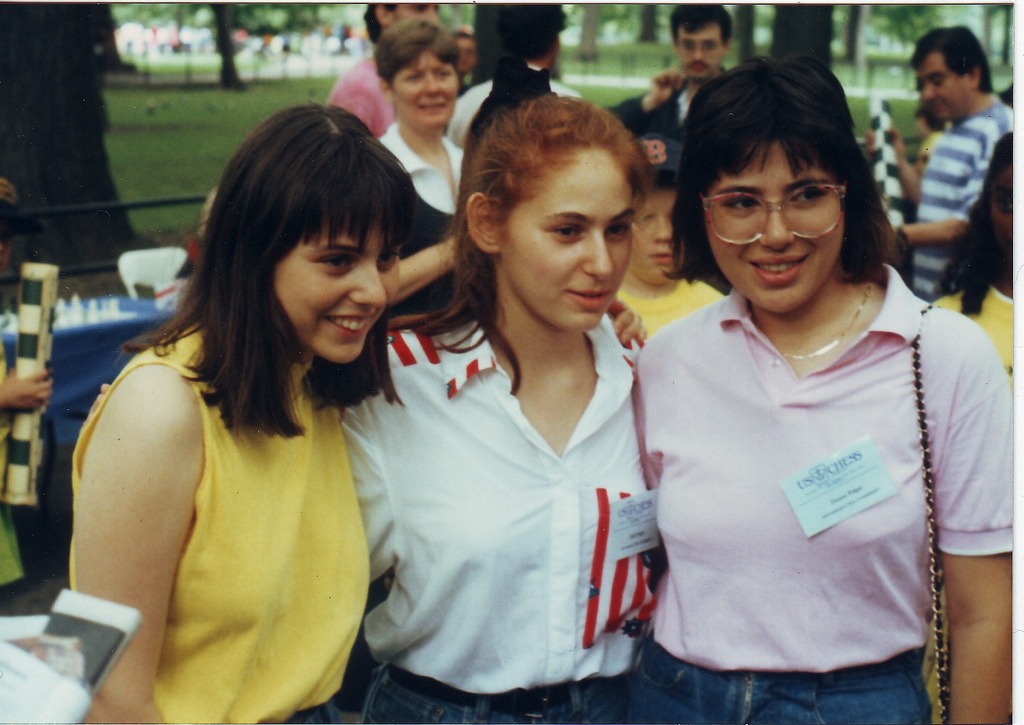
The Polgár sisters were trailblazers, creating a path where not many had walked. Running on their father’s philosophy that “geniuses are made and not born”, the Polgár sisters helped build women’s chess and went on to dominate it.
Judit Polgár, the youngest of the three sisters, is considered the greatest female player of all time, becoming the only woman to be ranked in the top 10 worldwide (reaching #8 in 2005) and defeating all-time greats like Garry Kasparov and Magnus Carlsen.
Susan, who is the eldest, is the first female to achieve the Grandmaster title through traditional norms, while Sofia is famous for her performance in a 1989 Rome tournament, which is deemed as one of the best performances by a woman.
The Polgár sisters redefined women’s chess, and this is their story.
“Geniuses are Made, Not Born”
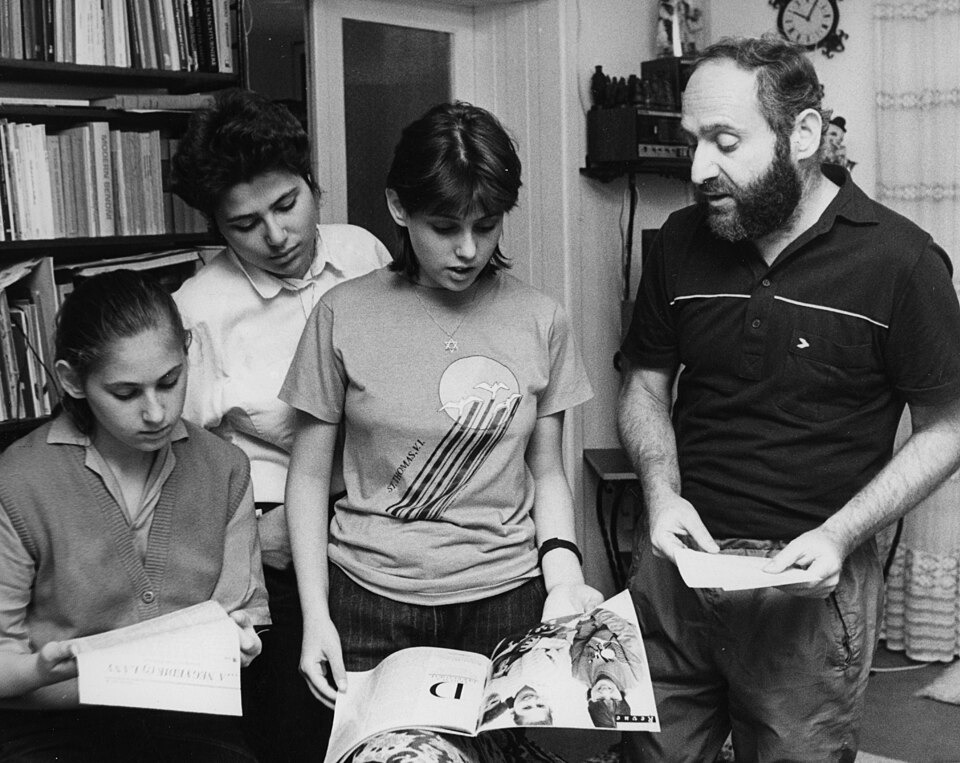
Born in Budapest to László and Klara Polgár, the Polgár sisters were raised as part of an educational experiment. Laslo and his wife believed that through early and intensive education in special subjects, you could make child geniuses.
László has a philosophy, “geniuses were made, not born,” and with the help of his wife and children, he was determined to prove it.
This was László ’s life’s work.
As a researcher and educational psychologist, László was fascinated with understanding geniuses. He studied over 400 geniuses and prodigies, including greats like Socrates and Einstein, and he analyzed the common patterns in these stories.
He observed that all of them started at a very young age and practiced their skills to a depth, which led him to pioneer the mantra that “a genius is not born, but is educated and trained.”
With homeschooling, which was very weird at the time, László designed a plan that would help his children become chess prodigies. The idea would only work by majoring on a specific subject, and he chose chess because “it was very objective and easy to measure.”
The house was filled with chess books and pictures of famous chess players. The girls would play against each other constantly and compete in the best tournaments they could find. The family would keep records of the tournament history of every competitor the children faced. Their lives were dedicated to chess.
Pressure From The Government and Community
As the children grew, the Polgar family faced difficulties with the project. László believed his children could compete against men, which was against the Hungarian Chess Federation’s policy that girls were to play in female-only tournaments.
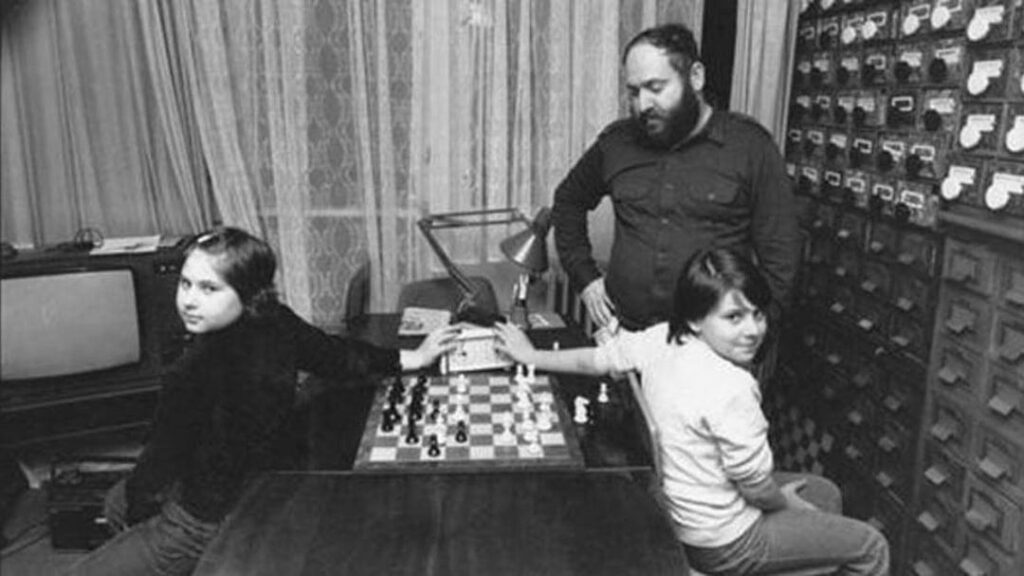
The “experiment” faced a lot more criticism from neighbors, fellow chess players, and even the government, but László and his wife stopped at nothing to ensure their kids became chess prodigies.
The Hungarian government once arrested the family and separated the children from their parents, seized their passport and didn’t allow them to play outside of Hungary or Eastern Europe, or in male tournaments.
However, after much pressure from the international community, the Polgár sisters were allowed to travel outside of Europe and eventually participate in the 1988 Women’s Chess Olympiad held in Thessaloniki, Greece.
While Susan, Sofia, and Ildikó Mád were impressive in that tournament, Judit was the star of the show. She showed up and wiped the floor with everybody, spurring the country to Olympic Gold. On their return to Hungary, they were celebrated as heroes, and that was the moment their story got into the limelight.
For László, his life’s work was paying off, and it was just the beginning of an unbelievable story.
Susan Polgár
Susan Polgár, also known as Zsuzsa, is the eldest of the three Polgár sisters. Born on April 19, 1969, Susan recalls being hooked on chess and instantly drawn to the game without her father forcing her.
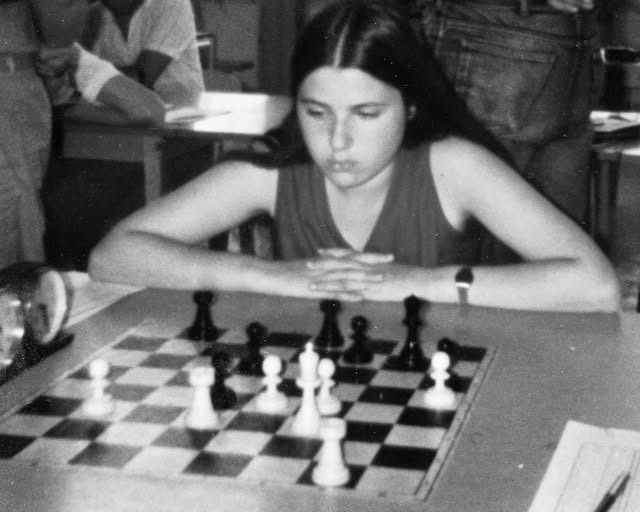
Susan had amassed tons of hours of practice in her early years, and her father decided it was time for her to play with people older than her.
At 4 years of age, she won the under-11 chess championship of Budapest with a perfect score of 10-0. At 12 years old, she won the under-16 section of the 1981 World Youth Chess Festival for Peace. She also attained the International Master (IM) title three years later and was ranked the top female chess player in the world.
As her chess prowess continued to grow, the FIDE made a very controversial move, adding 100 rating points to every female chess player except Susan in 1986, the reason being that Susan had played mainly men in her career. This move dropped Susan from the top spot in Women’s FIDE ratings in 1987.
Setting The Record for Youngest GM in Women’s Chess
In 1988 and 1990, she and her sisters won gold medals in the Women’s category of the Chess Olympiad. By January 1991, she became the third woman awarded the title of Grandmaster by FIDE, after Nona Gaprindashvili and Maia Chiburdanidze.
She also set the record for the youngest woman to become a grandmaster, a record which was eventually broken by her own sister Judit in December 1991, becoming both the youngest female grandmaster and the youngest grandmaster.
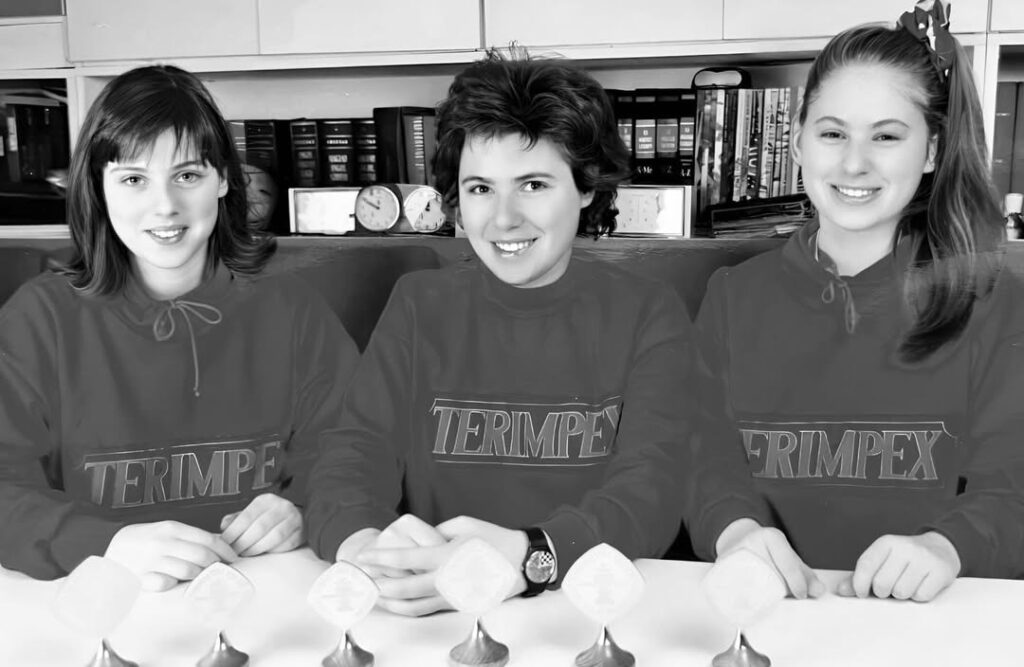
In 1992, Susan won both the Women’s World Blitz and the Women’s World Rapid Championship. She won the Women’s World Chess Championship from 1996 to 1999 in Classical Chess time control and also the World Blitz and Rapid Championship in1992
After switching allegiance to the United States in 2002, Susan was named “Grandmaster of the Year” in 2003 by the United States Chess Federation, making her the first woman to win that honor. In that same year, she also became the first woman to win the US Open Blitz Championship, a title which she won again in 2005 and 2006.
In July 2005, Susan gave a large simultaneous exhibition in Florida, breaking four world records: the largest number of simultaneous games played (326, with 309 won, 14 drawn, and 3 lost); consecutive games played (1,131); highest number of games won (1,112); and highest percentage of wins (96.93%).
Pregnancy and Forfeiting Her Title
Before 1992, Susan tended to avoid women-only tournaments, but having won the 1996 Women’s World Championship, she was unable to defend her title due to pregnancy.
She was originally expected to defend her title against Xie Jun in 1998, but because the FIDE couldn’t find a sponsor, the defense was delayed till 1999. At this time, Susan got pregnant, and given that she was due to give birth in March 1999, she requested a postponement.
She felt that she did not have sufficient time to recuperate, and refused that the match be held in China, the home country of her challenger. She also wanted a larger prize fund matching at least the minimum stipulated by FIDE regulations at the time (200, 000 Swiss francs).
With Susan refusing to play under these conditions, FIDE declared that she had forfeited the title and instead organized a match between Xie Jun and Alisa Galliamova for the Women’s World Chess Championship, which was won by Xie Jun.

Susan Polgar ended up suing the FIDE in the Court of Arbitration for Sport for monetary damages and the restoration of her title. In March 2001, the case was settled, with Susan withdrawing her claims and FIDE agreeing to pay her attorney’s fees in the amount of $25,000. She, however, didn’t get her title back, and since then, Susan has refused to participate in subsequent Women’s World Championship cycles.
Sofia Polgár

Born in 1974, Sofia (Zsófia) was the second of the three siblings, and while her achievements aren’t as huge as her sisters’, she dominated women’s chess with her sisters when she was actively playing and became very famous for the “Sack of Rome”.
Playing at the 1986 World Under-14 Championship, she finished second to Joël Lautier and was declared world under-14 girls champion.
The “Sack of Rome”
By the time she turned 14, she took the world by storm during a tournament held in Rome in 1989.
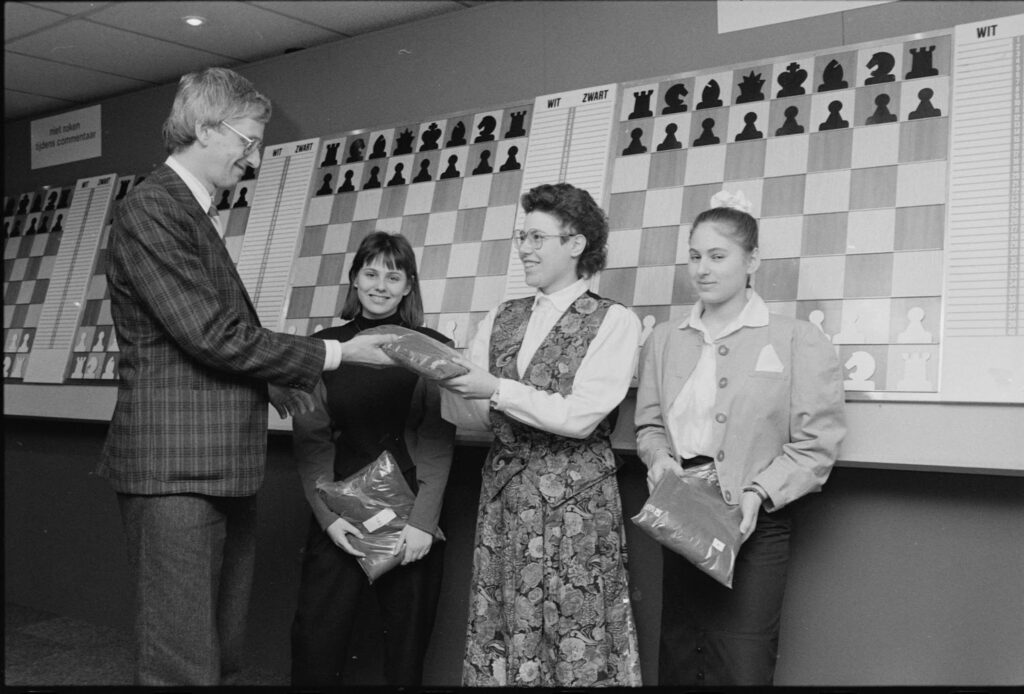
Most of her opponents in that tournament were grandmasters, and she finished the tournament with a score of 8.5 out of 9. Her performance rating for the tournament was 2879, one of the strongest performance ratings in chess history.
This performance became known as the “Sack of Rome,” with experts rating Sofia’s performance in the tournament as the fifth-best ever in the history of chess.
Sofia would later compete at the World Junior Chess Championship in 1994, finishing second to Helgi Grétarsson.
She and her sisters played for the Hungarian team in four chess Olympiads, winning team gold in 1988 and 1990, team silver in 1994, and individual gold medals in 1990 and 1994, and a bronze medal in 1996.
They briefly met Bobby Fischer in the summer of 1993, with all the Polgar sisters taking turns to play random chess games against Fischer. Sofia was said to beat Fischer three times in a row.
The Incident with Korchnoi
She was also ranked as the sixth-strongest female player in the world for a while, and at a point in her career, she beat Viktor Korchnoi in a game of fast chess. Korchnoi, at the time, was a 10-time candidate for the World Championship.
After beating Korchnoi, Sofia said she was scared of actually losing the game.
Korchnoi, who was frustrated by the loss, said this was the very first and last game Sofia would win against him. They didn’t play each other again, with Korchnoi passing away on 6th June 2016.
Judit Polgár
Popularly known as the “Queen of Chess,” Judit is the first and only woman in Chess history to earn a 2700+ rating.
She is considered by many as the greatest female chess player of all time, and her achievements prove it.
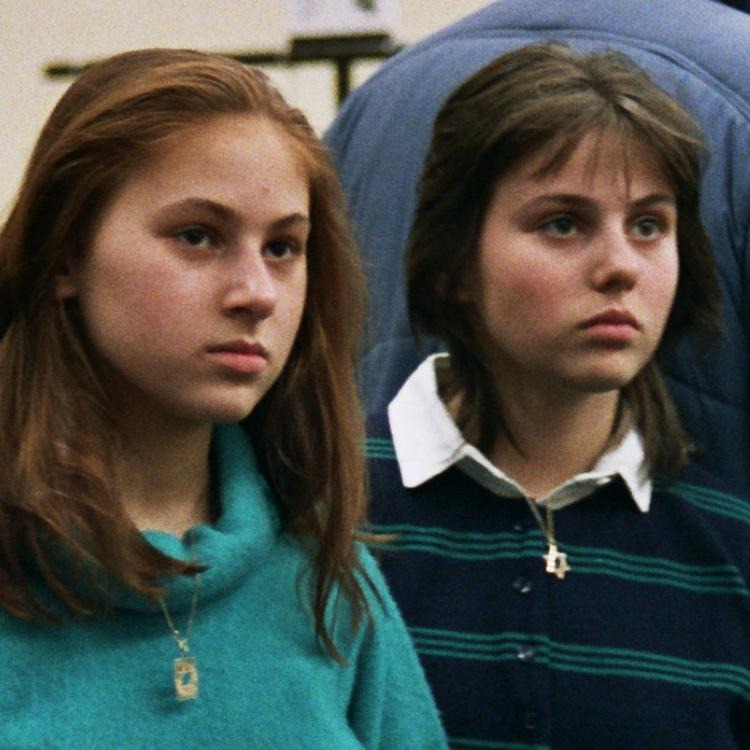
Born on 23rd July 1976, Judit is the youngest of the Polgár sisters, and, just like her sisters, from a young age, she was a chess prodigy. At age 5, she defeated a family friend without looking at the board.
She started playing in tournaments at 6 years old, and by 9 years old, she had a rating of 2080 with the Hungarian Chess Federation.
In 1984 in Budapest, Sofia and Judit, who were 9 and 7 years of age at the time, played two games of blindfold chess against two masters, which they won. At one point, the girls complained that one of their opponents was playing too slowly and suggested a clock should be used.
In April 1986, Judit played in her first rated tournament in the U.S., finishing first in the unrated section of the New York Open, winning US$1,000. In January 1987, 10-year-old Judit defeated Romanian International Master Dolfi Drimer in the Adsteam Lidums International Tournament in Australia.
Youngest Player to Make IM Title
In April 1988, Judit gained her first International Master norm in the International B section of the New York Open.
In August 1988, she won the under-12 “Boys” section of the World Youth Chess and Peace Festival in Romania. By October that same year, she had completed the requirements for the International Master title, becoming the youngest player to ever reach this title.
Youngest Player to Make FIDE’s Top 100
At 12 years old, she became the youngest player to break into the FIDE top 100 rating list, ranked at 55 with a rating of 2555 points, which was 35 points higher than Women’s World Champion Maia Chiburdanidze, and 45 points ahead of her sister Susan.
Following her achievements, The British Chess Magazine wrote: “Judit Polgár’s recent results make the performances of Fischer and Kasparov at a similar age pale by comparison.”
Breaking Bobby Fischer’s Record
And indeed, her performances made the chess world have a second look at the successes of Fischer and Kasparov because in 1991, at just 15 years and 4 months, she became the youngest player at the time to achieve the title of Grandmaster, breaking the 33-year-old record previously held by former world champion Bobby Fischer.
Bobby Fischer can be quoted as saying, “he doesn’t think women make good chess players,” but with Judit breaking his record, it’s safe to say Fischer’s words hold no value anymore. The manner in which she broke his record was very thrilling for the average chess fan.

Judit entered the Hungarian Chess Championship with all the Hungarian Chess greats in action, playing one another. In a tournament where she wasn’t even considered a contender, Judit dominated on her way to the final, shocking many of her opponents.
In the final game against Tibor Tolnai, she had a tough choice to make. Take only a draw to break Fischer’s record, or beat her opponent to win the tournament and also break the record. Judit, in her typical attacking element, went on the offensive, dismantling her opponent to become a grandmaster and also Hungary’s national chess champion.
Judit finished in first position in the chess tournaments of Hastings 1993, Madrid 1994, León 1996, U.S. Open 1998, Hoogeveen 1999, Sigeman & Co 2000, Japfa 2000, and the Najdorf Memorial 2000.
Flawless Record vs World Champions
She is also the only woman to have won a game against a reigning world number one player, and defeated eleven current or former world champions in either rapid or classical chess: Magnus Carlsen, Anatoly Karpov, Garry Kasparov, Vladimir Kramnik, Boris Spassky, Vasily Smyslov, Veselin Topalov, Viswanathan Anand, Ruslan Ponomariov, Alexander Khalifman, and Rustam Kasimdzhanov.
In 1990, British GM Nigel Short called Judit “one of the three or four greatest chess prodigies in history”. Initially, Kasparoov initially disagreed, saying: “She has fantastic chess talent, but she is, after all, a woman. It all comes down to the imperfections of the feminine psyche. No woman can sustain a prolonged battle.”
Now it was time for Judit Polgar to face the final boss himself—Garry Kasparov.
Facing Kasparov
Kasparov is Judit’s idol. She has dreamt of meeting him all her life. Getting to play him in 1994 at Linares was surreal, but she was intent on making him eat his words.
At this time, Judit Polgar was still the best women’s player in the world, and Kasparov was regarded as the greatest chess player alive, at the time.
Controversy at Linares
While many had expected a tough game, Kasparov was decimating Judit, but in a sudden twist, Kasparov moved his knight to c5, opening up a way for Judith who was being outplayed, to draw the game. In a split second, Kasparov realizes his mistake, picks the piece back up after initially releasing it (which is against the rules), and plays a different move.
No one sees it except Judit. She didn’t complain because it’s her word against his. A women’s champion, let alone a young female chess champion, has never played a men’s champion.
If she complained and Kasparov denies it on the spot, it becomes a case of a “spoilt brat” vs “a master of the game.” Judit also feared that causing a “scene” would prevent her from getting more invitations.
A Spanish television crew was filming the event and had a camera that caught the incident, but had no one behind the camera, so there was no backup for Judit, even if she stated her claims. She played on which closes the window for protests, and Kasparov converted his winning position to victory and defeated Judit.
Although the incident seemed to be swept under the carpet, the television crew who originally left Linares returned to the tournament, and upon request, they provided the footage which showed Kasparov actually taking his hand off the piece and Judit’s shock at the incident.
The incident would later haunt Kasparov throughout the tournament.
In the closing days of the tournament, Judith walks up to Kasparov, asking him, “Why would you do this to me?” and in a later report, Kasparov responds by saying Judith needs to learn some manners.
Kasparov Becomes Judit’s Nightmare
Kasparov would later play Judit again in 1996. The game was a dog fight from start to finish, with Judit going blow for blow with Kasparov, whom even the greatest men’s players fell against. He would eventually win after Judit collapsed her strategy during the endgame. They would play 14 more times, with Judith being frustrated at her inability to nick a win off Kasparov.
Beating Kasparov
Kasparov was her nightmare, but she wasn’t going to go down without beating him. Both players later met again in Moscow in 2002, and this time, she finally did it.
In a slow, nuanced, and strategic game, Judit crushed Kasparov, forcing him to accept defeat. As Kasparov shook Judit and walked away, she became the first and only woman to defeat an all-time great.
After the game, Kasparov changed his opinion on women’s chess, saying that “The Polgár sisters showed that there are no inherent limitations to their aptitude, an idea that many male players refused to accept until a twelve-year-old with a ponytail had unceremoniously crushed them.”
Refusing To Play in Women’s World Championships
Despite being considered the greatest female chess player of all time and being the only woman to make the FIDE’s top 10 rating, Judit refused to play in the Women’s World Championship. Her reason was that most women didn’t take it as seriously as men’s players.
In her words, “I always say that women should have the self-confidence that they are as good as male players, but only if they are willing to work and take it seriously as much as male players.”
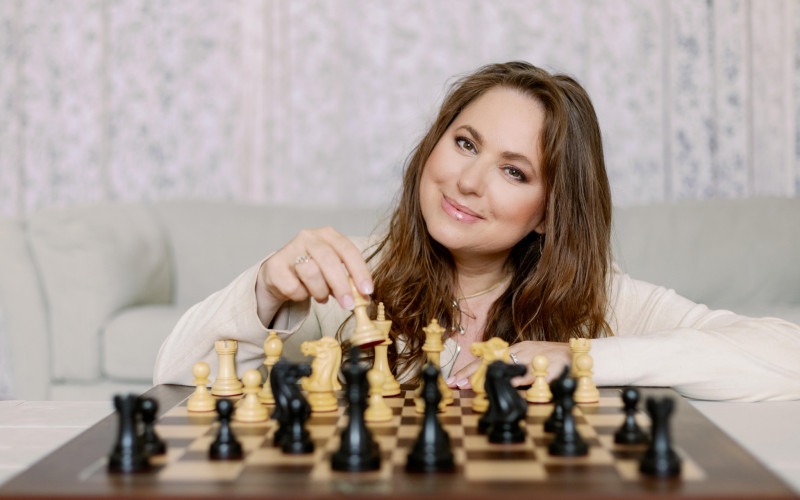
She also rarely played in women-only tournaments despite being the No.1-ranked women’s player for 25 years, from 1989 until her retirement in 2014.
Life Beyond The Chessboard
Apart from breaking barriers while playing chess, the Polgár sisters live impactful lives outside the chessboard.
Susan founded the Polgár Chess Center in New York in 1997 to give chess training to children. She also set up the Susan Polgár Foundation and joined the Texas Tech Knight Raiders chess team as head coach in 2007.
In 2014, she was awarded the Furman Symeon medal, which is given annually to the best chess coach who works with both male and female players.
After her retirement in 2014, Judit Polgár was announced as coach of the Hungarian national men’s chess team in 2015. She was inducted into the World Chess Hall of Fame in 2021.
Judit founded the Judit Polgár Chess Foundation, which developed two educational programs that are now part of the Hungarian national curriculum.
She has also written multiple educational chess books for pre-school and elementary school children, and methodological resources for teachers.
Unlike her sisters, Sofia didn’t stay in the limelight for too long. She slowly pulled herself away from the action to focus on her family and artistic pursuits. She has illustrated several books, including Judit Polgár’s Chess Palace book series.
Are Geniuses Born or Made?
László spent most of his life trying to prove this theory, and the success of his daughters has put an end to this debate.
The Polgár sisters aren’t the only proof that geniuses are made. Richard Williams did the same with Serena and Venus Williams, and Earl Woods did the same with Tiger Woods.
Are people born geniuses? Yes, but talent or genius isn’t enough. Many athletes have dazzled in various sports, but without the sheer discipline needed to master their skills, many have faded away.
You can only make it so far by the sheer power of your genius, but what can keep you in the game and allow you to rise to the occasion time and time again is the practice, mastery, and work that you put in.
Talent needs a lot if hardwork, as Warren Buffett says, “an idiot with a plan can beat a genius without a plan.”
Who wrote this?

Wisdom Aghe is a creative whose passions include sports, video editing, writing and a little bit of design. With these skills and a curious mind, Wisdom takes interest in creating sports content and holding interesting sports conversations. He loves sports and it's his happy place. He spends his leisure time playing football, playing games and reading.