


January 18th, 2026, marked the end of the 2025 Africa Cup of Nations, which saw Senegal lift their second continental title on Moroccan soil: though that triumph now sits under contestation following the recent ruckus over the tournament’s true winner.
Yet, amid a tumultuous finale characterized by towel-snatching antics, controversial refereeing decisions, and a dramatic protest that saw Senegalese players walk off the pitch following a controversial referee call, another spectacle quietly seized global attention in the most unlikely fashion.
Michael Kuka Mboladinga, a 53-year-old fan from the Democratic Republic of the Congo, captured the attention of audiences far beyond the African continent.
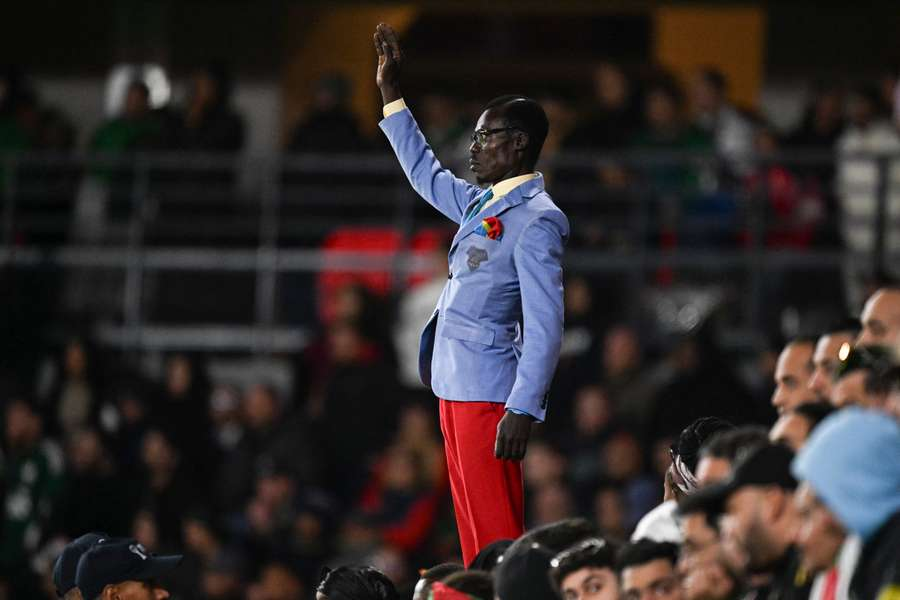
Perched on a makeshift plinth, Mboladinga stood motionless throughout his country’s matches: his left arm raised, mimicking the renowned pose of his country’s first-ever prime minister and African independence icon, Patrice Lumumba.
Beyond drawing attention to the Congolese national team, that single expression exposed the world to a deeper historical narrative of the Democratic Republic of Congo that stretches far beyond the confines of the game. It spoke of the legacy of Belgian colonial rule, the story of a man who dared to dream, and a nation that continues to grapple with the lingering shadows of imperial dominance.
One man, one pose, one enduring image, and African football became something much bigger than sport.
Less than a month later, as the world shifted its focus from the iconic scenes of the tournament, a strikingly similar – yet far more contentious – scene unfolded far beyond the Atlantic.
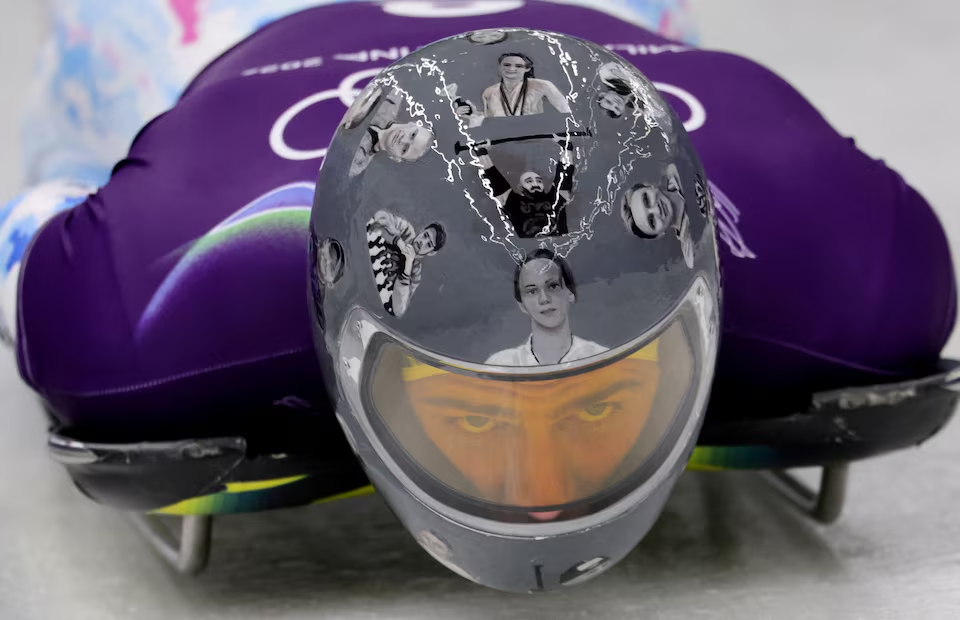
At the Olympics, Ukrainian skeleton athlete Vladyslav Heraskevych was disqualified after attempting to compete wearing a helmet bearing the faces of more than 20 athletes killed during the Russia-Ukraine War.
Like Mboladinga, he rooted his gesture in remembrance and national identity, yet it provoked a starkly different response.
The International Olympic Committee ruled that such an act violated the long-standing principle of political neutrality that underpins the Olympic movement. Where one political expression was celebrated, the other was sanctioned as dissent.
Linked by context and separated by consequence, these moments reignite a question that has lingered for decades: can anyone truly pull sport and politics apart, or do they inevitably reflect one another?
Background
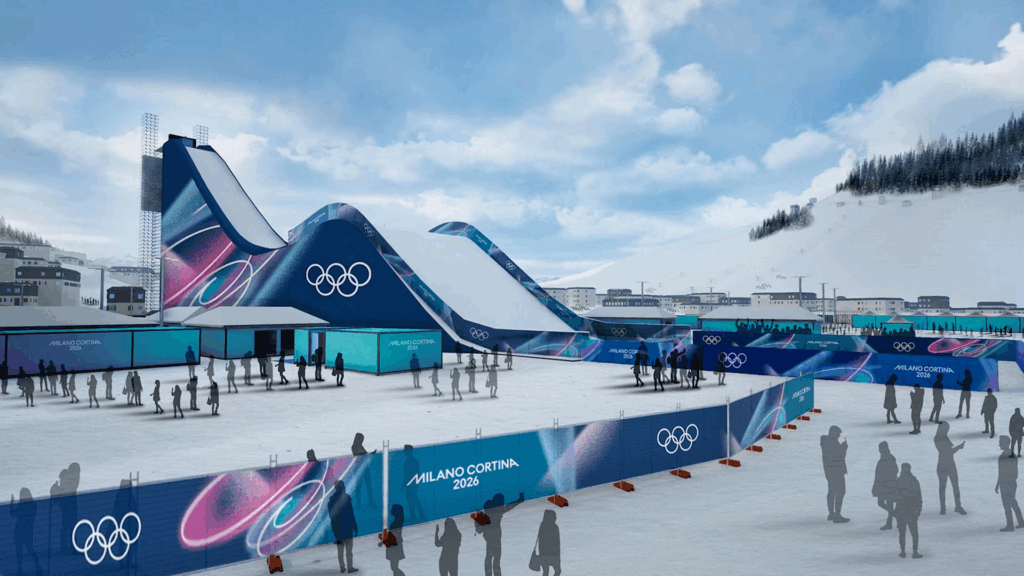
Deep within the alpine mountains oscillating between Milan and Cortina d’Ampezzo, the 2026 Winter Olympics produced more than just moments of athletic brilliance; the world will also remember the Games for what they desperately tried to avoid.
Even before the Russia-Ukraine war began in 2022, Heraskevych had already alerted the world as to what was coming. Following his performance in France, in the same tournament, four years earlier, he revealed a hand-painted sign in blue and yellow: the colours of the Ukrainian flag, bearing the words “No War in Ukraine.”
At the time, the IOC interpreted the message as one of peace, aligning with the values of the Olympic movement, and chose not to sanction him.
Two years later in Milan, the IOC viewed his display through a completely different lens. This time, the same body that had once approved his gesture ruled that his proposed helmet constituted a political demonstration: one that violated the boundaries of the games.
Once again, the long-standing debate about the place of politics in sport crept its way back into the headlines.
Historical Precedents of Political Expressions in the Olympics
In order to comprehend the weight and significance of Heraskevych’s helmet protest against the IOC, it is important to take a trip down memory lane.
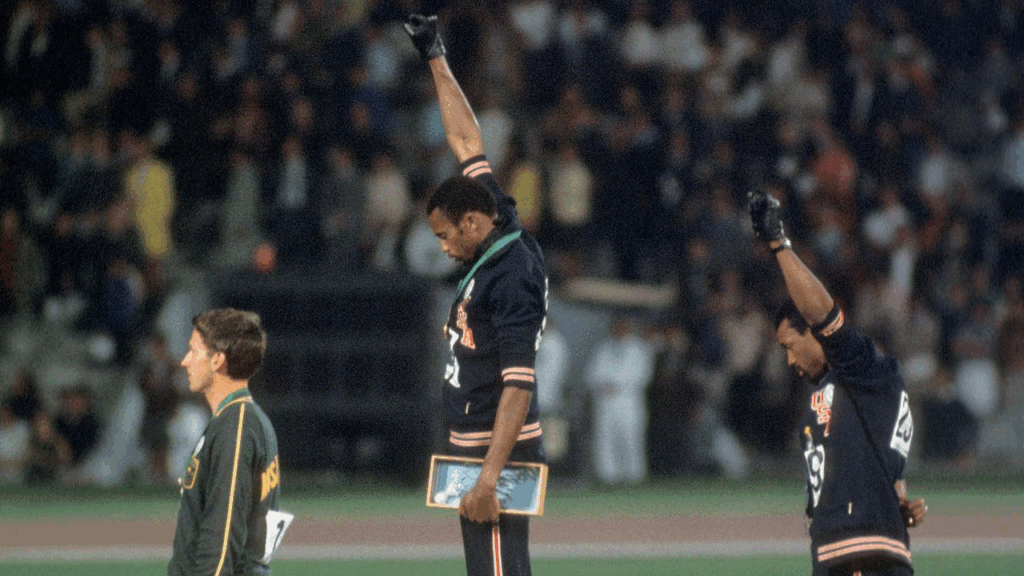
Sports and politics are woven into the very fabric of Olympic history. One of its most enduring images remains the raised fists of Tommie Smith and John Carlos at the 1968 Mexico Olympics.
Standing barefoot on the podium after the 200m final, both men bowed their heads and delivered the Black Power salute. That expression was intended to spotlight injustice against people of colour in the United States.
However, what followed was swift and unforgiving. The International Olympic Committee, under the leadership of Avery Brundage, expelled both athletes from the Olympic village, framing their protest as a violation of Olympic neutrality.
But neither the IOC nor the United States expulsion of both athletes from its national team did much to diminish the legacy that followed. The Black Power salute would go on to etch itself into global consciousness, becoming one of the most enduring symbols of resistance in sporting history, outlasting the moment that sought to contain it.
Decades later, the parallels to Milan-Cortina 2026 are difficult to ignore. While time and contexts differ, the underlying question remains unchanged: can the Olympic arena truly separate athletic performance from the political realities athletes inhabit?
In both instances, the IOC’s response sought to preserve the ideal of neutrality, yet inadvertently reinforced the visibility of the very issues it aimed to contain.
Rule 50 and the Olympic Safe Space
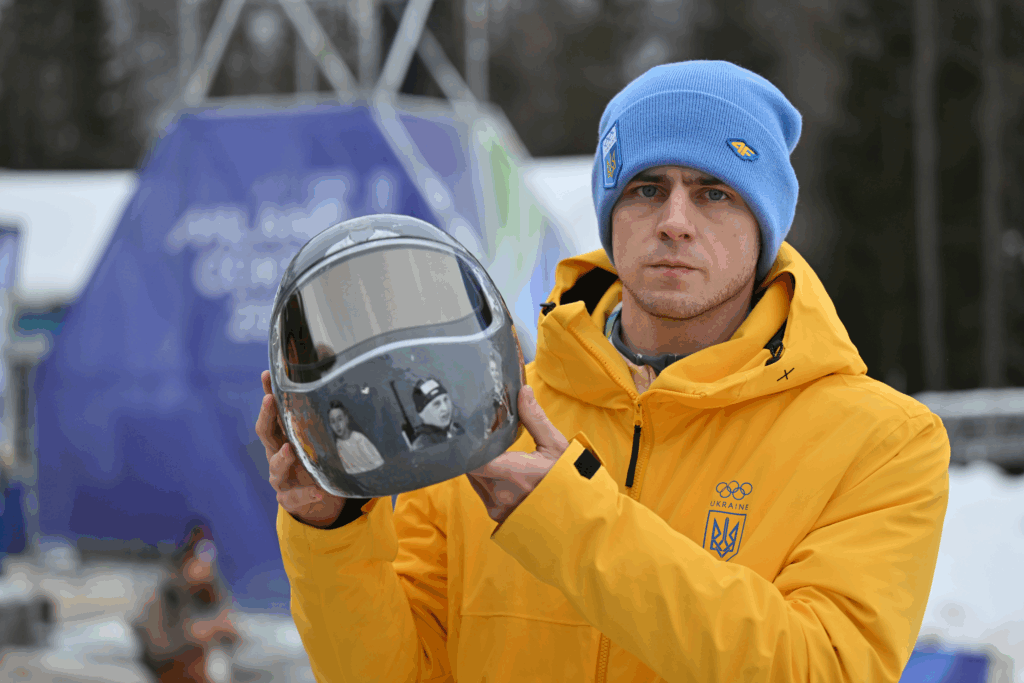
For a start, conventional wisdom suggests that the moments we notice most are rarely where the story begins. From the raised fists of Tommie Smith and John Carlos at the 1968 Mexico City Olympics to more recent controversies such as Heraskevych’s helmet ban, the pattern is visible. Both moments, like several other defiant demonstrations in the Olympic village, are tied to the infamous Rule 50 of the Olympic charter.
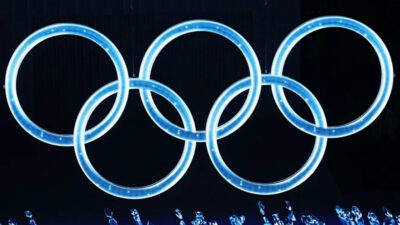
The provision prohibits political, religious, or racial demonstrations during competition and medal ceremonies. In essence, the Olympic Games are meant to be a neutral space, where people attain a temporary refuge from the divisions of the outside world
IOC spokesperson Mark Adams further reinforced this position in response to Heraskevych’s helmet ban in Italy, he said:
“It’s fundamental that there are equal rights for all athletes, and that the games need to be separated not just from political and religious but from all types of interference so that all the athletes competing can concentrate on their performance.
”Obviously, during the games, you can imagine with more than 90 countries competing here and 2000 athletes plus, there will be a whole range of issues that people want to commemorate – family members, wars, conflicts, and sadly, we live in that kind of world.
”But what we try to do at the Olympics is to create a safe space for people to compete away from that, whilst also allowing people to express themselves.”
From the surface, the position of the International Olympic Committee appears grounded in a compelling logic: to shut the real world out for two weeks during the Olympics. Yet beneath that ideal lies a more complicated truth: neutrality, in a world defined by inequality and conflict, is never as absolute as it appears.
Olympic Ideal of Neutrality
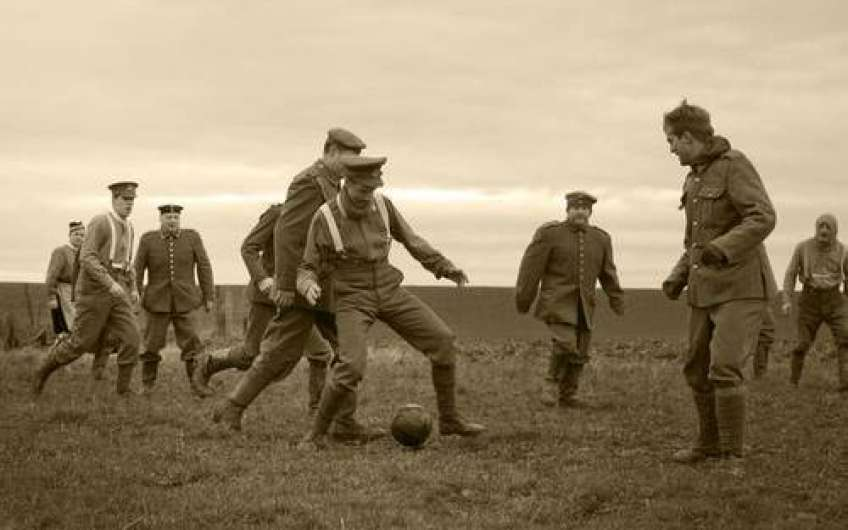
One way to understand the IOC’s reasoning is to recall the famous Christmas truce of 1914 during World War I. You see, in that brief moment, German and English soldiers, amidst bloodshed, death, and hardened political identities, laid down their weapons to share greetings, exchange small gifts, in some accounts, play football, and momentarily suspend the hostilities of war. For a fleeting period, humanity eclipsed conflict.
That single moment in history illustrates the ideal the Olympic Movement often seeks to evoke: a temporary suspension of the world’s divisions. But instead of a battlefield, the Olympic arena becomes the site of this truce.
Athletes from nations at war still line up on the same track, compete in the same pool, and stand on the same podium.
From this perspective, the logic behind Rule 50 becomes clearer. Allowing political, racial, or religious demonstrations could transform the Olympics stage into a platform for advocacy, mirroring the very divisions it seeks to dissolve.
Yet this ideal grows more complicated when confronted with the realities of modern sport. While the Olympic Movement commits to political neutrality, political identity deeply structures international sport
Athletes do not compete merely as individuals; they represent nations. Flags are raised, anthems are played, and medal tables are organised by country. Governments invest heavily in Olympic programmes not only to develop talent, but to project prestige and soft power on the global stage.
In this sense, the Games already inhabit the political architecture of international relations.
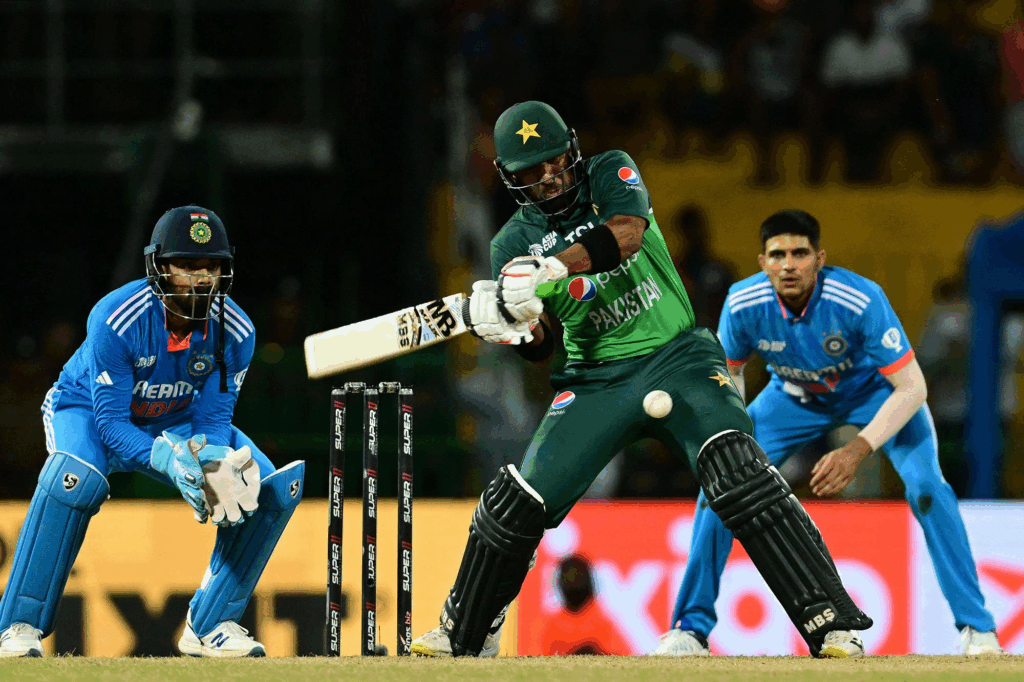
More so, certain matchups are mostly intensified due to diplomatic rivalries between countries. For instance, encounters between India and Pakistan, especially in cricket, carry historical and diplomatic weight, intensifying their meaning beyond just sport.
The Ukrainian helmet controversy, therefore, exposes a fundamental contradiction at the heart of the Olympic model. The Games are designed to symbolise international unity, yet they operate within systems that reinforce national identity and geopolitical symbolism.
As a result, efforts to enforce neutrality inevitably produce political consequences. When the IOC restricts an expression, the world may perceive it as suppressing a vital message they have the right to know. When it allows certain forms of participation, it may appear to endorse or tolerate the political circumstances that made such decisions necessary in the first place.
Russian Neutral Athlete Policy and the Olympic inconsistency
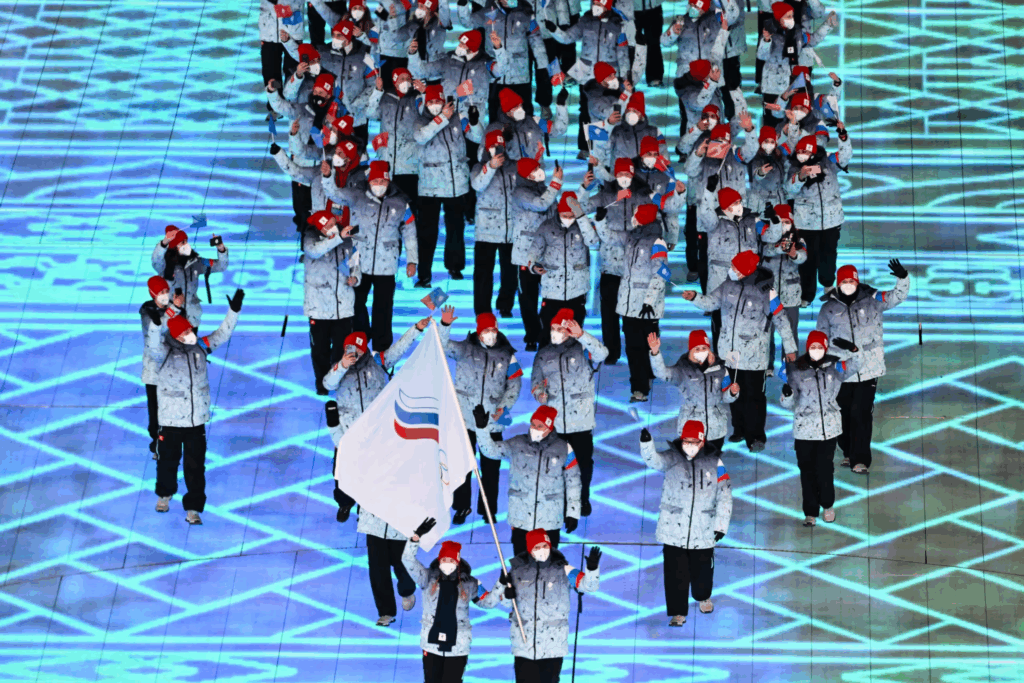
Beyond symbolic representation, the ongoing war between Ukraine and Russia introduces a new set of political implications for Olympic governance and poses a structural bias in the implementation of the sacred rule.
Following Russia’s invasion of Ukraine in 2022, the International Olympic Committee barred Russian athletes from competing under their national flag and anthem. Instead, they were permitted to participate as neutral athletes, without national symbols.
They framed the policy as a compromise—a way to avoid collectively punishing athletes while still acknowledging the political realities surrounding the conflict.
Yet, in an attempt to establish balance, the IOC revealed an underlying contradiction. On the one hand, it maintains that athletes should not bear responsibility for their governments’ actions.
On the other hand, the very act of removing national symbols acknowledges that political circumstances shape who can compete, and under what conditions. The concept of neutrality, in this context, becomes less of an absolute principle and more of a negotiated position, exposing the subjectivity of the IOC’s interpretations.
And as history has shown over half a century ago, restriction rarely silences expression; they amplify it. Just as the gesture of Tommie Smith and John Carlos at the 1968 Mexico Olympics endured far beyond the podium, so too will Vladyslav Heraskevych’s helmet protest remain etched in Olympic memory.
Athlete Activism and Advocacy
As the International Olympic Committee struggles to sustain its long-standing position, it once again finds itself caught up in between two competing realities: what sport is, and what the IOC aspires to be.
Amidst all that tension, one truth becomes increasingly difficult to ignore, as it has been half a century ago: the pursuit of complete neutrality, and the exclusion of politics from sport, is a contest the IOC is unlikely to win.
The major determinant of this phenomenon has been the shift in power and proximity. Sports stars, up until now, have not been distant figures in the sports world. Unlike institutional bodies, their voices travel faster, reach further, and resonate more with audiences. Fans, in turn, connect not with governing bodies, but with the individuals whose stories they follow.
Long before now, athletes have used their platforms to advocate for causes that extend beyond sport.
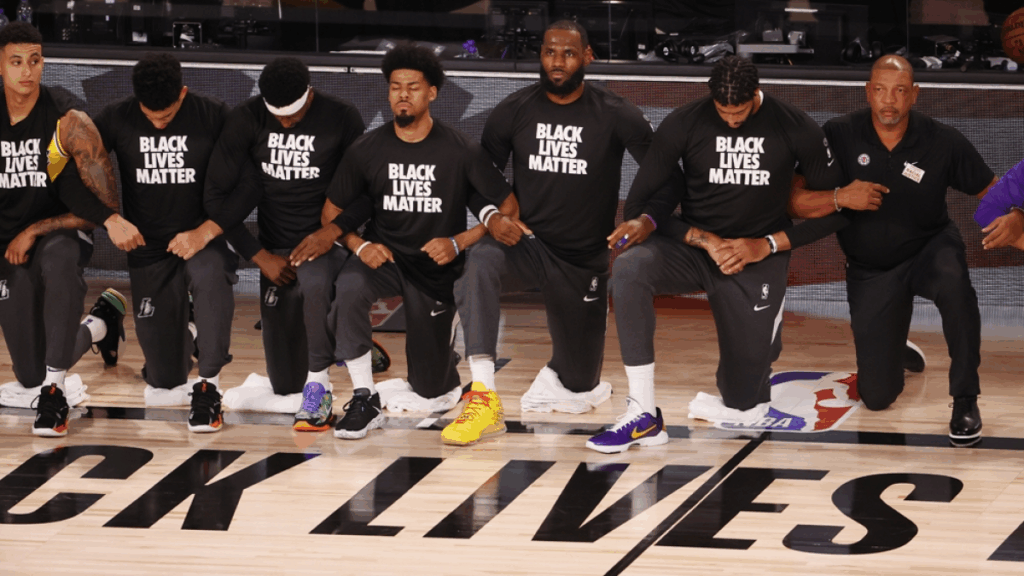
From the iconic gestures of players bending the knee during the Black Lives Matter protests, the National Basketball Association’s social justice initiatives, and Richarlison’s criticism of police violence in Brazil’s favelas, athletes’ activism has become less an exception and more an expectation from fans.
At the end of the day, it all boils down to a conclusion: as long as athletes represent nations and exist within a world defined by conflict, the idea of a truly apolitical sporting arena will remain an enduring ideal that the IOC strives desperately, yet unsuccessfully, to enforce.
Who wrote this?

Mahbubat Salahudeen is a Sport Journalist with a primary focus on Youth-Athleticism and women's football.
She is currently pursuing a degree in Media Communications and Public Relations. While much of her experience lies in Sports communications, she has honed transferable skills in strategic communication, audience engagement, and digital media production that transcend industries.
- Mahbubat Salahudeen
- Mahbubat Salahudeen
- Mahbubat Salahudeen

- Mahbubat Salahudeen

- Mahbubat Salahudeen

- Mahbubat Salahudeen

- Mahbubat Salahudeen

- Mahbubat Salahudeen

- Mahbubat Salahudeen

- Mahbubat Salahudeen