



In today’s football market of huge transfer fees, high wages, and lucrative brand deals, most players now value career security above sentiment.
A football career is short, and the window to maximize earnings is even shorter because a big move may only come once. It begs the question, when a single signature can secure generational wealth, why stay in one place?
Yet, from Camp Nou to Old Trafford’s Theatre of Dreams, a select few resisted. These legends stayed, proving money can buy talent but not the memories of a lifetime forged with one club.
Staying at one club can create a strong sense of belonging and personal identity. Many players find it hard to adjust to a new city or culture. Changing teams isn’t just about football; it also means adapting to a new country, language, customs, and sometimes facing isolation. Not every athlete is comfortable leaving a familiar environment.
For these men, the comfort of their home city provided stability for their careers. It’s this stability that we admire today.
1. Paolo Maldini
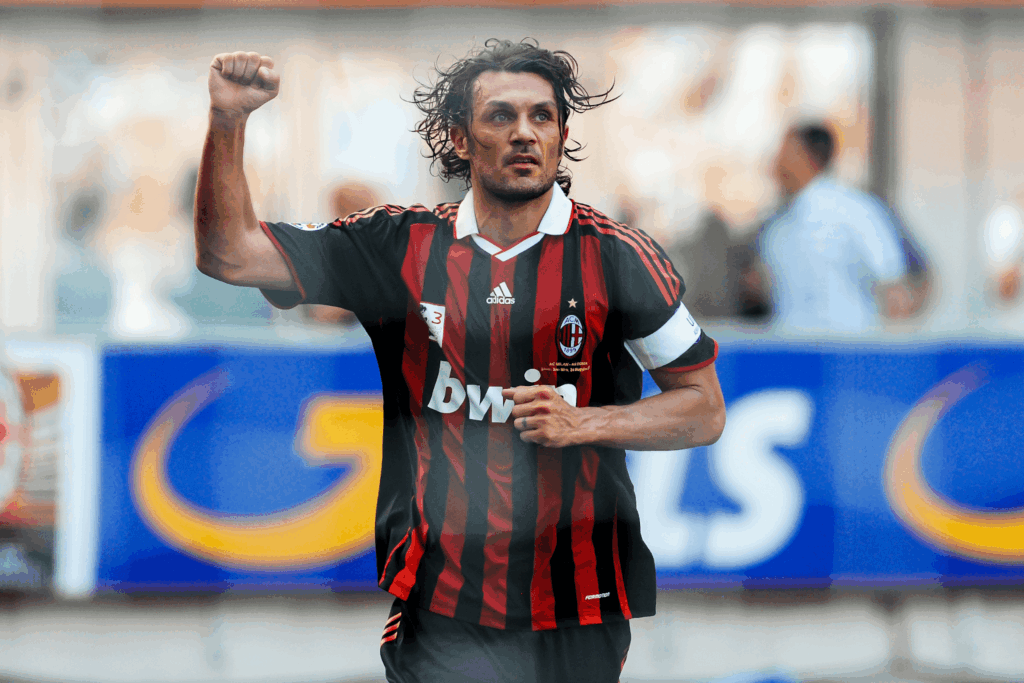
Maldini began his journey at AC Milan at the age of 10. His natural talent on the ball saw him placed in the academy as a midfielder. However, by the age of 14, his coaches recognized his defensive potential and transitioned him to right-back.
Paolo’s senior debut came at age 16, against Udinese. He filled in for the injured Sergio Battistini. Although that was his only appearance that year, he left a lasting impression and broke into the first-team rotation permanently at 17.
Upon taking the No. 3 shirt previously worn by his father, Cesare, it became clear that Paolo was meant to lead the club into a new era. Enjoying a smooth ride in Sacchi’s immortal side, Maldini thrived as an energetic fullback. He went on to win the Bravo award as the best U-23 player.
Fabio Capello inherited Sacchi’s foundation and led Milan into an era of unprecedented domestic dominance. Long before Arsenal’s famous 2003/2004 run, Maldini and the AC Milan Invincibles set the standard with a 58-game unbeaten streak.
Maldini was handed the captain’s armband in 1997. Despite a dip in Milan’s overall competitiveness, Maldini’s leadership remained a steadying force.
By 2001, when he was 33, Maldini had transitioned from a dynamic left-back to a smart, reliable center-back. Playing under his old teammate Carlo Ancelotti, Maldini won two Champions League trophies in 2003 and 2007.
When he finally retired in 2009 at 41, he left behind a staggering legacy with 1,000 appearances for AC Milan and won 25 trophies, including 7 Serie A titles and 5 Champions League crowns.
His records for Serie A appearances and Italian caps stood for years before being surpassed by Gianluigi Buffon and Fabio Cannavaro.
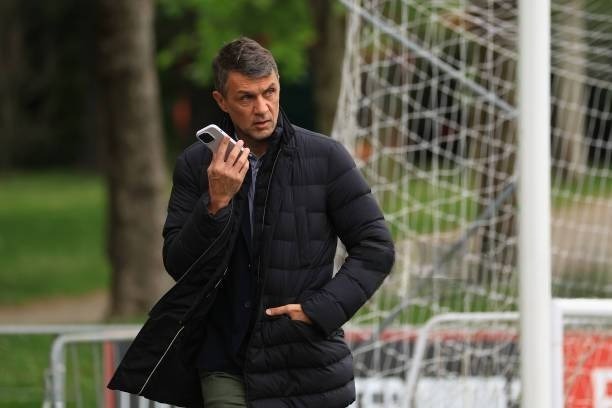
Maldini returned to Milan in 2018 as Technical Director and led them to the 2021/2022 Scudetto, the club’s first in over a decade. Though he left in 2023, his influence remains the blueprint for modern defensive excellence.
2. Francesco Totti
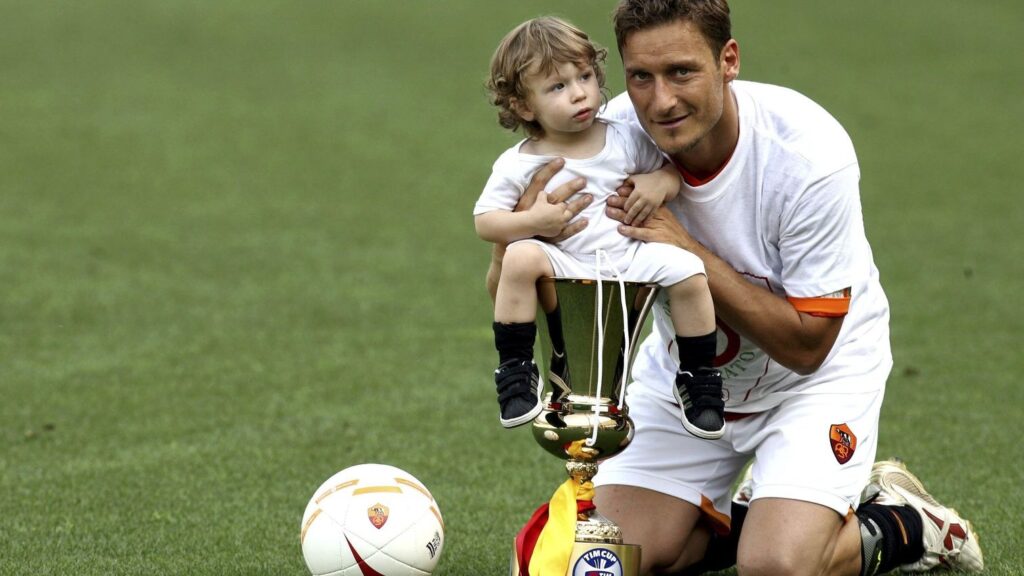
As a young boy from Rome, Totti had one dream: to play for his home club, just like his idol Giuseppe Giannini, a one-time captain of Roma.
Totti played for Roma’s youth side for three years. He made his first team debut at 16 in a comfortable win against Brescia.
Francesco Totti’s ability to play multiple attacking positions made him an effective weapon during his 25-year stint at Roma. He was a primary creator and scoring threat at different points—playing as a 10, left winger, and striker.
Under Zdenek Zeman, in the summer of 1997, Totti improved physically and mentally as a player.
This helped him reach double goal figures for the first time. As his presence grew, he was handed the armband in 1998.
Totti was transformed into a number 10 under Capello in the classic 3-4-1-2 formation. This change led to a breakthrough 2000/2001 season that brought Roma their third Serie A title.
However, Totti reached the peak of his footballing prowess in the 2003/2004 season, pushing Roma into a title race against Milan and scoring 20 goals that season. That summer became a defining moment in his career, with Real Madrid seeking his signature.
But he refused the move and chose to stay with his boyhood club, which had given him everything. This led to his famous statement: “I cheated on all my girlfriends, but not Roma.”. We do not know if he regrets his choice, but the city of Rome has returned that love.
By late 2004, Totti was converted into a striker, where he would end up playing for the most part of the remainder of his career.
Unlike many other legends, Totti did not win many trophies. The distinguishing factor was the goal-scoring haul of 250 goals in 619 appearances, a stellar figure for someone who played across different positions.
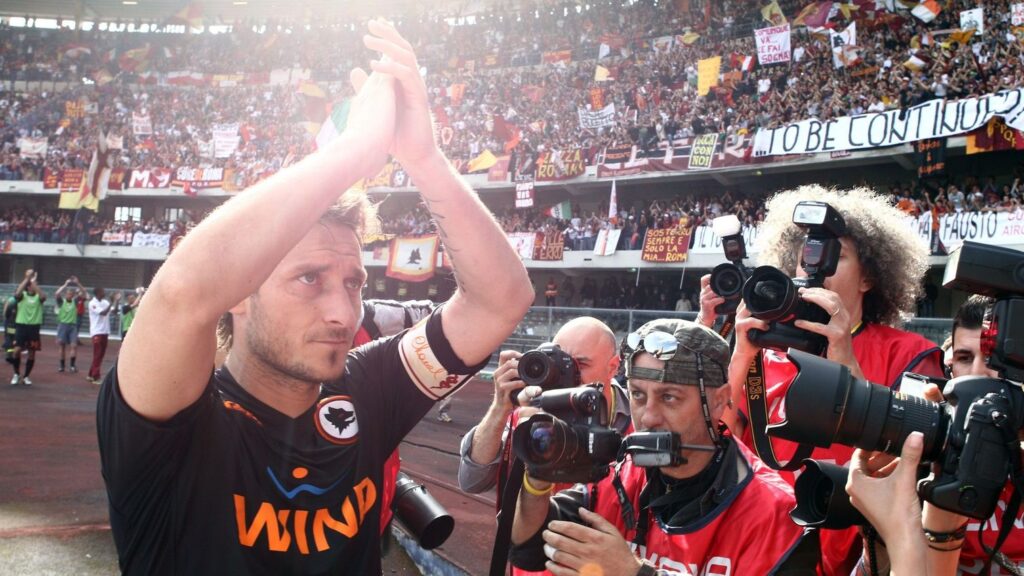
In 2017, Totti played his last game for Roma against Genoa as a substitute. He received loud applause from the fans as a befitting farewell to the king of Rome.
3. Ryan Giggs
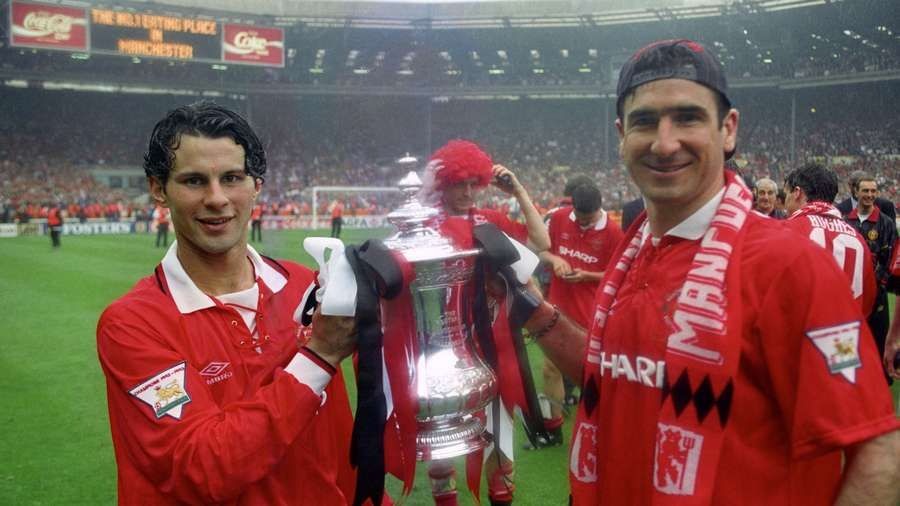
Giggs signed his pro contract at 17 back in 1990, before the commencement of what we know today as the Premier League in 1992.
His first competitive encounter that would signal the emergence of a young superstar was in 1991, a cold evening in Manchester, 2-0 down against Everton, Alex Ferguson brought him on. Although he did not change the outcome of the game, his swervy, breathtaking runs got everyone liking the young lad.
Giggs initially struggled to break into the first team with Lee Sharpe ahead of him in the pecking order, but by 1992, he had made a case for himself as being too good to be ignored. He would partake in winning United’s first Premier League trophy, the first of 13.
By 2002, he had become United’s longest serving player despite still being in his 20s after spending a decade winning multiple Premier League titles, including the 3-peat of 1999, 2000, 2001, and the famous Champions League final win against Bayern Munich in 1999.
Persistent hamstring issues also became a challenge, and there were serious concerns that injuries, plus a little internal dressing room crisis, would lead to the eventual departure of Giggs. But by 2005, the injuries had gone, and his performance had improved.
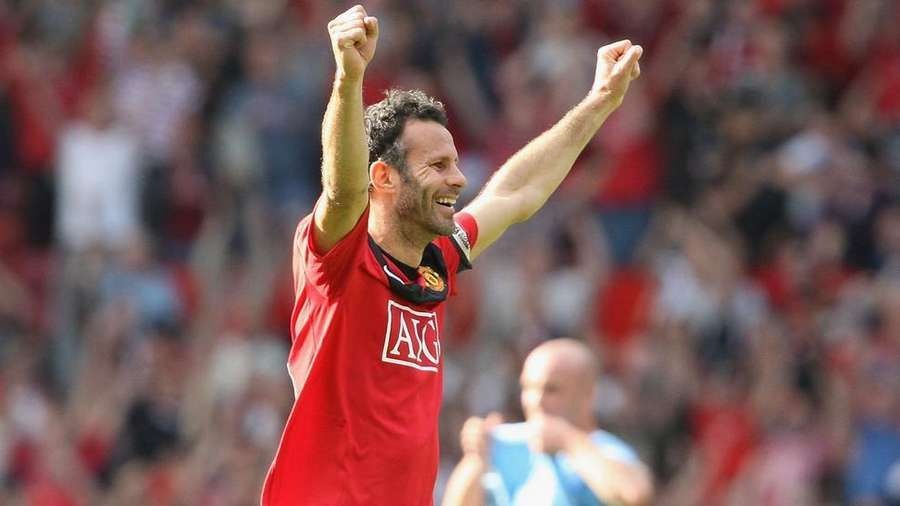
Manchester United Chief David Gill signed Ryan Giggs to a two-year extension in 2005, breaking his policy against signing players over 30. This decision and show of faith paid off as Giggs remained the team’s most senior player.
Across 23 seasons, he set the record for the most assists in Premier League history (162), made the most appearances for Manchester United, became the only player to compete in 22 consecutive Premier League seasons, and set the record for being the first player to score 100 goals for Manchester United.
Post-retirement, the talented Welshman coached his national team in 2018 and qualified them for Euro 2020. However, he could not manage the team during the tournament due to ongoing investigations following assault allegations.
4. Carles Puyol
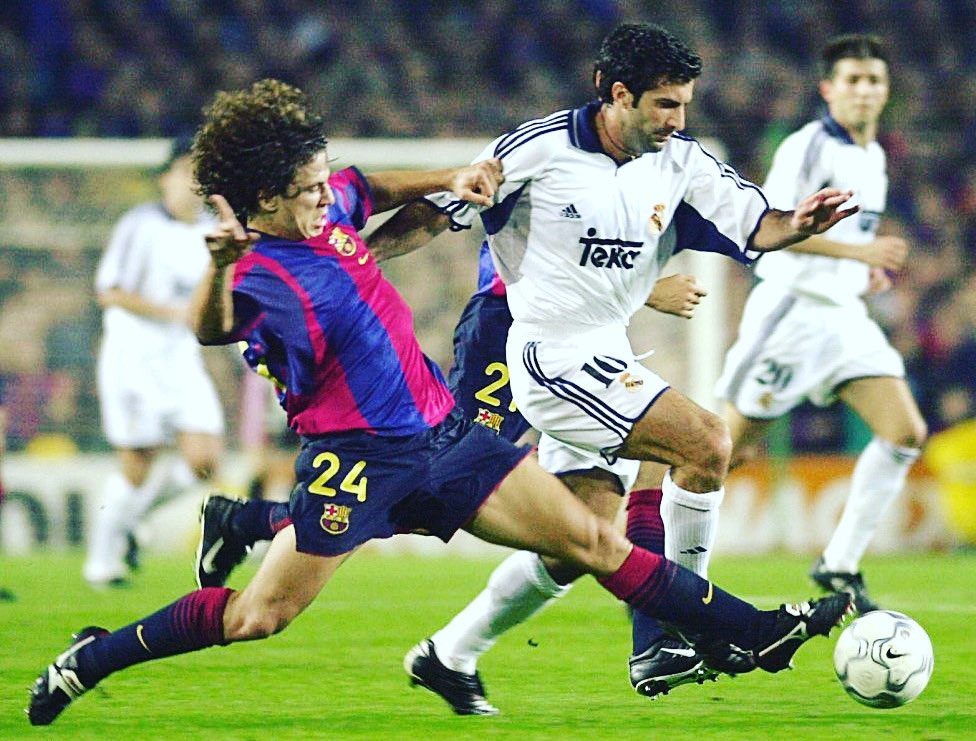
Barcelona’s free-flowing football, anchored by midfield legends Iniesta and Xavi, inspired a new generation of fans who basked in the tiki-taka ideology. Yet, behind that technical elegance stood one man: Carles Puyol.
While he did not play the prettiest football on the field, Carles Puyol efficiently managed a star-studded Barcelona side with his leadership. Though he spent the majority of his career as a center-back, he could also hold the fort at right-back, earning the nickname “The Shark” from fans and teammates alike.
Having spent his entire youth career at the famous La Masia, Puyol initially struggled to break into the first team due to the presence of Frank de Boer and Michael Reiziger.
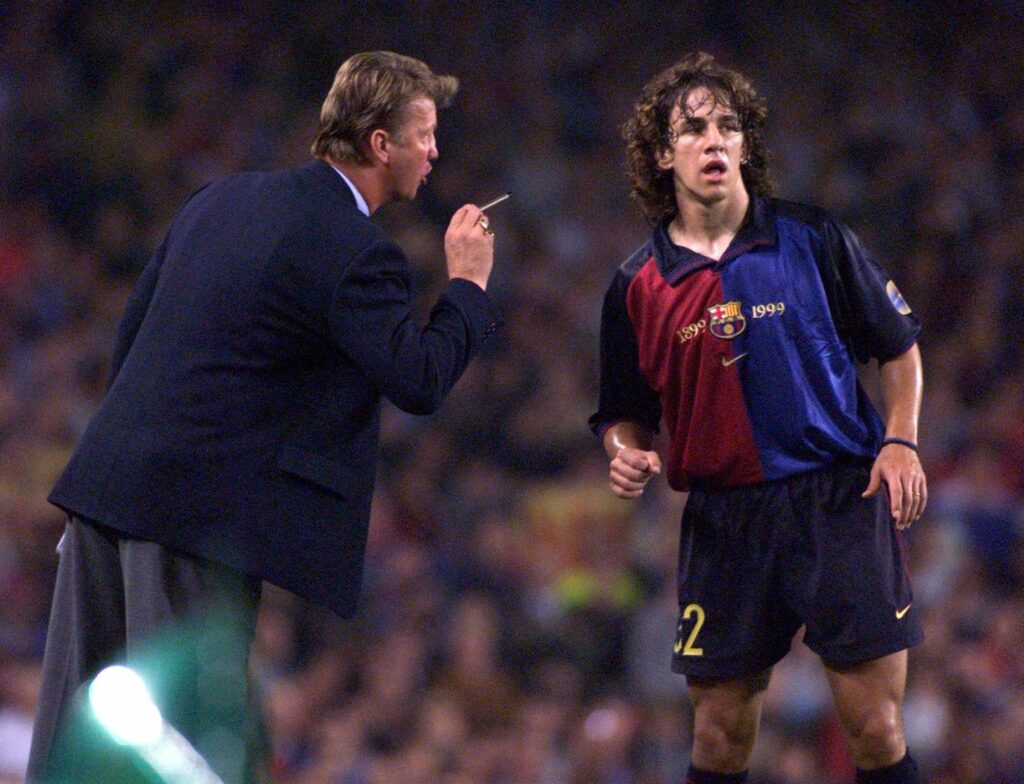
Puyol earned a promotion to the senior team from manager Louis van Gaal in 1999. After moving to center-back, he became a key part of the squad. When Luis Enrique departed in 2004, Puyol was named club captain.
Under his captaincy, Barcelona achieved an unprecedented haul of silverware, including three Champions League trophies, seven La Liga titles, and two Copa del Rey trophies, with the 2009 season marking a historic treble.
After more than 500 appearances, he announced his retirement in 2014 with 21 trophies to his name. He immediately transitioned into a role as assistant to the Director of Football at Barcelona, though he later resigned. Puyol was offered the position of Barcelona Sporting Director in 2019, which he ultimately rejected. Now enjoying his retirement, he continues to make occasional public appearances.
5. Gary Neville
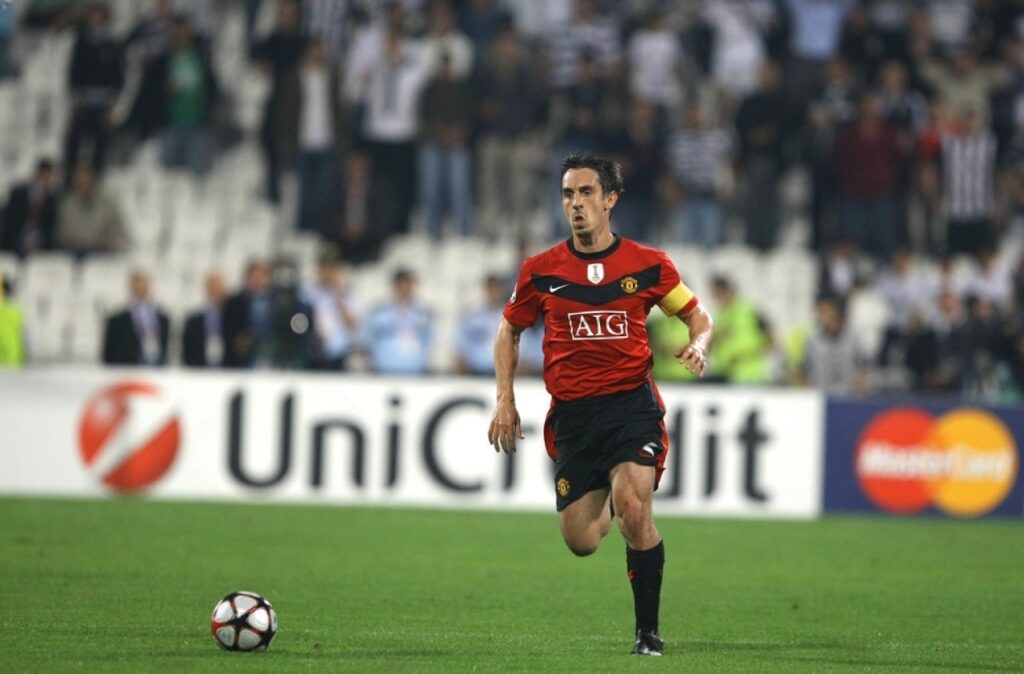
As part of the illustrious 1992 class, Gary Neville made his debut for Manchester United in 1992 against Torpedo Moscow, but was a substitute choice. Then, in the 1994/1995 season, following the injury to Paul Parker, he became the starting right back.
He formed a terrific partnership with David Beckham on Manchester United’s right-hand side during the successful era of the late 1990’s and early 2000s. Roy Keane’s departure in 2005 saw Ferguson appoint him as the captain.
Neville suffered injuries that kept him out for lengthy periods, the longest being between March 2007 and January 2008.
His appearances dwindled as Patrice Evra emerged as a solid replacement. Neville signed a contract extension in 2010, yet he knew his football days were numbered.
In February 2011, Gary Neville announced his retirement from football after 20 years at Manchester United, his testimonial came against Juventus at the end of the season in May that same year.
Neville had a brief coaching career, joining Roy Hodgson as an assistant on the England National team in 2012, a position he held till the end of the qualifying period for the Euros 2016.
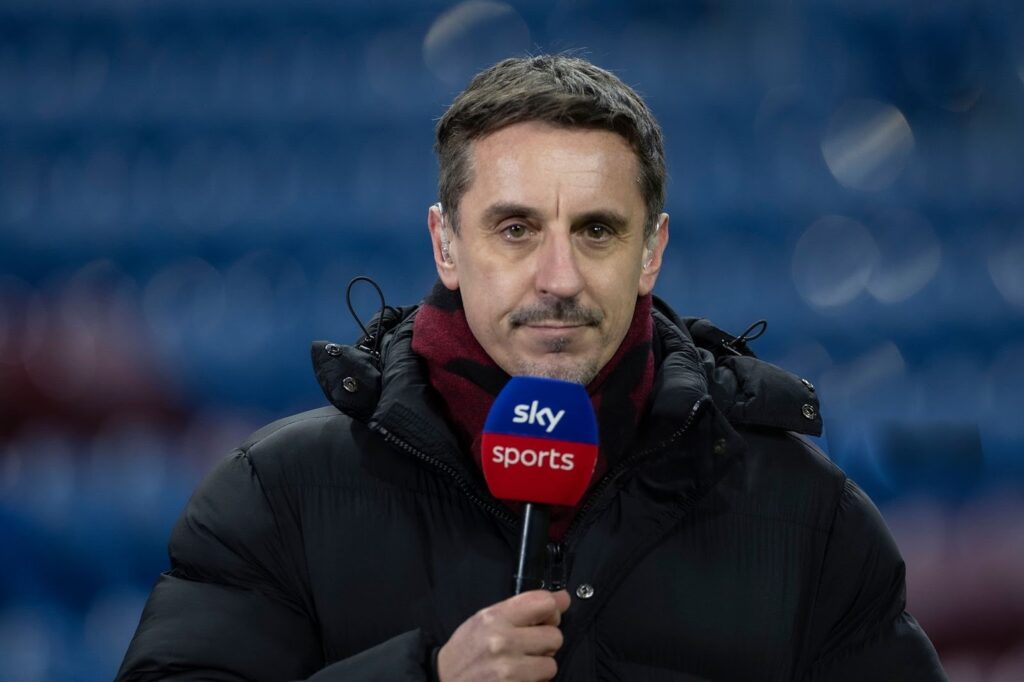
But that was not the only time he got into coaching while serving as an assistant; he got hired as head coach of La Liga side Valencia in December 2015, but was sacked 4 months later.
He returned to punditry, where he has created a successful career.
6. Franco Baresi
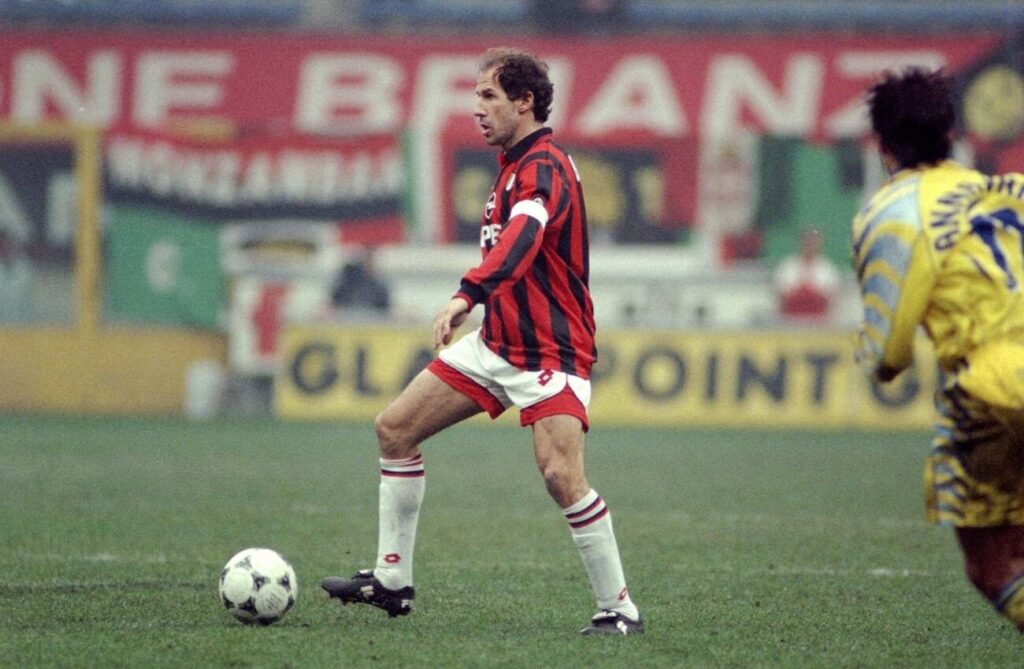
The perfect test for loyalty is not when the going is good, but when nothing seems to work. Well, Baresi passed the test in flying colours.
Franco Baresi spent 20 years at AC Milan, with 15 of those years as captain.
In his early years, he was rejected by city rivals Inter Milan
Franco Baresi made his debut at the age of 17 during the 1977/1978 season. His first two years were successful.
During that period, AC Milan won its 10th Serie A title in 1979, but a big problem was looming. A year later, in 1980, investigations revealed that Milan had gotten themselves involved in a match-fixing scandal, and the team was slapped with relegation as their punishment.
While players left, Baresi elected to stay at the club, becoming its captain at the age of 22 in 1982. He guided the club back to Serie A amidst struggles during their return, and he held the team.
By the late 80’s, Sacchi became the coach of AC Milan, leading the club to one of its most successful eras. Baresi led one of the greatest defensive units in the history of football, which earned him a runner-up finish at the 1989 Ballon d’Or, only behind teammate Marco Van Basten.
Franco Baresi retired in 1996 after winning 6 Serie A titles. AC Milan retired the number 6 shirt he wore throughout his career as a respect and perfect farewell to a player who gave everything to the club in good and bad.
7. Tony Adams
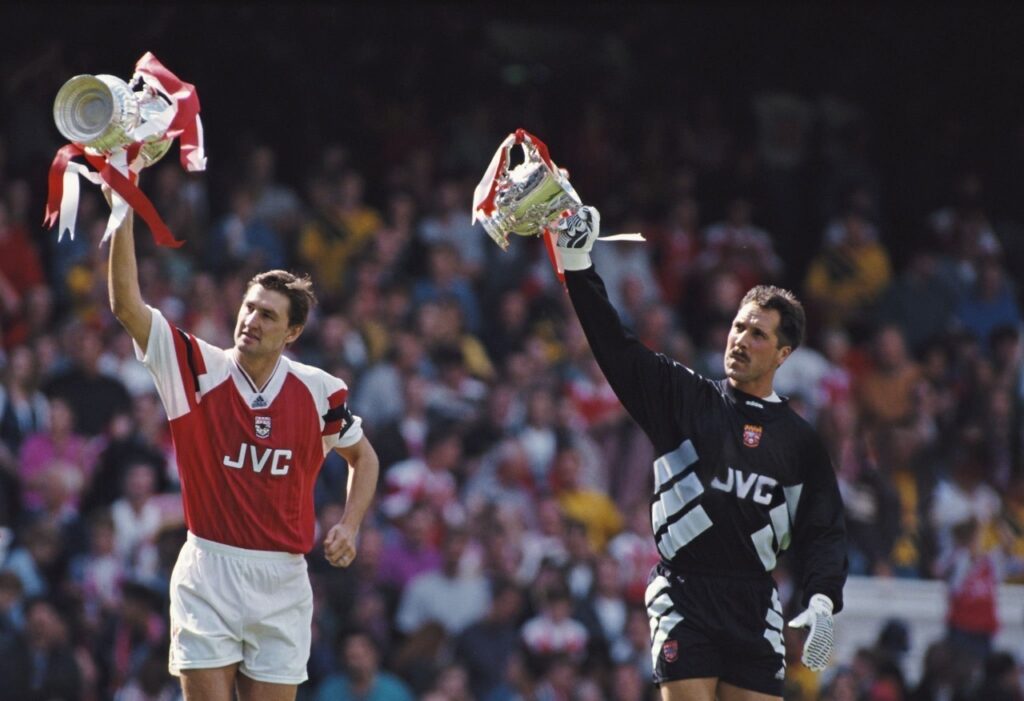
The history books remember Tony Adams for helping Arsenal win the league at Anfield in 1989, but he was also part of the “famous back four” in the 1990s.
Tony Adams, joined the club as a young schoolboy at the age of 17 and became captain at 21. George Graham assembled an all-English backline featuring Adams, Lee Dixon, Nigel Winterburn, and Steve Bould. Adams became the first captain to win the League Cup and FA Cup in the same season.
Arsene Wenger became Arsenal manager in 1996, the same year Adams was struggling with off-the-field issues, but the French manager did not write him off.
With Adams still wearing the armband, Wenger built the defensive unit around him. Tony Adams repaid that faith by guiding Arsenal to two Premier League titles, in 1998 and 2002. Following that final triumph, he hung up his boots to end a stellar career.
Tony Adams remains one of five people with a statue outside the Emirates Stadium, which was erected to celebrate the club’s 125th anniversary in 2011; the others are Thierry Henry, Dennis Bergkamp, Arsene Wenger, and Herbert Chapman.
Adams established the Sporting Chance Clinic in 2000 to provide treatment, and rehabilitation to sportsmen and women suffering from alcoholism and gambling.
8. Jamie Carragher
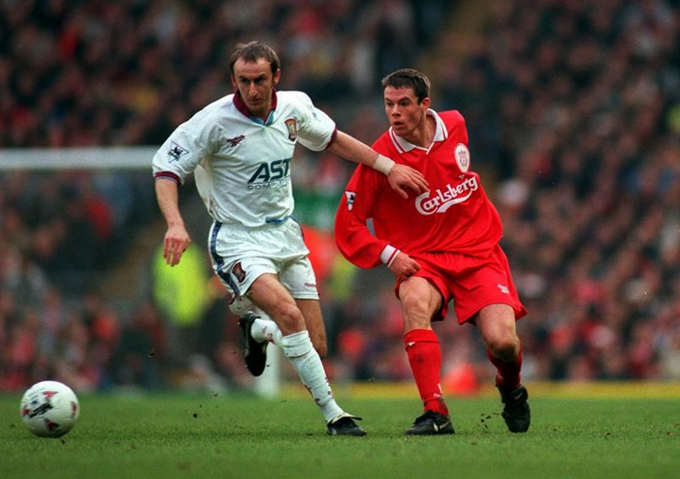
Born in Merseyside, England, Carragher grew up supporting Everton. That changed when he joined the Liverpool academy in 1988 at age 11. He broke into the first team in 1997. Initially, he served as a utility player covering center-back, right-back, and defensive midfield.
He was later restricted to right-back after scoring two own goals against Manchester United in 1999. His place in the team became consistent by 2000. However, a serious injury in 2002 kept him out of England’s World Cup squad.
This injury led the club to sign Steve Finnan as cover. That signing threatened Carragher’s future at Liverpool. However, Rafa Benitez’s appointment in 2004 transformed him into a composed center-back. This shift led to his most successful years.
In 2005, Carragher took part in the “Miracle of Istanbul.” Jamie reached another final in 2007 but lost. He announced his retirement in 2013 after playing 737 matches for the Reds. He won every club-level trophy except for a Premier League title.
9. Paul Scholes
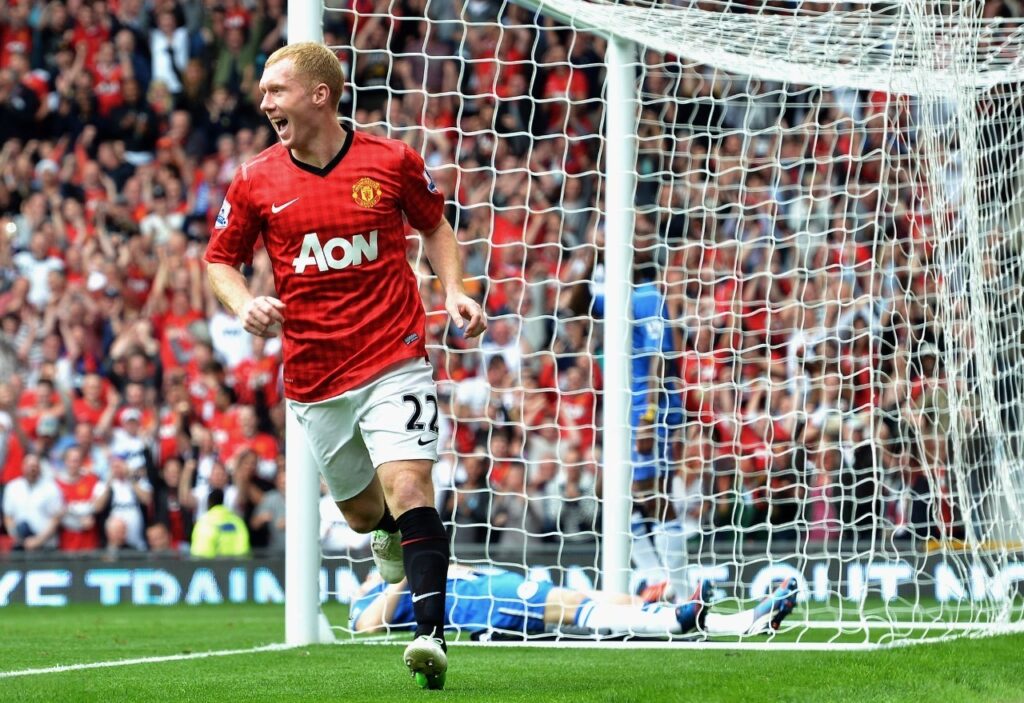
Known for long-range shots and a stern countenance, Paul Scholes became a formidable player for Sir Alex Ferguson. He scored over 150 goals in 700 appearances. This represents the third most appearances in the club’s history.
Scholes belonged to the famous Class of ‘92. However, he only secured his senior breakthrough during the 1994/1995 season. Eric Cantona’s suspension and Mark Hughes’ sale forced Scholes into a two-man forward line playing as a strike partner to Andy Cole. He scored 14 goals from that position.
The veteran English midfielder became a mainstay in the team when Roy Keane sustained an injury in late 1997 and established himself as an important player.
Sir Alex Ferguson wanted to maximize Scholes’ skillset and he bought Juan Veron in 2001. Ferguson changed the formation to 4-4-1-1. He deployed Scholes as a supporting striker.
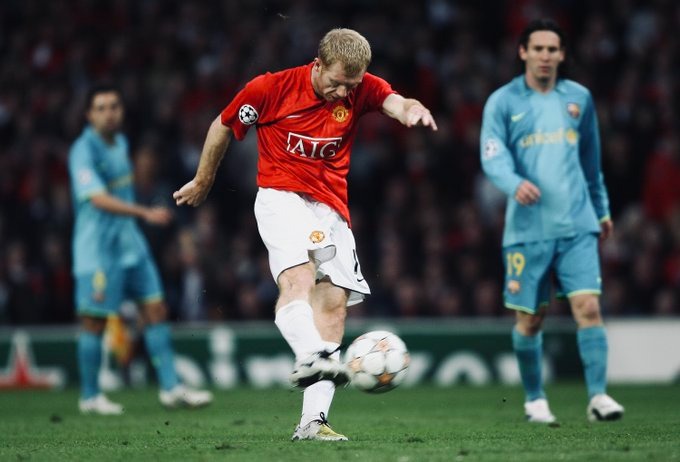
Across 20 seasons in Manchester United colours, Scholes won 11 Premier League titles and two Champions League titles. He also secured multiple FA Cups and Football League Cups.
The English national team did not enjoy his best years. Scholes retired from international football in 2004 citing personal time with family as a primary priority.
After retiring from football, he invested in Salford City and briefly coached the team. Former teammates Beckham and Neville bought the club in 2025 through a consortium.
Scholes also moonlights as a sports analyst and commentator for various platforms. These include BT Sports and ITV. He recently took a step back from punditry to accommodate the demands of fatherhood.
10. Lev Yashin
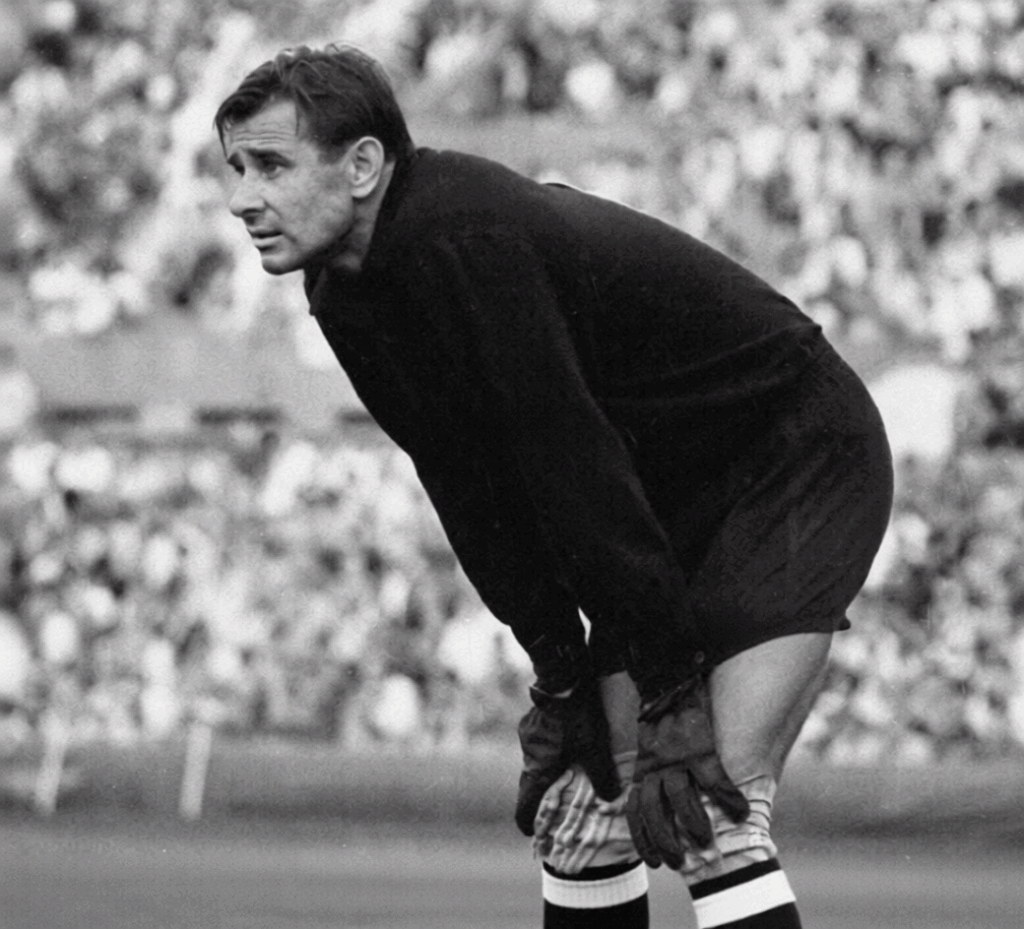
One of the awards given during the Ballon d’Or ceremony is the Lev Yashin trophy for best goalkeeper. So yes, the name of the award is not an abstract one; it belongs to a man who redefined goalkeeping.
In 1958, during the World Cup, Yashin’s vocal leadership and goalkeeping prowess made the Soviet Union advance to the quarter finals. Although they lost to eventual winners Brazil 2-0, Yashin’s heroics made the scoreline more respectable.
At the club level, he played for Dynamo Moscow from 1950 to 1970. He became the first and only goalkeeper to win the prestigious Ballon d’Or in 1963 with 10 nominations in the course of his 20-year career, with 6 of those nominations coming consecutively from 1956 to 1961.
Lev Yashin passed away in 1990 at the age of 60 years after a battle with stomach cancer. Still, his legacy continues to live on with the awards he won and the public edifices and monuments named after him, the most notable being Dynamo Moscow’s stadium and the 100 ruble bank note commemorating the 2018 World Cup.
Who wrote this?

Francis Muojindu is a law graduate, journalist, and writer who is always seeking to amplify African Voices in sports.
He primarily covers football, basketball, and athletics with good knowledge of other sports.
When Francis is not bantering with friends, he is on the search for the latest news flying across the globe.
- Francis Muojindu
- Francis Muojindu

- Francis Muojindu
- Francis Muojindu

- Francis Muojindu
- Francis Muojindu

- Francis Muojindu

- Francis Muojindu
- Francis Muojindu

- Francis Muojindu