




“Giving up is something a Lauda doesn’t do.”
One of the most recognisable faces across all generations of motorsports. An Austrian legend who commanded the respect of drivers and team principals for half a century.
Despite the cruel hand fate had dealt him, Niki Lauda rose like a phoenix from the ashes of a devastating crash to chart a course that would etch his name in the hallowed halls of Formula 1.
Niki Lauda’s career spanned two decades, including stints with two of F1’s most iconic teams, Ferrari and McLaren. His subsequent return to motorsport came with a lot of success, this time from the pit wall, rather than the cockpit.
Join me as I relive the legacy of Niki Lauda and his inspirational resurgence from the jaws of death to Formula 1 supremacy.
Who is Niki Lauda?
Andreas Nikolaus Lauda, famously known as Niki Lauda, was born on February 22, 1949, in Vienna, Austria. He hailed from a wealthy paper manufacturing family.
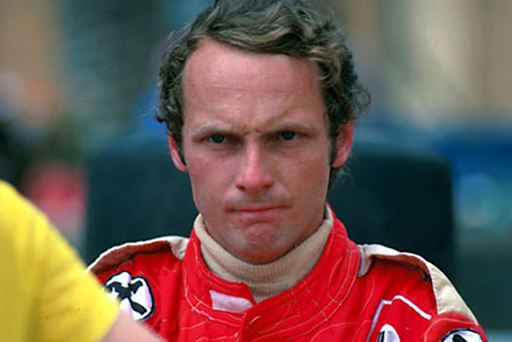
However, his innate passion for racing, which he discovered at a young age while racing karts, was undeniable. Even though his family disapproved of his dream to become a racecar driver, Lauda’s determination and rebellious spirit led him to defy their wishes and pursue his racing career relentlessly.

“I fought my grandfather like you wouldn’t believe. I went my own way and decided to become a racing driver. I don’t think I would ever have fought as hard as I did if my grandfather had been a reasonable person.”
Niki Lauda Goes Into Racing
Lauda quickly proved his talent in organized racing in a Mini and swiftly climbed up the racing ranks. In 1971, he secured a spot in the March Racing team as a driver, thanks to a £30,000 bank loan secured against a life insurance policy.
The pivotal moment in young Niki Lauda’s career came in 1973 when he joined the BRM team. That season, he finished in an impressive fifth place, with a best finish of second place at the Spanish Grand Prix. He ended the season as the Formula 1 Rookie of the Year.
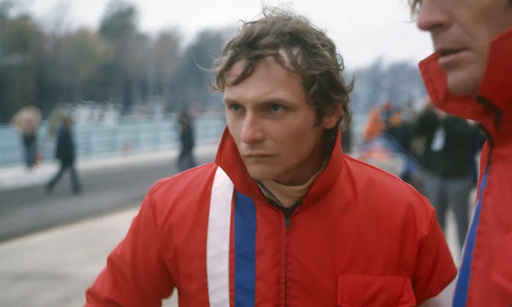
The following year, he won the Drivers’ Championship with BRM, becoming the youngest driver to win the title.
Lauda’s skills caught the attention of Enzo Ferrari, the legendary founder of the Scuderia Ferrari racing team. His move to Ferrari was a coup for the team. He was paired with Clay Regazzoni, and the two drivers formed a formidable partnership.
Lauda would hit the ground running by winning the world championship in 1975.
Rivalry with James Hunt
One of the most unforgettable chapters in Niki Lauda’s illustrious career was his intense rivalry with the British driver, James ‘The Shunt’ Hunt.
During the thrilling 1976 F1 season, fans worldwide were captivated by the gripping battle between Niki Lauda and James Hunt for the championship title. The two drivers couldn’t have been more different in their personalities and driving styles, adding a compelling dimension to the narrative.
Lauda was a serious and dedicated driver, while Hunt was adored for his intuitive and aggressive driving. He was more of an eccentric personality who enjoyed the social life outside racing.
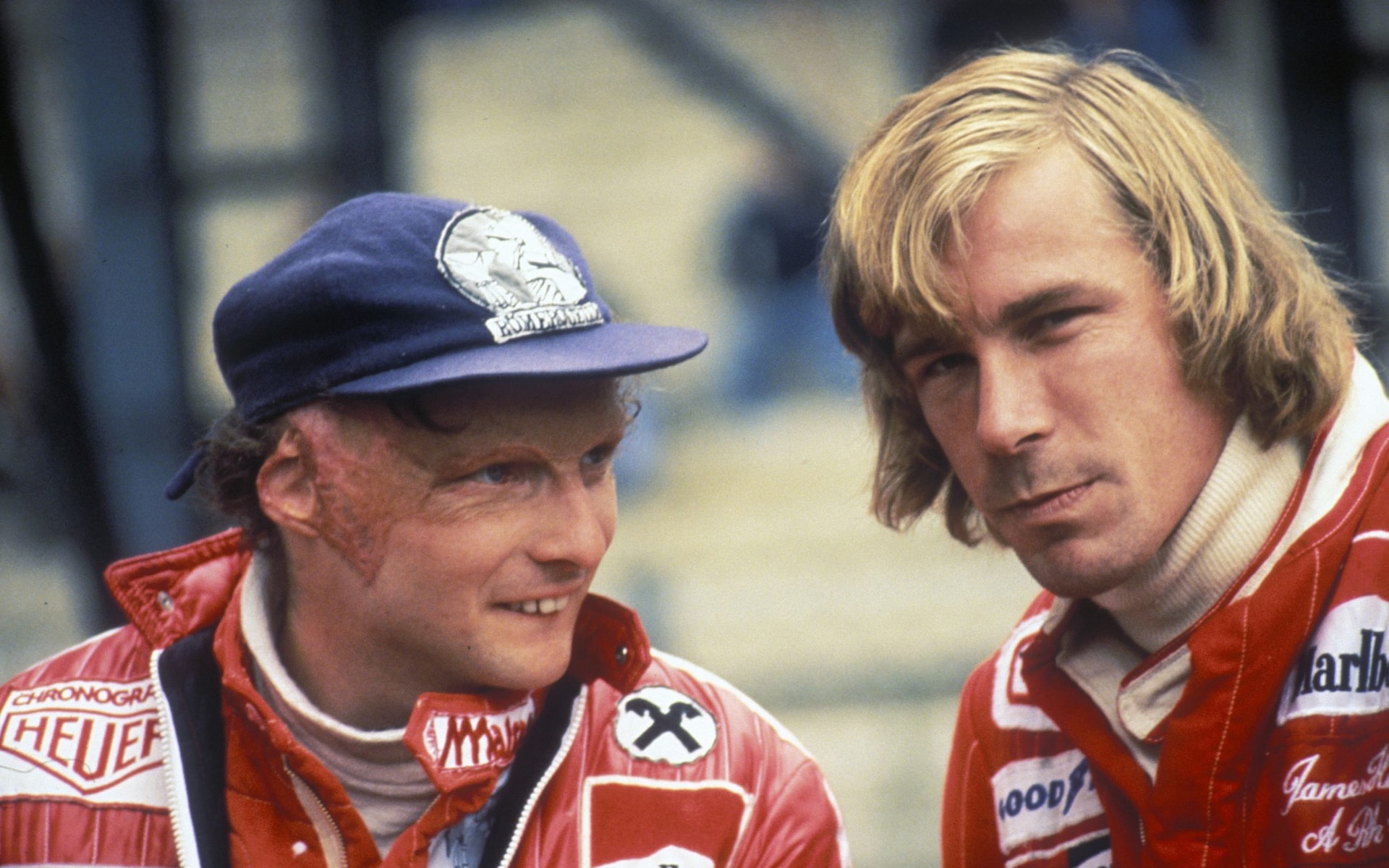
Interestingly, despite their intense on-track battles, Lauda and Hunt shared a unique camaraderie off the track. Lauda, in his book “My Years with Ferrari,” revealed that they occasionally stayed at the same hotel, and on one occasion, they even flew together to the 1976 Japanese Grand Prix on race day.
Throughout the 1976 F1 season, both drivers engaged in a thrilling head-to-head contest for the championship. Lauda secured three race victories, while Hunt managed to clinch four. As fate would have it, the championship came down to the climactic final race of the season, the Japanese Grand Prix.
Heading into the race, Lauda held the lead in the championship standings. However, Hunt delivered an outstanding performance and emerged victorious in the race, ultimately claiming the championship title dramatically.
The Crash Heard Around the World
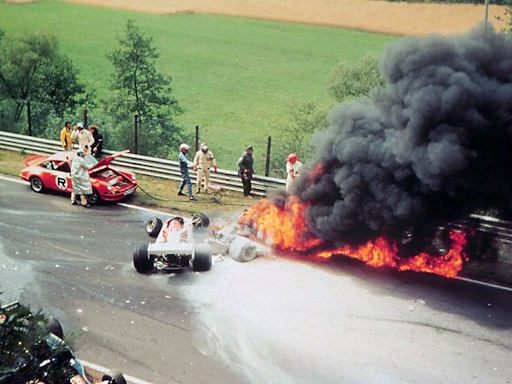
On August 1, 1976, tragedy struck during the German Grand Prix at the Nürburgring, a notoriously dangerous track.
Days before the race, Niki Lauda asked other drivers competing at the circuit to boycott the 1976 German Grand Prix due to safety concerns. The circuit was 23 kilometers long, and the organizers needed more resources to manage it properly. There were not enough fire marshals, fire and safety equipment, or safety vehicles.
Formula 1 was a dangerous sport then, and three drivers who were present that day later died in race accidents. However, most drivers voted against the boycott, and the race went on as planned.
Lauda was the fastest driver on the Nürburgring circuit, having completed the course in under 7 minutes driving the Ferrari 312T. He was also leading the 1976 season rankings with four victories and had finished second in two of the six races leading up to Nürburgring. Unfortunately, Lauda’s fears came true when he crashed shortly after the race started.
What Caused the Crash?
Before the race, the rain had left the tracks wet, but as the event commenced, the weather took a turn for the better, causing the track to dry up slowly. Most drivers initially opted for wet tires but promptly made pit stops to switch tires as the weather conditions changed.

“I always knew about the risks I was taking. Every year, someone you knew was killed racing. You had to ask yourself, do you enjoy driving these cars so much that you’re prepared to take that risk?”
After completing the first lap, Lauda, too, decided to change his tires in response to the evolving track. Determined to regain lost time during the pit stop, he pushed harder in his driving.
Unfortunately, it was on the treacherous section between the fast left curve and the Bergwerk right curve that Lauda misjudged his recovery from a sharp right turn. This error resulted in a violent collision with the track barriers.
The impact caused Lauda’s car to burst into flames, and was further compounded by a collision with driver Brett Lunger’s vehicle. The force of the collision sent Lauda’s car hurtling back onto the track, where yet another car struck it.
But the ordeal was far from over for Lauda as he was trapped in the burning wreckage for an agonizingly long minute. He continued to inhale toxic fumes in full view of bewildered spectators.
Despite the terrifying circumstances, the quick actions of fellow drivers, including Arturo Merzario, proved instrumental in saving Lauda’s life. Arturo rushed to assist and pulled Lauda from the wreckage, displaying remarkable bravery amidst the flames.
Ultimately, Arturo Merzario’s heroic efforts saved the Austrian driver from inevitable disaster, sparing the sport from an unimaginable tragedy.
What Happened to Niki Lauda after the Crash?
Lauda suffered burns to his head, hands, and hair, and he also inhaled toxic fumes that affected his lungs and blood. He was immediately airlifted to the University Hospital of Ludwigshafen and placed in a medically induced coma.
The uncertainty surrounding Lauda’s survival loomed large. But it was not game over for the champ; Niki Lauda was always a fighter.

“People always think that the worst time of my life must have been after the German Grand Prix crash in 1976, which put me in a coma and left me with severe burns. But it wasn’t.”
Astonishingly, just six weeks after the horrific crash, he made an unprecedented comeback at the Italian Grand Prix in Monza. Fans and fellow drivers were in awe and cheered his return.
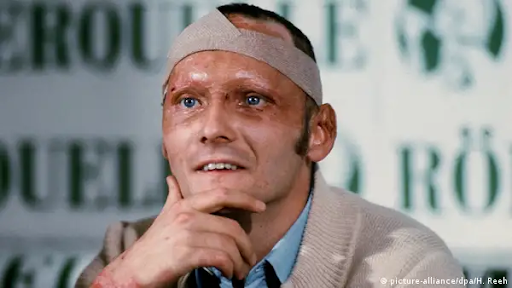
His thirst for victory was so great that he pulled up to the race in blood-soaked bandages and a specialized helmet due to the extensive scarring he had suffered.
The season’s final race, the Japanese Grand Prix, became the battleground for a thrilling showdown between Lauda and Hunt. With a slim three-point lead over Hunt, Lauda’s absence from two earlier races due to the accident added an element of suspense.
The Japanese Grand Prix attracted widespread attention, showcasing the rising popularity of Formula 1. However, heavy rain wreaked havoc, and the race began under lousy weather conditions to accommodate television schedules.
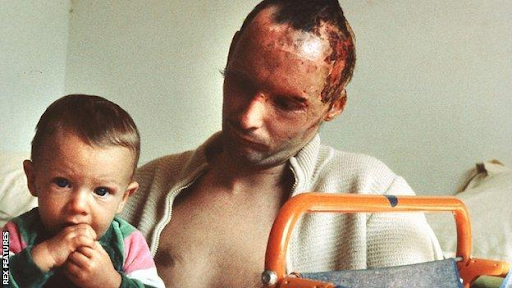
Despite his desire for victory, Lauda did not want to risk a repeat of his travails in Germany—he decided to withdraw from the race, straining his already tumultuous relationship with Ferrari, who had replaced him with driver Carlos Reutemann during his hospitalization, a decision that left a bitter taste in Niki’s mouth.
How the Crash Changed F1
Lauda’s accident in 1976 left a mark on the F1 season, influencing its thrilling conclusion and adding to its historical significance.
The sport’s demand for live television coverage surged, and its popularity spread internationally. The crash altered the trajectory of that season, enabling his rival Hunt to secure the 1976 championship by a mere point.

But Lauda’s story did not end there. He made a powerful statement the following season by securing his second championship title.
Overall, the negative publicity surrounding the incident forced F1 to make strides to improve driver safety. Unfortunately, it only takes a near-tragedy or a colossal loss for these issues to come to the fore in motor racing.
In Niki Lauda’s case, he was lucky to walk away with only burns.
The Two Retirements
Niki Lauda’s first retirement came in 1979, as he chose to focus on his family and business ventures.
However, the allure of the racetrack proved too firm, and Lauda joined McLaren in 1982 after a two-year hiatus from Formula 1. He paired up with Alain Prost, and they formed a formidable partnership. Lauda clinched the championship in 1984 and finished second to Prost in 1985.
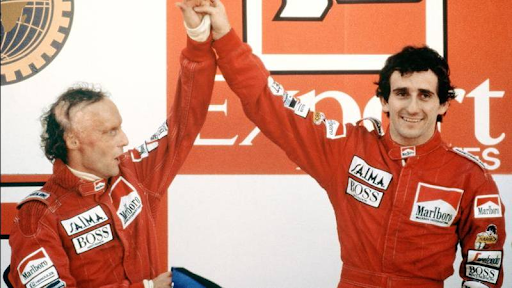
Lauda’s second retirement came in 1985 after his third and final World Championship title.
Following his second retirement, he dedicated himself to various managerial roles and significantly contributed to the world of Formula 1.
Niki Lauda’s Post-Racing Career
After retiring from Formula 1 racing in 1985, Niki Lauda remained involved in motorsports in many ways. He served as a consultant for Scuderia Ferrari from 1993 to 1995.
He was the team manager of the Jaguar F1 racing team from 2001 to 2002. Lauda’s expertise and insights guided teams to success, reflecting his constant commitment to reproducing success.
In 1993, he became an inductee in the International Motorsports Hall of Fame.
Niki Lauda also served as a respected pundit for German TV during Grand Prix weekends. He held the position of non-executive chairman of Mercedes-AMG Petronas Motorsport from 2012 until he died in 2019.
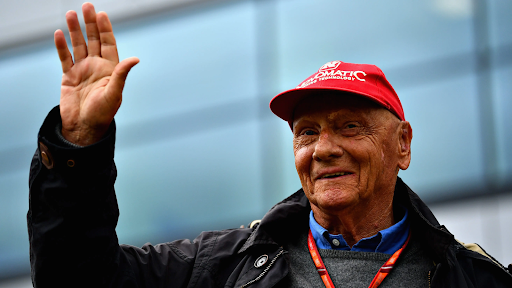
In addition to his work in motorsport, Lauda was an intelligent businessman; he founded Lauda Air, an airline he ran until 2002.

“When I was in motor racing, I had taken the decision to risk my life. But when you run an airline, and more than 200 people want to go from A to B – and they don’t arrive – that’s a different responsibility.”
The year 2006 will herald the publication of his famous autobiography, “To Hell and Back.” The French government in 2013 awarded him the Legion d’Honneur.
His fierce competition with James Hunt on the Formula 1 tracks remains a glorified topic of discussion even today amongst motorsports lovers. This iconic rivalry was the plot of the award-winning Hollywood film Rush 2013
How Many World Championships did Niki Lauda Win?
Niki Lauda is one of only two drivers to have won the Formula 1 Drivers’ Championship with Ferrari and McLaren. He is also the only driver to have won the championship with three different teams, further cementing his place in the pantheon of racing greats.
The Nürburgring incident highlighted the need for enhanced safety standards in Formula 1 and spurred Niki Lauda’s advocacy for driver protection throughout his racing career.
Lauda’s calls led to stricter regulations to protect drivers and prevent similar accidents in the future. He played a role in introducing safety measures like the HANS device and the crash helmet, which have since become vital components of driver protection.
Beyond his racing accomplishments, Lauda’s legacy continues to inspire sports fans worldwide. Defying grim odds to survive a near-fatal crash and returning to the race tracks solidified his status as a legend in the sport.
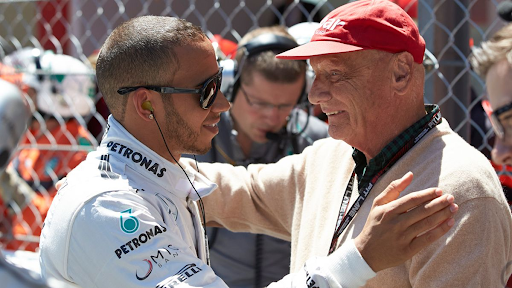
The Austrian’s contributions to motorsports extend beyond his driving career. As a figurehead, he left an indelible mark on Formula 1 and will forever be an icon of the sport.
Icons like Lewis Hamilton and Sebastian Vettel point to Niki Lauda as a source of inspiration and close confidant in matters related to racing.
Niki Lauda was a gifted driver, a successful businessman, and a true sports hero. His legacy remains in the annals of Formula 1 history. He will forever remind us that true champions are defined by their victories and their resilience in the face of life’s most daunting challenges.
Who wrote this?

Ugochukwu is a sports enthusiast with an undying love for underdog stories.

Ebuka is a tech enthusiast, writer, and eSports guru currently working with a team of daring Africans to revolutionize the writing scene. He enjoys answering questions, brainstorming new ideas, and discussing the future of sports and esports.
-
Ebuka Agbasi

-
Ebuka Agbasi

-
Ebuka Agbasi

-
Ebuka Agbasi

-
Ebuka Agbasi

-
Ebuka Agbasi
-
Ebuka Agbasi
-
Ebuka Agbasi

-
Ebuka Agbasi
-
Ebuka Agbasi

-
Ebuka Agbasi

-
Ebuka Agbasi

-
Ebuka Agbasi

-
Ebuka Agbasi