



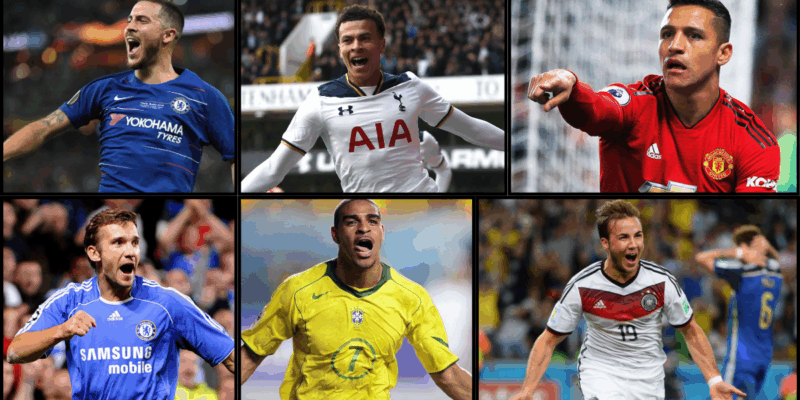
Historically, football has had moments of sheer brilliance from great players who performed at outstanding levels.
Lionel Messi, Cristiano Ronaldo, and Zinedine Zidane are the quintessence of such players, with their excellence, consistency, and longevity placing the aforementioned names at the top echelon of great players.
However, there are great players who, despite their excellence, took a different path that ultimately changed the trajectories of their careers.
These players displayed electrifying performances and seemed destined to dominate football for several years.
Injuries, loss of form, poor career decisions, or changes in environment hindered these players from reaching their projected heights.
This retrospectively changed the course of their respective careers from an all-time great to a tragic story of “what could have been.”
We highlight the top ten footballers who reached world-class levels, only to fade far sooner than expected, after showing great promise and legendary potential.
10. Adriano
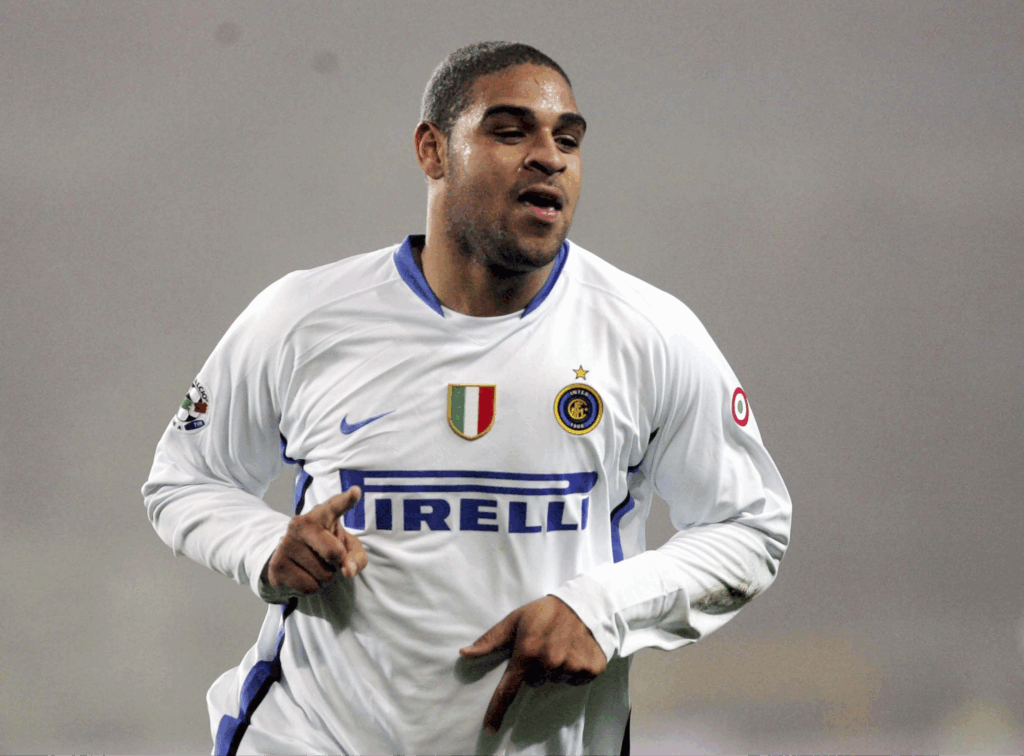
At the turn of the millennium, Adriano Leite Ribeiro embodied the ideal depiction of the modern striker.
He was built like a heavyweight boxer and possessed that joga bonito feel to his game that allowed him to seamlessly blend raw power and technical flair.
During his peak at Inter Milan, Adriano played at a frightening level, earning the moniker “L’Imperatore“—The Emperor.
His thunderous left foot generated so much power that he could shoot from anywhere within the opposition’s half and had a decent chance of scoring from within 40 yards of the opposition’s goal.
Between 2004 and 2005, Adriano was officially recognized as one of the best players in the world by magazines and sports media outlets, finishing in the top ten of the Ballon d’Or voting twice.
He also led Brazil to glory on multiple occasions, winning the Copa America in 2004 and then the Confederations Cup the following year.
Adriano appeared to be on a path to greatness before tragedy struck in August 2004. The sudden death of his father, Almir, took a huge toll on him and led to his descent.
He lost his predatory instinct due to a lifestyle defined by escapism and depression. There were recurring stories about heavy partying, missed training sessions, and a lack of discipline.
By 2006, Adriano’s goal tally had plummeted, and he offered little influence on the pitch, as he was neither scoring regularly nor contributing to the attack effectively.
Inter Milan sent him on loan to São Paulo in a last-ditch effort to help rekindle his spark, but their efforts proved futile.
In subsequent years, he bounced between clubs like Flamengo, AS Roma, Corinthians, Atletico Paranaense and Miami United FC.
After his brief stint with Miami United FC in 2016, he effectively stopped playing professional football.
9. Andriy Shevchenko
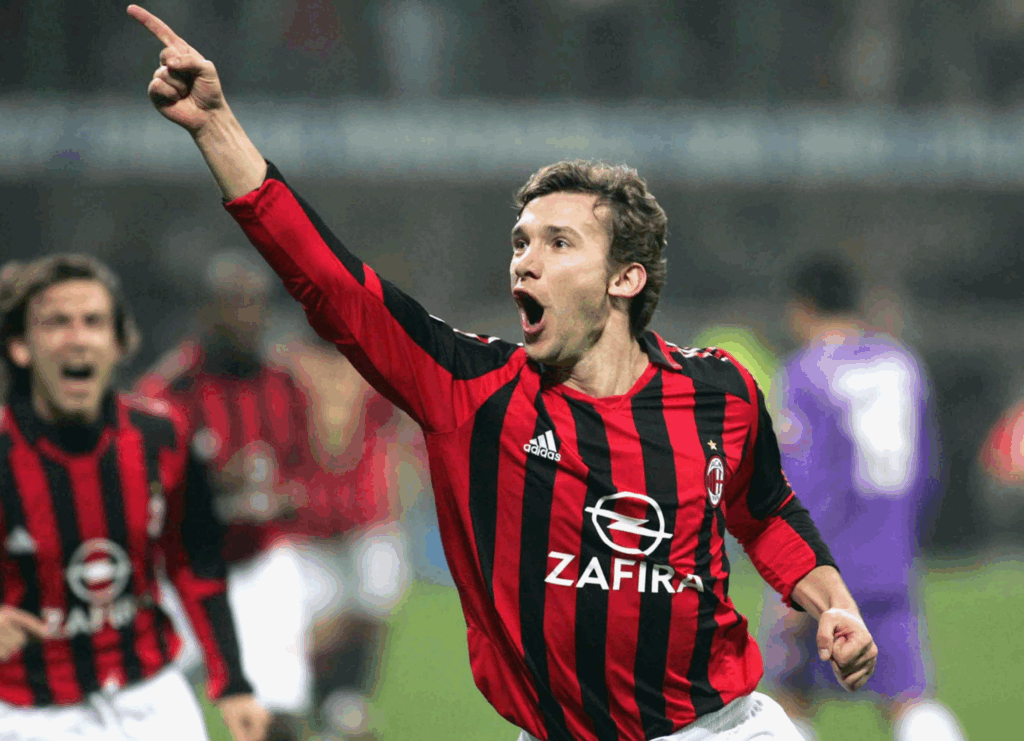
During the early 2000s, Andriy Shevchenko was one of the most lethal forwards in European football.
At AC Milan, the Ukrainian brilliantly combined a sprinter’s acceleration with clinical finishing, making him a nightmare to defend.
His crowning achievement came in 2004, when he secured the highly coveted Ballon d’Or after delivering the Champions League title to the Rossoneri.
By the time he left Milan, he was the club’s second-highest goalscorer of all time. The turning point for Shevchenko arrived after his record-breaking transfer to Chelsea in 2006.
The move was one of Roman Abramovich’s passionate quests to bring the best players in Europe to West London.
The unveiling of the Ukrainian brought much hype and projection. He was expected to conquer the EPL and become a vital figure in Chelsea’s fight for major silverware.
However, what followed was the start of a decline from his best form. His explosive agility vanished due to several minor injuries or a tactical mismatch in Mourinho’s system.
Shevchenko could no longer beat his marker, and his finishing became erratic. As he struggled to make a valuable impact on the pitch and battled with fitness issues, he eventually became a bench player that the team could no longer afford to keep.
In his two seasons at Stamford Bridge, he scored just nine league goals. This tally over two seasons at Chelsea was what the Ukrainian often amassed in one month, during his peak in Italy with AC Milan.
After failing to establish himself in England, Shevchenko returned to AC Milan on a season-long loan in a sentimental bid to reignite his career.
Unfortunately, he had fallen agonizingly far from his best, as he appeared physically struggling and far from his characteristic spark.
8. Mario Gotze
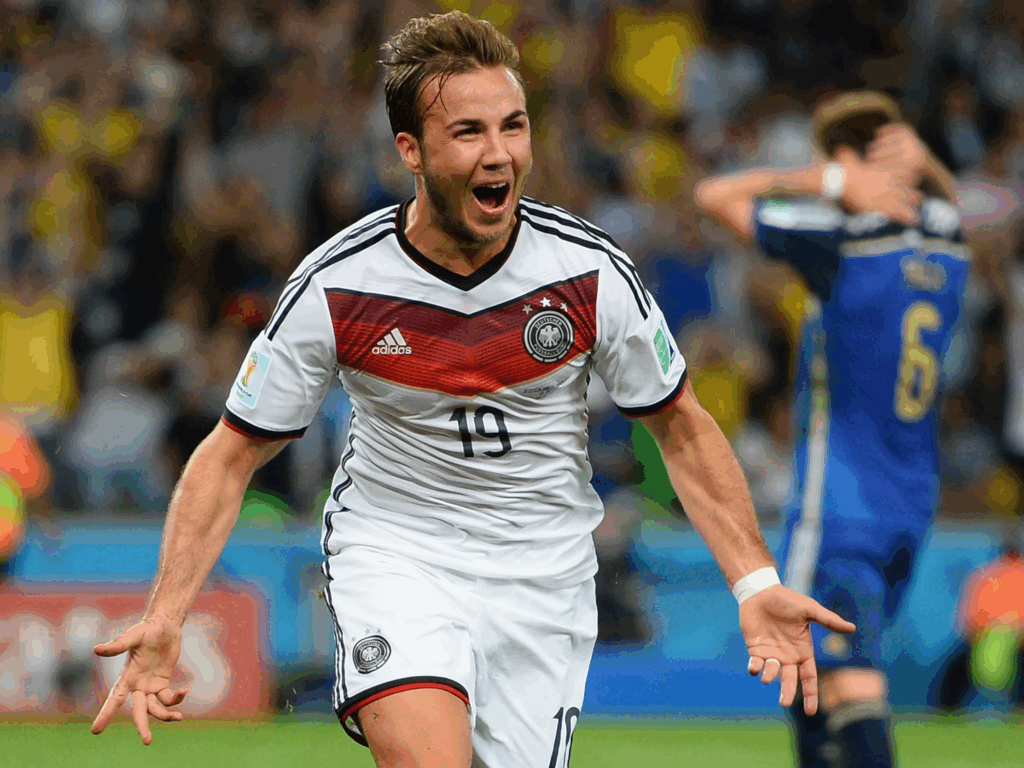
Very few players get compared to Lionel Messi after a few appearances in the professional scene. Mario Gotze was one of those players after he burst into the limelight in Germany.
At Dortmund, he emerged as a once-in-a-century talent, taking over games just like Lionel Messi in his months at Barcelona.
Gotze’s spatial awareness was remarkable and his poise in midfield was only seen in veterans. His move to Bayern Munich in 2013 was a step further in his journey to becoming a world-class player.
He breezed into life at the Allianz Arena and became the creative outlet for a side that had some of the elite players in Europe.
Gotze had the moment of his career with his national team at the 2014 World Cup final. In the 113th minute of the 2014 World Cup final, he calmly controlled a cross with his chest before volleying towards goal in a dramatic tie with Argentina.
He was just 22 years old at the time, and he seemed destined for more greatness after his heroic efforts for Germany.
Unfortunately, the pressure to live up to the hype of his World Cup exploits led to a drop in his performances at Bayern Munich.
Gotze struggled to maintain consistency and quickly became a sporadic figure in Pep Guardiola’s tactical plans.
The media and fans grew critical of his lack of fitness and his unmissable “chubby” appearance. He had flashes of brilliance, but his agility continued to falter during this period.
The final tale of his sudden regression came in early 2017, after he was diagnosed with myopathy.
This diagnosis explained the reason for his chronic muscle fatigue and weight gain, which hindered him from playing at his best at Bayern Munich and during his unsuccessful return to Dortmund.
7. Mesut Ozil
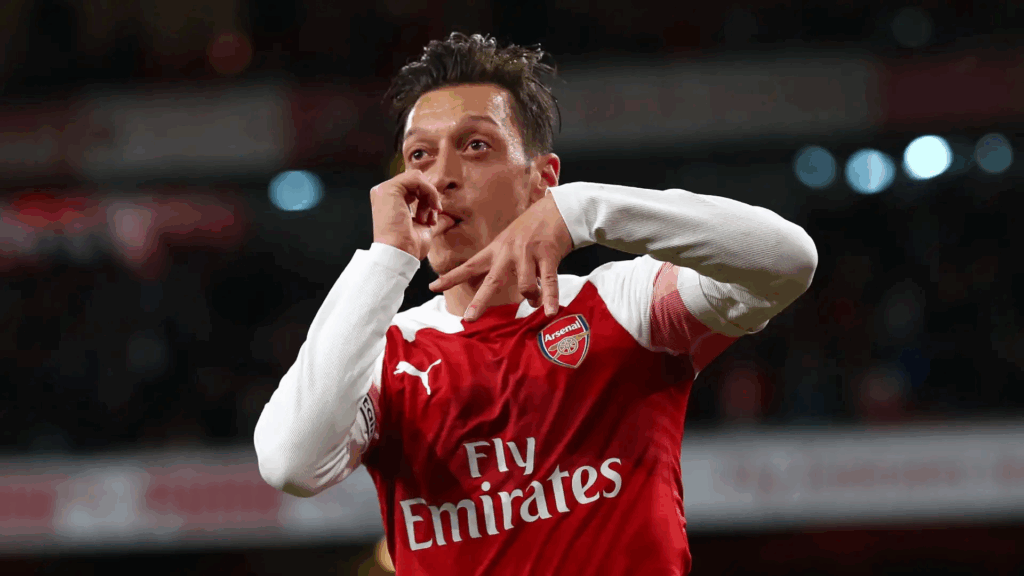
In the era where the “Classic No. 10” last thrived, Mesut Ozil operated as the game’s premier architect.
During his stint at Real Madrid, he was the primary engine that created chances for Cristiano Ronaldo’s scoring records.
Remarkably, he led the La Liga in assists made for three consecutive seasons, a feat only he and Lionel Messi have achieved in Spanish top-flight history.
Ozil possessed a telepathic vision that most players did not have. He also had a passing range that allowed him to comfortably make a pass to a teammate irrespective of their position on the pitch.
After plying his trade in Spain, he made a much-anticipated move to North London outfit Arsenal in 2013. This signaled the start of a new era for the club, which positioned Ozil as the talisman in attack.
He carried on his creative excellence at Arsenal, with his peak coming in during the 2015-16 campaign.
Ozil provided a staggering 19 league assists, one shy of the all-time Premier League record. This included an explosive first half of the season, in which he made 16 assists in the first 20 games.
His outstanding impact at the Emirates was rewarded with a massive contract extension in early 2018. Despite being the highest earner at the club, his statistical output began to plummet.
The transition from Arsene Wenger to more tactically rigid managers like Unai Emery and Mikel Arteta catalyzed his descent.
They demanded high pressure and intensity that clashed with Ozil’s calculated and slow-paced style.
Between 2019 and 2021, he became a total outcast at the club. Arsenal eventually excluded him from both the Premier League and Europa League squads, forcing the five-time German National Team Player of the Year to watch proceedings from the sidelines.
6. Radamel Falcao
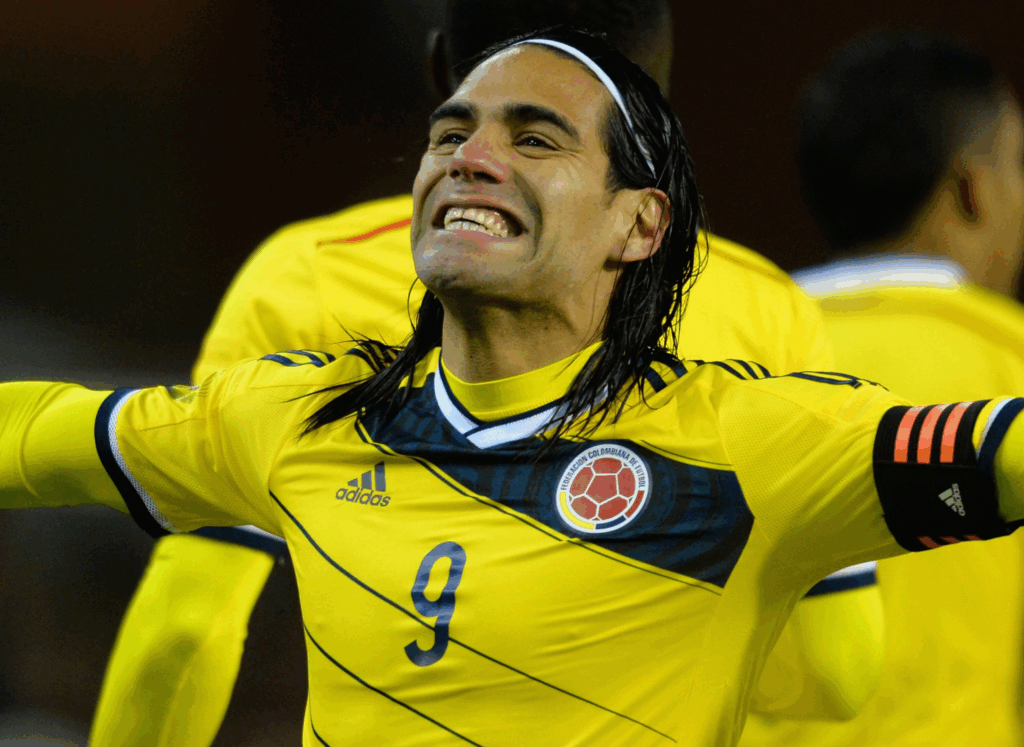
Shortly before the start of the 2010s, Radamel Falcao was the prime example of the most lethal version of a pure striker.
He earned the nickname “El Tigre” due to his predatory combination of aerial dominance and ruthless finishing.
During his tenures at FC Porto and Atletico Madrid, Falcao went toe-to-toe with the best strikers in Europe. His goals at the respective clubs led both teams to the Europa League titles with a record-shattering goal-per-game ratio.
He possessed an amazing leap and a “clutch” gene that enabled him to score with virtually every part of his body. By 2012, his hat-trick against Chelsea in the UEFA Super Cup earmarked him as a world-class striker.
After this blistering start to life in Europe, a catastrophic incident occurred in January 2014, which inadvertently changed the trajectory of the Colombian’s career.
While playing for Monaco, Falcao sustained an injury from an amateur player in a cup tie that resulted in a torn anterior cruciate ligament.
This dreadful moment led to his descent in overall performance, as the torn ACL robbed him of the explosive agility and lateral quickness that enabled him to dominate games.
Although he rushed his recovery to participate in the 2014 World Cup, only to ultimately miss out, the internal damage was already complete.
Subsequent moves to Premier League giants Manchester United and Chelsea prove futile. Rather than experiencing a rejuvenation in form, his move to England turned into a high-profile case study in regression.
A striker who once averaged nearly a goal every game on numerous occasions became a player who labored through an entire month without a single shot on target.
After leaving England, Falcao managed a brief resurgence back at Monaco, but that world-class aura he once exhibited has completely vanished.
5. Fernando Torres
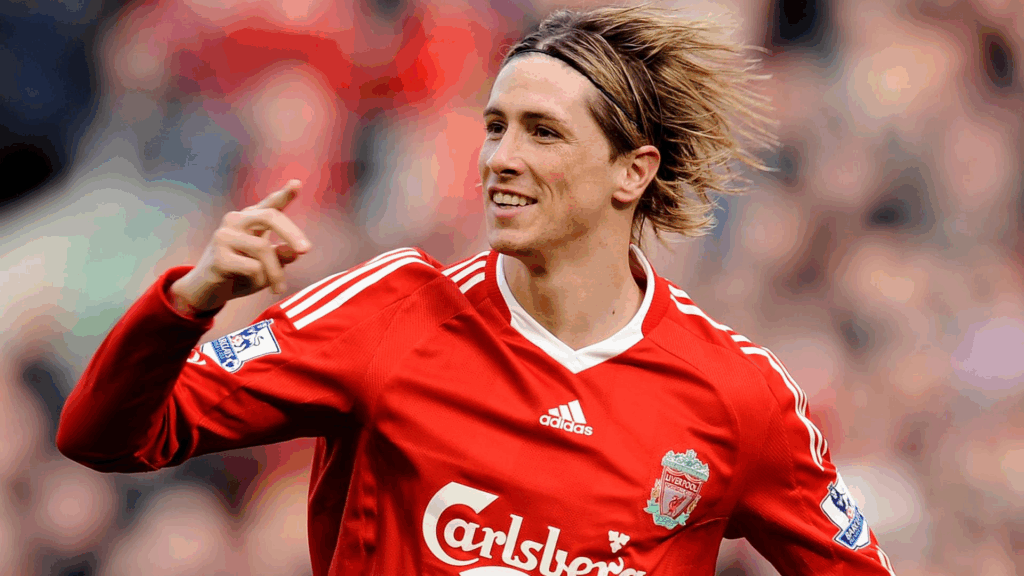
Torres spent twelve years with Atletico Madrid, six each at the youth and professional level, and eventually captained the club at a young age, before making a big-money move away from Spain.
The €38.5 million Liverpool paid to bring the Spaniard to the red side of Merseyside felt like a bargain.
In his debut season in England, he netted 24 league goals, instantly signifying as one of the best strikers in Europe.
Interestingly, none of his twenty-four strikes came from the penalty spot, and his tally was also a record for a foreign player in a debut Premier League season at that time.
Torres’ pinnacle arrived in 2008, when he scored the winning goal in the European Championship final and finished third in the Ballon d’Or voting.
At that point, “El Niño”, a baby-faced blonde-haired striker, was arguably the best striker in the world.
A series of recurring hamstring issues and a pivotal knee surgery in early 2010 marked the start of his decline.
Although he technically helped Spain win the World Cup that summer, he never looked like he was anywhere near his best.
His record-breaking move to Chelsea in January 2011 turned this physical decline into a public tragedy.
Torres no longer possessed the “yard of pace,” nor did he have the physical edge to play bully ball and outmuscle defenders. At one point, he went 903 minutes, a little over 10 games, without a goal.
There were times Torres occasionally produced “big-game” moments, famously sending Chelsea to the Champions League final in 2012. However, he had fallen very far from the player who once had the Ballon d’Or within his reach.
Several spells at AC Milan and then a return to Atletico Madrid saw him end his time in Europe on a discouraging note.
4. Philippe Coutinho
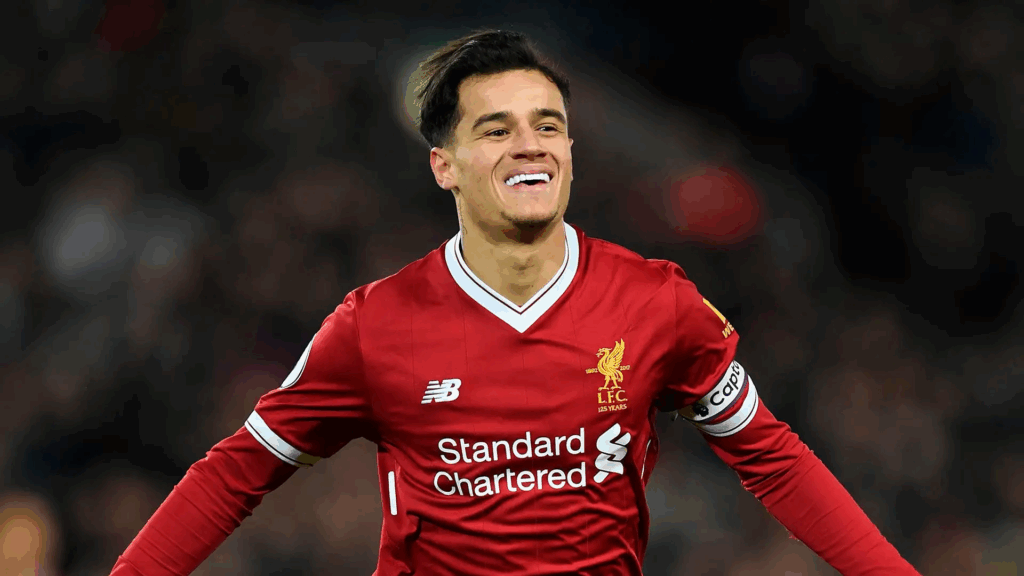
During his time at Liverpool, Philippe Coutinho was one of the Premier League’s most exciting talents.
Coutinho specialized in the spectacular, and this simply explains his game. He was the fulcrum in Jurgen Klopp’s counter-attacking setup, with the Brazilian having a clear understanding of spaces and pockets
His trademark curling strikes from outside the box were just a joy to watch. He often found time and space before opening up his body and letting it fly with an outrageous trajectory.
In his final season at Liverpool, Coutinho had already established himself as a world-class playmaker, scoring 12 goals and 8 assists in 20 appearances in all competitions.
His record-breaking move to Barcelona in 2018 was viewed as a practical move. Barcelona, aware that Lionel Messi was approaching the twilight of his prime, needed a player who could offer similar attacking qualities to Messi.
For Coutinho, the move felt like the crowning achievement of his career. But what followed after featuring for the Blaugrana a couple of times was very hard to comprehend.
As it became evident that this was just another big-money transfer that did not yield positive returns, he sought to rediscover his form in Munich.
During his loan spell at Bayern Munich, Coutinho played at a commendable level, better than his days in Barcelona, but it was not enough to maintain his status as a main figure in a club of Bayern’s pedigree.
The most ironic moment came when he scored against his parent club, during a humiliating 8-2 trashing by Bayern in the UEFA Champions League quarter-final that was played over one leg.
After failing to establish himself at either club, Coutinho returned to England with Aston Villa. He offered a glimmer of hope, but the spark died as quickly as it appeared.
3. Alexis Sanchez
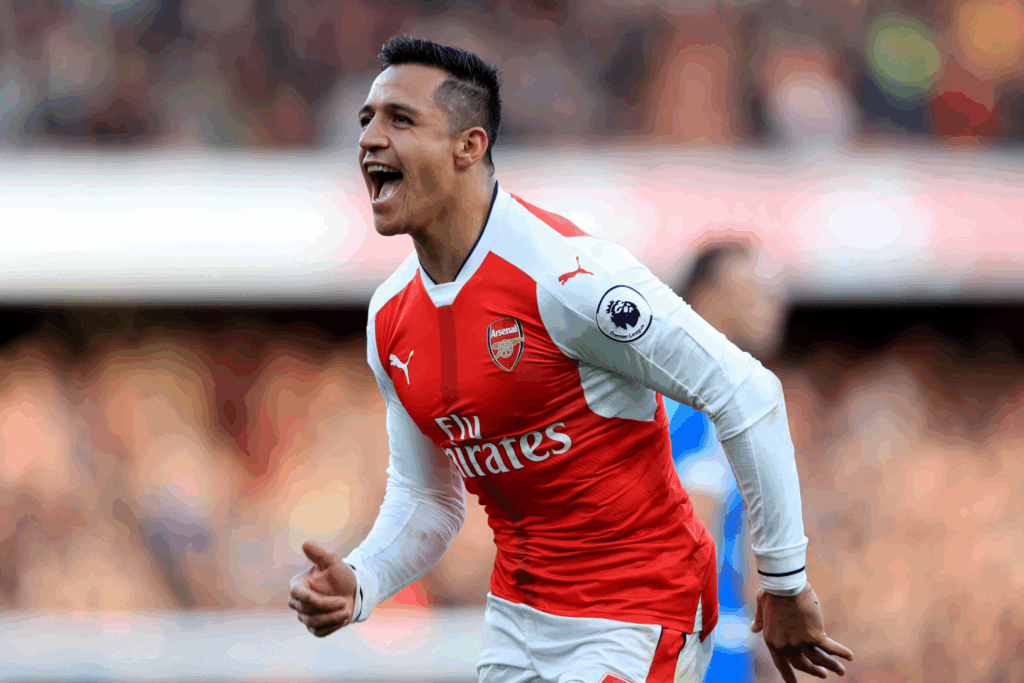
Alexis Sanchez arrived from Barcelona in 2014 for £30 million, and quickly established himself as one of the league’s most exciting wingers.
Between 2014 and 2017, Sanchez recorded 80 goals and 45 assists in 166 appearances for the Gunners.
What was also notable was the fact that he was not only a touchline winger. He could operate from both flanks, cut inside, and also come deep to receive the ball and build up attacks.
His peak occurred during the 2016-17 season, 30 goals across all competitions and delivered a man-of-the-match performance in the FA Cup Final victory over Chelsea.
For Chile, Sanchez was also outstanding, leading the nation in back-to-back Copa América titles in 2015 and 2016, after beating Argentina on penalties on both occasions.
In January 2018. Manchester made a high-profile move for the Chilean. He became the league’s highest-paid player, and it felt like he would continue dominating in a league he is very familiar with.
Unfortunately, that was not the case. In his first full season at Manchester United, he scored only two goals in 27 appearances.
The scale of his regression remained evident throughout his final years in England. By 2019, Sanchez had scored just five goals in 45 total games for the Red Devils.
Till this moment, Manchester United fans can not fathom how he managed to end up a failure, considering how amazing he was for the Gunners.
United eventually sent him on loan to Inter Milan to remove his wages from the books, signaling the end of one of the most bizarre spells for a top player.
Sanchez occasionally provided flashes of quality in Italy and later France, but he was a shadow of his past self, and many do not expect much from him.
2. Dele Alli
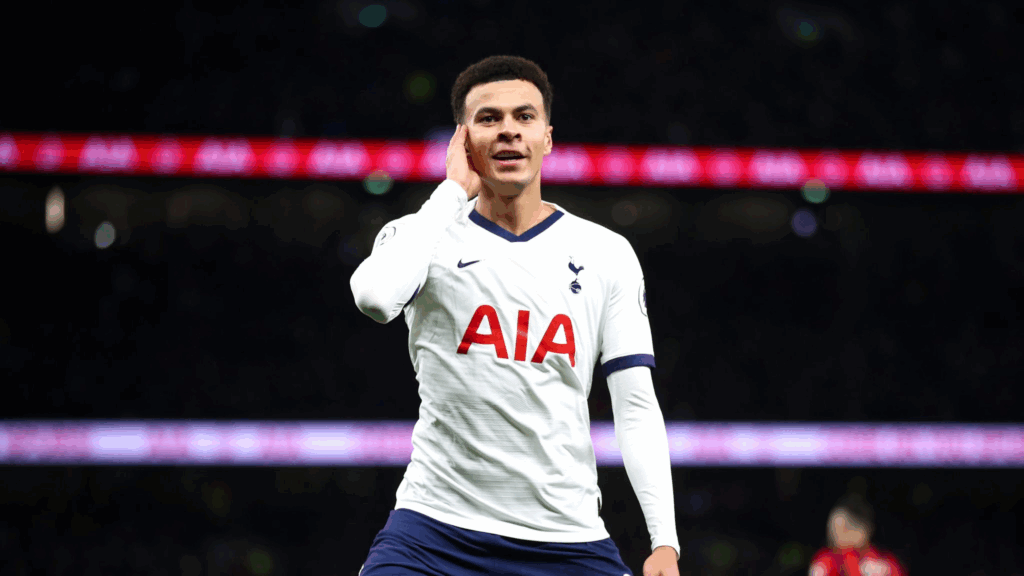
After arriving at Tottenham Hotspur from MK Dons for a modest fee of £5 million in 2015, Dele Alli entered the Premier League with little expectation and hype.
Despite this, Dele Alli eased into life in the top flight seamlessly and did not require the typical adaptation period needed for most teenagers to blossom.
Between 2015 and 2017, Dele Alli recorded 28 goals and 16 assists in the league, including back-to-back PFA Young Player of the Year awards.
By the age of 21, Dele Alli had already amassed a combined total of 40 Premier League goals and assists, a feat that eclipsed the achievements of legends like Steven Gerrard and David Beckham at similar times in their careers.
He also played a pivotal role in England’s run to the 2018 World Cup semi-final, playing the entire 120 minutes of the tie, which went to extra time.
The 2018-2019 season was the point where things subtly began to go south for the Englishman. Recurring hamstring injuries and several tactical shifts under different managers, including Antonio Conte and Jose Mourinho, affected his impact on the pitch.
Dele Alli could not put together a string of matches where he performed positively. He ended the 2020-21 season abysmally, scoring zero goals in fifteen appearances.
The scale of his fall reached a damning level when he made a free transfer to Everton in 2022. He struggled to rediscover his form at the club and struggled to secure a starting spot for a relegation-threatened side.
A loan move to Besiktas followed and as expected, his spell at the club did not turn out fine either.
By 2024, his contract at Everton expired after a two-year period in which he failed to register any further competitive minutes for the club due to recurring fitness issues.
1. Eden Hazard
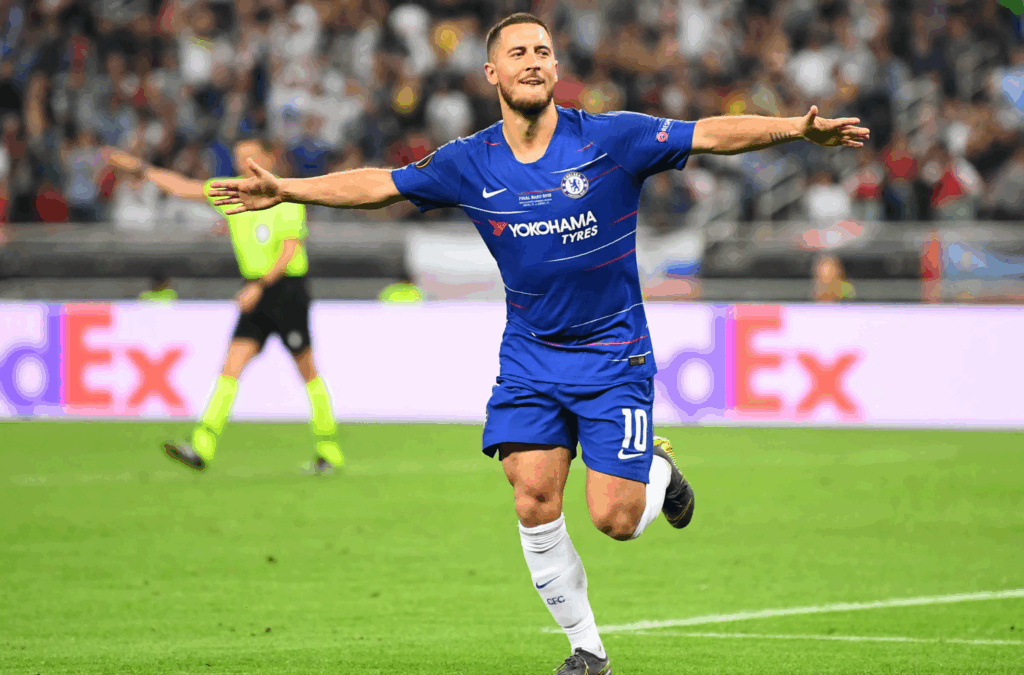
After arriving at Lille academy, Eden Hazard quickly made his debut for the senior team. He was the club’s youngest goalscorer at the time and was one of the most exciting players to watch.
Individual accolades followed, earning the Ligue 1 young player of the year in back-to-back seasons, in 2009 and 2010, and then back-to-back Ligue 1 player of the Year awards in 2011 and 2012.
He led Lille to a historic domestic double and ended a 57-year league title drought for the club by winning the Ligue 1 and the Coupe de France.
Chelsea, who had just won their first-ever Champions League title, paid £32 million to bring the Belgian to Stamford Bridge in the summer of 2012.
With a lot of hype and expectations surrounding his arrival in England, Hazard made an immediate impact in a star-studded Chelsea side.
By the end of his debut season, he registered 13 goals and 24 assists in all competitions for the Blues. During his seven-year tenure at Chelsea, he recorded 110 goals and 92 assists in 352 appearances.
It was known that a move to Spanish giants Real Madrid was Hazard’s dream and this became a reality in 2019. He completed a permanent transfer to Los Blancos for a fee exceeding £100 million.
It was at this point that things began to “nose-dive”. As months passed, his struggles with match fitness and health lingered.
Over four seasons in Spain, he scored just seven goals in 76 appearances. In 2023, he struck a mutual agreement with Real Madrid to terminate his contract a year early.
At just 32 years old, he announced his total retirement from the sport. He stated that the “fun” had vanished from the pitch, and he could no longer play at a high level.
Who wrote this?

Bienuoma Agaga-Akpati is a software engineer, writer, eSports player, and sports enthusiast, presently working with a group of ambitious Africans to transform the writing industry. With good knowledge of various sports and eSports, coupled with his keen ability for research, he loves analyzing ideas and topics that fosters the growth of the sport and eSports scenes. In his spare time, he enjoys creating content and engaging in discussions across various platforms.
- Bienuoma

- Bienuoma

- Bienuoma
- Bienuoma
- Bienuoma

- Bienuoma

- Bienuoma

- Bienuoma

- Bienuoma

- Bienuoma

- Bienuoma

- Bienuoma

- Bienuoma

- Bienuoma

- Bienuoma

- Bienuoma

- Bienuoma

- Bienuoma

- Bienuoma

- Bienuoma

- Bienuoma

- Bienuoma

- Bienuoma

- Bienuoma

- Bienuoma

- Bienuoma

- Bienuoma

- Bienuoma

- Bienuoma

- Bienuoma