


Over the years, many great players have excited fans with their talent on the court.
Michael Jordan, LeBron James, and Kobe Bryant are just a few stars that fans admire and respect.
There are also lesser-known players who didn’t reach those same heights but still left a legacy worth remembering.
Some players started strong but, for different reasons, never reached their full potential.
These stars saw their careers drop off quickly after their rise and couldn’t return to their best form.
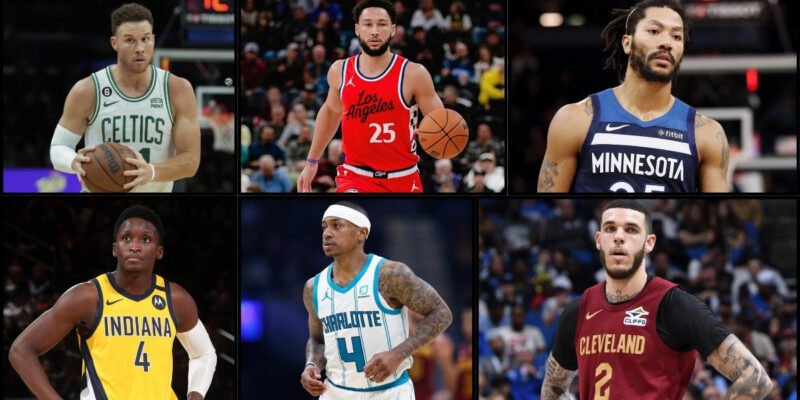
Here are 15 NBA players who peaked early but later saw their careers take a downturn.
15. DeMarcus Cousins
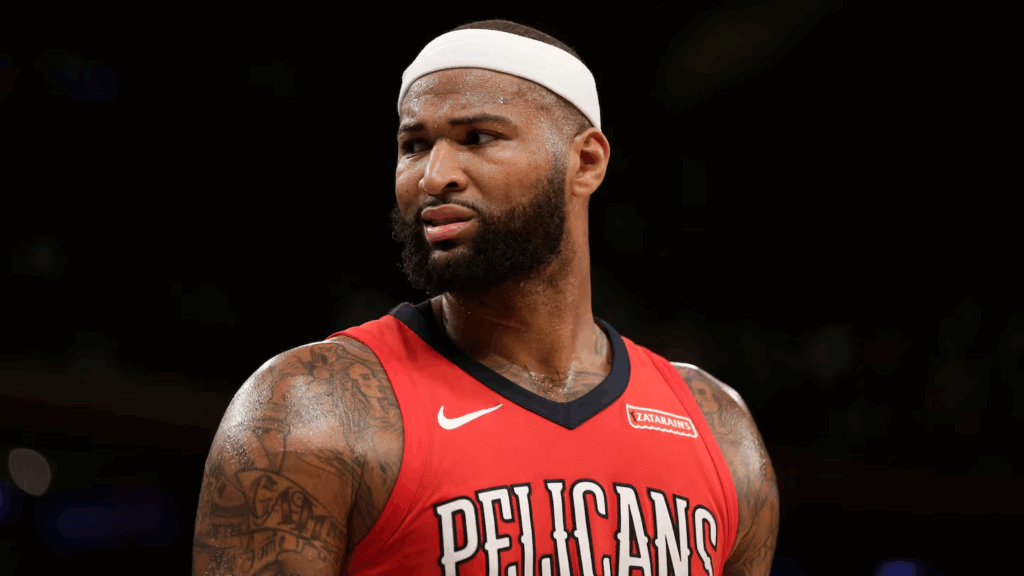
The Sacramento Kings selected Cousins with the fifth overall pick in the 2010 NBA Draft. He quickly established himself as a double-double machine, earning NBA All-Rookie First Team honors in 2011.
Cousins played his best basketball from 2014 to 2018. He made four straight NBA All-Star teams and was named to the All-NBA Second Team in 2015 and 2016.
In the 2016/17 season, Cousins played at a near-MVP level. He averaged 27 points, 11 rebounds, and 4.6 assists per game, and he challenged defenses with his strong three-point shooting.
On January 26, 2018, Cousins tore his left Achilles tendon in the final seconds of a game against the Houston Rockets. This injury ended his prime years.
Cousins joined the Golden State Warriors for the 2018/19 season, but he never got back his explosiveness from before the injury.
Subsequent injuries accelerated the decline. Cousins suffered a torn left quadriceps during the first round of the playoffs with the Warriors. Shortly after signing with the Los Angeles Lakers, he suffered a torn ACL in his left knee during an off-season workout, which forced him to miss the entire 2019/20 season.
Each injury took away more of Cousins’ athleticism and rhythm. He went from being an All-NBA star to a role player and eventually became a journeyman.
From 2020 to 2022, Cousins played for the Houston Rockets, LA Clippers, Milwaukee Bucks, and Denver Nuggets. He took on new roles with each team but never returned to his All-Star level.
Cousins later played overseas and won a championship and Finals MVP in Taiwan’s T1 League in 2024.
14. Lonzo Ball
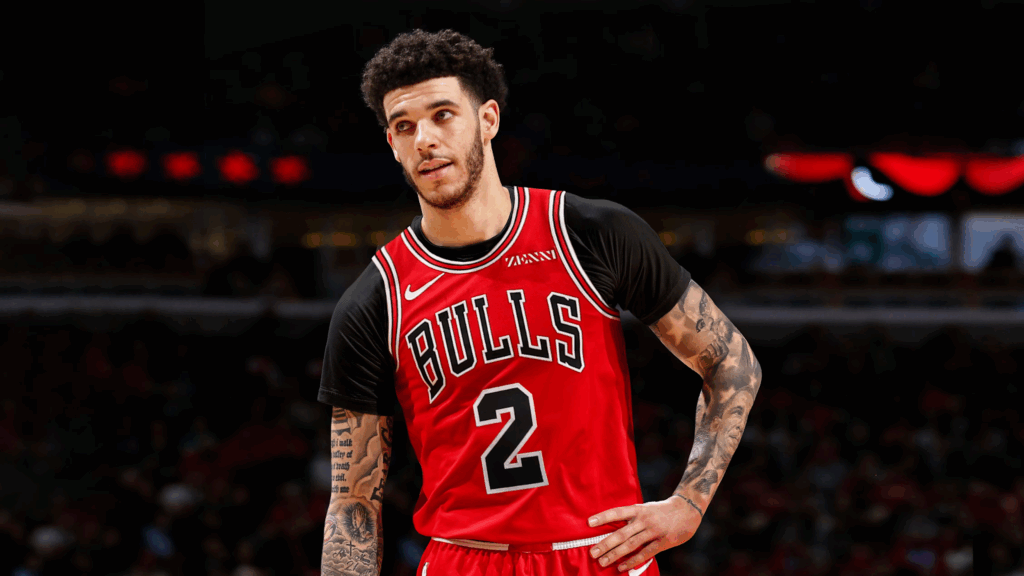
Lonzo Ball entered the NBA with high expectations, mostly due to the hype job by his dad, Lavar Ball. He was known for his vision, pace, and defense more than his scoring.
The Los Angeles Lakers selected Ball with the second overall pick in the 2017 NBA Draft.
He earned NBA All-Rookie Second Team honors in 2018. During his rookie season, he averaged 10.2 points, 7.2 assists, and 6.9 rebounds.
Lonzo Ball became known as a versatile, elite defensive playmaker before a series of knee surgeries changed his career.
Shoulder and knee injuries in his rookie year limited him to 52 games. An ankle sprain in January 2019 cut his second season short.
In 2019, Ball was traded from the Lakers to New Orleans in the Anthony Davis deal. Two years later, he joined the Chicago Bulls and quickly became a key part of their backcourt, helping the team rise to the top of the Eastern Conference in early 2022.
On January 14, 2022, Ball played his last game for more than two years. He first missed time with “left knee soreness,” but doctors later found he had a torn meniscus and a bone bruise.
What was meant to be an eight-week recovery turned into years. Ball had three surgeries on his left knee in less than two years, ending with a rare double cartilage transplant in March 2023.
The following seasons made it clear things had changed. He missed all of 2023/24, and the momentum he once had was gone.
In October 2024, Ball finally returned to the Bulls’ lineup, becoming the first professional athlete to come back from a double cartilage transplant.
After the 2024/25 season, Chicago traded him to Cleveland. By early 2026, he was still rehabbing his knee and dealing with minor setbacks, but he settled into a steady veteran role with the Cavaliers.
13. Blake Griffin
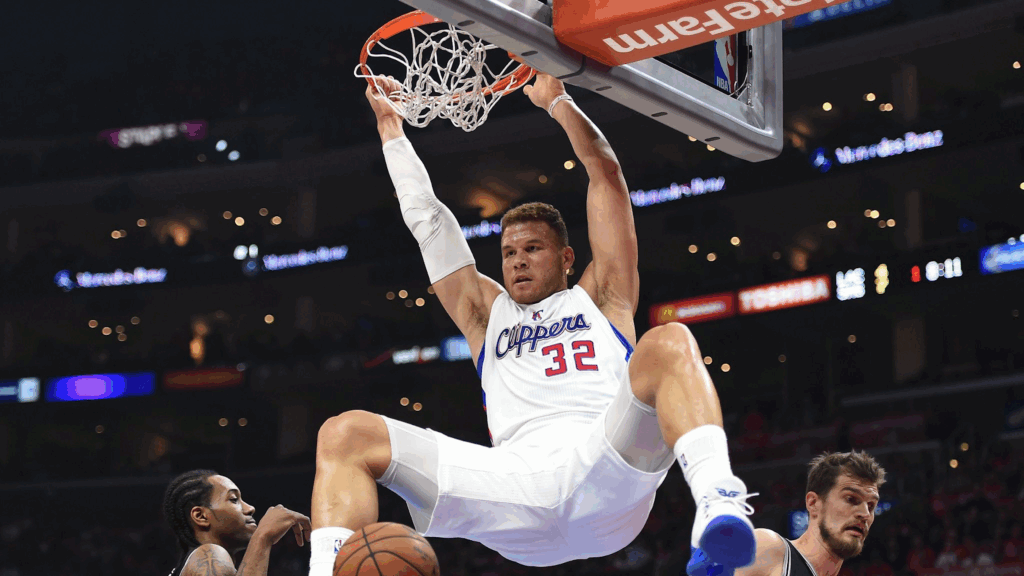
Blake Griffin arrived in the NBA with equal parts flash and force. He punished rims, played with nonstop energy, and separated himself from other players his size with rare explosiveness.
The Los Angeles Clippers selected Griffin with the first overall pick in the 2009 NBA Draft.
Although a broken kneecap sidelined him for his entire true rookie year, he debuted with historic impact in 2010.
Griffin won the 2011 Rookie of the Year award after averaging 22.5 points and 12.1 rebounds. He became the first rookie since 2003 to make the All-Star team.
Alongside Chris Paul and DeAndre Jordan, Blake Griffin headlined the Lob City era, which was one of the most exciting eras in basketball. He earned five consecutive All-NBA selections and finished third in MVP voting in 2014.
In January 2018, after signing a five-year “max” contract, the Clippers traded Griffin to the Detroit Pistons, marking a significant shift in his career.
In 2018/19, Griffin played the best basketball of his career. He averaged 24.5 points, 7.5 rebounds, and 5.4 assists, carrying Detroit’s entire offense.
That 2019 playoff run marked his “last stand.” Extensive left knee surgeries and loss of explosiveness stripped him of his All-Star mobility. In the 2020/21 season, he went over a year without recording a dunk.
After a contract buyout from Detroit, Griffin joined the Nets. He sacrificed his scoring role to play as a small-ball center and provided toughness, spacing, and hustle.
Griffin later signed a one-year deal with the Boston Celtics, where he became a valued locker-room leader and occasional starter before sitting out the 2023/24 season.
Griffin officially announced his retirement from the NBA on April 16, 2024. He finished his career as one of the most decorated and versatile forwards of his generation.
12. Gilbert Arenas
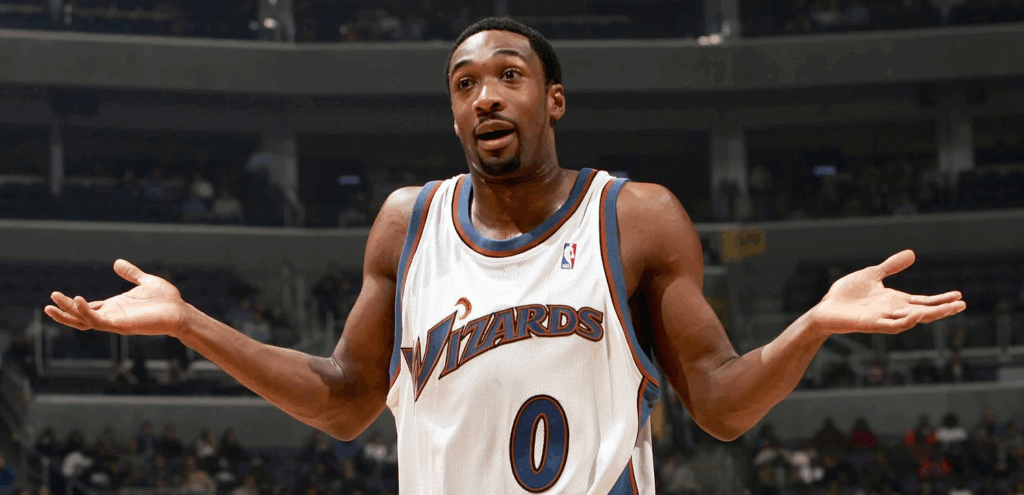
Gilbert Arenas rose from obscurity, an overlooked second-round pick, into “Agent Zero,” and one of the NBA’s most electric scorers. He played with swagger, range, and fearless shot selection, reshaping how teams defended the perimeter.
The Golden State Warriors selected Arenas with the 31st overall pick in the 2001 NBA Draft. He used this perceived slight as motivation, quickly blossoming into a star.
Arenas won the 2003 NBA Most Improved Player award after averaging 18.3 points per game in his second season.
He then signed with the Washington Wizards in 2003 and entered his statistical prime. From 2004 to 2007, he averaged over 25 points per game each season.
During the 2005/06 season, he averaged a career-high 29.3 points and earned the first of three consecutive All-Star selections. He famously scored 60 points against Kobe Bryant and the Lakers in December 2006.
The fall-off phase for Arenas began in the 2007/08 season, and it started with his body betraying him.
In April 2007, Gerald Wallace accidentally fell into Arenas’ leg, which tore Arenas’ meniscus. Arenas rushed his rehabilitation, creating a cycle of surgeries that sapped his elite explosiveness. He played only 15 games over the next two seasons.
The following seasons deepened the decline rather than correcting it. Arenas never regained full health, and his explosiveness never returned.
Off-court issues accelerated the collapse. In December 2009, Arenas brought unloaded firearms into the Wizards’ locker room following a dispute with a teammate.
As a result, Commissioner David Stern suspended Arenas indefinitely in January 2010. Arenas ultimately served a 50-game suspension and completed time in a halfway house for violating D.C. gun laws before returning to the court.
When he came back, he had trouble reshaping his game around a body that no longer gave him the same edge. His career now stands as one of the league’s clearest reminders of how quickly dominance can fade.
11. Jahlil Okafor
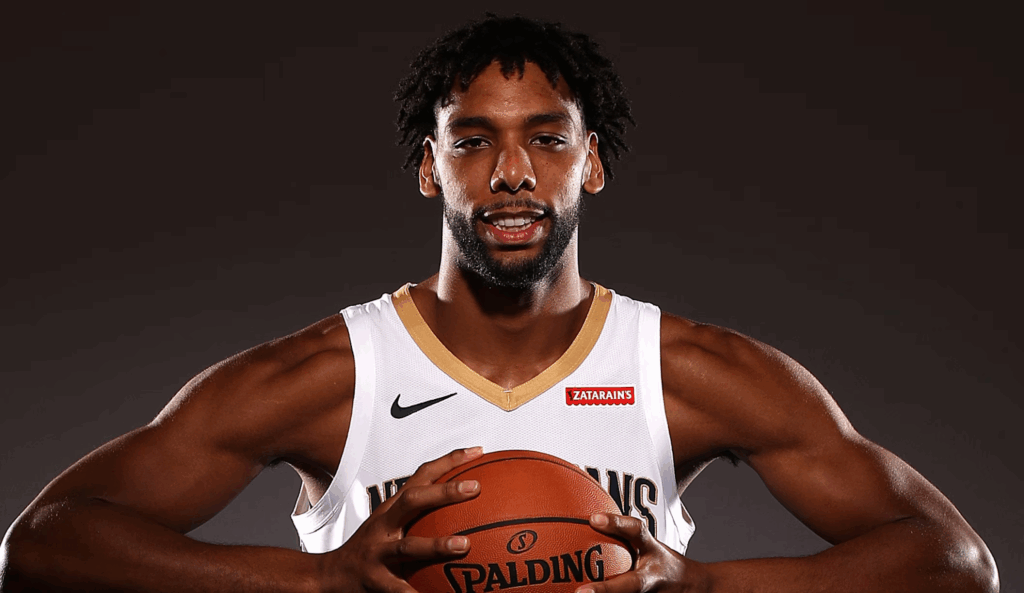
Jahlil Okafor came into the NBA as a celebrated prospect, the face of old-school dominance just as the league was getting ready to move on from it.
He brought elite post scoring, smooth footwork, and a strong college résumé. Many believed he could anchor a franchise by owning the paint.
At Duke, Okafor overwhelmed opponents, leading the Blue Devils to the 2015 NCAA Championship and winning ACC Player of the Year. The Philadelphia 76ers followed by selecting him third overall in the 2015 NBA Draft.
In what was a spectacular debut for the Duke alumni, Okafor scored 26 points in his first NBA game against the Boston Celtics.
He averaged 17.5 points and 7.0 rebounds during his first season, earning a spot on the NBA All-Rookie First Team.
Several factors pushed Okafor out of the elite tier of NBA players, starting in the 2016/17 season.
A torn meniscus cut his rookie season short and sent him to surgery. The injury slowed his physical progress and further limited mobility that was already a concern.
The NBA rapidly transitioned toward a perimeter-oriented game that prioritized three-point shooting and defensive versatility.
Okafor’s traditional, back-to-the-basket style lost value, and his defensive struggles made him a liability.
Philadelphia drafted multiple centers, most notably Joel Embiid, which reduced Okafor’s playing time and further limited his ability to develop and maintain a prominent role on the team.
After his time in Philadelphia, Okafor drifted into a journeyman role. From 2017 to 2021, he moved between the Nets, Pelicans, and Pistons, never finding a long-term home.
In February 2025, he earned another shot by signing a 10-day deal with the Indiana Pacers, rewarding a strong run in the G League.
Okafor expanded his career globally, playing for teams in China and Spain. As of early 2026, he plays for Levanga Hokkaido in the Japanese B League, where he remains a productive double-double threat.
10. Victor Oladipo
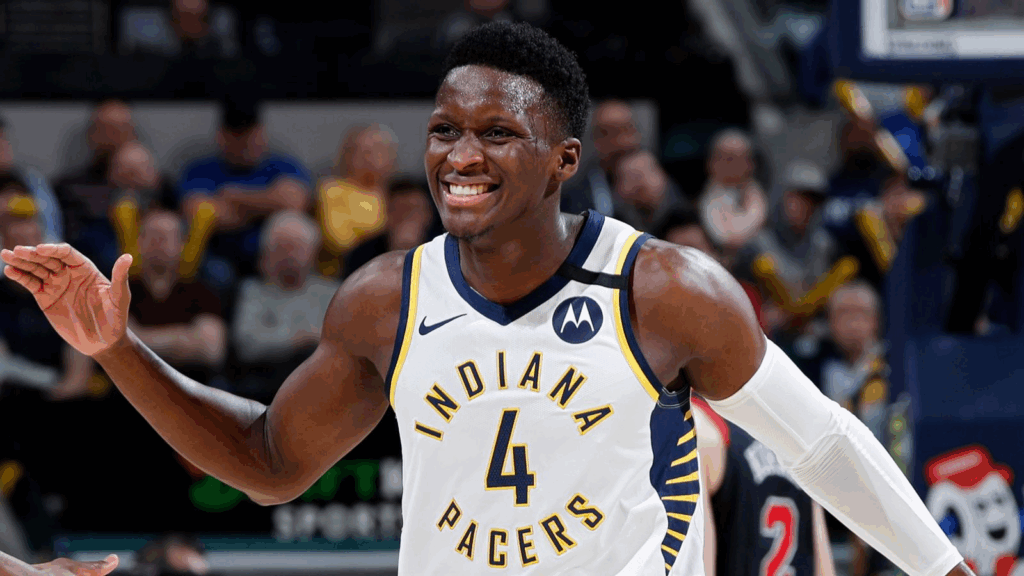
Victor Oladipo’s rise once felt inevitable. He transformed from a raw athletic prospect into an elite two-way superstar by combining explosive athleticism, defensive hunger, and leadership.
The Orlando Magic selected Oladipo with the second overall pick in the 2013 NBA Draft. After solid stints in Orlando and Oklahoma City, he reached superstar status upon joining the Indiana Pacers in 2017.
Oladipo enjoyed one of the greatest individual seasons in Pacers history. He averaged 23.1 points, 5.2 rebounds, and 4.3 assists while leading the league in steals (2.4 per game).
Oladipo carried the Indiana Pacers beyond expectations as the team went toe-to-toe with a LeBron-led Cavaliers team in the playoffs.
He earned NBA Most Improved Player, All-NBA Third Team, and All-Defensive First Team honors in 2018, whilst finishing high in MVP voting.
He also secured two consecutive NBA All-Star selections in 2018 and 2019, cementing his place as one of the league’s top guards.
On January 23, 2019, Oladipo suffered a ruptured quadriceps tendon in his right knee during a game against the Toronto Raptors.
This injury required surgery and sidelined him for a year. He never regained the explosive speed that defined his “Agent Dipo” persona.
The Pacers traded him to the Houston Rockets in 2021, who then traded him to the Miami Heat shortly after.
Just four games into his Miami tenure, he suffered another injury to his right quadriceps tendon, requiring a second surgery. In April 2023, he suffered a torn patellar tendon in his left knee during a playoff game, which forced him to miss the entire 2023/24 season.
In November 2025, Oladipo joined the Wisconsin Herd (the Milwaukee Bucks’ G League affiliate). As of early 2026, he continues to pursue an NBA call-up.
9. Brandon Roy
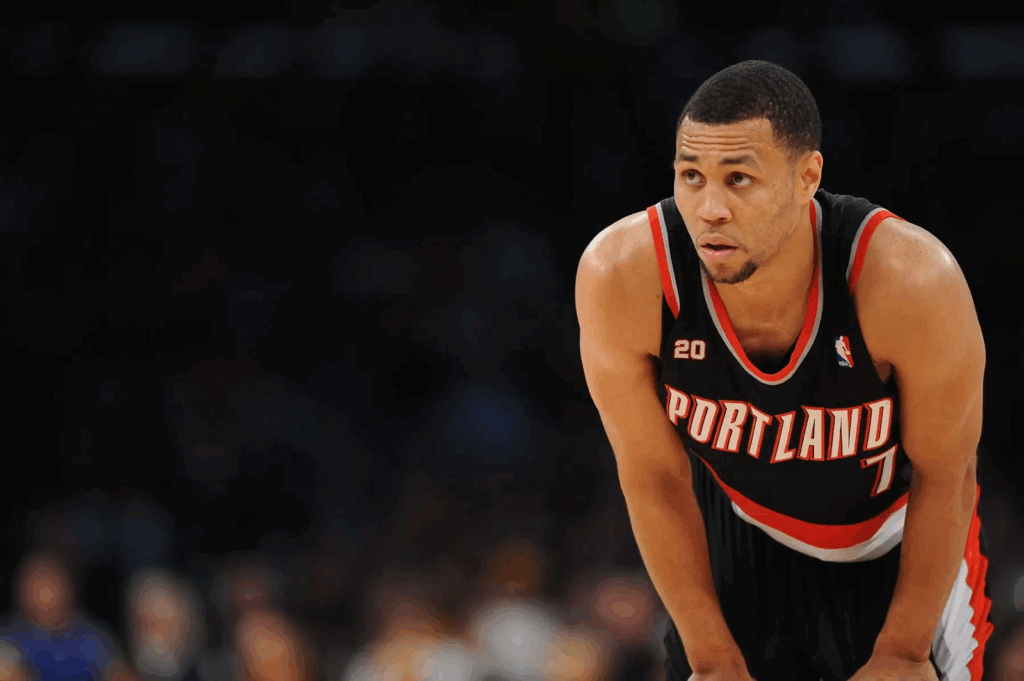
Brandon Roy entered the NBA as a polished guard and quickly became the cornerstone of the Portland Trail Blazers. He played with control, balance, and a sense of timing that separated him from louder stars.
The Minnesota Timberwolves selected Roy with the sixth overall pick in the 2006 NBA Draft before trading him to the Portland Trail Blazers.
He won the 2007 NBA Rookie of the Year award almost unanimously after averaging 16.8 points and 4.0 assists.
Between 2008 and 2010, Roy became one of the league’s premier shooting guards. He averaged 22.6 points during the 2008/09 season and earned three consecutive All-Star selections.
He also secured spots on the All-NBA Second Team in 2009 and the All-NBA Third Team in 2010. Kobe Bryant famously described Roy as the hardest player to guard in the Western Conference because he had “no weaknesses” in his game.
He earned a reputation as a “stone-cold killer” in late-game situations, exemplified by a legendary 52-point performance against the Phoenix Suns in 2008.
A lack of cartilage in both knees led to chronic arthritis, ending Roy’s prime at age 26. In April 2010, he underwent surgery for a torn meniscus in his right knee. He returned eight days later for the playoffs, but the decision took a toll on his long-term health.
By the 2010/11 season, persistent pain stripped him of his explosiveness, and he announced his initial retirement in December 2011.
Roy attempted one final comeback before transitioning into a highly successful coaching career.
He signed with the Minnesota Timberwolves for the 2012–13 season.
However, he appeared in only five games before another knee surgery ended his playing career permanently in 2013. Roy’s body ultimately denied him a long career.
8. Antoine Walker
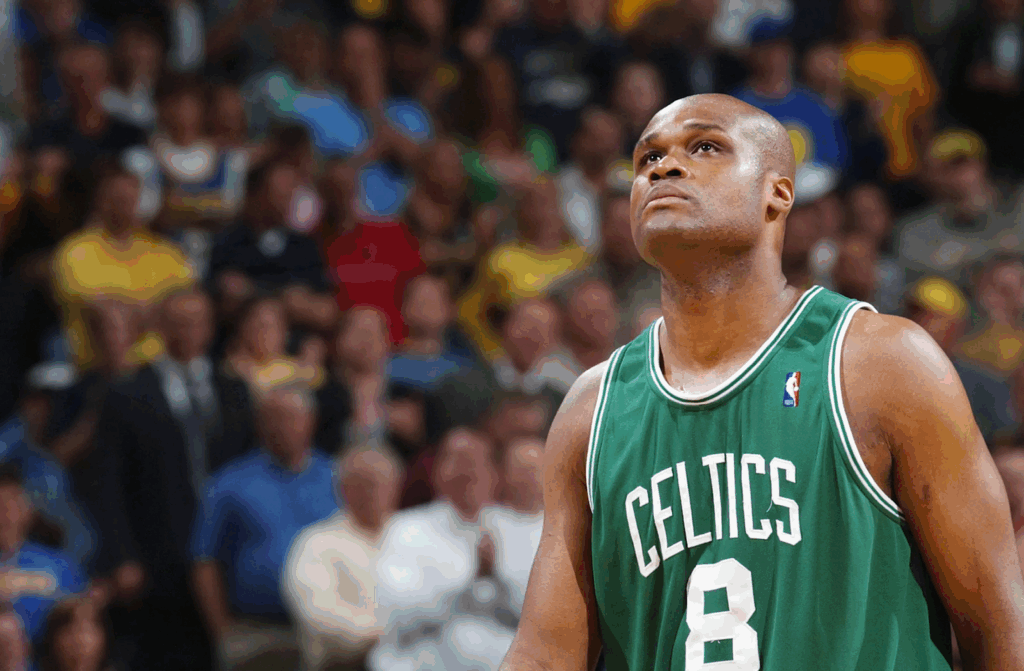
Antoine Walker embodied an era before the NBA decided what it wanted power forwards to be. He was versatile, launched threes without hesitation, and had wild shot selections.
The Boston Celtics selected Walker with the sixth overall pick in the 1996 NBA Draft. He immediately became a focal point of the franchise’s post-Larry Bird rebuilding era.
He earned NBA All-Rookie First Team honors in 1997. By his second season, he averaged a double-double with 22.4 points and 10.2 rebounds per game.
Walker earned three All-Star selections (1998, 2002, 2003) during his primary stint in Boston. Alongside Paul Pierce, he led the Celtics to the 2002 Eastern Conference Finals, their first deep playoff run in seven years.
Despite his 6’9″ frame, Walker frequently shot from the perimeter. He famously led the league in three-point attempts and makes during the 2000/01 season.
When asked why he shot so many threes, he famously replied, “Because there are no fours.”
In 2003, the Celtics traded Walker to the Dallas Mavericks, marking the beginning of his transition from a franchise star to a veteran contributor.
Walker joined the Heat in 2005 as part of the largest trade in NBA history. He played a vital role as a sixth man and floor spacer, helping the Heat win the 2006 NBA Championship.
Following the championship, Walker’s conditioning and shooting efficiency plummeted.
Walker’s post-NBA life involved a public battle with personal and financial hardship before he reinvented himself as an educator.
In 2010, Walker filed for Chapter 7 bankruptcy, citing over $12 million in debt. As part of the bankruptcy process, Walker had to sell his 2006 NBA Championship ring.
He attempted to play his way back to financial stability through stints in Puerto Rico and the NBA D-League (Idaho Stampede) before officially retiring in 2012.
7. Shawn Kemp
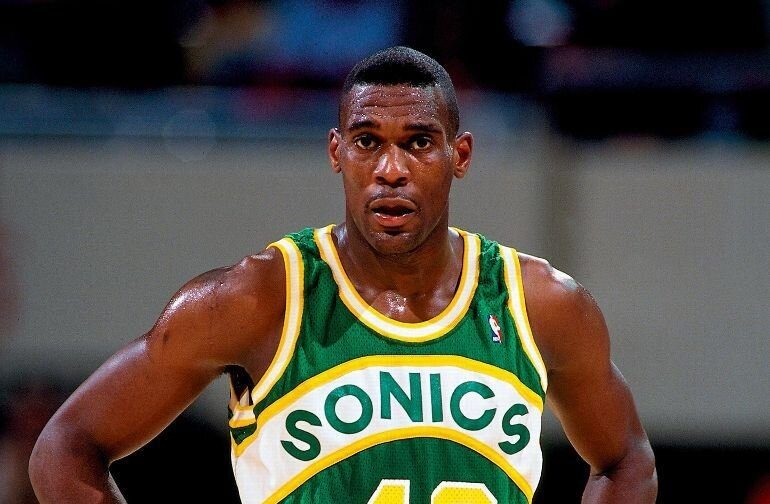
Shawn Kemp once played basketball like a force of nature. He rose from the youngest player in the league to a superstar.
The Seattle SuperSonics selected Kemp with the 17th overall pick in the 1989 NBA Draft. He skipped college basketball entirely, entering the league as a raw but historically athletic 19-year-old.
Kemp quickly became a nightly highlight reel, known for some of the most ferocious dunks in NBA history. He formed a legendary duo with point guard Gary Payton.
Kemp reached his absolute peak during the 1995–96 season. He led the Sonics to a franchise-record 64 wins and an NBA Finals appearance against Michael Jordan’s 72-win Chicago Bulls.
Despite losing the series, Kemp averaged 23.3 points and 10.0 rebounds on 55% shooting. He finished a close second in Finals MVP voting, nearly becoming the second player ever to win the award from the losing team.
During his Seattle tenure, he earned five consecutive All-Star appearances and three All-NBA Second Team selections.
Kemp’s decline began in the 1996/97 season. Contract disputes strained his relationship with Seattle. He still produced strong numbers, but his spark dimmed.
In 1997, Kemp demanded a trade and joined the Cleveland Cavaliers. He initially maintained his elite form, but the 1998/99 NBA lockout served as the definitive turning point. Kemp reported to training camp roughly 50 pounds above his postseason size, reportedly weighing over 300 lbs.
During this period, Kemp also battled addictions to alcohol and cocaine. He entered drug rehabilitation in 2001, which further disrupted his career.
By the early 2000s, Kemp drifted through short stints with Orlando and Portland, far removed from his former identity. He averaged less than 7 points per game over his final three seasons before retiring at age 33.
6. Isaiah Thomas
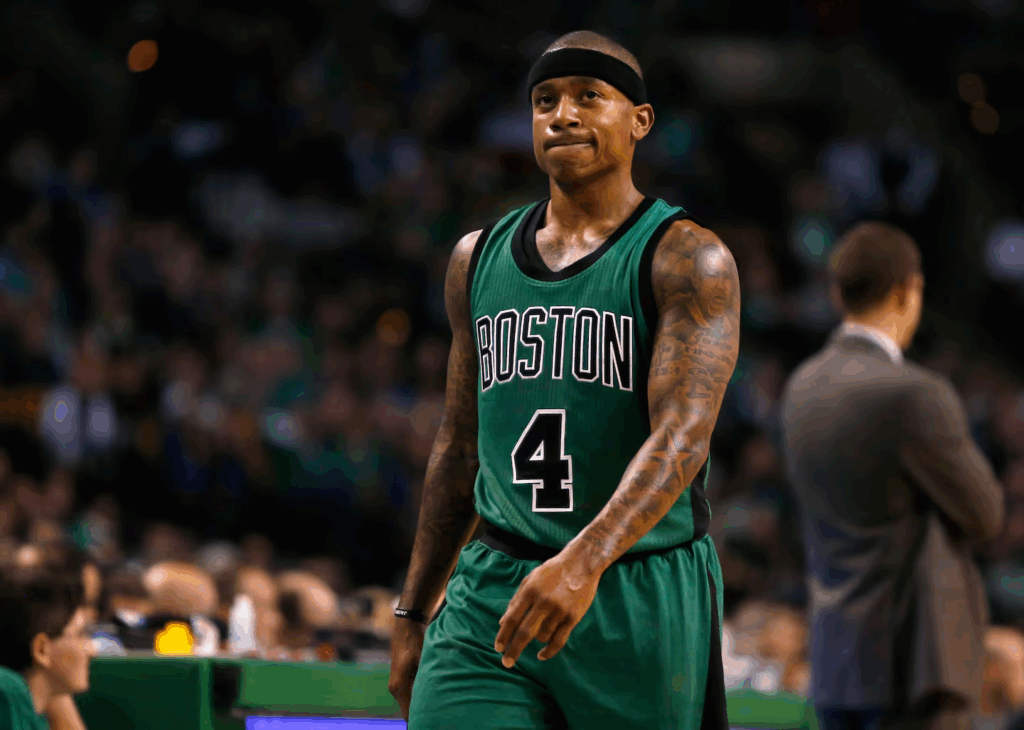
Isaiah Thomas once compressed the impossible into a 5-foot-9 frame and made it sustainable through will. He played with edge, speed, and fearless shot-making, bending NBA defenses that towered over him.
The Sacramento Kings selected Thomas with the 60th and final pick in the 2011 NBA Draft. He defied expectations from the start, earning NBA All-Rookie Second Team honors.
Following stints in Sacramento and Phoenix, he joined the Boston Celtics in 2015 and reached the pinnacle of his career.
During the 2016/17 season, Thomas averaged 28.9 points and 5.9 assists per game. He led the Celtics to the best record in the Eastern Conference and an appearance in the Eastern Conference Finals. He also finished fifth in MVP voting in 2017 and earned All-NBA Second Team honors.
Thomas earned the nickname “The King in the Fourth” for leading the league in fourth-quarter scoring. He famously scored 53 points against the Washington Wizards in a 2017 playoff game on what would have been his late sister’s birthday.
During the 2017 postseason, Thomas suffered a torn labrum and a femoral-acetabular impingement in his right hip. He played through the pain until the Eastern Conference Finals, when the injury finally forced him to the sidelines.
That choice, along with severe cartilage loss and arthritis, permanently changed what his body could handle.
In August 2017, the Celtics sent Thomas to the Cavaliers as part of the Kyrie Irving trade. That move started a journeyman stretch defined by short-term deals, constant rehab, and a career spent trying to regain what his body no longer allowed.
Subsequent stops in Los Angeles, Denver, Washington, and beyond never restored momentum.
As of early 2026, Thomas remains an active free agent at age 36. He recently expressed his desire to play “at least one more season” and continues to seek opportunities for a roster spot.
5. Kemba Walker
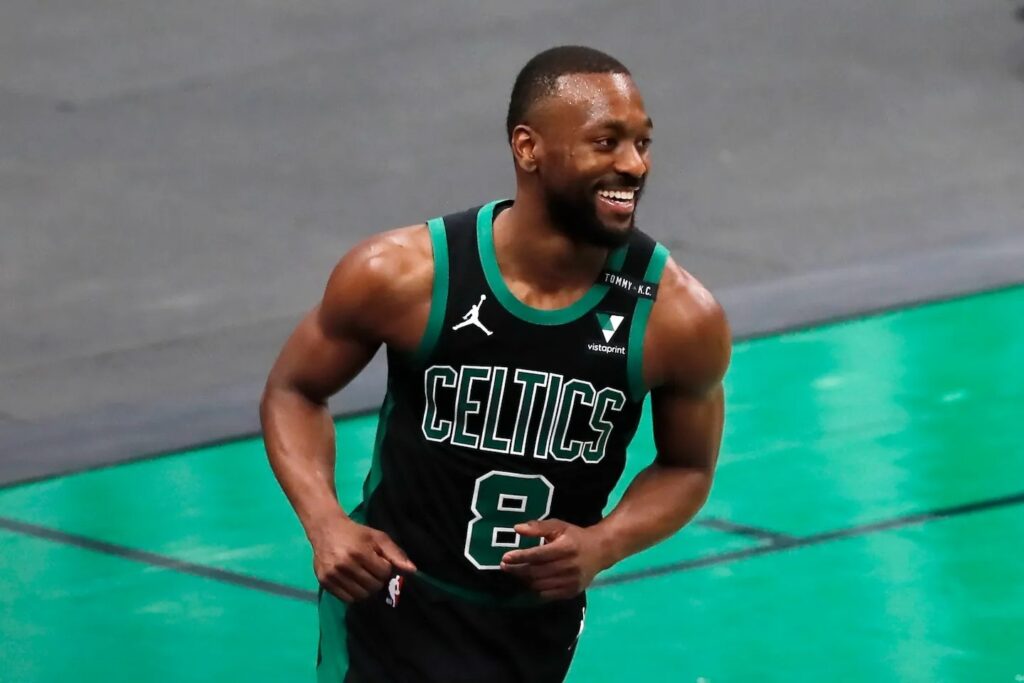
Kemba Walker built his NBA identity on movement by dancing into space, slicing defenses with tight handles, and carrying heavy offensive loads. That approach carried him to stardom but left little room for physical decline.
The Charlotte Bobcats (now Hornets) selected Walker with the ninth overall pick in the 2011 NBA Draft. He entered the league fresh off leading the UConn Huskies to an improbable NCAA Championship.
Walker became the face of the Charlotte organization, eventually becoming the all-time leading scorer in franchise history. He earned four consecutive All-Star selections from 2017 to 2020.
During the 2018–19 season, Walker averaged a career-high 25.6 points per game. He famously scored 60 points against the Philadelphia 76ers in November 2018.
He secured a spot on the All-NBA Third Team in 2019 as well as starting the All-Star Game, cementing his status as an elite guard.
Walker joined the Boston Celtics via a sign-and-trade in 2019. While he initially maintained his All-Star form, chronic left knee issues began to surface during the 2020 season.
A stem cell injection and repeated flare-ups robbed him of the elite “stop-and-start” speed and shifty lateral movement that defined his “Cardiac Kemba” moniker.
He missed significant time during the 2020 and 2021 playoffs, which hampered the Celtics’ championship.
Following his time in Boston, Walker’s career entered a rapid decline. Between 2021 and 2023, he played for the New York Knicks and Dallas Mavericks.
He flashed his scoring ability at times, even dropping 44 points in a game for the Knicks, but lingering knee issues kept him from staying in the rotation.
On July 2, 2024, Walker officially retired, closing a career that perfectly shows how slim the margin can be between peak and decline.
4. Lamar Odom
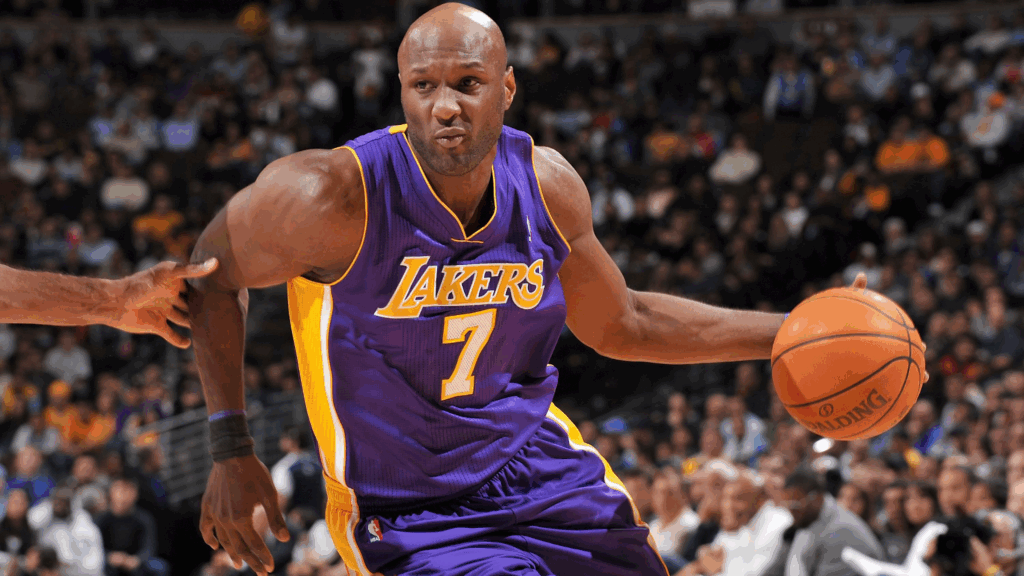
Lamar Odom redefined the role of a versatile big man as a “point forward.” He played without a fixed label, drifting from forward to guard duties, rebounding, passing, and scoring as needed.
The Los Angeles Clippers selected Odom with the fourth overall pick in the 1999 NBA Draft. He immediately showcased a unique 6’10” frame with the ball-handling and passing skills of a point guard.
Odom earned NBA All-Rookie First Team honors in 2000. He averaged 16.6 points, 7.8 rebounds, and 4.2 assists during his debut season.
After a productive year in Miami, Odom joined the Los Angeles Lakers in 2004 as part of the Shaquille O’Neal trade.
Odom played a pivotal role in the Lakers’ 2009 and 2010 NBA Championships. His ability to start or come off the bench provided the team with elite tactical flexibility.
In 2011, he averaged 14.4 points and 8.7 rebounds while shooting a career-best 53% from the field. These numbers earned him the NBA Sixth Man of the Year award.
In December 2011, the NBA famously vetoed a trade that would have sent Chris Paul to the Lakers and Odom to the New Orleans Hornets. The Lakers eventually traded Odom to the Dallas Mavericks shortly after.
Odom later described this trade as the moment he lost his “purpose” and “drive.” He arrived in Dallas out of shape and mentally detached, which led to the Mavericks benching him for the rest of the 2011/12 season.
Odom’s post-Lakers life involved a public struggle with substance abuse and a fight for survival.
He returned to the Clippers for the 2012–13 season but averaged a career-low 4.0 points per game. He officially retired from the NBA in 2014 after a brief stint in Spain.
3. Derrick Rose
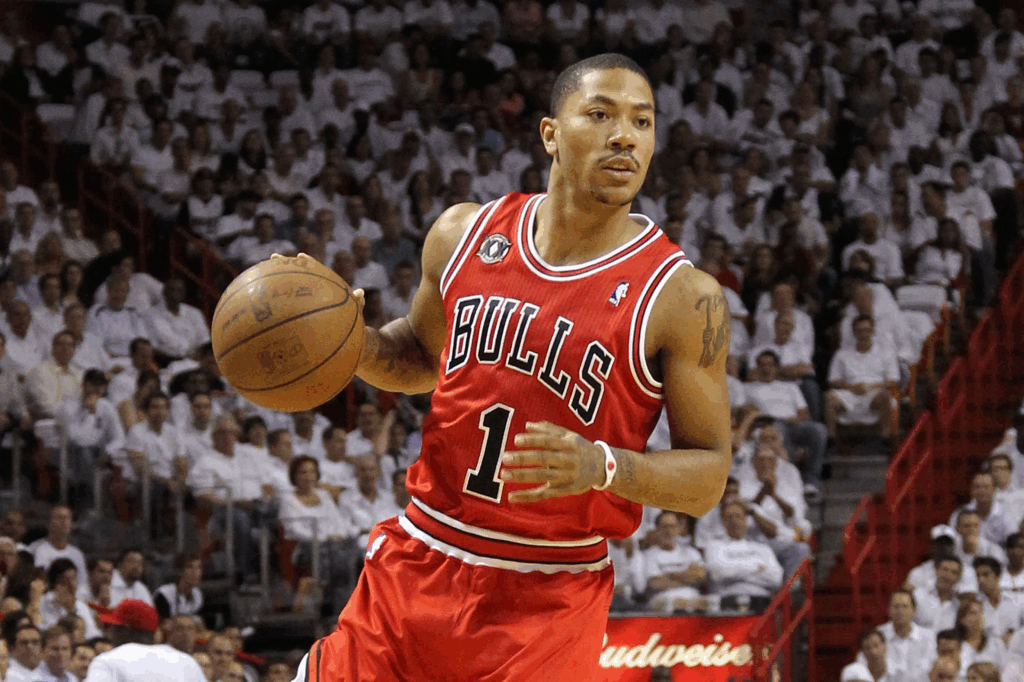
Derrick Rose once moved faster than the game itself. He attacked space with relentless drive and finished through contact with fearless energy.
The Chicago Bulls selected Rose with the first overall pick in the 2008 NBA Draft. He immediately electrified his hometown and the rest of the league.
Rose won the 2009 NBA Rookie of the Year award after averaging 16.8 points and 6.3 assists. He famously tied Kareem Abdul-Jabbar’s record for points in a playoff debut with 36 against the Boston Celtics.
In the 2010/11 season, Rose became the youngest MVP in NBA history at age 22. He carried the Chicago Bulls to the league’s best record and served as their offensive engine.
The fall-off phase for Rose tragically began in the 2011/12 season, and it arrived in a single moment.
On April 28, 2012, during the final minutes of a playoff game against the Philadelphia 76ers, Rose suffered a torn ACL in his left knee. This injury forced him to miss the entire 2012/13 season.
Just ten games into his 2013 return, he suffered a torn meniscus in his right knee, ending his prime years and stripping him of his athleticism.
After the Bulls sent him to the Knicks in 2016, Rose bounced around the league, playing for the Cavaliers, Timberwolves, Pistons, and Grizzlies, cementing his status as a journeyman.
On Halloween 2018, he erupted for a career-high 50 points with the Timberwolves against the Jazz.
During his second stint with the Knicks in 2021, Rose finished third in Sixth Man of the Year voting, offering veteran leadership and clutch performances for a team headed to the playoffs.
Rose officially announced his retirement from the NBA on September 26, 2024. The Bulls retired his No. 1 jersey on January 24, 2026, but he did not achieve his expected projections.
2. Ben Simmons
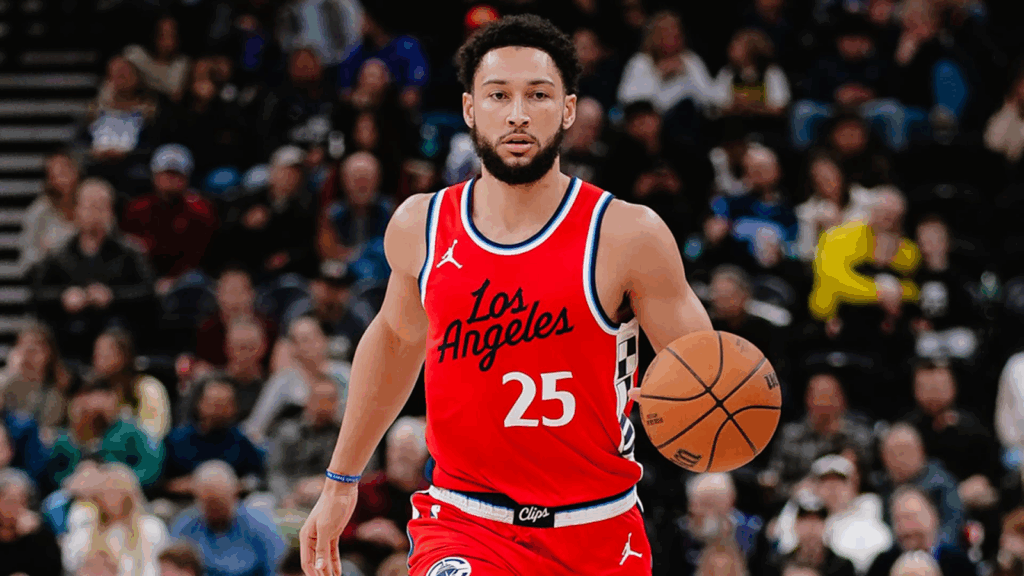
Ben Simmons entered the NBA as a contradiction that worked. He refused to shoot jumpers, yet he controlled games.
Simmons was an anomaly, but he functioned effectively on both ends of the floor.
The Philadelphia 76ers selected Simmons with the first overall pick in the 2016 NBA Draft. After sitting out his first year with a foot injury, he debuted with historic versatility.
Simmons won the 2018 NBA Rookie of the Year award. He averaged 15.8 points, 8.2 assists, and 8.1 rebounds, drawing frequent comparisons to Magic Johnson and LeBron James.
Simmons evolved into one of the league’s most versatile defenders. He earned two NBA All-Defensive First Team selections, finished second in the 2021 Defensive Player of the Year voting, and secured All-Star Selections and an All-NBA Third Team selection in 2020.
The turning point in Simmons’ career occurred during the 2021 Eastern Conference Semifinals against the Atlanta Hawks.
In Game 7, he famously passed up an open dunk late in the fourth quarter. Following the loss, public criticism from his coach and teammates led to a total breakdown in his relationship with the 76ers.
Simmons requested a trade and held out for the entire first half of the 2021/22 season, citing mental health concerns.
A blockbuster trade to Brooklyn in February 2022 offered a reset, but injuries, back issues, and mental strain compounded the decline.
His scoring plummeted during his tenure in Brooklyn, and he never regained his All-Star form. What once felt like an anomaly became a liability. Out from the Nets in early 2025, he signed a veteran-minimum deal with the Los Angeles Clippers.
As of January 2026, Ben Simmons has effectively stepped away from professional basketball. After failing to secure an NBA contract for the 2025/26 season, he transitioned into the world of professional sports fishing.
1. Roy Hibbert
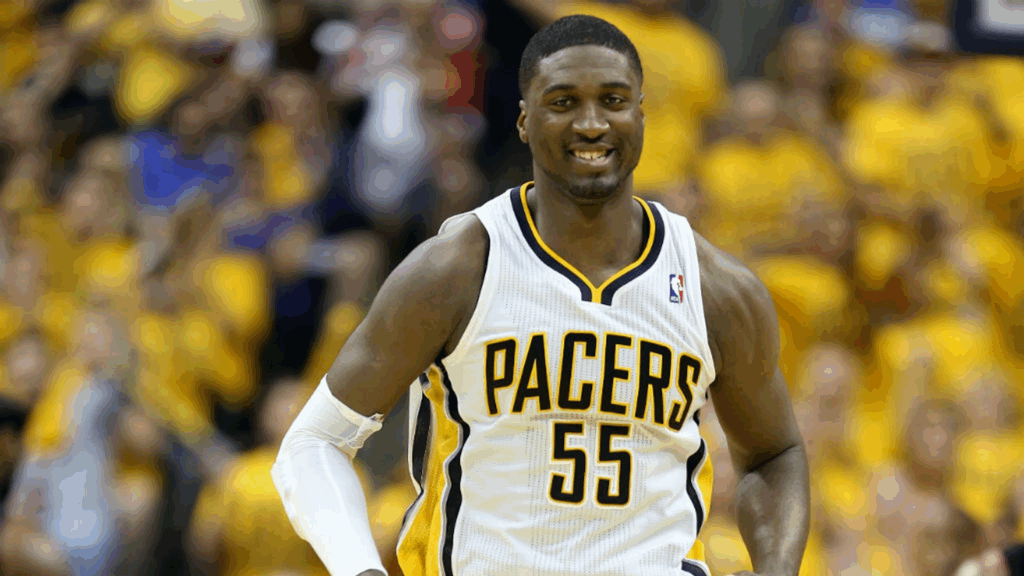
Roy Hibbert emerged as the league’s most formidable rim protector, relying on his size, timing, and defensive intelligence. He transformed the role of a traditional center in a league shifting toward speed.
The Toronto Raptors selected Hibbert with the 17th overall pick in the 2008 NBA Draft before trading him to the Indiana Pacers. Hibbert utilized his 7’2″ frame to become the anchor of a top-tier defense.
Hibbert mastered the “rule of verticality,” which allowed him to contest shots at the rim without fouling by jumping straight up with his arms extended.
He earned two All-Star selections and secured a spot on the NBA All-Defensive Second Team in 2014.
During the 2013/14 season, he finished as the runner-up for the Defensive Player of the Year Award, trailing only Joakim Noah.
In the 2013 Eastern Conference Finals, he averaged 22.1 points and 10.4 rebounds, nearly leading the Pacers to an upset over the defending champion Heat.
Hibbert’s decline began abruptly during the latter half of the 2013/14 season. Several factors converged to dismantle his impact.
The NBA issued a memo to officials in 2014 clarifying the verticality rule. Opponents began exploiting his lack of mobility in pick-and-roll situations, and Hibbert struggled to defend quicker, more versatile big men.
The following season proved detrimental. His offensive production plummeted. He famously recorded zero points and zero rebounds in multiple playoff games in 2014, leading to intense media scrutiny and a visible loss of confidence.
By the time he left Indiana, Hibbert’s rim protection was no longer elite. He became a journeyman and backup center in Los Angeles and Brooklyn, far removed from the presence he once commanded.
He played brief stints for the Charlotte Hornets and Denver Nuggets. In Denver, he mentored a young Nikola Jokić before officially announcing his retirement on July 17, 2018.
Who wrote this?
Bienuoma Agaga-Akpati is a software engineer, writer, eSports player, and sports enthusiast, presently working with a group of ambitious Africans to transform the writing industry. With good knowledge of various sports and eSports, coupled with his keen ability for research, he loves analyzing ideas and topics that fosters the growth of the sport and eSports scenes. In his spare time, he enjoys creating content and engaging in discussions across various platforms.
- Bienuoma

- Bienuoma
- Bienuoma
- Bienuoma
- Bienuoma
- Bienuoma
- Bienuoma
- Bienuoma

- Bienuoma

- Bienuoma

- Bienuoma

- Bienuoma

- Bienuoma

- Bienuoma

- Bienuoma

- Bienuoma

- Bienuoma

- Bienuoma
- Bienuoma
- Bienuoma

- Bienuoma

- Bienuoma

- Bienuoma
- Bienuoma
- Bienuoma
- Bienuoma
- Bienuoma

- Bienuoma

- Bienuoma

- Bienuoma