



Football holds a unique place in the Netherlands. For decades, the country has produced players who have left a deep impact on the game of football. From hard-tackling defenders to midfielders who dictate the pace of play and forwards with a ruthless edge in front of goal.
That identity found its clearest expression in “total football,” the philosophy shaped by Rinus Michels and brought to life by Johan Cruyff. Cruyff’s influence stretched far beyond the Netherlands, inspiring figures such as Pep Guardiola, who played under him in Barcelona’s 1992 European Cup-winning side.
Either referred to as the Netherlands (or Holland), and known globally as the Dutch through their language, the country’s influence on football has long exceeded its modest size.
Domestic clubs like Ajax have played a major role in that legacy, ranking among the world’s leading exporters of talent and lifting the Champions League, Europe’s top club trophy in 1995, after reaching consecutive finals.
Still, one prize has remained out of reach. Time and again, talented generations have come close, only to fall short at decisive moments. Three World Cup finals. No trophies.
Their only moment of relief remains the triumph at Euro 1988.
Two decades later, belief returned with the emergence of another outstanding group of players, but once again, success slipped away at the crucial moments. If misfortune ever needed a familiar victim, the Dutch national team often seemed to fit the role.
This is the tale of one of Dutch football’s most gifted eras. A story of expectation, disappointment, and the question of whether the Dutch need another golden generation.
A History of Underachieving
In football terms, a “golden generation” refers to a period when a nation enjoys strength across every position on the pitch, with elite players and a squad capable of matching the world’s strongest teams.
After the Netherlands’ success in the late 1980s, there was a gradual decline through the
1990s. That era peaked with a semi-final loss to Brazil at the 1998 World Cup, followed by a disappointing defeat to Croatia in the third-place match.
What followed was a dry spell on the international scene. The Dutch failed to qualify for the 2002 World Cup and did not return to the tournament until 2006 in Germany, eight years later.
During that downturn, however, something began to change. Dutch players started moving in greater numbers from the domestic league to Europe’s biggest clubs, laying the groundwork for a new wave of talent.
The 2006 World Cup: The Battle of Nuremberg
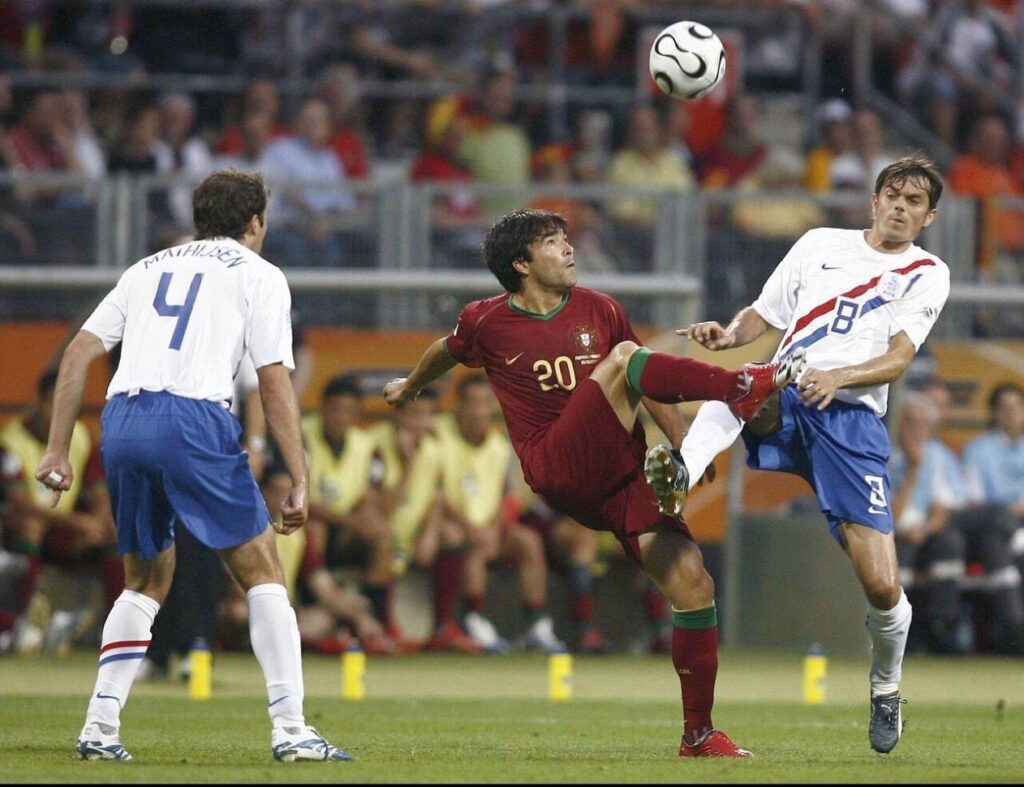
The 2006 World Cup marked the beginning of a rebuild that would eventually reach its ceiling in 2014.
Two years earlier, that process had already been set in motion when Dutch football icon Marco van Basten was appointed head coach following Dick Advocaat’s resignation after Portugal knocked the Netherlands out of Euro 2004 in the semi-finals.
Van Basten’s appointment felt like a natural fit. Despite a relatively short playing career, he carried an immense international pedigree, having been part of the 1988 Euro-winning squad and, crucially, understood the burden of near misses, having been part of Dutch sides that fell short of delivering major honours.
The Netherlands’ squad for the 2006 World Cup reflected a careful balance between experience and youth, with players drawn from the top levels of European football.
Van Basten’s 23-man list included senior figures such as Edwin van der Sar, Manchester United’s first-choice goalkeeper at 35, Ruud van Nistelrooy, the 2003 Premier League Player of the Year and a former Golden Boot winner, and Mark van Bommel, who had just lifted the Champions League trophy with Barcelona.
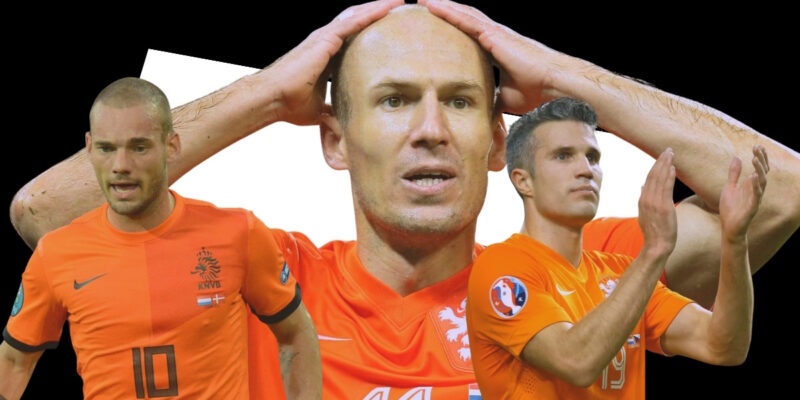
Beneath those headline names was a group of younger players already making their mark. Arjen Robben, only 22, had just won the Premier League with Chelsea. Robin van Persie was establishing himself at Arsenal as the long-term successor to Thierry Henry and had featured in the 2006 Champions League final defeat to Barcelona. Wesley Sneijder, still with Ajax, had claimed the Johan Cruyff Trophy as the Netherlands’ best young player two years earlier. All three were the same age.
That positivity faded quickly. The Netherlands exited the group stage unbeaten, yet fate paired them with Portugal in the round of 16, a matchup that promised trouble. What followed became known as the Battle of Nuremberg, still remembered as the most chaotic match in World Cup history.
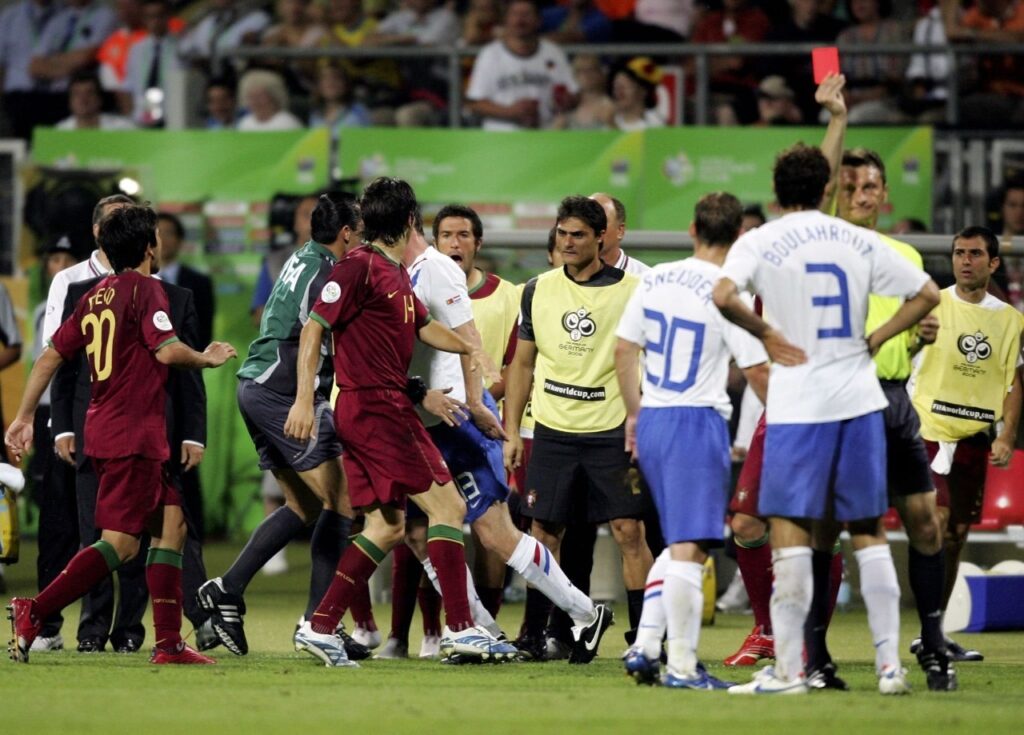
Wild tackles, flaring tempers, and repeated stoppages led to a tournament record of 16 yellow cards and four red cards. Portugal survived the madness and advanced to the quarter-finals. For the Netherlands, the defeat hurt, but it served as a harsh education for young players like Wesley Sneijder and Robin van Persie, who lived through the chaos on the pitch.
Euro 2008: The Russian Dagger
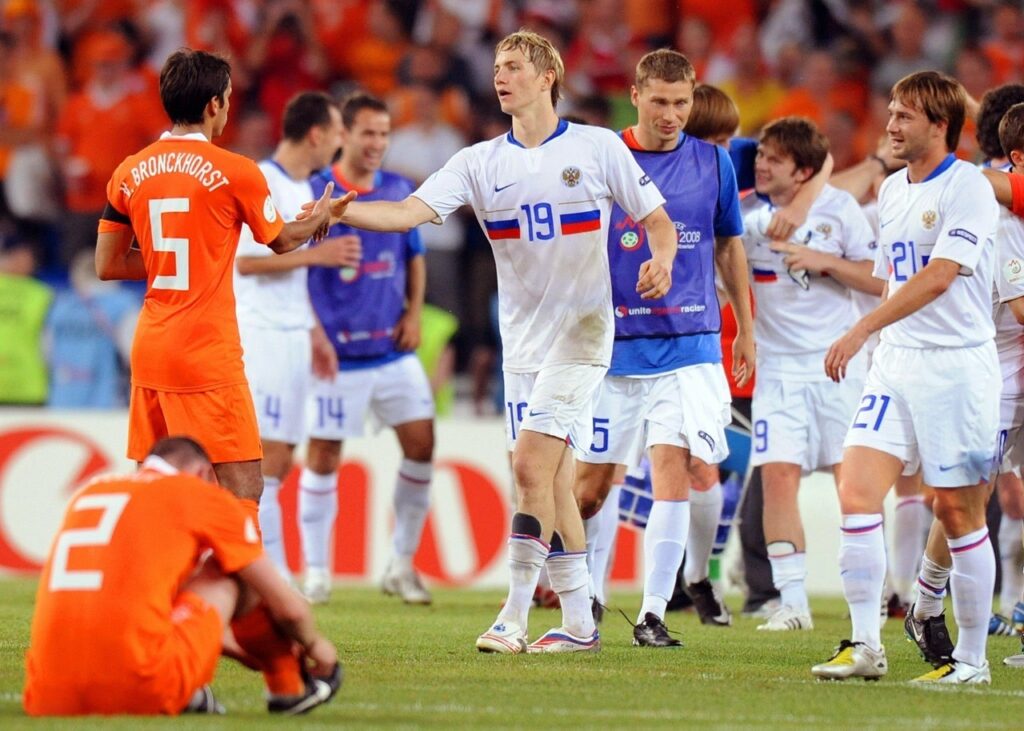
As the World Cup drew to a close, attention soon shifted to Euro 2008. During that period, some of the players had moved to bigger clubs. Wesley Sneijder had left Ajax for Madrid in 2007, joined by fellow countrymen Robben and Van Nistelrooy.
Euro 2008 was set to be a farewell stage for several senior figures, including Edwin van der Sar. The lessons from two years earlier had toughened the younger players, while the older players were driven by the urge to win something before bowing out.
Few people gave the Netherlands much of a chance. Drawn into a daunting group alongside France and Italy, finalists at the 2006 World Cup, the general view was that the Dutch would struggle. A third-place finish, possibly behind Romania, and qualification as one of the best third-placed teams was seen as the ceiling. That outlook seemed fair.
What followed stunned everyone. In their opening match, the reigning world champions were dismantled 3–0 by a vibrant Dutch side playing with freedom and confidence.
Wesley Sneijder delivered a standout performance, scoring and assisting to earn the man of the match. The momentum did not stop there. France and Romania were also brushed aside, as the Netherlands cruised through the group with maximum points.
The round-of-16 clash with Russia looked straightforward on paper. Instead, it reopened old wounds. After a goalless 90 minutes, Ruud van Nistelrooy gave the Oranje the lead, only for Andrey Arshavin to spark a Russian response. Three goals later, the Netherlands were out. It felt hauntingly familiar.
That exit effectively closed the chapter on Marco van Basten’s reign. Across four years, he had rebuilt the team and struck a balance between youth and experience. He stepped down, citing personal reasons and the strain of the role, though many felt that the familiar Dutch misfortune of the 1990s had followed him into management.
A change was inevitable.
The 2010 World Cup: Third Time Unlucky
Bert van Marwijk took charge of the Oranje following Van Basten’s exit. He was also a former international, though without the same stature as his predecessor, and his immediate task was to steer the Netherlands through qualification for the 2010 World Cup.
The early signs were impressive. The Dutch became the first European nation to book their place at the tournament, winning every qualifying match without defeat. Even so, that flawless run did little to convince everyone that Van Marwijk was the man to deliver success.
As the World Cup approached and the group stage draw was announced, analysts, bookmakers, and supporters began offering their predictions on who would win the final of football’s biggest stage, and the Netherlands was not on the cards of potential winners
But one thing was clear. The youngsters taken to the 2006 World Cup had grown into established names.
Wesley Sneijder had just played a pivotal role in José Mourinho’s treble-winning Inter side. Robin van Persie was a regular starter at Arsenal and was in the hunt for the Premier League Golden Boot. Arjen Robben, fresh from Spain, had become Bayern Munich’s driving force, leading them to a domestic double with 23 goals in 37 appearances.
Martin Stekelenburg, who was Edwin van der Sar’s understudy in 2006, was now Ajax’s first-choice goalkeeper and finished the season with a league-best 19 clean sheets.
Even so, individual brilliance alone did not make them favourites. Spain, Brazil, Germany, and Italy all boasted squads packed with bigger names, which kept the Dutch just outside the circle of clear title contenders.
The Netherlands was placed in Group E alongside Cameroon, Denmark, and Japan. None of the opponents were pushovers, but the Dutch won all three matches. The toughest test came in the final group game against Cameroon, where they were forced to absorb long spells of pressure from a physically imposing side.
Barring a handful of early surprises, the World Cup traditionally reaches its fiercest matches in the knockout rounds, when the stronger nations begin to collide. That moment arrived in the quarter-final against Brazil. The first half was punishing for the Oranje defence, as Robinho and Kaká ran riot, with Robinho breaking the deadlock. It seemed like the end of the road had arrived for the Oranje
The response after the break was fearless. Sneijder equalised from a driven cross that the goalkeeper failed to deal with, then completed the turnaround by heading in a corner after Dirk Kuyt’s near-post flick. Those two goals secured a place in the semi-final.
Once again, Sneijder delivered on the biggest stage, underlining why he was central to Mourinho’s Inter.
Belief began to grow. With confidence surging among the supporters, a semi-final appearance brought the sense that, with the right breaks, the Netherlands were edging closer to a prize that had evaded them for generations.
Their semi-final opponents, Uruguay, arrived riding the emotion of a dramatic escape against Ghana that had gone their way. Luis Suárez’s infamous handball had granted them a lifeline, though it also ruled him out of the semi-final, a blow they could not overcome as they fell to the Dutch.
It was staggering. As a side not tipped as potential World Cup winners, the Oranje had eliminated one heavyweight after another, navigating some of the tournament’s toughest obstacles, yet the mission was still unfinished.
Awaiting them in the final was Spain, a matchup that left the Oranje as clear underdogs. Spain had booked their place by seeing off Germany, the same ruthless German side that had swept aside Argentina and England with four goals apiece on their path to the latter stages.
This Spanish team was filled with Barcelona and Real Madrid stars, moulded by elite managers and steeped in a clear footballing identity.
Even so, Dutch supporters were undeterred. They had earned their place on the biggest stage and, with it, the right to believe.
Clad in orange, they flooded into Johannesburg’s FNB Stadium, better known as Soccer City, ready to pour every ounce of support behind their team.
Howard Webb’s whistle set the final in motion, both sides trading early blows in search of the opening goal. On the flank, Arjen Robben and Sergio Ramos clashed repeatedly, but despite the chances, neither team found a breakthrough.
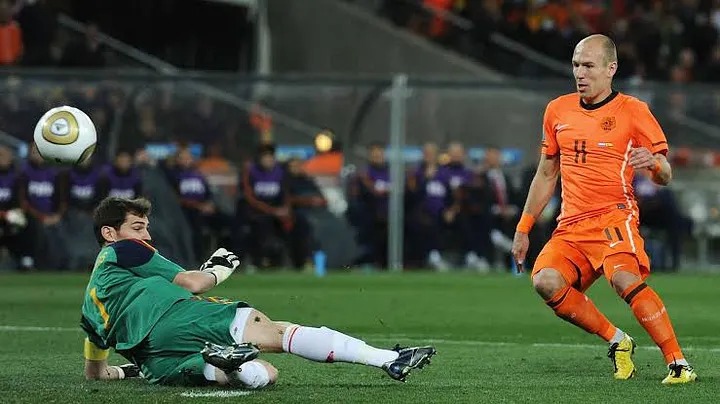
The turning point came in the 62nd minute. Arjen Robben burst clear on goal with the chance to decide the final, but he failed to convert. It was a moment that would haunt him. That chance had carried the weight of a nation and should have settled the contest.
With the match moving into extra time, Spain finally struck. Andrés Iniesta broke the deadlock, leaving the Dutch scrambling for a response. They pushed for an equaliser to force penalties, but Spain held firm, closing out the game and delivering their country’s first World Cup triumph.
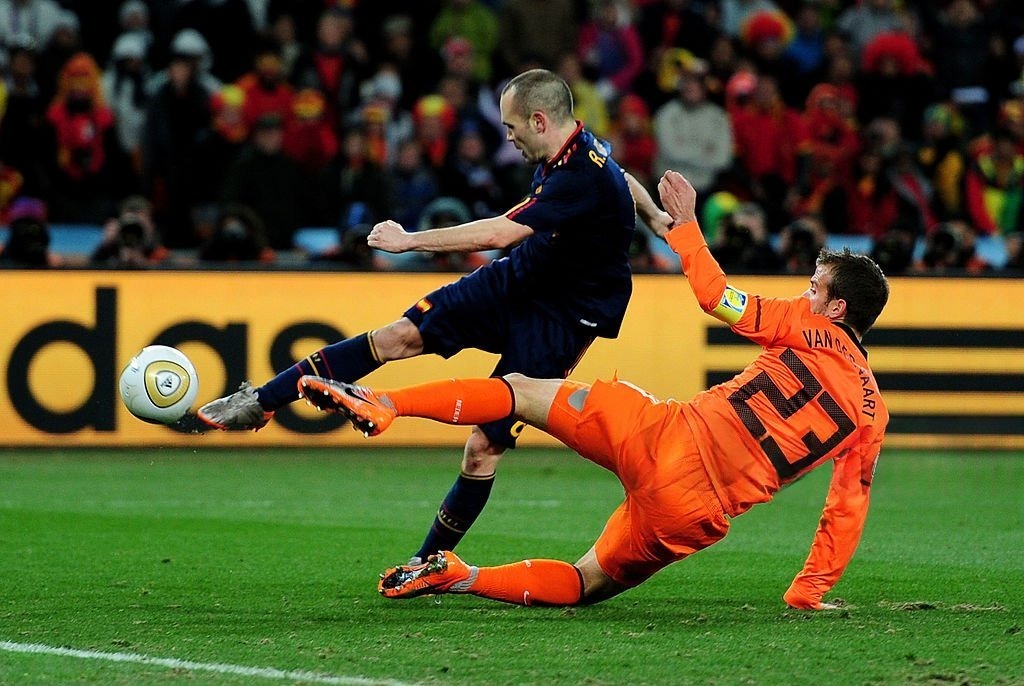
For the Netherlands, the pain was familiar. Once again, the dream slipped away, as it had in 1974 and 1978. Three finals, three denials, just like Peter’s third denial at the crow of the cock, each failure cutting a little deeper than the last. It hurt, but it did not change the result.
Robben would carry the burden of that miss, yet football offered no pause for reflection. Time moved on, and so, eventually, did the Oranje.
Euro 2012: Nightmare in Kharkiv
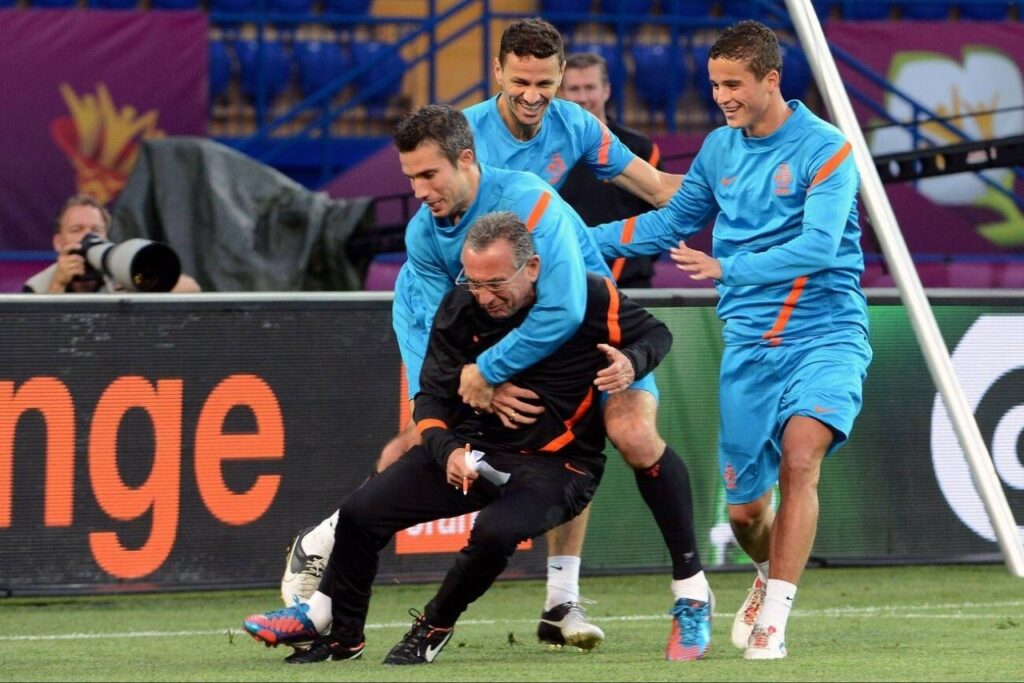
Ukraine and Poland were co-hosting the Euros in 2012, the second time that will be happening after the Euros 2000, which was co-hosted by the Netherlands and Belgium.
Bert van Marwijk remained at the helm, having extended his contract to 2016 the year prior, the Oranje were presented with an opportunity to change the narrative from two years earlier. They were coming into the competition as one of the favorites following their impressive outing at the 2010 World Cup
Once again, the Netherlands found themselves grouped with Portugal, Denmark, and Germany, familiar rivals from past encounters. At a glance, they appeared well-equipped.
Robin van Persie was in ruthless form after reaching 30 goals to secure the Premier League Golden Boot. Wesley Sneijder was still a key figure at Inter Milan, while Arjen Robben arrived after enduring yet another crushing loss against Chelsea, denied by Petr Čech in the penalty shootout of the 2012 Champions League final.
The squad had also evolved. Fresh faces such as Kevin Strootman and Luuk de Jong were integrated, adding energy to the side.
There was an expectation that long-standing prejudices in parts of Eastern Europe had begun to fade, especially within football, a sport that often presents itself as a unifying force.
That assumption proved misguided. During an open training session at Stadion Miejski in Kraków, watched by around 20,000 fans, monkey chants broke out from the stands shortly after the warm-up had begun.
Some players refused to continue. Van Marwijk stepped in, removed the cones, moved the session to another area of the pitch, and training went on.
The incident drew widespread criticism. UEFA was fully aware but issued no punishment, framing it as a broader social issue rather than a football matter.
Still, this was hardly the backdrop any team would want before a tournament opener. The impact was psychologically damaging, but in football, context rarely softens judgment.
Denmark provided the opening challenge, and the Netherlands fell short, losing 1–0. A single result rarely determines a team’s outcome at a tournament, and history shows that slow starts can be overcome. Still, competitions of this level offer little time, and any response has to come quickly.
The second outing was against Germany. Given the strength of the opposition, victory was never certain, but there was confidence that the Dutch could at least take something from the match. They created chances in the first half but failed to convert, and they were made to pay when Mario Gómez struck twice before the break.
Change was required after halftime. The Netherlands played with more cohesion and fashioned several chances, yet frustration lingered until Robin van Persie finally scored to revive belief among the supporters. Defensive lapses nearly led to another goal, and when the final whistle sounded, the damage was done.
They were staring at an early elimination and now needed a win against Portugal by 2 goals to keep their hopes alive. After the match, Van Marwijk was openly critical, pointing to a hesitant back line that sat too deep and allowed Germany to apply sustained pressure.
Van Marwijk’s criticism after the Germany defeat was largely justified, though he also shared responsibility. His conservative setup contributed to the team’s struggles. Still, there was no time to dwell on the fault. The equation was simple: a two-goal win over Portugal and hope Germany overcame Denmark.
None of it played out. The Netherlands lost 2–1 to Portugal, with Cristiano Ronaldo scoring twice, settling an old score dating back to his injury at the hands of the Dutch in 2006. Germany beat Denmark, confirming the Oranje’s elimination.
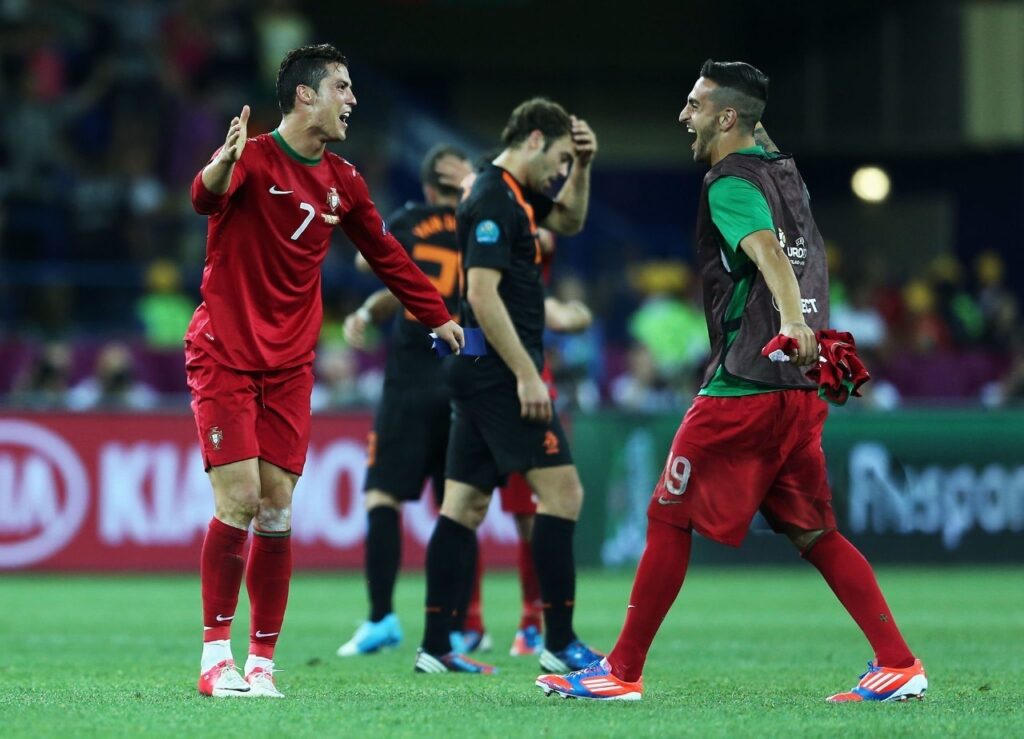
As ever, the manager bore the brunt. Despite a contract renewal that was to see him stay till 2016, Van Marwijk stepped down after meetings with the federation. It was a quiet exit for a man who qualified the Oranje for two tournaments and delivered a World Cup final in one; a public sack would have been unfair.
The 2014 World Cup: The Flying Dutchmen
Time is rarely kind in football. By 2014, the Dutch national team looked nothing like the side of 2010 or 2012. Key players were older, others had retired, and nearly half of the previous core was gone. Louis van Gaal was back in charge, another clear choice to stay within the Dutch nationality rather than look outside.
Robin van Persie had left Arsenal in 2012 for Manchester United and won the Premier League in 2013. If success did not come with the national team, at least it arrived at club level. Wesley Sneijder moved to Galatasaray, while Arjen Robben finally lifted the Champions League in 2013 after Bayern Munich beat Borussia Dortmund, easing the pain of earlier failures with both club and country.
Those three remained the pillars, now joined by a new wave that included Tim Krul, Jasper Cillessen, and Stefan de Vrij. Continuity mattered.
As usual, the Oranje were handed no favours in the draw. They were grouped with holders Spain, South American heavyweights Chile, and Australia. The highlight was clear. A World Cup final rematch, this time arriving early, in the group stage.
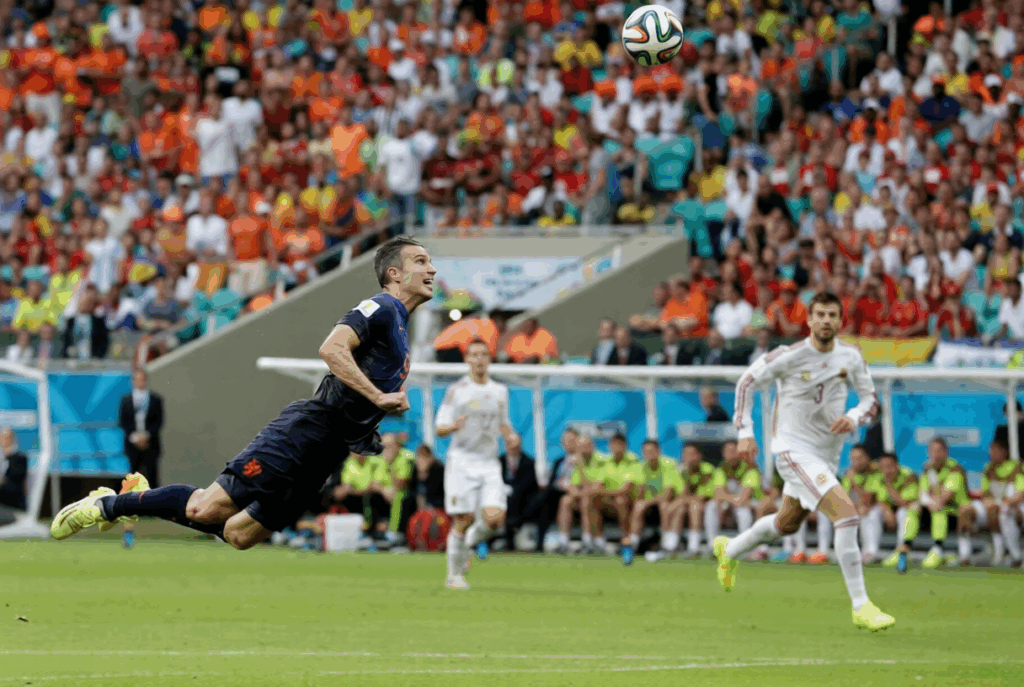
The Netherlands treated the rematch with Spain as unfinished business and settled it emphatically in Salvador, dismantling the holders 5–1. There was no trophy attached, but it felt good to win. What unfolded was a near-perfect performance.
Robben raced through on goal and did more than beat Iker Casillas. He toyed with the Spanish defence and left the goalkeeper on the ground after slipping past him. Van Persie produced the moment that defined the night, meeting a long ball with a soaring header that earned him the nickname “The Flying Dutchman.” The Oranje were in complete control.
Van Gaal’s reaction only added to the intrigue. He claimed the team still had room to improve and had yet to reach its best performance. After scoring five against the reigning champions without hitting full stride, it raised uncomfortable questions for everyone else.
One question remained. Were the Netherlands back? They went on to win their remaining two group matches, while holders Spain exited at the group stage.
In the group stage, Oranje was the best of what they produced at the 2014 World Cup, contrary to Van Gaal’s earlier assertions about hitting better performances.
Results were all that mattered, and Van Gaal leaned into that reality. Style took a back seat, but wins kept coming. Mexico were put away 2–1 in the round of 16, and Costa Rica were beaten 4–3 on penalties in the quarter-final.
Another semi-final appearance, coming at a second straight World Cup, underlined how far the team had gone. Still, it was never meant to be the destination. After 120 scoreless minutes against Argentina, a 4–2 defeat on penalties ended the run. From the last 16 onward, performances slipped, and reliance on narrow margins finally caught up with them.
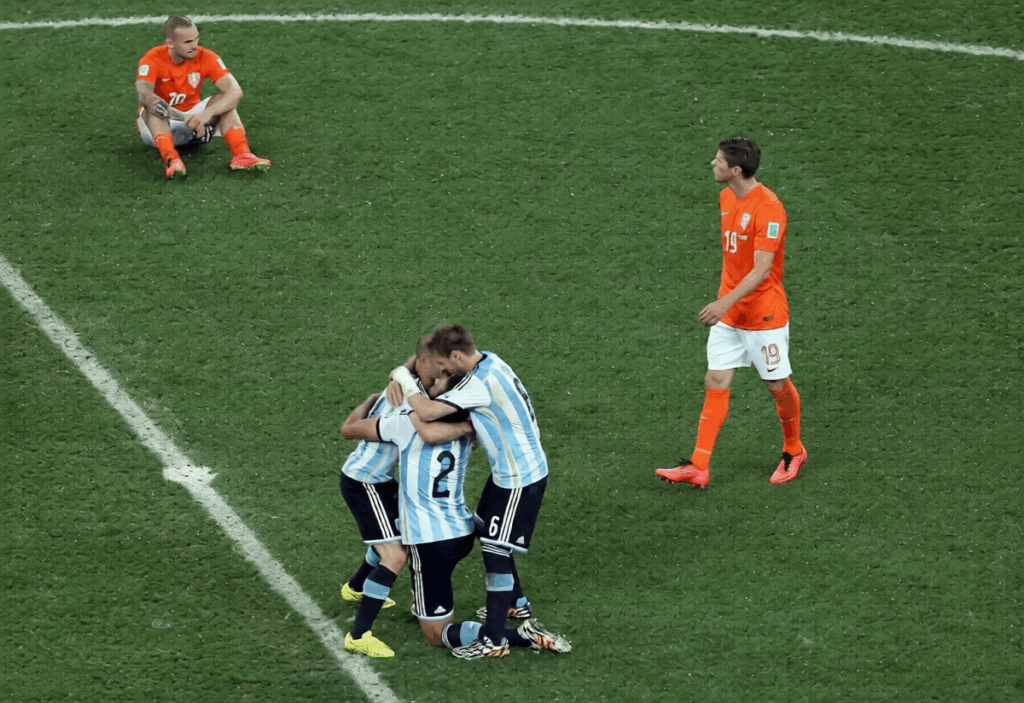
Third place was sealed with a win over hosts Brazil. Opportunities to get to the semi-final consecutively rarely repeat themselves, especially with other nations improving and younger squads closing the gap fast.
Van Gaal left his role as head coach after the World Cup. He had done his bit; it was time for someone else.
Euro 2016: Crashing Out With a Whimper
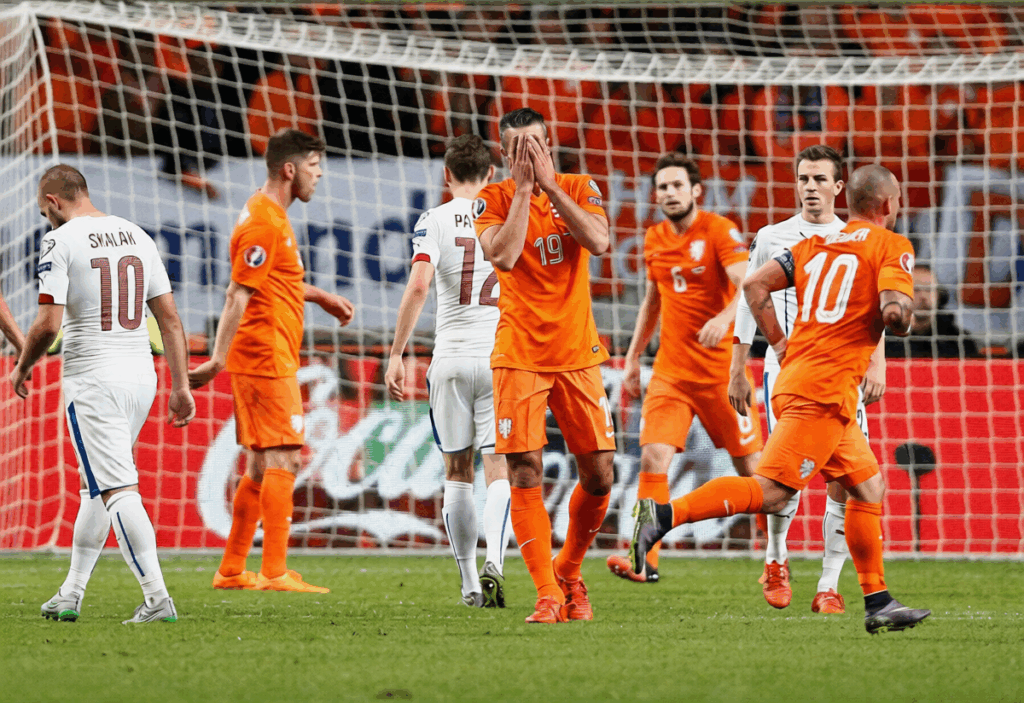
Guus Hiddink returned for his second spell in charge of his country’s national team, the first stint coming between 1995 and 1998. The aim was to see the team from qualification to the end of the Euro 2016, and assistant manager Danny Blind will take over.
Earlier signs of poor performances in the team, which were salvaged by Van Gaal’s tweak in the set-up was not addressed properly. Hiddink reverted to the traditional Dutch 4-3-3 system, which backfired heavily.
Qualifying form offered little reassurance. Only four wins came from ten matches. Before the qualifiers ended, Guus Hiddink was gone, with Danny Blind stepping in as head coach. It later emerged that Hiddink had been dismissed rather than stepping aside.
Those 4 victories came against the group’s weakest sides, Kazakhstan and Latvia. Nobody really expected those two sides to grind out a result from the Dutch side.
Context mattered, since the group also included Turkey, the Czech Republic, and an Iceland team inspired by Lars Lagerbäck on their way to a historic qualification. These other teams in the group had become stronger and tougher than they previously were.
Still, context could only stretch so far. No one would have imagined the Oranje failing to escape from that group. That disbelief explained the sharp criticism from national icons such as Johan Cruyff, who viewed the outcome as unacceptable.
Amid the frustration, one reality stood out. The core of the team had aged. Sneijder was well past his peak after his dominant run between 2010 and 2013. Robben missed large parts of qualifying through injury. Van Persie’s decline was made evident by his own goal against the Czech Republic.
Robben still had something left, perhaps another season or two, but international retirement loomed for the leading stars. Reliance on them was no longer realistic.
Warning signs from 2014 had gone unaddressed. A fragile defence, a flat midfield, and an attack that lacked any surprise defined the qualifying campaign.
New names such as Memphis Depay and Virgil van Dijk entered the picture, though immediate salvation was never a fair expectation. By then, it was clear this generation had reached its end, remembered for a World Cup final and a near-miss semi-final, yet ultimately falling just like the Dutch sides of the 1970s and 1990s.
Social media was awash with this occurrence, with some saying that their decade at the top of football was well and truly over. Others turned it into banter material, likening the Oranje to Andorra.
This was more than a bitter pill to swallow, considering that the spots for qualification had increased to accommodate more teams; no reason would be enough to satisfy the fans for the abysmal outing.
Do the Dutch Need Another Golden Generation?
Missing out on the 2018 World Cup forced a full reset. A rebuild followed, light on headline names but rich in quality. Virgil van Dijk emerged as the anchor of Liverpool’s defence during this time, while Ajax’s remarkable 2019 Champions League run fed a new wave of talent into the national team, like Frenkie De Jong.
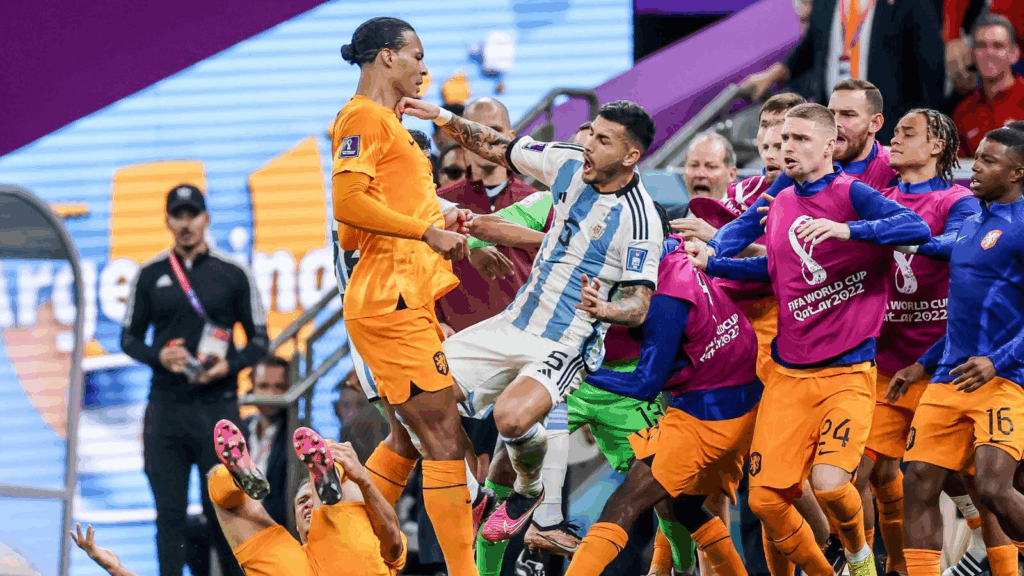
The 2022 World Cup offered encouragement. A quarter-final exit came only via penalties against eventual champions Argentina, another meeting eight years on. With the 2026 World Cup approaching, can the Oranje rise as underdogs and carve a place for this current team and their country in World Cup history?
Who wrote this?

Francis Muojindu is a law graduate, journalist, and writer who is always seeking to amplify African Voices in sports.
He primarily covers football, basketball, and athletics with good knowledge of other sports.
When Francis is not bantering with friends, he is on the search for the latest news flying across the globe.
- Francis Muojindu

- Francis Muojindu

- Francis Muojindu

- Francis Muojindu
- Francis Muojindu
- Francis Muojindu
- Francis Muojindu

- Francis Muojindu
- Francis Muojindu
- Francis Muojindu

- Francis Muojindu