



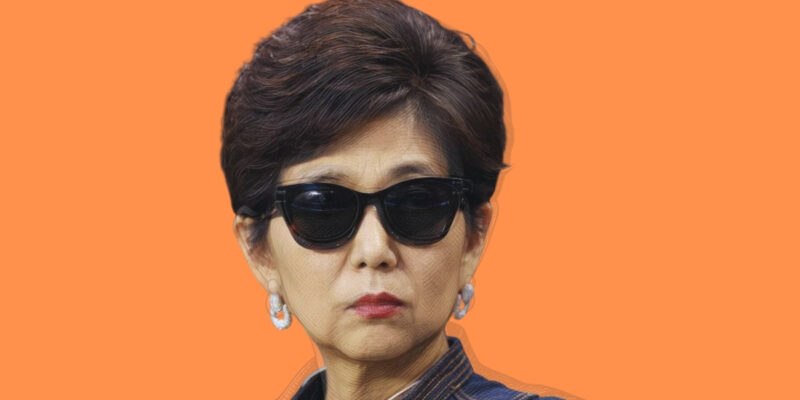
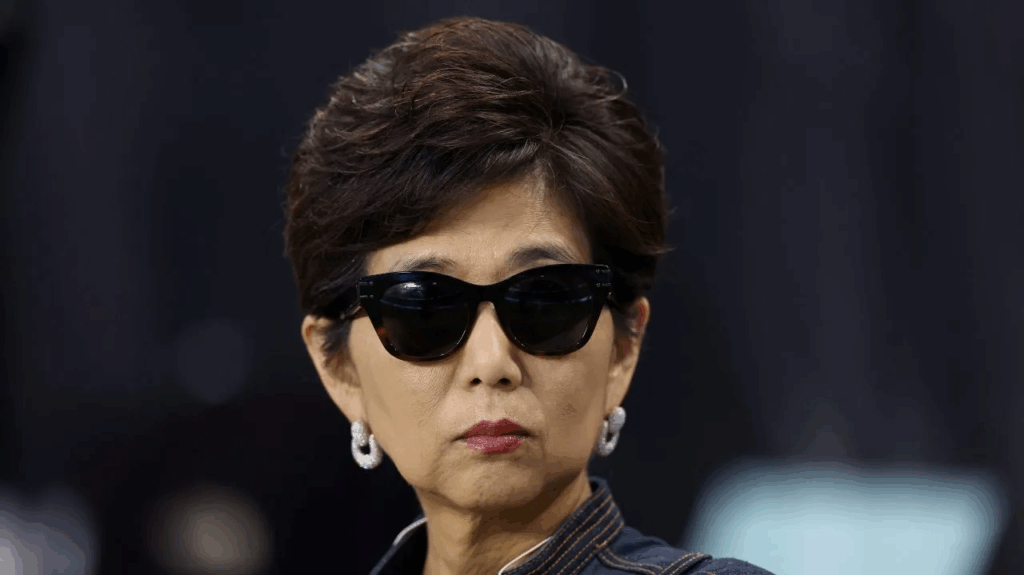
When Michele Kang stepped into the women’s game in 2020, every corner of the industry felt the shift. Her $35 million (£26.5m) takeover of the Washington Spirit was seen as a blockbuster financial move and the highest at the time.
No one could predict exactly what would follow, but one thing was certain: the game was on the brink of one of its most defining chapters yet.
Conventional wisdom suggests that the moments we notice most are rarely where the story begins. Long before the money arrived, long before investors began to connect the dots, women’s football had already been writing its own proof of concept.
In the United States, the signs were impossible to ignore. Stadiums were filled whenever major tournaments came around. Television audiences rose steadily.
For over two decades, the United States women’s national soccer team set a benchmark that blurred the line between excellence and inevitability. Years of sustained international football, four World Cup titles, and a level of consistency that even the men’s game struggled to match.
Evidently, the talent had always been there.
But if you looked just beyond the pitch, the cracks started to show. The infrastructure around the sport lagged behind in ways that were hard to ignore. Training systems were built with male athletes as the default. Budgets remained tight.
The contradiction became harder to ignore. Women’s football kept delivering, but the rewards rarely matched the output. It was as though the sport had mastered the art of knocking on the door, only for it to remain stubbornly shut.
The archives of those glory years, when placed side by side with the growing commercial possibilities of the present, began to tell a different story, urging: invest now, or risk being left behind.
And Kang listened.
From Healthcare Systems to Stadium Lights
Kang’s journey into football is anything but conventional. She was born in Seoul, South Korea, into a working-class family. Her old neighbourhood was constantly humming with reconstruction: a befitting metaphor for what lay ahead. Her father worked as a civil servant, while her mother managed the home.
Growing up as the youngest of three girls in South Korea, Kang was more curious than rebellious, always asking why. Her mother was called to her school multiple times, not because she was causing trouble – she was a top student – but because she would question teachers, rules, and expectations.
Kang was also a self-described tomboy growing up. She played sports, a lot of them. She played soccer and volleyball, but tennis became her primary sport before the need to study won out.
For some parents, the emphasis on the value of education is unwavering. Kang’s parents were no different. The formula was simple: get good grades, secure a respectable job, and settle down.
That same formula sharpened her academic discipline, earning her a place at Yonsei University, one of South Korea’s most prestigious institutions. Yet even there, Kang was never the one to be boxed by convention.
Soon after her studies, she left Seoul in the early 1980s and moved to the United States as a young adult to pursue her dream in tech.
Within a short period of time in the U.S, she had built a career at the intersection of healthcare policy and digital infrastructure—a space where the real work happens quietly.
In 2008, she founded a company called Cognosante, which focused on modernizing healthcare technology systems for government agencies and public health programs. By the time the company was sold in 2024, Kang had already established herself as a billionaire entrepreneur.
That brings us, somewhat unexpectedly, back to football.
From Fan to Trailblazer
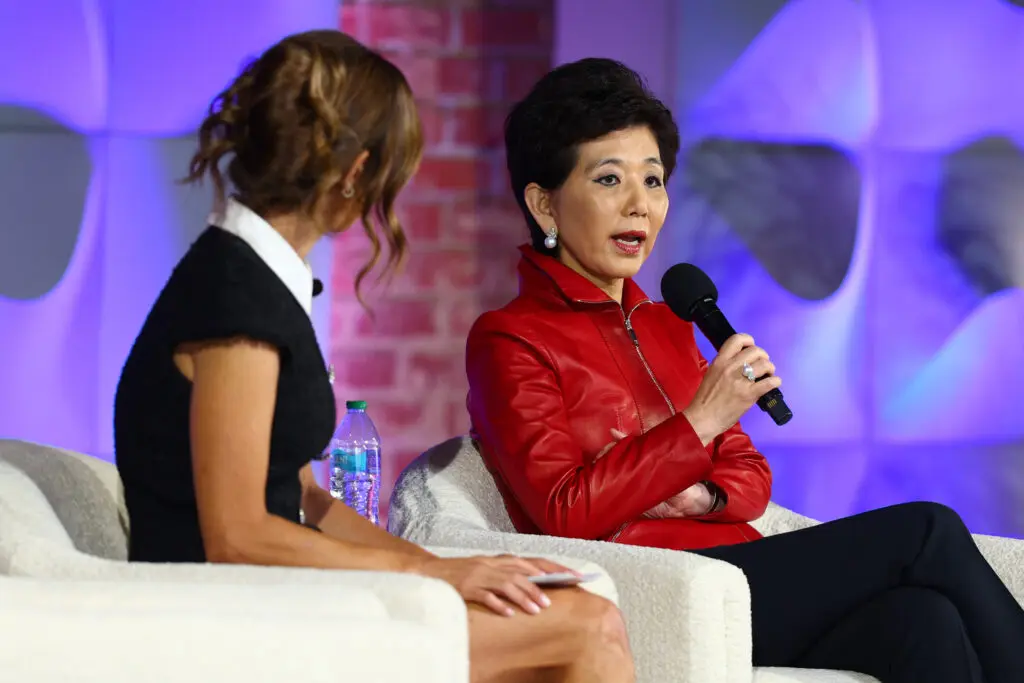
Just like many investors, Kang first arrived as a fan who enjoyed the excitement of the pitch.
“To tell you the truth, I didn’t know there was a professional league in this country,” Kang said in 2022. “In part because my life has been all about work. I didn’t have time to do anything else.”
The football part was nice, but what appealed to her most was having a hands-on impact on women’s empowerment, especially around pay and equity issues. As she once said, “dignity of work, dignity of self, independence, and being able to get the same opportunity.” are four things that have helped her through her journey.
With women’s football, she could provide opportunities.
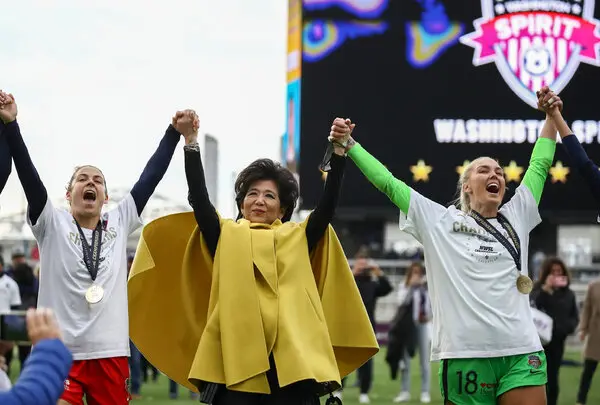
In 2020, she purchased a minority stake in the Washington Spirit of the National Women’s Soccer League (NWSL).
At that time, the NWSL was still figuring things out. There was no strong voice to push for its potential. Different owners came and went. Even the facilities between the male and female sports varied wildly. These challenges killed the value that many investors saw in the team and later drove them away.
However, Kang saw something else entirely.
Three Clubs, One Idea
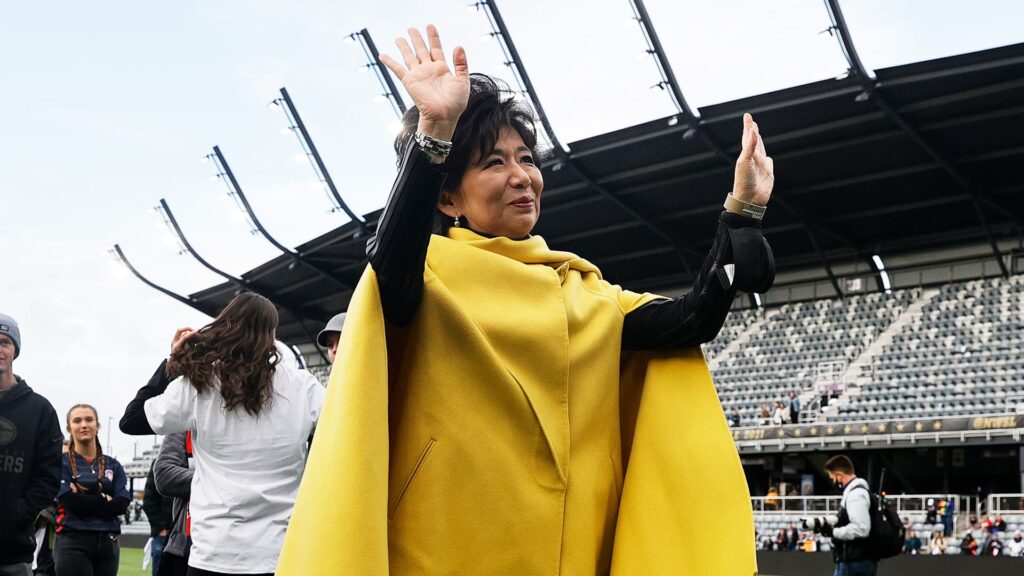
Owning one football club, especially as a minority owner, can sometimes resemble a passion project. Owning several, across continents, that is something far more deliberate. It’s a long-term strategy.
After taking full control of the Washington Spirit in 2024, Michele Kang turned her attention to Europe. A year earlier, she had already made a decisive move, acquiring a significant stake in Olympique Lyonnais Féminin, a team widely regarded as the gold standard of women’s club football.
To the casual observer, Lyon was already complete. Eight European titles. A squad shaped by icons like Ada Hegerberg and Wendie Renard. Kang saw more to this: an untapped potential as a brand still operating in the shadow of its men’s counterpart.
Then came England. Still operating within Lyon’s structure, Kang added the London City Lionesses to her growing portfolio. The map widened. The idea sharpened.
Three clubs. Three countries. One owner.
But Kang never approached them as isolated assets. Instead, she built a framework around them: a multi-club model under the banner of Kynisca Sports International.
Under Kynisca, these clubs became more than teams; they became nodes in a network. What later emerges is not just continuity, but alignment and a shared philosophy stretching from Washington to Lyon to London.
And the investment did not stop at club level. In 2024, Kang took an even bigger step. She committed $30 million to the United States Soccer Federation—the largest single donation in its history directed at women’s football.
Next was the youth level. Because in all honesty, what good is elite investment if the pipeline beneath it remains broken? Youth identification programs were expanded. National team training opportunities grew. Mentorship structures for coaches and referees began to take shape.
Yet, even that was not the most ambitious part of Kang’s plan.
The System the Game Never Had
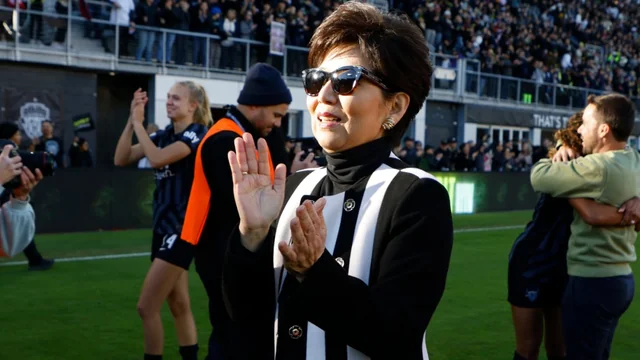
There is a statistic Michele Kang often returns to when discussing the state of women’s sport. It sounds almost insignificant at first until its implications begin to unfold.
Roughly six percent of sports science research has historically focused on women. That number explains more than it appears to.
For decades, elite sport has operated on a foundation built primarily around male physiology. Training methods, recovery cycles, injury prevention models, performance analytics—all calibrated with men in mind. When women entered these systems, adaptation followed as an afterthought, often reactive rather than intentional.
The consequences have been visible. Take Anterior Cruciate Ligament injuries (ACL) which occur at significantly higher rates in female footballers than in their male counterparts. For years, researchers debated the causes: biomechanics, muscle imbalances, hormonal fluctuations. But beneath those discussions, the real problem was merely a structural failure.
Through Kynisca, Kang committed tens of millions of dollars to building an innovation hub dedicated to research on female athletic performance. Her work ranges from injury prevention to hormonal cycles and how they shape training loads. She took it upon herself to answer questions that should have been central to women’s sport decades ago.
From Kang’s historic stake at Washington Spirit, to her blockbuster donation to the Women’s Football team, these were built around an idea Kang often expresses bluntly: “Women are not small men.”
The phrase sounds simple, but it carries an entire philosophy that shaped her legacy and the future of women’s football itself. If women’s football is going to reach its full potential, it cannot simply inherit systems designed for someone else.
Within Kang’s clubs, facilities have improved, salaries have grown, and the commercial structure surrounding the teams has slowly started to fall in place.
The Ripple Effect on the Global Stage

The interesting thing about Michele Kang’s investments is that her influence in women’s football doesn’t stop with the clubs she owns.
In football, ideas are infectious.
A tactical shift developed in one league gets to show up somewhere else. A youth academy model that works in one country will quietly become the template for another. Over time, what begins as a local experiment slowly reshapes the wider game. Kang understands that dynamic well.
The effects of that model are already visible in smaller ways. Notably, attendance numbers in the NWSL continue to rise. Commercial partnerships are starting to expand. Broadcasters are beginning to treat women’s football as something more than an occasional novelty, and other investors are beginning to adopt Kang’s methods as well. For instance, groups like Mercury/13 (investing in Como Women and Bristol City) and Crux Football are beginning to mirror this “networked” approach.
Crux Football has begun constructing its own multi-club structure, starting with the takeover of Montpellier’s women’s team in France.
All these similar projects taken together suggest something subtle: the idea of building networks around women’s football is beginning to scale, all thanks to a radical investor who chose to bet on dignity over dollars.
Challenges Ahead
The path however is not always without hurdles. Even the most ambitious plans collide with reality. The revenue gap between the men’s and women’s games remains a canyon. Many clubs still rely on the “charity” of men’s sides willing to absorb losses. For instance, in England, several Women’s Super League teams, including Chelsea FC Women and Manchester United Women, remain closely tied to their men’s counterparts for resources and infrastructure.
In other words, the kind of ecosystem Michele Kang hopes to build is still being assembled in real time.
All of this begs one question: Can the women’s game grow quickly enough to sustain the investments flowing into it?
Regardless, Michele Kang seems unfazed by the timeline. In her world, systems aren’t built overnight. Her impact on women’s football is still unfolding, and it may take years to fully understand how significant it will be.
Before her intervention, the sport had depended heavily on moments of brilliance to push itself forward. There were crowds that appeared just often enough to remind everyone what the sport could become.
What Kang seems to be attempting instead is far more structural: building the foundations that allow those moments to exist within a stable ecosystem. Clubs connected across continents. Research programs dedicated to female athletes. Development pathways that stretch beyond youth academies.
If Michele Kang succeeds, people will not only remember her as an investor, she will be remembered as the person who looked at the “fragile” state of women’s football and decided to build an industry many had overlooked.
At the end of the day, the real payoff for women’s football may not arrive next season or even the one after that. But once it works, it could reshape the entire industry. And Kang will be right at the center of that transformation.
Who wrote this?

Mahbubat Salahudeen is a Sport Journalist with a primary focus on Youth-Athleticism and women's football.
She is currently pursuing a degree in Media Communications and Public Relations. While much of her experience lies in Sports communications, she has honed transferable skills in strategic communication, audience engagement, and digital media production that transcend industries.
- Mahbubat Salahudeen

- Mahbubat Salahudeen

- Mahbubat Salahudeen

- Mahbubat Salahudeen

- Mahbubat Salahudeen

- Mahbubat Salahudeen

- Mahbubat Salahudeen

- Mahbubat Salahudeen

- Mahbubat Salahudeen

- Mahbubat Salahudeen