



For a country that gained independence in 1991 and was enlisted in FIFA’s ranking system three years later, Croatia has quickly grown into a football powerhouse.
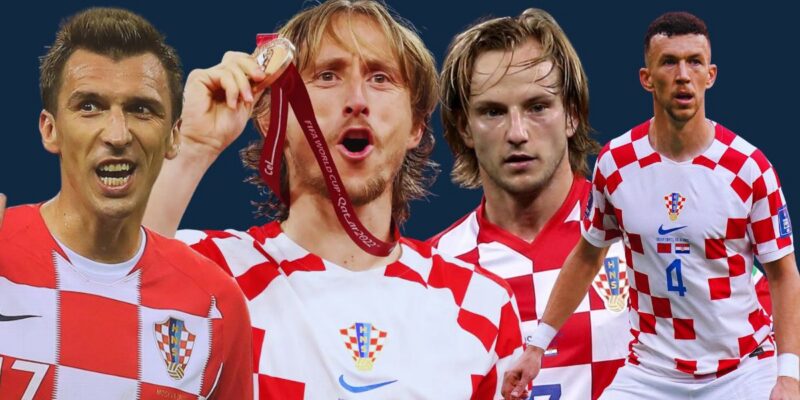
From their World Cup debut in 1998, Croatia had a host of elite talents, including Davor Šuker, Zvonimir Boban, Ivan Rakitic, and Luka Modric. These talents, combined with the rise of two golden generations, have punched Croatian football far above its weight.
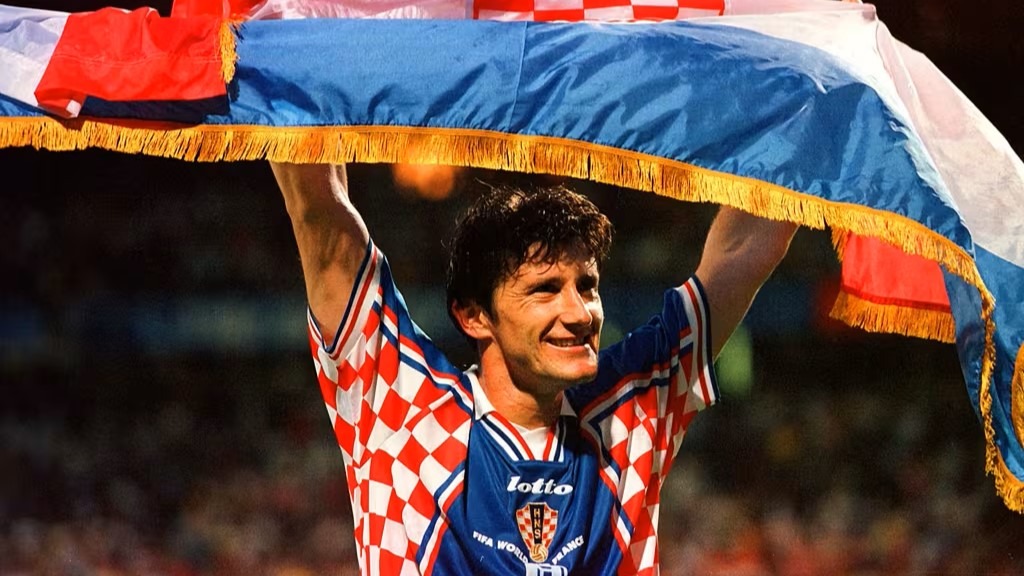
Croatia’s golden generations have rewritten their history in a short span and have come close to winning the biggest prize in international football, the World Cup, on three occasions.
The Class of 1998: The First Golden Generation
After declaring independence in 1991, Croatia was thrown into war, which lasted until 1994, preventing it from being admitted into FIFA and UEFA.
Nicknamed Vatreni, Croatia initially ranked 125th, but their qualifying run for the 1996 Euro moved them up to 62nd. In their first-ever international tournament, Croatia beat reigning Euro champions Denmark and marched past Turkey before losing to Germany in the quarterfinals.
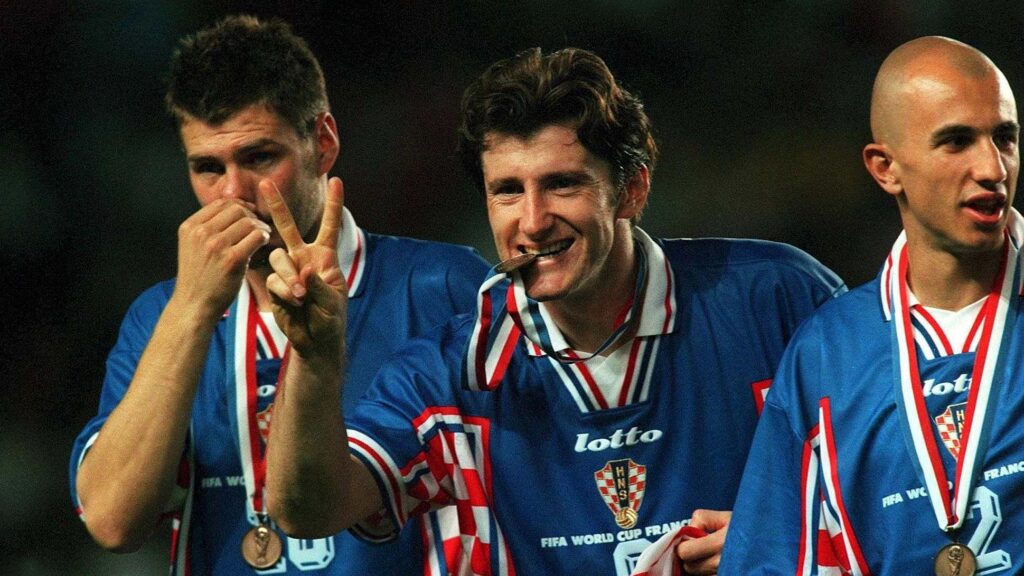
The next time the football world saw Croatia in an international competition was at the 1998 World Cup in France.
The class of 1998 is referred to as Croatia’s first golden generation, and they arrived at the 1998 World Cup with stars like Zvonimir Boban of AC Milan, Robert Jami of Real Betis, Robert Prosinecki of Dinamo Zagreb, and most importantly, Davor Šuker of Real Madrid.
That summer, they pulled off a footballing miracle, one many had not imagined for a relatively new footballing country like Croatia.
In the group stage, Croatia started impressively. They beat fellow debutants Jamaica 3-1 and Japan 1-0. Šuker scored in all their group-stage games except for the 1-0 loss to Argentina.
In the round of 16, Croatia faced a strong Romanian side and stole a 1-0 win, with Šuker scoring the winning goal. In the quarter-finals, the Valtreni faced reigning European Champions Germany.
This was meant to be the end of their journey, but the class of 98 pulled off the greatest win in Croatian football at the time. They demolished Germany 3-0 with Šuker once again on the score sheet.
Their run finally ended in the semi-finals against hosts France. Šuker gave Croatia the lead, but Lilian Thuram scored twice to send France through to the final.
However, that wasn’t the end of their story as Croatia bounced back in the third-place game to defeat the Netherlands 2-1 and secure the bronze medal in their first World Cup appearance. Their performances at the 1998 World Cup saw them jump to 3rd in the FIFA rankings.
Šuker was at the center of everything, and he took home the Golden Boot and Silver Ball. More importantly, the class of 98 laid the foundation for the golden generation that would come two decades later.
The Second Golden Generation
After the class of 1998 put Croatia on the map, the team struggled to maintain that level of excellence. Naturally, Croatia replaced its first golden generation with younger players, but there were many ups and downs.
Croatia managed good performances like the quarterfinal run in Euro 2006 and the round-of-16 loss to Portugal in Euro 2016. However, there were a lot more underwhelming performances in that span. They either failed to qualify for an international competition or disappointingly crashed out in the group stage.
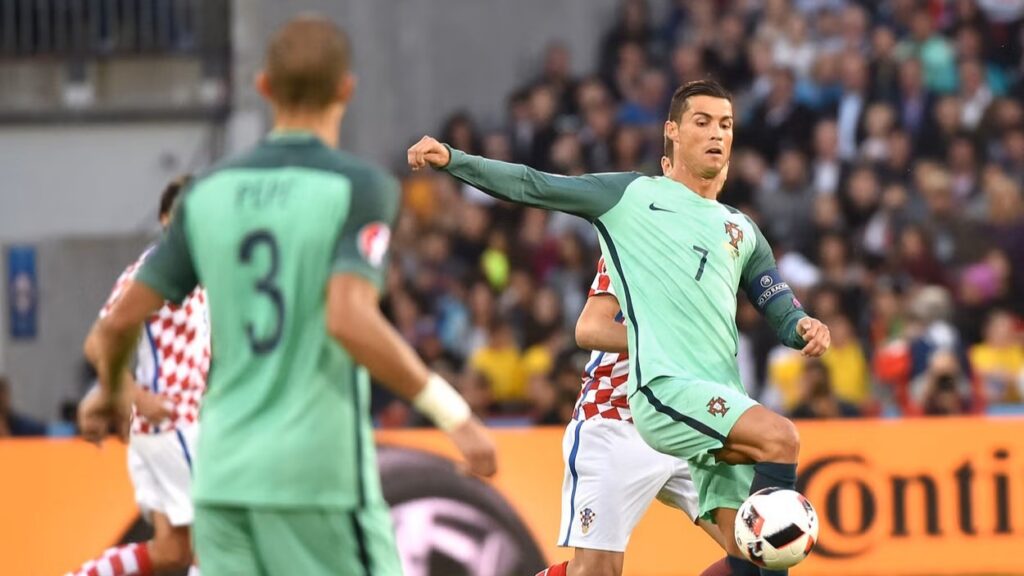
Although they hadn’t gelled as a team, individually, a second golden generation was rising.
At the center of this second generation was Luka Modric. After moving from Dinamo Zagreb to Tottenham Hotspur, Modric showed his world-class level alongside Gareth Bale, which later caught the eye of Real Madrid.
Modric picked defenses apart with his passes, controlled the tempo of games, and scored long-range bangers. Modric is one of the greatest midfielders of his generation, and at Real Madrid, he formed a formidable midfield trio with Toni Kroos and Casemiro. That midfield dynamic can only be rivaled by Barcelona’s Iniesta, Busquets, and Xavi.
Luka Modric was joined in Croatia’s midfield by Ivan Rakitic, who shared a similar understanding of the game and was a dominant force for both Sevilla and Barcelona. Before moving to Barcelona in 2014, Rakitic was already one of the best players in La Liga, and in his first year at Barca, he helped the team win a historic treble.
Around this time, Marcelo Brozovic had just earned a move to Inter Milan, while Mateo Kovacic moved from Inter Milan to Real Madrid and was making a name for himself.
Mario Mandzukic led the team from the front. His stints playing for Bayern Munich, Atletico Madrid, and Juventus gave him the experience of playing on the biggest stages. He was a handful for defenders, led the press relentlessly, and had a knack for providing decisive goals.
Just like Mandzukic, Ivan Perisic had an eye for goal and wicked shot power. He is two-footed, could play as a wing-back or forward, and combined this with pure athleticism.
At the back, Croatia had Dejan Lovren, Domagoj Vida, and, most importantly, Darijo Srna, who linked the old and new generation. He served as a senior figure in defense and was the squad’s captain as the second golden generation slowly took shape.
Russia 2018: Dare to Dream
By 2018, the pieces for Croatia’s second golden generation were finally in place. Srna retired from the national team, Modric became captain and led the team to write a new chapter in Croatian football.
Croatia won all of their first five qualifying games for the 2018 World Cup, and it looked like qualification was in the bag. But two defeats against Iceland and Turkey and a draw against Finland nearly ended a World Cup journey right at the blocks.
After public outcry, Zlatko Dalic replaced Ante Cacic as head coach, and with a 2-0 win over Ukraine, Croatia booked a place in the playoffs, where they beat Greece 4-1 on aggregate to book a spot at the 2018 World Cup.
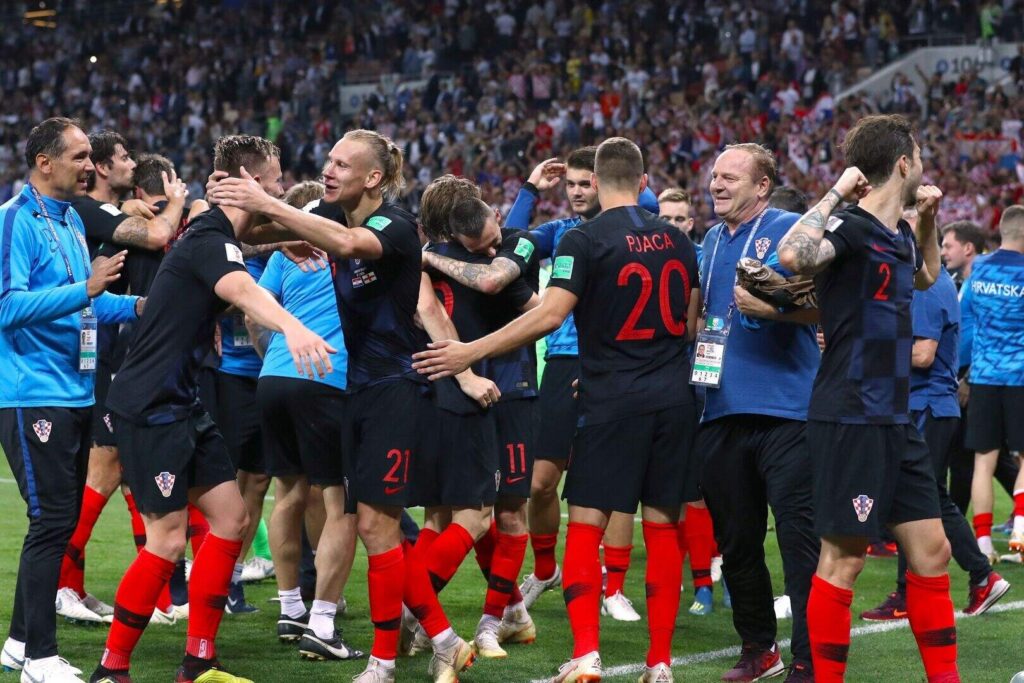
Croatia was in Group D with Nigeria, Argentina, and Iceland. From a neutral perspective, the group was Argentina’s for the taking, but what followed was the greatest group-stage performance in Croatia’s history.
In the opening game, they beat Nigeria 2-0. Then came the heavyweights, Argentina, who were heavy favorites to top the group.
Croatia didn’t hold back. They scored three second-half goals in 37 minutes to take all three points. Goals from Ante Rebic in the 53rd minute and Modric in the 80th minute snuffed the energy out of their South American opponents. Rakitic put the icing on the cake in the 91st minute to make the scoreline a disgrace to all Argentine supporters.
Croatia walked into the final game with nothing to lose. They had already qualified, but they still put on a masterclass as they beat Iceland 2-1.
In the knockout stage, Croatia played like they had an extra tank of energy. In the round of 16 against Denmark, they went to penalties following a 1-1 draw after extra time. Danijel Subasic was Croatia’s hero in the penalty shootout, saving three penalties, equalling the record for most penalty saves in a World Cup shootout.
In the quarter-finals, Croatia drew 2-2 with hosts Russia after extra time. Croatia would’ve won it in extra time after Vida scored in the 101st minute, but Mario Fernandes’ goal in the 115th minute ensured the game went into penalties.
This was Croatia’s second extra time and penalty shootout of the competition. What were the odds that they would win again? Those odds, whatever they were, worked in Croatia’s favor as they won once again on penalties.
In the semi-finals against England, there was a consensus that Croatia would have tired legs from playing back-to-back extra-time minutes. As the game progressed, that consensus felt wrong.
Trippier scored a superb free-kick in the 5th minute to give England the lead, but Croatia pulled level in the 68th thanks to Perisic and dragged the game to extra time. Their third consecutive extra time. Did they lose? For the third time, no. Mandzukic came clutch in the 109th minute after England switched off defensively to send Croatia through to the final.
In the final, Croatia faced France for a chance to do the impossible. France struck first in the 18th minute as Mandzukic headed Griezmann’s free-kick into his own net, becoming the first player to score an own goal in a World Cup final.
Croatia fought back, and ten minutes later, they were level thanks to a superb finish from Perisic. However, the Croatian’s joy was cut short ten minutes later as he handled the ball in the penalty box. Griezmann stepped up and made it 2-1 as the game approached half-time.
In the second half, France picked up where they left off, with Pogba making it 3-1 in the 59th minute. 6 minutes later, Mbappe made it 4-1. The game was beyond reach for Croatia.
Mandzukic canceled his earlier mistake by capitalizing on a Lloris error to make it 4-2, but that goal was only a consolation as France saw out the game and won the World Cup.
Croatia, although in agony, could take respite from the fact that they had made history by finishing second in the World Cup, surpassing the class of 1998. It was also a befitting stage for Mandzukic to close the curtains on his international career.
Despite losing the final, Modric took home the Golden Ball award as the tournament’s best player, but that was just the tip of the iceberg. A few months later, Modric won the Ballon d’Or, becoming the first player to break the Messi-Ronaldo decade-long dominance.
Qatar 2022: Bronze is Not Enough
After the 2018 World Cup, Croatia grew stronger and became a more mature side as players like Modric, Kovacic, and Perisic became more prominent in Europe. However, they couldn’t translate their excellence into trophies.
In the inaugural edition of the UEFA Nations League, Croatia lost 6-0 to Spain in their first game and finished at the bottom of their group. In the 2021 edition, they finished third.
When football resumed after COVID in 2020, Croatia won just 2 out of 8 games. In Euro 2020, they got dumped out in the round of 16 after a 5-3 extra-time defeat to Spain.
However, the team got back into their groove in the qualification campaign for the 2022 World Cup in Qatar. Croatia finished at the top of their qualifying group, with seven wins, two draws, and one loss.
Compared to the 2018 World Cup, Croatia had a much harder group in 2022. They were placed in Group F with Canada, Belgium, and Morocco, who turned out to be the dark horses of the tournament.
Croatia began the tournament with a 0-0 draw vs Morocco, followed by a 4-1 win over Canada and a 0-0 draw against Belgium in their final group game, which was enough for them to reach the knockout stages.
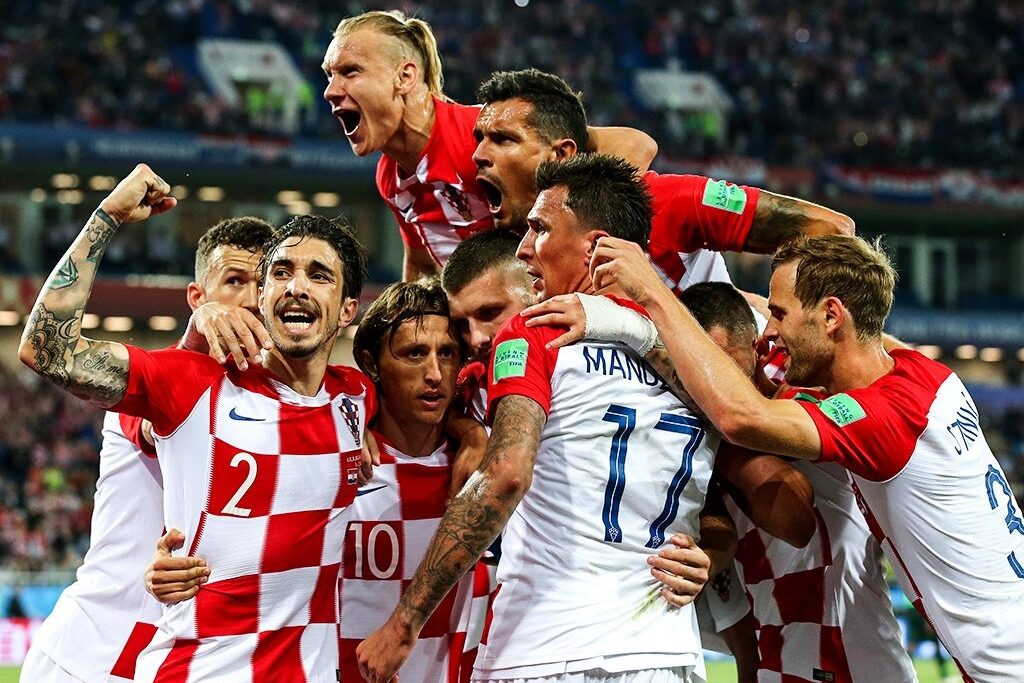
Just like in 2018, Croatia went to extra time in their round-of-16 tie against Japan. This time, Livakovic was the man between the sticks, taking over from Subasic. It was his time to shine, and he did, saving four penalties in the shootout to send Croatia to the quarter-finals.
Against Brazil in the quarter-finals, Croatia outdid themselves. Neymar scored in the 105th minute to give Brazil a 1-0 lead, and it felt like it was game over, only for Bruno Petkovic to equalize late and send the game to penalties. Croatia scored all their penalties in the shootout and won 4-2.
It felt like 2018 all over again. Back-to-back penalties, running like they had extra lungs. Maybe they could go all the way this time.
In the semi-final, they faced a familiar foe, Argentina. The scenes from the 3-0 win in 2018 must’ve played in their head while training for the game, but little did they know that Argentina was about to shatter their dreams.
Messi put Argentina ahead in the 34th minute, and five minutes later, Alvarez doubled the advantage. Croatia was in sixes and sevens. In the 69th minute, Alvarez got his brace, completing Argentina’s revenge for the defeat 4 years ago.
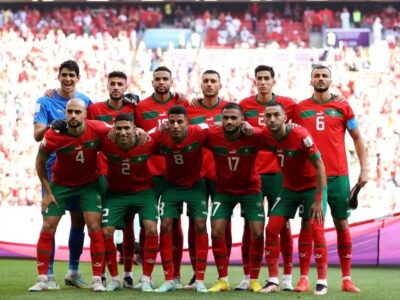
Croatia didn’t make it to the final, but in the third-place play-off, they ensured they didn’t leave Qatar empty-handed. Gvardiol and Orsic scored for Croatia as they beat Morocco 2-1 to win the bronze medal.
It was Croatia’s second bronze medal at a World Cup and clear proof that this second generation had surpassed its predecessors.
Although reaching the final was an achievement, it also served as a reminder of what this generation had missed. Croatia had reached a World Cup final in 2018, and now another semi-final in 2022, yet the biggest prize remained out of reach.
Euro 2024
Although there were signs of a decline as most of Croatia’s key players were entering the twilight of their careers, their second golden generation proved its class once again at the 2023 Nations League.
They topped their group, which had Denmark, France, and Austria, to set up a semifinal clash against the Netherlands, whom they beat 4-2 in extra time. The win against the Netherlands took them to their first-ever Nations League final.
In the final, Croatia met Spain, who had thrashed them 6-0 in their first-ever Nations League game years back. It was an intense game with Spain almost taking the lead in the 84th minute, only for Perisic to clear Ansu Fati’s shot off the line.
With no winner in regulation time and extra time, the game went to penalties, and Croatia painfully lost 5-3. They missed another opportunity to win a major trophy, and by Euro 2024, the cracks in the team were impossible to ignore.
The team looked different from the one that marched to the World Cup semi-finals in 2022. Modric was 38, Perisic wasn’t the same athletic winger that combed the wings, and the football wasn’t as sharp as it used to be.
Croatia joined Spain, Italy, and Albania in group B, and their performance was one to forget. Spain beat Croatia 3-0, scoring all three goals before half-time. Croatia played better against Albania but conceded a late equalizer as the game ended 2-2.
In the final group game against Italy, where they could’ve rescued a point, a late curler from Zaccagni ensured the game ended in a draw. Croatia were out.
2026 World Cup: The End of Croatia’s Golden Generation
The 2026 World Cup was indeed the last dance for Croatia’s golden generation.
Stalwarts like Modric, Kovacic, Perisic, and Livakovic remained from the team that nearly won the World Cup in 2018 and 2022, while Dalic had replaced much of the old guard with young, promising talents.
Croatia really gave it their all at the 2026 World Cup, but their journey ended cruelly in the round of 32 against Portugal. Perisic gave them the lead early in the second half, and although Ronaldo equalized from the penalty spot 15 minutes later, Croatia were by far the better team.
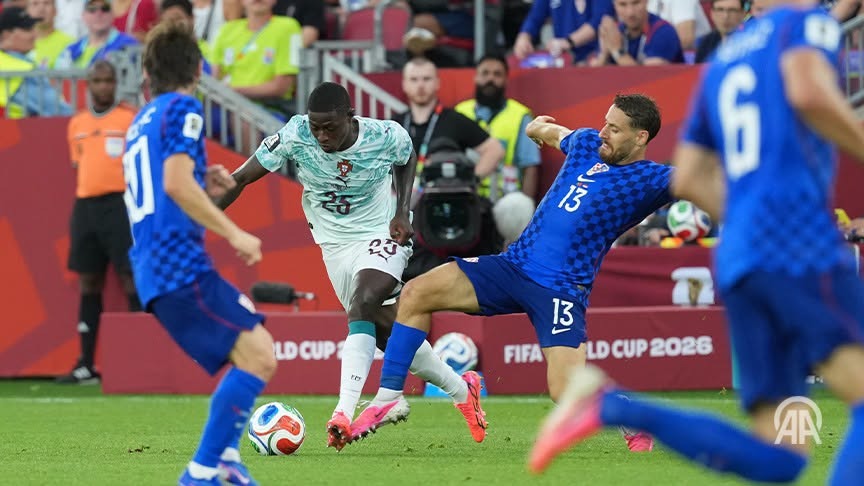
They had two goals ruled out for offside, struck the bar, and called Diogo Costa into action on multiple occasions. Failing to convert their chances later hurt them as Goncalo Ramos put Portugal ahead in the 4th minute of added time.
Croatia searched for a miracle, and the football gods answered them at the death as Gvardiol scored in the 103rd minute to make it 2-2. The crowd was delirious, but those celebrations were cut short when VAR disallowed the goal, with an explanation that seemed unfathomable in real time.
Croatia fell short once again, and this time, it hurt even more. The curtains had finally closed on the golden generation. Dalic, who became head coach in 2017, retired from the national team after overseeing the greatest era of Croatian football.
The old guard is officially in the twilight of their careers. Modric is 40, Perisic is 37, Kramaric is 39, while Kovacic and Livakovic are now in their early thirties. They have given their all, and it is time for a new generation to shoulder the rigors of international football.
The next generation of Croatian footballers are already stars in the making. Gvardiol, Sutalo, and Stanisic are already household names in some of the biggest clubs in Europe. Sucic, who was a key part of Inter’s 2025/26 title-winning season, will be a big pillar in midfield after Modric retires.
Modric’s generation showed what it meant to compete consistently at the highest level. Although they didn’t win any trophies, they have set a standard and foundation that the younger generation can build on and learn from.
Who wrote this?

Wisdom Aghe is a creative whose passions include sports, video editing, writing and a little bit of design. With these skills and a curious mind, Wisdom takes interest in creating sports content and holding interesting sports conversations. He loves sports and it's his happy place. He spends his leisure time playing football, playing games and reading.