



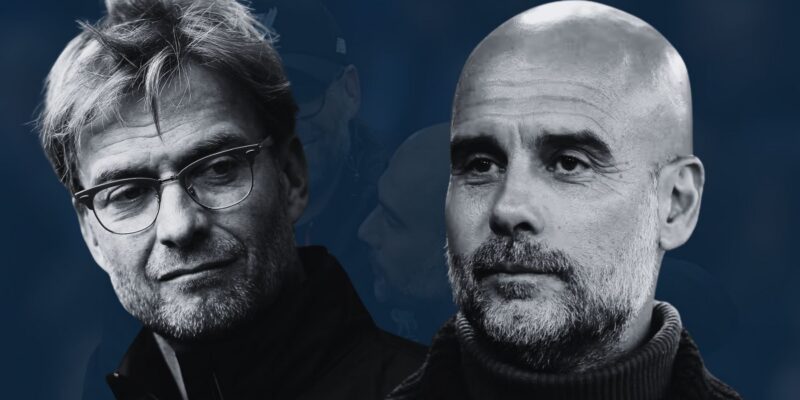
For the better part of a decade, it was the best of times for neutrals, the worst of times for Manchester United fans, and the age of wisdom for purists. English and German football had two mad geniuses at the pinnacle of the game, and they hated losing to each other as much as they loved winning titles.
Jürgen Klopp and Pep Guardiola found worthy adversaries in each other, and it is rare to see rivalries that extend across leagues.
After 9 years at Liverpool, Klopp famously said he was running out of energy and left the club. Similarly, Pep felt he lacked the energy to be at the top after 10 years at Manchester City.
These quotes felt like two heavyweights who went 10 rounds against each other and basically knocked lumps out of each other’s lifespans.
But this rivalry did not start in the Premier League; it began all the way back in Germany. And as similar as their drive to win was, they both went about it in different ways to achieve success. To truly understand this, we have to start with the cities to understand what made these men who they were.
A Tale of Two Cities
Dortmund is a working city that rebuilt itself after coal and steel hollowed it out. It is a place that never fully trusted money, because money had already abandoned it once.
Munich is the opposite. It has old money, southern elegance, and a club that has functioned for decades as the establishment against which everyone else in German football defines itself.
Borussia Dortmund’s Yellow Wall is a terrace built on defiance, but Bayern Munich’s dominance is built on the efficiency of a ruthless German juggernaut.
When Jürgen Klopp took the Dortmund job in 2008, he knew he was accepting a philosophy of resistance. It was more than a coaching post because the club has a fanbase that insists that the purity of heart can always beat the love of money.
Manchester and Liverpool share the same tension. In 2016, Manchester City was a state-backed, affluent club. It was rebuilding itself into a footballing superpower with resources no rival could realistically match.
Liverpool, ninety-five minutes down the East Lancs Road, still carries the identity of a port city that has spent half a century fighting the idea of falling behind. The fan culture leans instinctively toward solidarity over spectacle.
You’ll Never Walk Alone is a slogan that captures the way the city of Liverpool and the club see the world. Klopp was the perfect manager for Liverpool because his gegenpressing style, where everyone runs, suffers, and shares the load, embodies that worldview.
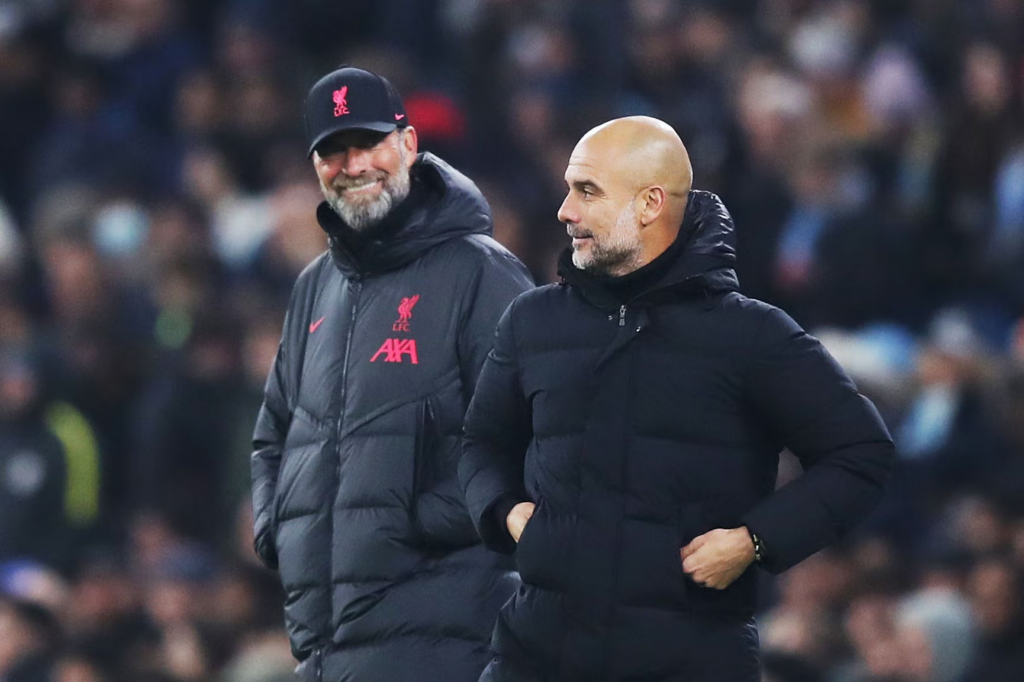
At Bayern and City, Pep Guardiola built teams that treated the game as a puzzle, with a simple solution. With patient circulation, superior individual quality, and the conviction that if you moved the ball calmly for long enough, the door would open.
Dortmund and Liverpool built teams that approached the game as a fight: start on the front foot and win the ball back in the first six seconds.
And at that intersection of these contrasting cultural and sporting philosophies lay the central theme that defined the rivalry between Klopp and Guardiola.
These men were two psychos who viewed football from opposite ends of the spectrum. I am not using the term “psychos” as a diagnosis or an insult, certainly not. I am using it as a compliment to both managers’ madness.
Guardiola’s madness has always been about control, while Klopp’s madness is about finding harmony through chaos. No wonder they were both exhausted by the time they left England.
The Warm-Up: The Bundesliga Years (2013–2015)
By the time Pep Guardiola arrived in Germany, Jürgen Klopp had already done the impossible twice with Borussia Dortmund.
Dortmund won back-to-back Bundesliga titles in 2010/11 and 2011/12 to become the first team in years to break Bayern’s financial dominance.
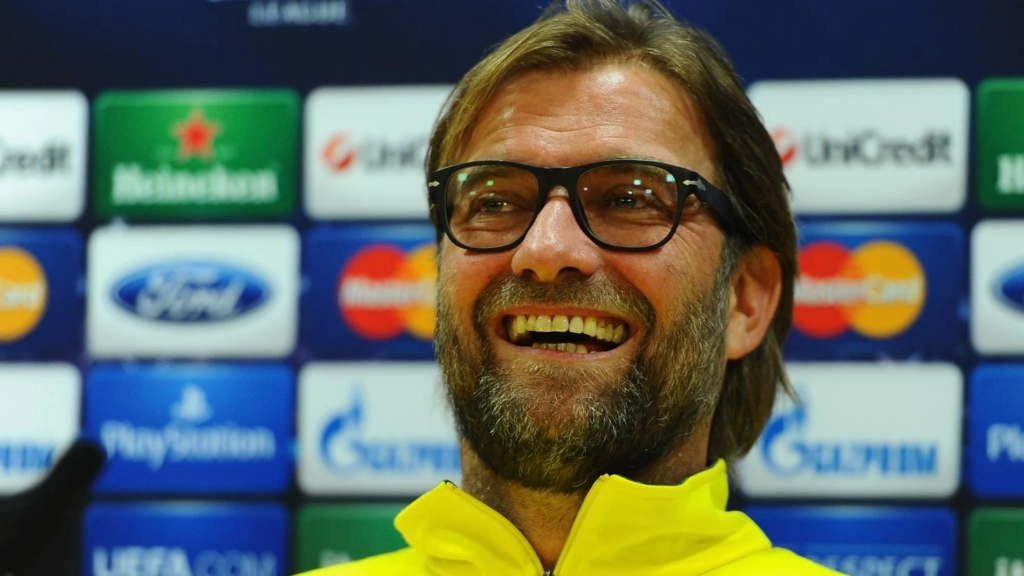
Bayern responded by building an empire that won a historic treble in the 2012/13 season. Dortmund reached the Champions League final that same season, at Wembley, and lost to Jupp Heynckes’ Bayern 2-1 at Wembley. The wound was already open before Guardiola had coached a single competitive match in Germany.
Pep Guardiola took charge in the summer of 2013 following years of success at Barcelona. His reward for doing such a great job in Catalonia was inheriting Heynckes’ empire.
Klopp and Pep met for the first time in the 2013 German Super Cup. A good game to watch, swinging 4-2 in Dortmund’s favor.
Guardiola’s competitive debut with Bayern ended in his first defeat as a manager on German soil. He was characteristically unshaken and insisted afterward that he didn’t feel Dortmund had actually been the better side. Klopp had already landed the psychological blow he wanted, and no one could have guessed that this would be the start of a decade-long rivalry.
Guardiola leveled the head-to-head in the league when Bayern won 3-0 at the Signal Iduna Park to record their first league victory over Dortmund since 2009. Dortmund returned the favor later in the season with a 3-0 win of their own at the Allianz Arena, but Bayern had already wrapped up the title by then. The two sides also met in the DFB-Pokal final that year, with Robben and Müller scoring in a 2-0 Bayern win that sealed the double for Guardiola in his debut German season.
But behind the results, Bayern was slowly stealing away Dortmund’s soul, one transfer at a time. Mario Götze left for Bayern before Guardiola even arrived, and Robert Lewandowski followed on a free transfer the following season.
Jürgen Klopp, years later, compared that loss to Liverpool losing Sadio Mané to the same club. Every time Bayern beat Dortmund, it was partly with players Dortmund had developed.
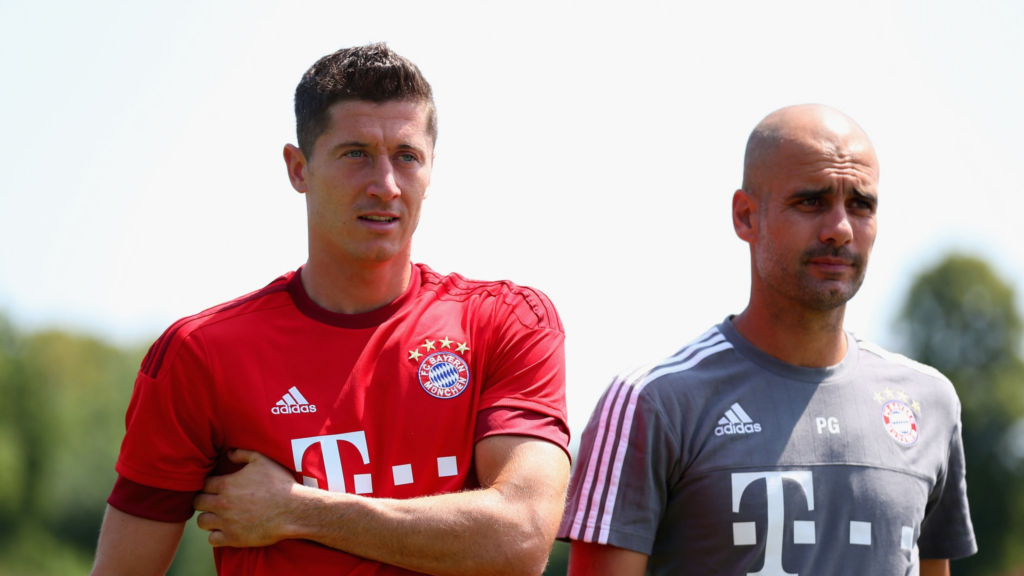
Klopp’s last German trophy against Guardiola came in the 2014 Super Cup, which resulted in another Dortmund win. In the 2015 DFB-Pokal semi-final, Klopp bested Pep again as Dortmund eliminated Bayern on penalties, just over a week after Klopp had already announced he was leaving.
By the time Jurgen Klopp walked away from Dortmund that summer, he had gained the psychological edge because he went toe-to-toe against a giant with a team of young guns.
The trophy ledger, though, was decisively in Guardiola’s favor. Bayern won the league in all three of his seasons in Munich.
So, round one, on paper, belonged to Pep. But the argument was far from settled; it only changed postcodes.
The Main Event: The Premier League Title Wars (2016–2024)
Klopp took over at Liverpool in October 2015, nearly a year before Guardiola followed him to England to take charge at Manchester City. Their first Premier League meeting came on New Year’s Eve 2016 at Anfield, with Guardiola publicly describing Klopp before the game as the best attacking coach in world football.
However, it was Liverpool’s defense that settled the game. Georginio Wijnaldum’s eighth-minute header was enough for a 1-0 win, in a game Klopp called “really hard work.”
At this point, it was clear that the rivalry had crossed the North Sea intact. We just didn’t know how deep it would go.
Statement in Europe
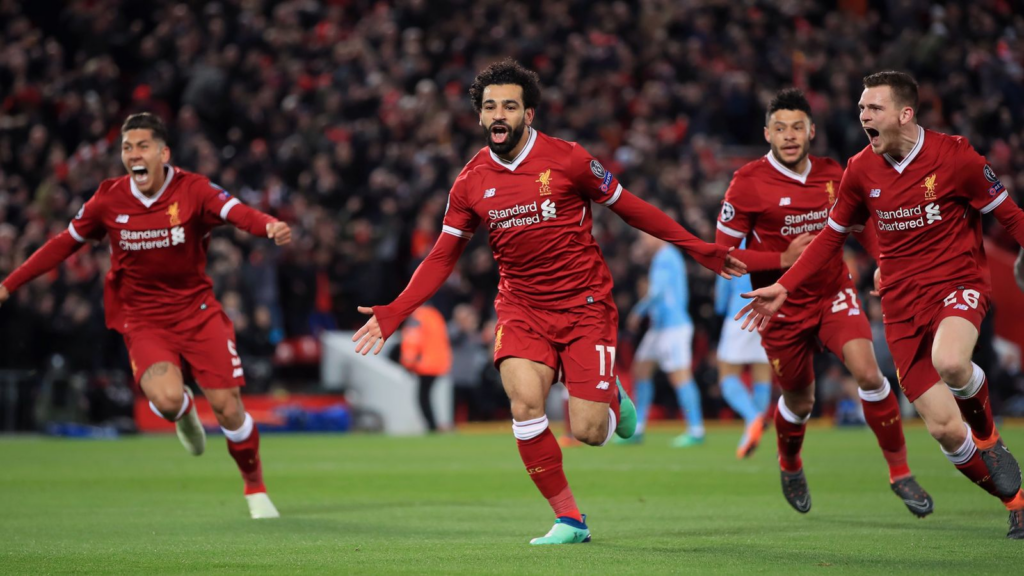
In April 2018, Liverpool dismantled Guardiola’s Premier League-winning City side 3-0 in the first leg of the Champions League quarter-final at Anfield. It was an evening so complete it effectively ended the tie before the second leg kicked off. Mohamed Salah, Alex Oxlade-Chamberlain and Mané all did the damage in the first half.
Six days after the first leg, Liverpool completed the job with a 2-1 win at the Etihad. It was the first time in the Guardiola era that City had looked genuinely rattled by anyone.
The 97-Point Heist
Then came the 2018/19 season when the rivalry stopped being a subplot and became the story of English football.
Liverpool had a 7-point lead over City by the start of January. In fact, Liverpool’s only loss of the season came on January 3rd, 2-1 away at City. A game that could have gone either way after John Stones famously cleared the ball off the line before Leroy Sané’s winner.
Manchester City, however, responded with an almost unthinkable run of fourteen consecutive wins to close out the season. Liverpool finished with 97 points — the most in their history at the time, and only one defeat all season — and it still wasn’t enough.
City were crowned champions with 98 points. The two teams delivered the third- and fourth-highest points totals in Premier League history, but only one got the trophy, and it was Guardiola’s men.
Liverpool did win the Champions League that year, to slightly douse the pain of missing out on the league title.
Liverpool’s Coronation
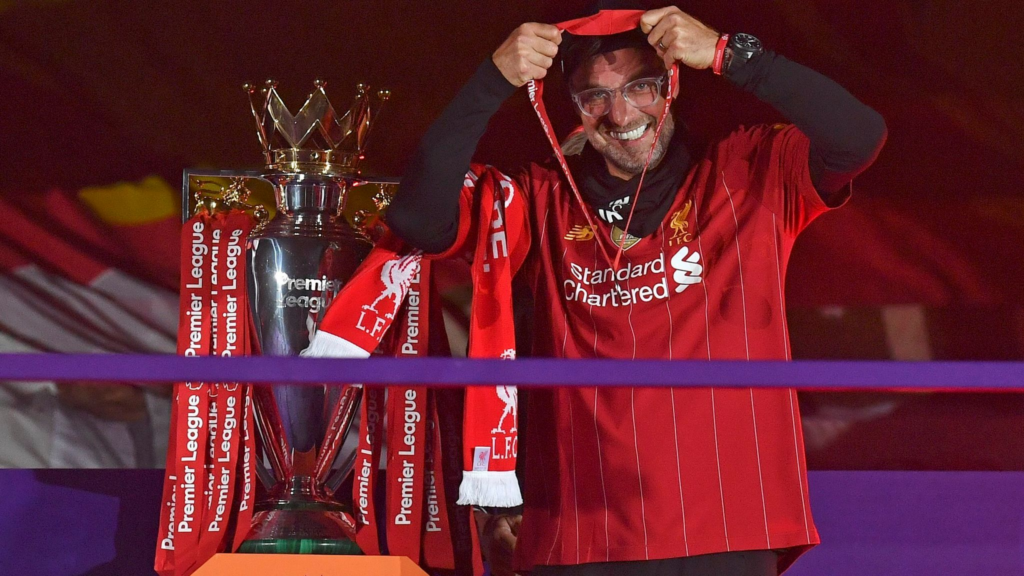
Liverpool’s answer arrived the very next season. The 2019/20 campaign was thrown off balance by the COVID-19 pandemic, but nothing was going to stain Liverpool’s celebrations of ending a thirty-year wait for the title.
Klopp’s side won 32 league matches, remained unbeaten at Anfield throughout, and finished with 99 points. This was the club’s highest Premier League total ever, finishing eighteen points clear of City in second.
Liverpool were simply saying that the 2018/19 defeat had been an aberration, decided by the slimmest of margins. It was not a gap in class.
The Quadruple Dream
By the end of the 2021/22 season, the rivalry had settled into a rhythm of brilliance and repeated second-place finishes for Liverpool.
Liverpool finished on 92 points, one behind City yet again, chasing a genuinely historic quadruple. They could have been champions on the final day, as City were 2 goals down at home to Aston Villa with 20 minutes to play. The City fightback was as historic as the Aguero moment as they won 3-2.
It felt cruel for Jurgen Klopp and the red half of Merseyside. They won all but three of their final eighteen fixtures, with one of those draws coming against City themselves. They won both the FA Cup and Carabao Cup and lost the Champions League to Real Madrid. It ended as a season that, against almost any other opponent, would be remembered at least as a treble year rather than another near-miss.
The Long Farewell
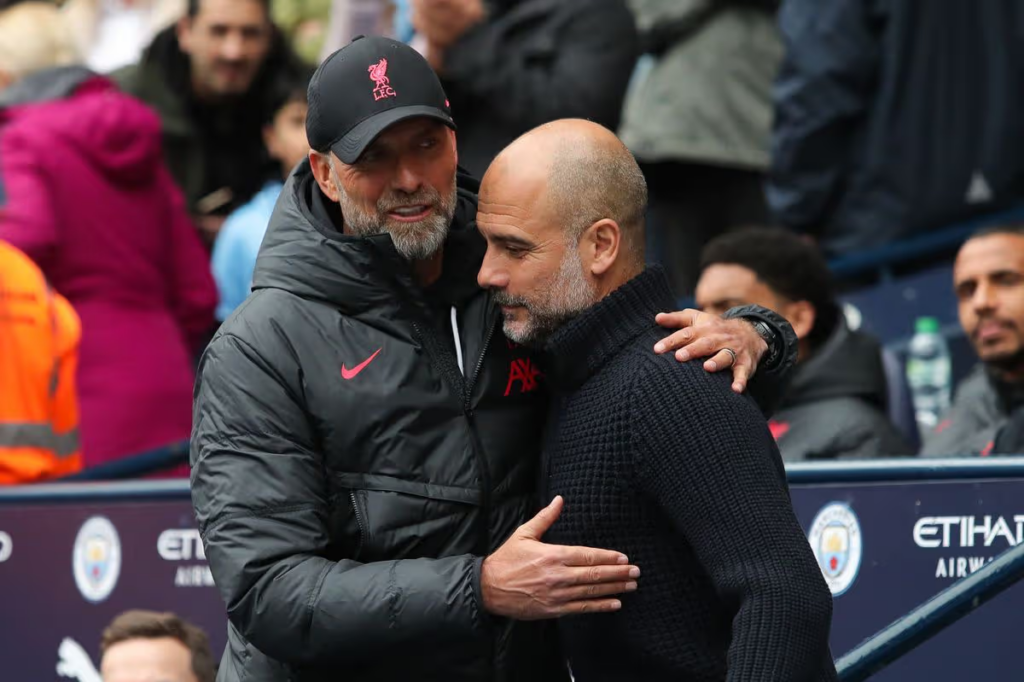
The final act played out with both men aware the clock was running down. Klopp had shocked everyone with his farewell announcement and ahead of their last domestic meeting in March 2024, both spoke at length about what the other had meant to them.
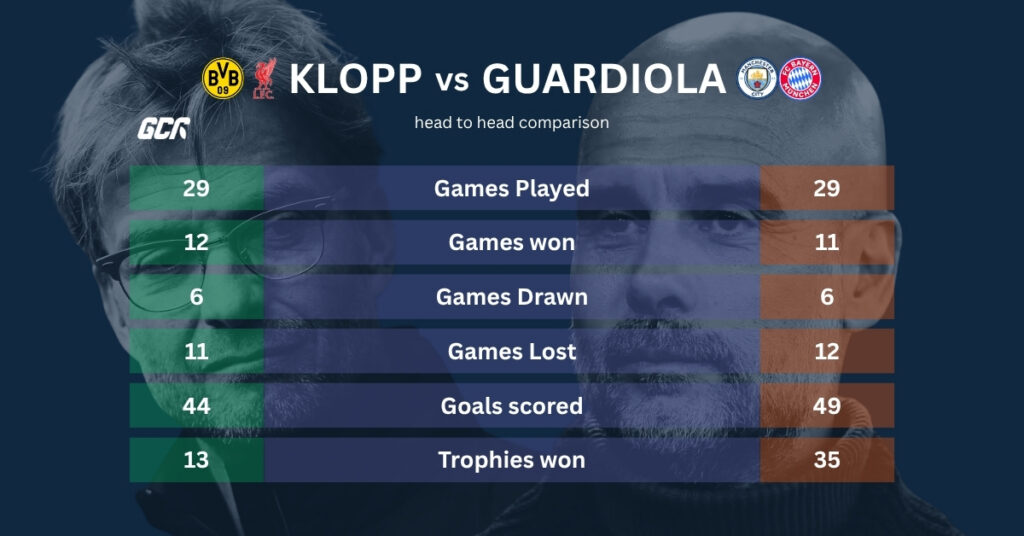
Their sixteenth and final Premier League meeting ended, fittingly, in a 1-1 draw at Anfield. Guardiola finished the head-to-head with five wins to Klopp’s four, and seven draws between them. It was a rivalry as even as English football has produced at the very top.
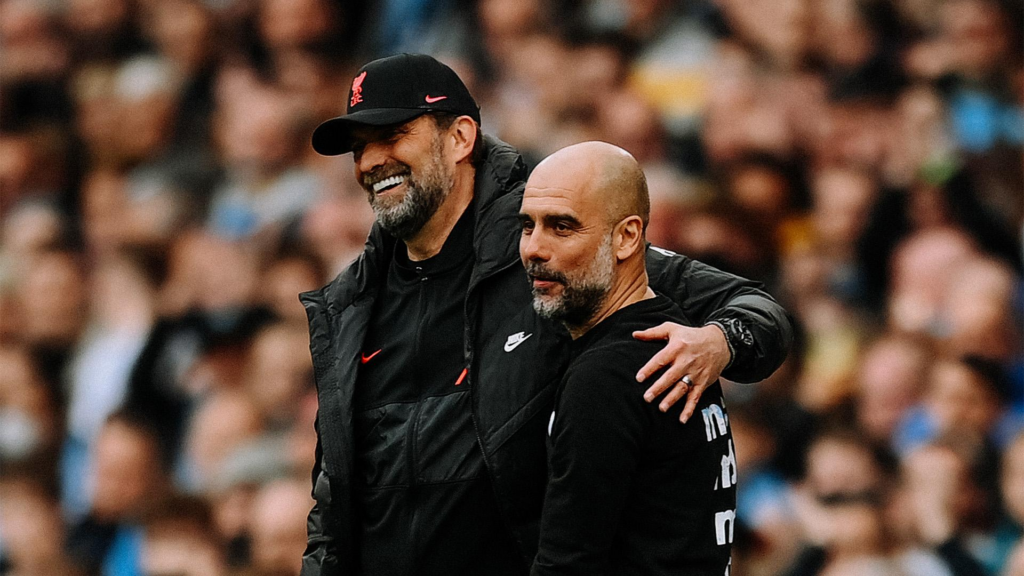
There was mutual acknowledgment and respect between the two men, and Guardiola knew Jurgen Klopp had made City a better team and himself a better manager.
The Legacy of the Rivalry
Let’s strip away the emotion and look only at what City actually won during the Klopp years. You’d realize that by looking at the numbers alone, it looked like it was a cakewalk for Guardiola and Manchester City. But Liverpool refused to let them be.
Liverpool were the only side to stop Manchester City from winning the Premier League title across a run of seven seasons.
Twice, Klopp’s team produced 97 and 99 points in their bid to win the title. That number would have won almost any other Premier League season outright, and one of those still finished as runner-up.
City, for their part, were pushed to 98 points in 2018/19 and 93 in 2021/22 just to stay ahead. In 2017/18, they also became the first and only team in English top-flight history to reach 100 points in a single season.
This wasn’t one dominant club getting an easy ride past a chasing pack. These were two of the greatest teams English football has produced, colliding at their peaks, repeatedly, for the better part of a decade.
This rivalry becomes even more remarkable when you compare it to what rivalries at the top of English football have traditionally looked like.
Arsène Wenger and José Mourinho spent years in poorly disguised contempt and touchline confrontations that spilled into outright physical posturing.
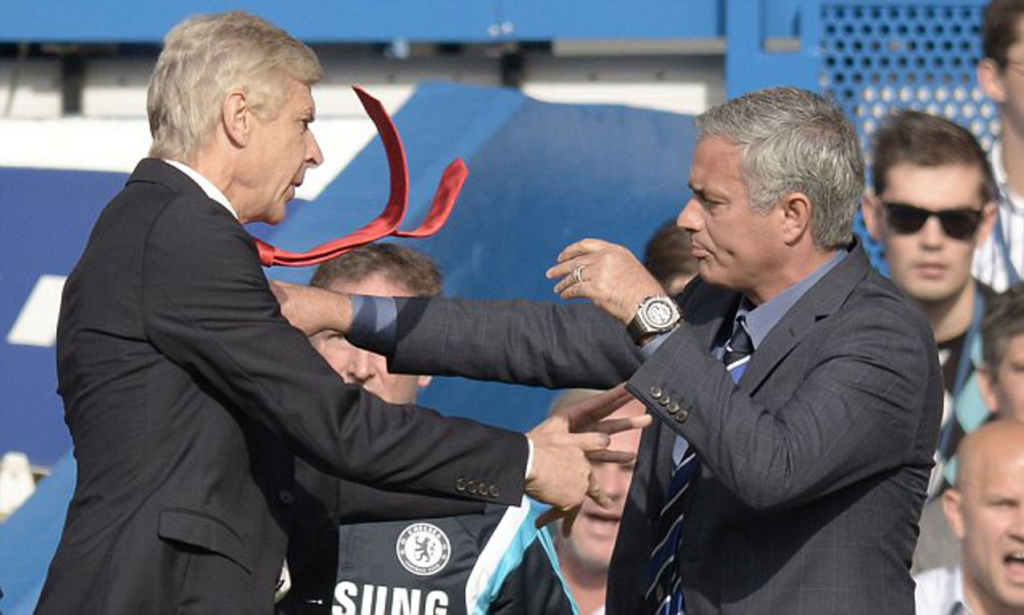
Arsène Wenger and Sir Alex Ferguson built one of the most bitter feuds the league has seen. It was a genuine title battle that curdled into years of mutual sniping between two great managers who changed English football.
Ferguson and Rafael Benítez had one of the pettiest personal exchanges in English football at the top level. The infamous “facts” press conference by Benítez stands as an iconic moment in Premier League history.
Ferguson and Kevin Keegan also gave the league its most theatrically unraveled title race. Keegan’s “I will love it if we beat them” outburst was the sound of a rivalry finally breaking a man on live television during a title race.
Even Mourinho and Guardiola’s own history, forged in Spain and carried into their Premier League overlap, was defined for years by real animosity rather than admiration. It was inevitable after Pep thrashed Mou 5-0 in their first La Liga clash.
Against that backdrop, Klopp and Guardiola look like an anomaly the league wasn’t quite built to produce. Klopp acknowledged that they were “not best friends because we don’t know each other,” but he had a lot of respect for Pep.
When it finally ended, Guardiola’s voice faltered as he described what Klopp had meant to him. In his own words, Klopp was a rival who had helped bring him to another level in the game.
That respect filtered down. For all the ferocity of Liverpool-City matches across this period, the fixture rarely produced the ugly flashpoints that defined the Ferguson-Wenger years. It should be possible to hate losing to someone and still recognize you were watching greatness.
Klopp and Guardiola proved those two things. They just made it look like they were in conflict for ninety minutes at a time, sixteen times over, before shaking hands and meaning it.
A World Apart
For a while after 2024, with distance, and memory, and neither man on a touchline, it looked like the story of Klopp v Pep had ended the way most great rivalries do.
Klopp’s first move after Liverpool was administrative. He was appointed Head of Global Soccer at Red Bull from January 2025 to oversee the group’s network of clubs. It looked like the closest he’d get back to a dugout, but it wasn’t.
Germany’s Round of 32 exit at the 2026 World Cup ended Julian Nagelsmann’s tenure. This reopened the door to the one job Klopp had spent years insisting his club loyalty wouldn’t let him take.
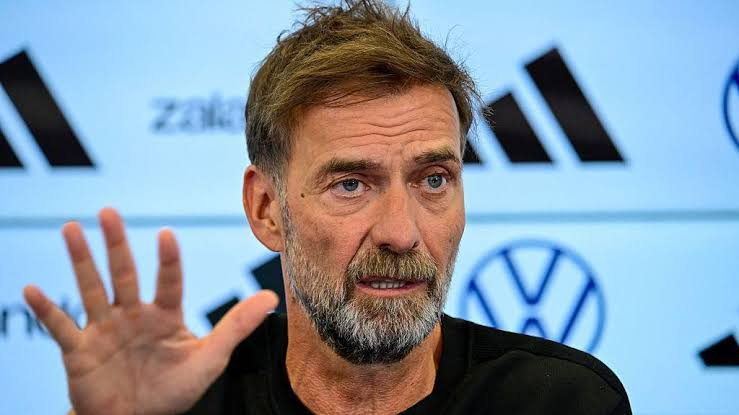
Klopp signed a four-year contract to lead Germany through to the 2030 World Cup. His former Liverpool assistant Pep Lijnders, who tried his hand at head coaching before returning as an assistant to Guardiola, also joined his staff. Two years after walking away “exhausted”, the psychosis called him back to the only stage that could match it.
Guardiola‘s path has bent the other way. He left Manchester City at the end of the 2025/26 season after a decade that delivered twenty major trophies. He stayed on only in an ambassadorial capacity for the wider City Football Group.
The obvious next step seemed to be Italy, whose federation had been chasing a marquee name after missing a third straight World Cup. And for a while, the talks were real as Guardiola met with Italy’s technical leadership, who were prepared to make financial exceptions just to get him.
He turned it down anyway and remains, for now, the most talked-about unemployed manager in world football.
There’s a symmetry worth sitting with. Klopp went home while Guardiola is still deciding what home even means to him professionally. One madman found his next obsession within months of the door opening. The other is still auditioning offers.
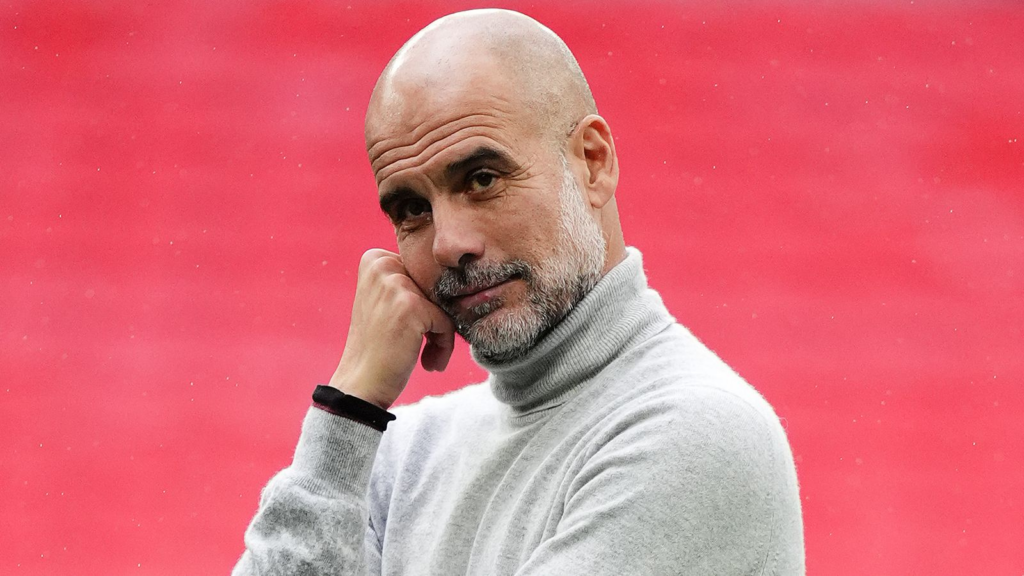
But international football has a way of eventually putting old rivals back in the same room. If Guardiola finally chooses a country, there’s a real chance the two of them will meet again on the biggest stage in the sport.
Imagine Klopp’s Germany against whoever Guardiola eventually says yes to at the World Cup or a European Championship.
Same obsession and same refusal to lose gracefully. Just a different flag on the touchline, and the whole world watching instead of just the Premier League.
So for now, the two psychos are briefly separated. But with football being what it is, don’t bet against another installment.
Who wrote this?

Philip is a sports broadcaster at Royal FM 95.1 in Ilorin, Nigeria, where he presents Sport File and Soccer Chat. Away from the mic, he writes long-form football pieces and runs Football Chronicles on YouTube. He has worked with AFTV, Kwara Youth League and Koller FA. He's interested in the stories behind the results — why teams rise, why they fall, and what gets forgotten in between.