



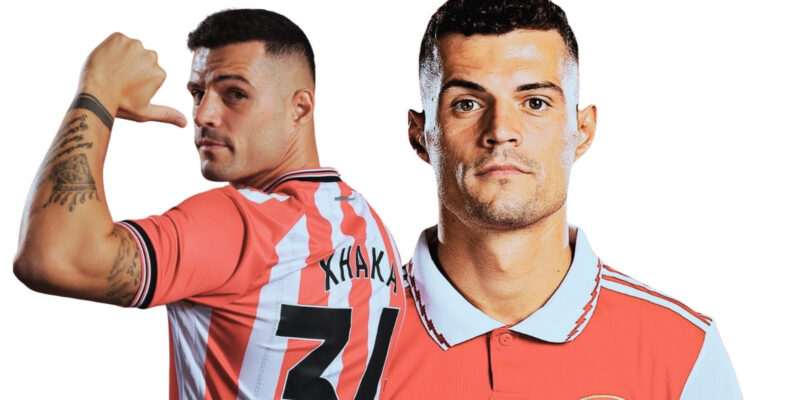
Granit Xhaka has lived different lives on and off the football pitch. One has brought love and admiration. The other has been filled with hate from the same people who once claimed to love him.
That game against Crystal Palace at the Emirates Stadium will live long in the lore of Granit Xhaka, even though it has long been forgiven.
Leaving the field to loud jeers from your own fans is gutting, especially for a player who had been handed the captain’s armband.
The Swiss veteran became the whipping boy of a frustrated fanbase that had endured years of disappointment. Whether fair or not, Xhaka became the perfect poster for Arsenal’s shambolic decline, and in that moment, it seemed his time in North London had reached an irreparable end.
Yet the player Arsenal supporters wanted gone would go on to receive a hero’s farewell at the Emirates less than a decade later. He would make history in Germany as the engine room of an invincible Bayer Leverkusen side before returning to England to help rebuild one of the country’s most historic clubs in its climb back to the top of English football.
How does one player go from being booed by his own supporters to becoming one of the most admired leaders in European football? Did Granit Xhaka truly change, or did the football world finally begin to understand the player he had always been?
Granit Xhaka’s story is about how childhood, life experiences, and family shaped one of football’s strongest characters. It is the story of a player whose greatest strength was often mistaken for his greatest weakness, and how that misunderstanding produced one of football’s finest redemption stories.
Made in The Balkans
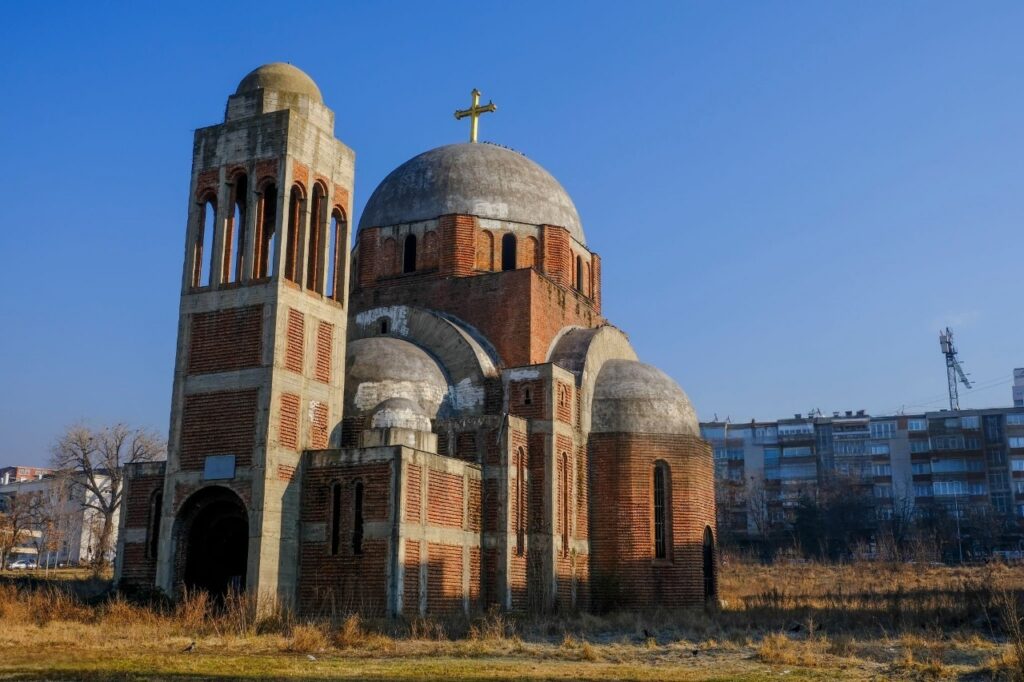
The socio-political backdrop in Yugoslavia from the mid-1960s to the early 1990s formed a core part of Granit Xhaka’s history. Xhaka’s native Kosovo sits in the Balkans, a region whose modern history has been marked by conflict and political upheaval, following the breakup of Yugoslavia.
Kosovo had endured decades of political tension when Granit Xhaka’s father Ragip Xhaka and his family found itself caught in the middle of it.
Ragip, an outspoken student of agriculture, had grown increasingly frustrated with the communist government. Alongside other students, he joined protests demanding better education, food, and, in short, a better quality of life.
As the dictatorship tightened its grip, the police hounded the students, jailed them, and beat them continuously for six months. Even under those inhumane conditions, Ragip never flinched.
Authorities eventually took him to court and accused him of rebellion against the state following a violent protest. He fought the allegations despite knowing that the compromised system offered him little chance of justice.
His family, like his lover Elmaze, did not know whether Ragip would ever leave prison. They kept hope alive. Three and a half years later, he walked free.
The experience convinced Ragip that the life he wanted for himself and Elmaze existed somewhere beyond what they had known. The two married and fled across the borders with little more than a handful of personal belongings.
Switzerland was never supposed to become their destination. The young couple planned to stop there briefly to see Albanian friends before continuing to Sweden. But the comfort of familiar faces changed their plans.
With a little convincing, Ragip and Elmaze stayed in Basel. A little over a year after finding a new home, Elmaze gave birth to Taulant. Eighteen months later, Granit arrived.
Swiss Army Knife: Coming Through At FC Basel
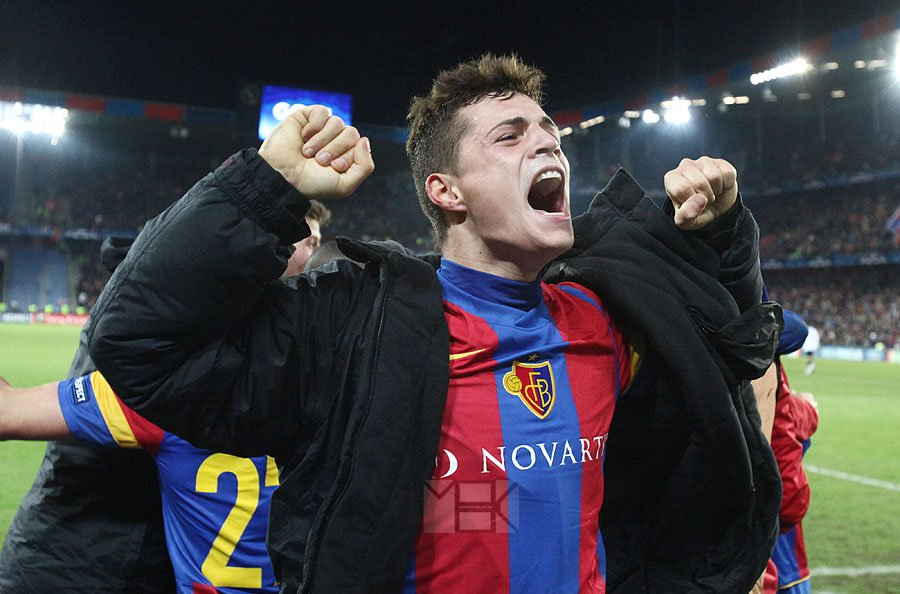
Ragip wanted to keep his children off the streets, so he enrolled Granit and Taulant at Concordia Basel, a feeder club to Swiss football giants Basel.
It took only two years for Granit and his brother to earn promotion to the Basel academy.
After Xhaka’s coaches judged him not good enough, an ACL injury at 15 seemed to signal the end of his dream of becoming a professional footballer.
Xhaka spent eight months on the sidelines before returning to football. But he struggled to play with freedom. Such a severe injury could weigh heavily on any teenager, and Xhaka felt its psychological impact.
By then, he had already learned his first lesson.
His father, Ragip, had been a footballer himself and might have turned professional had circumstances allowed. An injury ended his own promising career.
Yet if there was one thing the elder Xhaka passed on to his children, especially Granit, it was the fighting spirit to keep going, no matter what happened.
That was how Ragip had lived his own life. That was the Balkan way.
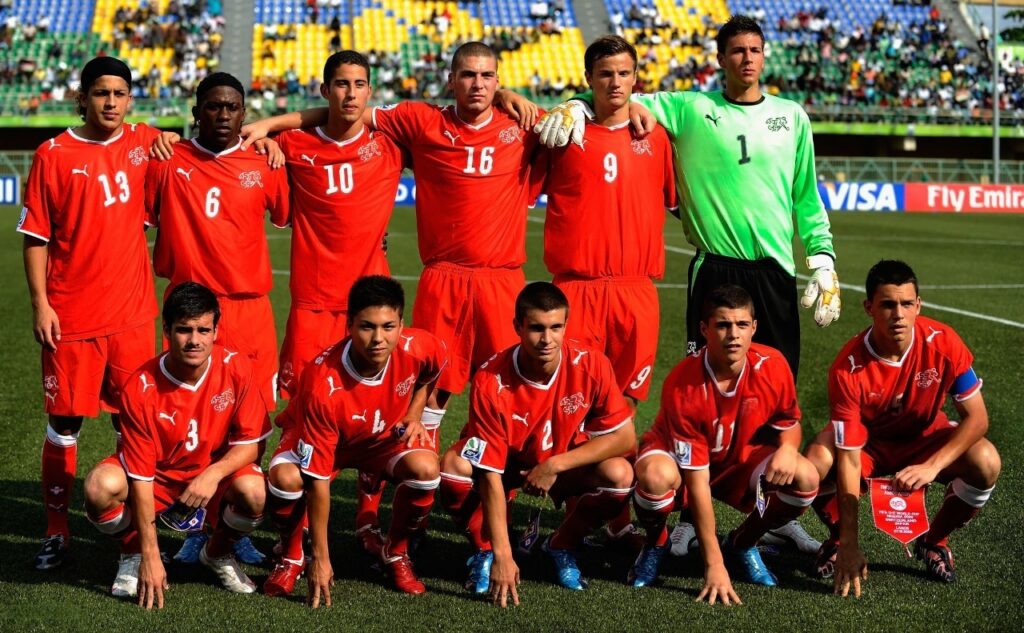
Granit threw himself into his recovery, but he still looked unlikely to make Switzerland’s Under-17 squad for the World Cup.
Then came a second, more important lesson in time and chance. Xhaka had done everything he could to recover, yet the World Cup still looked beyond him. Football, however, has a way of rewarding persistence.
An injury to another player in Switzerland’s Under-17 squad handed Xhaka an unexpected opportunity. He seized it with both hands, becoming one of the tournament’s standout performers as Switzerland stunned the football world by winning the 2009 FIFA Under-17 World Cup against hosts Nigeria.
A season later, Basel promoted Granit and his brother to the senior team. The teenager cemented his place on the side and orchestrated elegant midfield performances week after week, especially the one that sent Manchester United packing from the Champions League.
His form earned him a call-up to the Swiss national team and attracted attention from clubs across Europe. After months of courting, Borussia Mönchengladbach made the move official in May 2012, signing Granit Xhaka to a five-year deal under Lucien Favre.
Borussia Mönchengladbach: The Boy Made of Granite
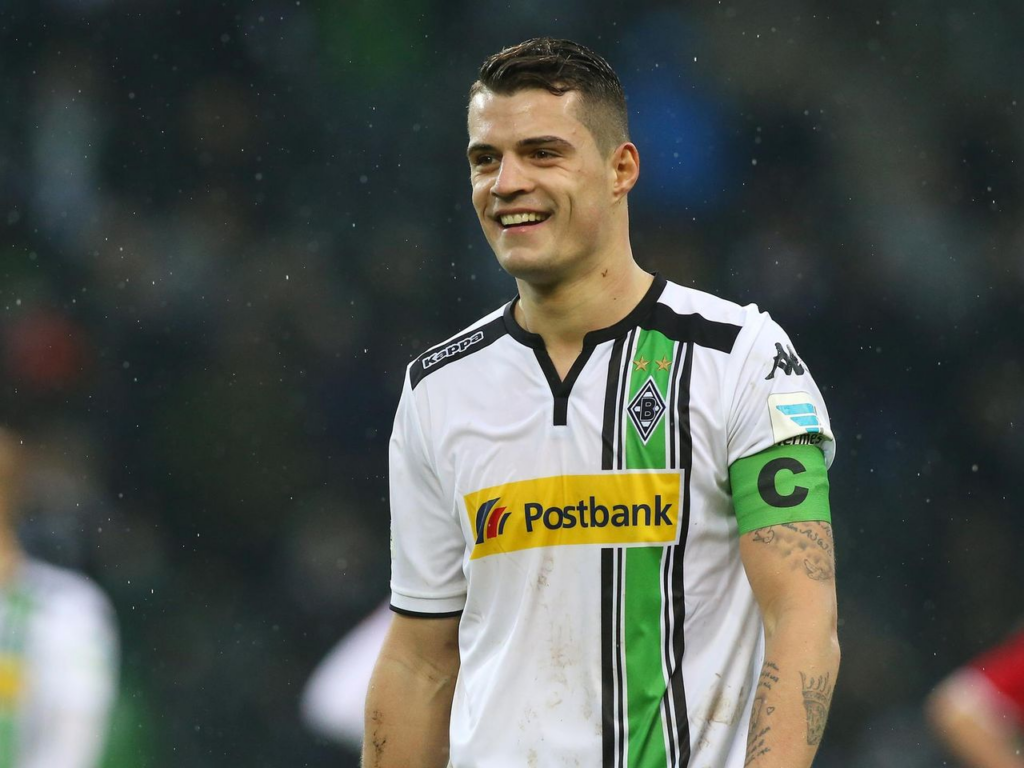
Granit Xhaka hated his first six months at Mönchengladbach because he could not get consistent minutes. Six months into his major breakthrough outside Switzerland, he considered leaving in the January transfer window.
But his dad, as he had always done, became a voice of reason.
Ragip told Granit to train harder. As a former footballer and lover of the game, he also provided constructive analysis of his son’s performances and helped him understand where he could improve.
One noticeable feature of Granit’s game stood above the rest: his willingness to take responsibility.
His spell at Gladbach coincided with one of the club’s most progressive periods in recent years. Across their first three seasons together, the club climbed from eighth to sixth, then to third in the Bundesliga, while securing Champions League football for the following campaign.
Xhaka’s influence on that rise did not go unnoticed.
In the summer of 2015, at just 22, Lucien Favre handed him the captain’s armband.
Xhaka embraced the responsibility and pushed Gladbach to a fourth-place finish, earning widespread praise for his performances.
Yet as the Bundesliga grew in intensity and teams improved, another part of his game became increasingly visible: his indiscipline. During his four years in western Germany, Xhaka received five red cards.
His talent and determination, however, never came into question. The reckless tackles that characterized parts of his game did not stop major clubs from considering him.
The Promise of His Early Years in North London
Arsène Wenger had failed in his closest chance to deliver Arsenal a domestic title after a 12-year drought. Leicester City had won the Premier League in 2016 with a squad assembled for less than £50 million, but Arsenal had failed to push them hard enough.
Analysts spent more time berating Arsenal for lacking a prolific No. 9, but ignored the major issue. Wenger’s game had become slow and monotonous in build-up.
To solve those issues heading into the new season, Wenger went after Granit Xhaka. Before he could kick another ball for Mönchengladbach, the Swiss midfielder found himself on a plane to London for £30 million.
Wenger saw Xhaka primarily as a box-to-box midfielder, believing his physical attributes suited the role. More importantly, Wenger believed Xhaka possessed the energy to influence matches through his movement and forward runs, although he stressed that the midfielder needed time to adjust to the pace and demands of English football.
Wenger recognized what Xhaka could do, but Arsenal lacked another midfielder who could effectively complement those skills.
The early signs of his brilliance were good, but so were the warnings.
He scored two screamers, one against Hull City in September 2016 and another three days later against Nottingham Forest in the EFL Cup.
The cautionary whispers soon outweighed the excitement.
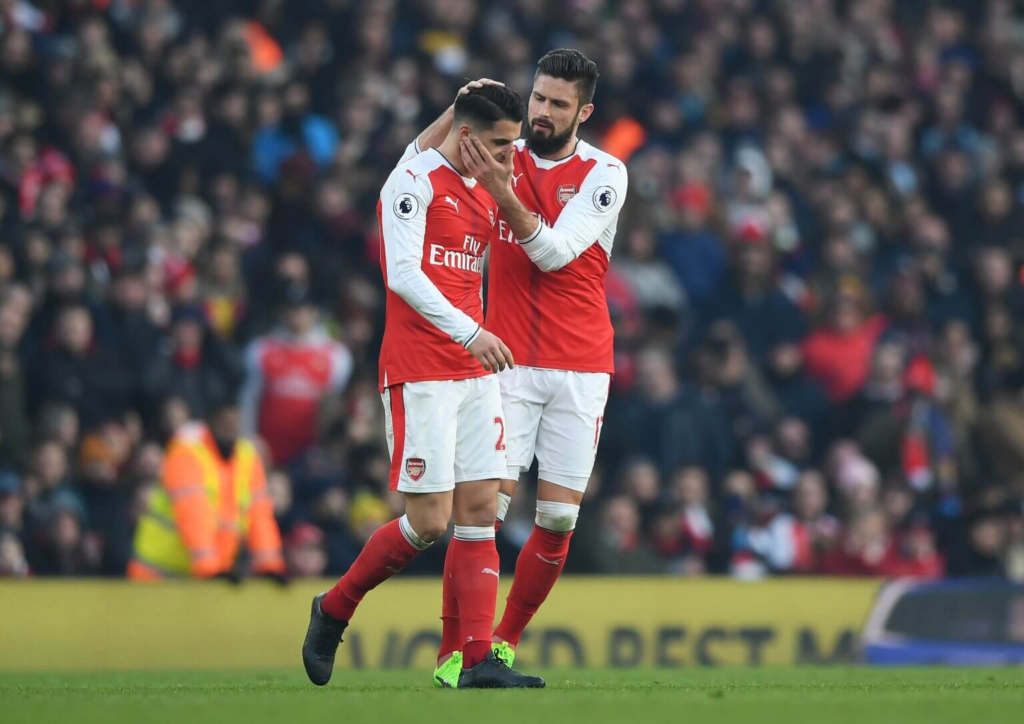
Xhaka picked up a red card against Swansea and, less than three months later, received another against Burnley, forcing Arsenal to grind out a win against Sean Dyche’s side. It became his ninth red card in three years, making him the player with the most red cards across Europe’s top five leagues at the time.
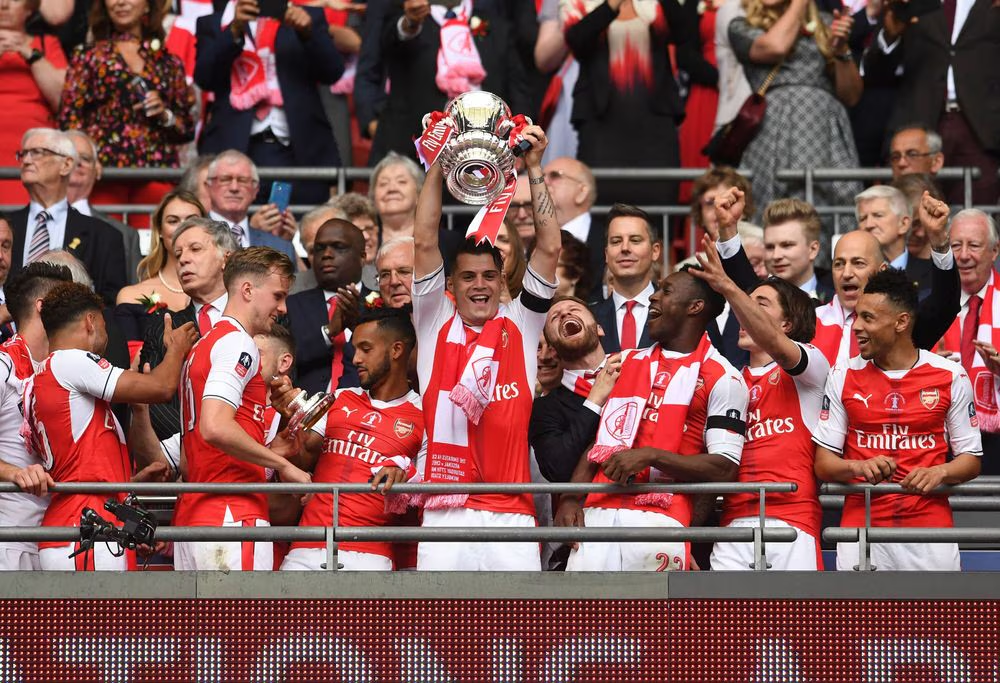
Arsenal would go on to win a historic 13th FA Cup and finish outside the top four. Those lapses faded into the background because Wenger was running down his time at the club and mediocre performances had become something Arsenal fans had grown accustomed to.
But that did not last. The holes in the team became bigger; that decline exposed Xhaka’s weaknesses further, team standards dropped, and the fanbase could no longer stomach disappointing weekends.
Captain, Scapegoat, Villain: How Xhaka Became the Ire of Arsenal Fans
By June 2018, Arsenal had entered the post-Wenger era, with Unai Emery taking the reins of what remained. His first season could have counted as a success. He led Arsenal to the Europa League final in 2019, where London neighbors Chelsea battered them 4-1.
That was not the entire story.
Emery’s first season owed much to the scoring and creative power of Mesut Özil and Pierre-Emerick Aubameyang. The underlying problems in the league remained. Arsenal could not protect leads because defensive fragilities continued to haunt them.
At the start of April, Arsenal sat third, one point above Tottenham. Then the April curse that had long characterized Arsenal returned. Three consecutive away defeats against Everton, Crystal Palace and Wolverhampton Wanderers condemned the Gunners to a fifth-place finish.
More worrying still, Arsenal’s away form had remained poor throughout the season. It took the Gunners nine months to record their first Premier League clean sheet on the road in a hard-fought 1-0 victory at Watford.
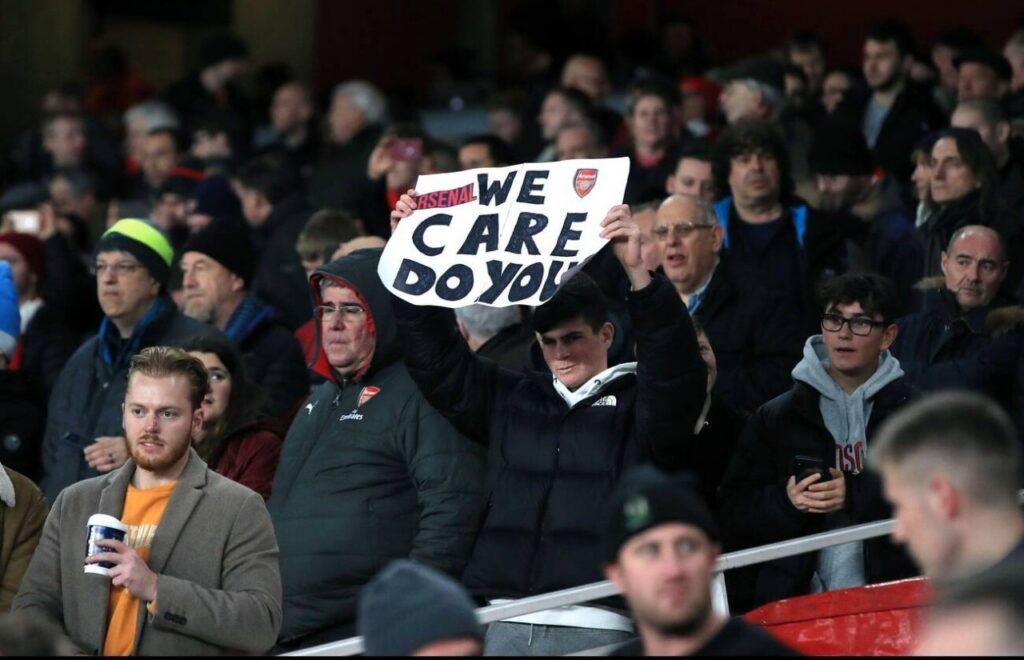
Before the 2019/20 season began, Arsenal supporters united in voicing their concerns about the club’s direction and their growing dissatisfaction with Stan Kroenke’s ownership. A banner at the Emirates summed up the mood: “We care, do you?”
Things already looked out of place for Emery. With captain Laurent Koscielny departing, the club had no clear replacement beyond a leadership group that included Xhaka.
The club signed Nicolas Pépé for a then-club-record fee to quell growing agitation over a perceived lack of investment. They brought in Real Madrid loanee Dani Ceballos as additional cover and an aging David Luiz to strengthen the defense.
A scrappy August win against Newcastle, followed by draws against Tottenham and Watford and a miraculous escape from defeat against Aston Villa, kept the fans talking.
In the Villa game, Xhaka came off to cheers from the supporters. Those cheers should have signaled what was coming in the following weeks.
The problem was that Xhaka, in his entirety, was not at fault.
The dressing room already looked fractured. Mesut Özil had been left out of the matchday squad without injury, with Emery claiming that others deserved to play more than him. Arsenal’s general approach on the pitch looked lackluster, uninspiring, and, at times, lazy.
Xhaka did not help himself. He lunged into tackles recklessly and collected cards, making it easy for supporters to place him under the spotlight.
A culture of mediocrity that had embodied Wenger’s later years had crawled into the underbelly of Emery’s team. Xhaka found himself playing at the heart of a midfield that often failed to protect him.
Emery handed Xhaka the armband in late September. He acknowledged that some sections of the fanbase remained unconvinced by the Swiss midfielder and told him that he needed to change that perception through his performances, show greater personality, improve with every match, and contribute consistently to the team.
That never happened.
After a narrow win at Bournemouth on 6 October, Arsenal entered a run of horrible performances that would last into December. Before that run ended, Crystal Palace provided the moment that would define Xhaka’s Arsenal career.
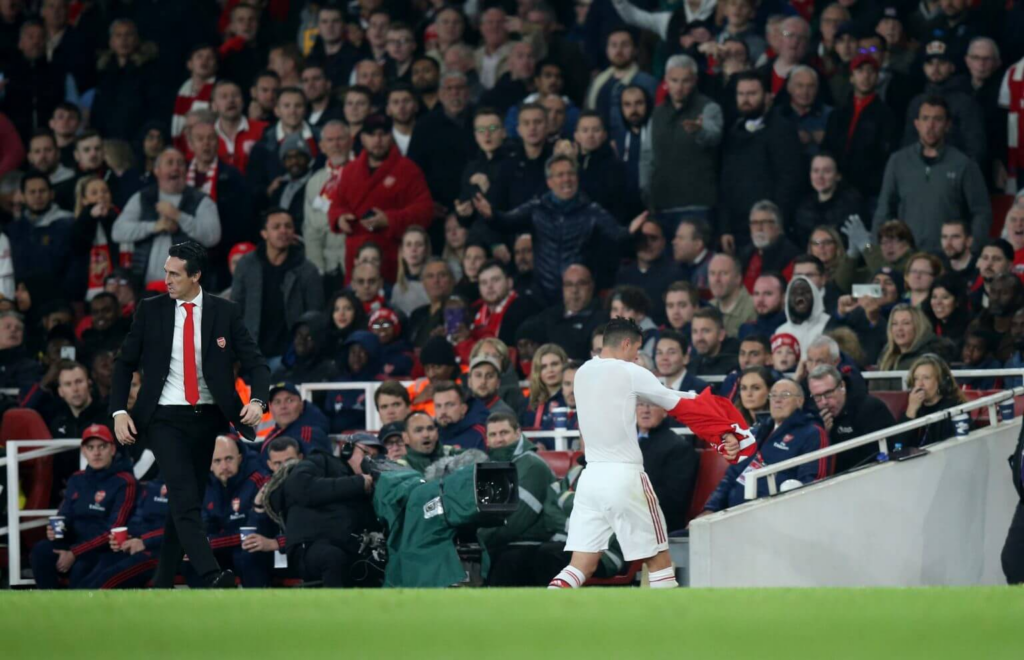
Arsenal had thrown away a 2-0 lead after taking the lead within 105 seconds. Emery substituted Xhaka in the 66th minute, and loud jeers followed him off the pitch.
The infuriated Xhaka cupped his ears and used expletives to address the crowd before heading into the dressing room.
He apologized after the match, admitting that he had overreacted. But the deed was done. Arsenal stripped him of the captaincy, and the fans had seemingly passed their verdict: Xhaka needed to leave.
Mikel Arteta and the Slow Rebuilding of Granit Xhaka
Unai Emery left Arsenal on 29 November 2019 as the hierarchy moved to prevent the club from slipping further. They wanted to put Arsenal back on a path of growth.
Former captain Mikel Arteta arrived from Manchester City, where he had served as Pep Guardiola’s assistant, and inherited a team in disarray.
Arteta’s first priority was to establish a culture, restore unity, and bring togetherness back to the dressing room. As he assessed the squad, he knew Xhaka’s personality and leadership could play an important role in the team he envisioned.
There was one problem. Xhaka had already made up his mind to leave.
His relationship with the supporters had broken down. Hertha Berlin had shown interest in him, and the midfielder was ready to close the Arsenal chapter.
Arteta’s first conversation with Xhaka centered on understanding how he felt and what had brought him to that point. Mikel wanted Xhaka to hear his honest opinion and know that he was ready to support him. He also wanted the club to stand behind the midfielder.
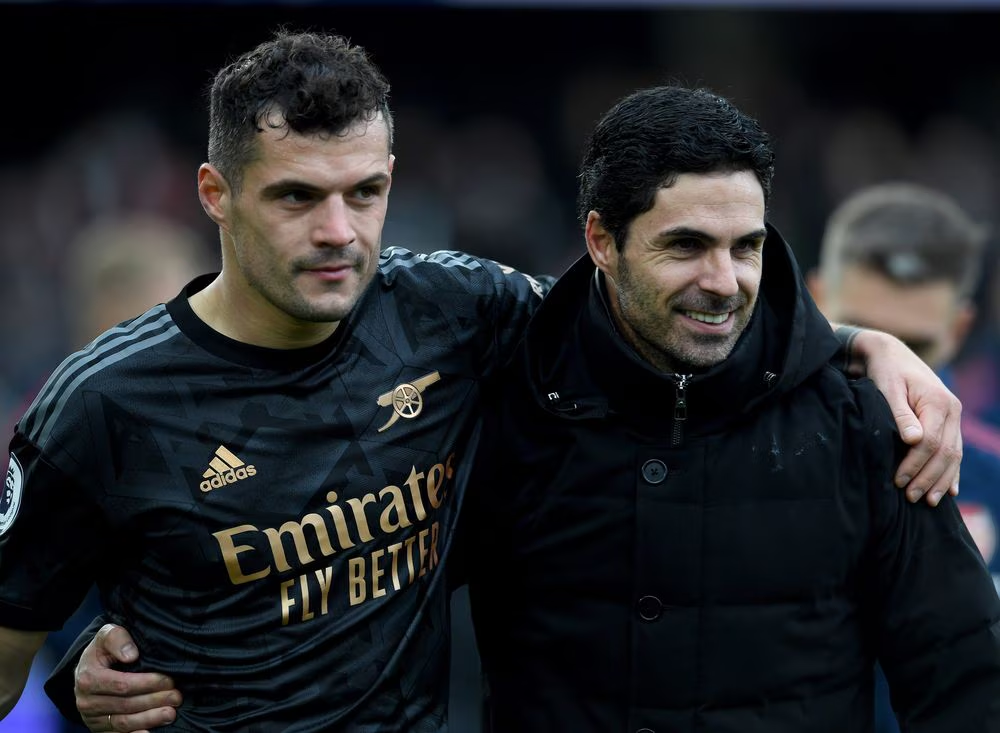
Arteta believed Xhaka could become a really good player for Arsenal and, more importantly, that he could enjoy playing under him. Xhaka thought about it, responded positively, and eventually changed his mind. That decision would prove significant for both the player and the manager.
The Spaniard understood Xhaka’s limitations, but he also recognized that Arsenal had spent years asking the midfielder to operate in areas that exposed them.
Xhaka had largely played as a deep-lying midfielder since arriving in the Premier League in 2016, often sitting at the base of Arsenal’s midfield and carrying much of the responsibility for building play from deep. His strengths were obvious: vision, passing range, composure in possession,, and the ability to dictate tempo.
His weaknesses remained just as clear.
Xhaka lacked the acceleration and tackling ability of a midfielder like Thomas Partey, and his temperament had repeatedly landed him in trouble. Yet Arsenal’s squad had rarely given successive managers a better option in front of the defense.
Xhaka remained important in possession, but playing so deep exposed him to opposition runners and placed greater demands on the parts of his game least suited to the role.
Arteta began to change that.
When Arsenal signed Thomas Partey in 2020, the move gave Arteta the defensive presence he needed in midfield and allowed Xhaka to move higher up the pitch.
Instead of constantly protecting the defense, Xhaka could operate as Arsenal’s left-sided No. 8, with Martin Ødegaard occupying a similar role on the opposite side. Arsenal’s full-backs, often Oleksandr Zinchenko and Ben White, could also move inside to provide additional support during build-up.
The change allowed Xhaka to play closer to the areas where his strengths could have the greatest impact.
Since arriving in the Premier League in 2016, Xhaka had made more errors leading to goals than any other outfield player, with eight to his name. He also ranked first for red cards, with four, and bookings, with 54.
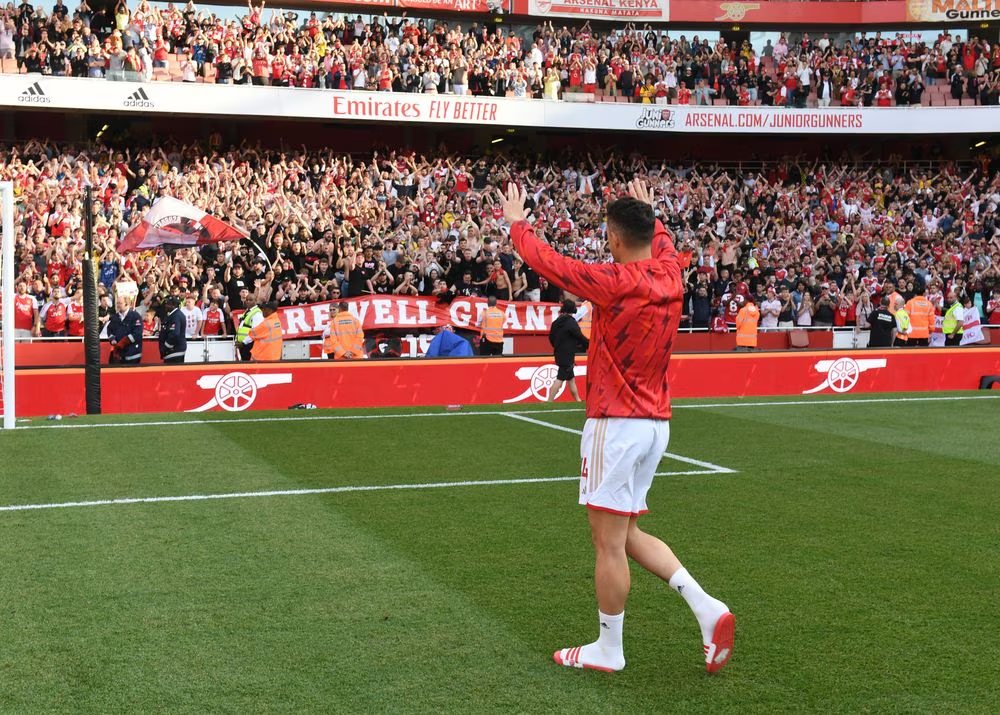
Now Xhaka offered Arsenal far more than character and professionalism. The reception from the away end against Brentford during the 2022/23 season provided one of the clearest signs of how far his relationship with supporters had traveled, and more crucial evidence of his redemption was revealed on the pitch.
And the man whose Arsenal career had once seemed destined to end in bitterness had again won the admiration of his fans.
Although injuries affected Arsenal’s performances, Xhaka’s availability helped spearhead their return to Europe, while his 12-goal and assist contribution ensured they gave Manchester City a run for the title.
But his watch had ended. Arteta and the hierarchy gave their blessing for Xhaka to leave the club at the end of the 2022/23 season, Granit Xhaka left Arsenal as a hero.
What Swiss Dreams Are Made Of
An often-overlooked part of Granit Xhaka’s career is his relationship with the Swiss national team.
At club level, he spent years wearing the label of the villain. In Switzerland, however, Xhaka became one of the most trusted figures in the national team and eventually its captain.
After helping the country win the Under-17 World Cup in 2009, Xhaka quickly moved into the senior national team and established himself as one of its most important players. The son of an immigrant eventually became the captain of his adopted country and the most-capped player in Swiss football history.
Xherdan Shaqiri shared a similar story. Like Xhaka, he grew up in Switzerland with Kosovo-Albanian roots, and together they became two of the defining figures of a generation of Swiss footballers.
Their greatest moments in a Swiss shirt came at the 2018 World Cup in Russia.
Switzerland faced Serbia, knowing that victory would take them into the last 16. Serbia struck first when Aleksandar Mitrović powered a header into the net in the fifth minute, leaving Switzerland chasing the game.
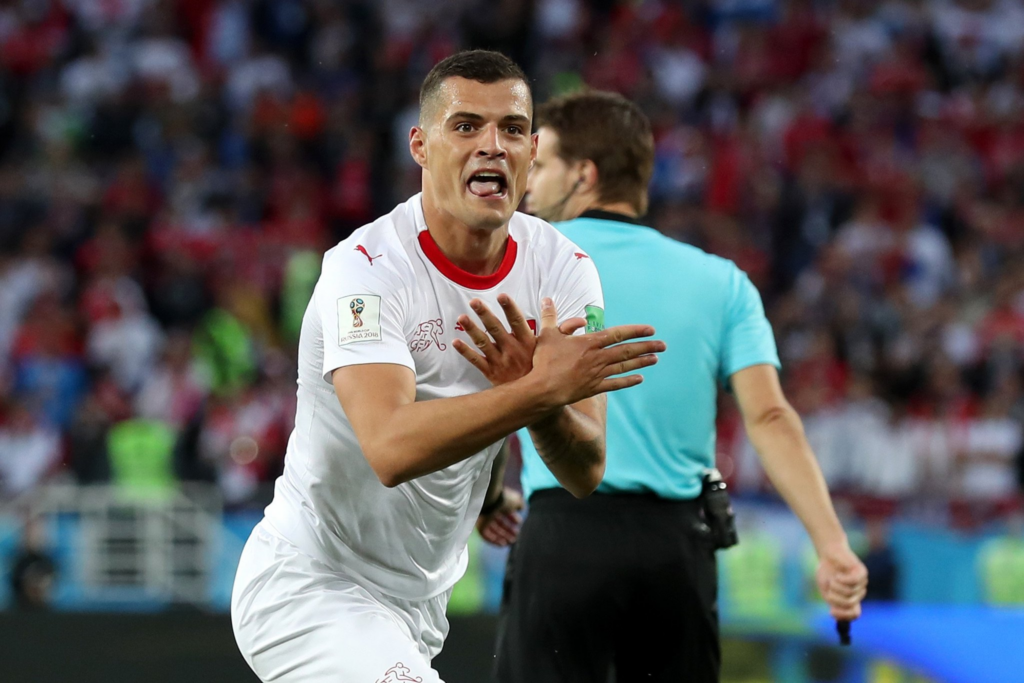
For much of the second half, Serbia held onto the lead. Then a loose ball fell to Xhaka. He unleashed a thunderbolt to level the game. But the goal itself soon became secondary to what happened next.
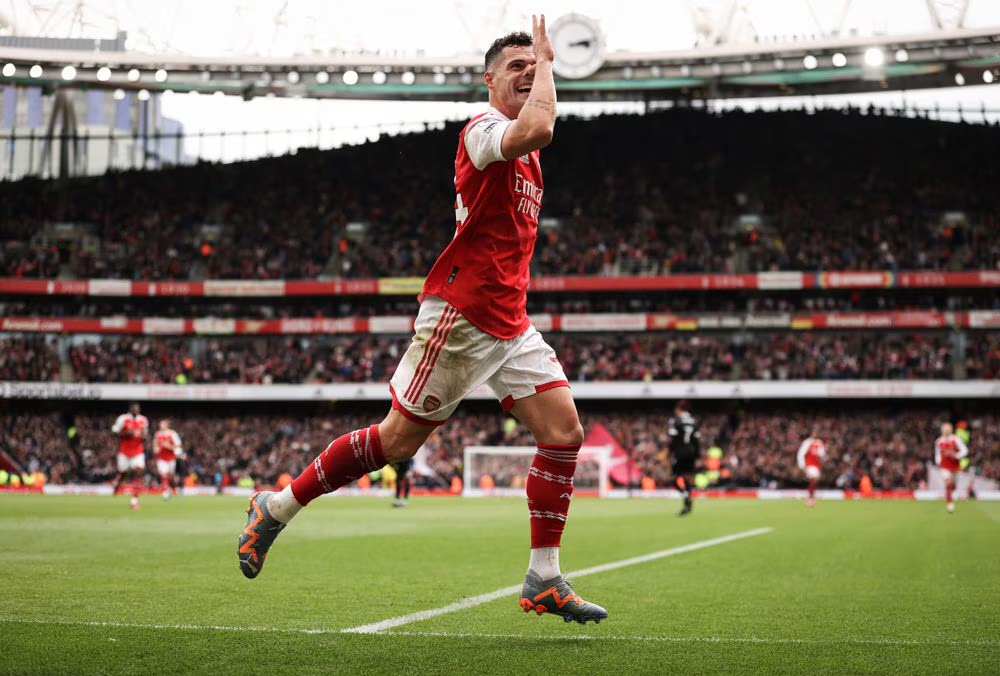
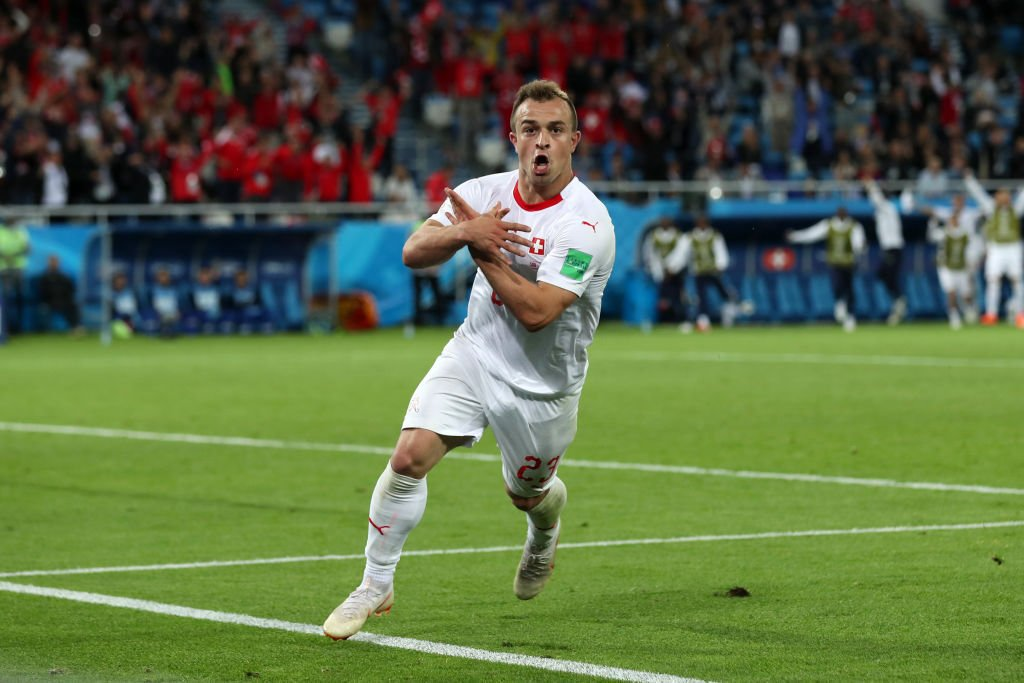
Xhaka ran towards the corner and raised both hands, crossing his thumbs and spreading his fingers to form the shape of an eagle—the Albanian eagle.
The celebration touched a political and historical nerve that stretched far beyond football.
The eagle carries enormous significance for Albanians. It appears on the Albanian flag and has long represented identity, pride, strength, and survival.
Serbia and Kosovo share a long and painful history, with tensions rooted in competing claims over Kosovo and intensified by the conflicts surrounding the breakup of Yugoslavia. Kosovo declared independence from Serbia in 2008, although Serbia has never recognized it.
For many Kosovo Albanians, the struggle for independence remains deeply connected to their sense of identity.
That history followed Xhaka and Shaqiri onto the pitch in Russia.
Serbian supporters booed the pair during the match, while some displayed images of Ratko Mladić, the Bosnian Serb military commander convicted of genocide and other war crimes by an international tribunal.
Against that backdrop, Xhaka’s eagle gesture carried a meaning that extended well beyond celebration.
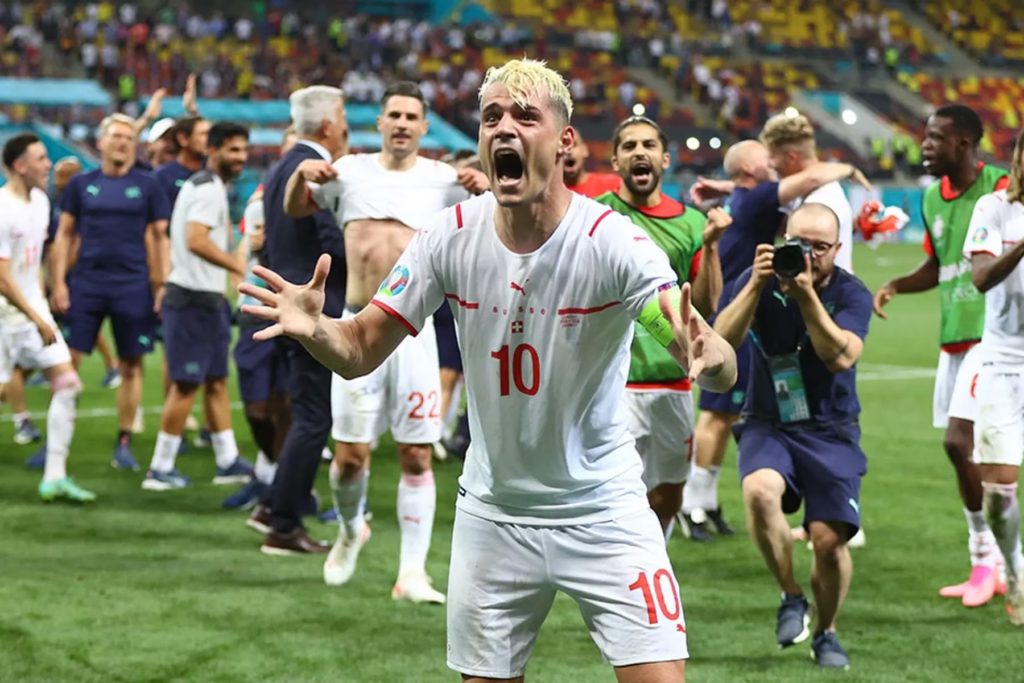
With the game level and time running out, Shaqiri received the ball, raced through on goal, and finished calmly to give Switzerland a 2-1 victory, repeating the same celebration Xhaka had done.
That night against Serbia became one of the most memorable in Swiss football history, only behind the 2020 Euros round of 16 upset to France, when Switzerland came from behind to clinch their first-ever European quarter-final tickets thanks to a masterclass performance from Xhaka in midfield and the goal-scoring boots of Seferovic.
But the Swiss captain was far from done with the national team, he would come back in 2026 to inspire the Switzerland to a first World Cup quarter final in 72 years after playing all 120 excruciating minutes against Colombia providing motivation during the match and scoring a penalty during the penalty shoot-out.
Bayer Leverkusen, Xabi Alonso and the Bundesliga Trophy
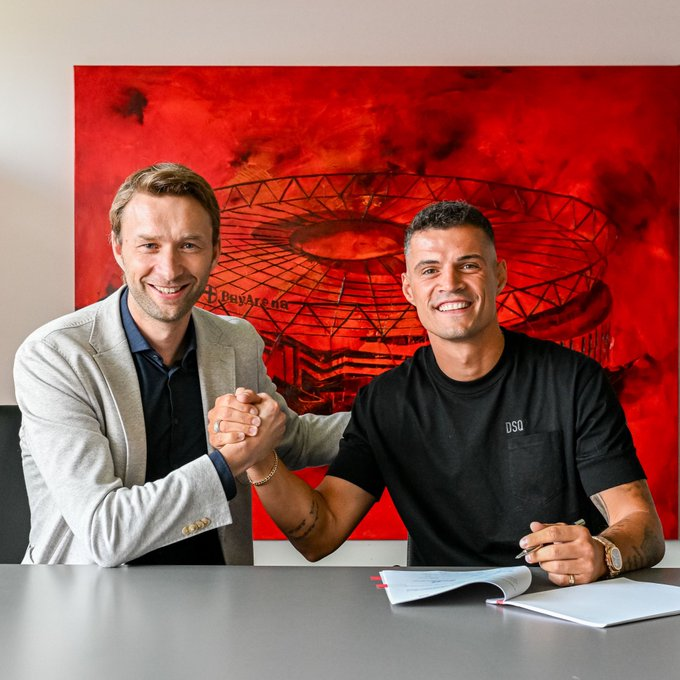
Xabi Alonso made Granit Xhaka one of his earliest signings in 2022 after taking charge of Leverkusen.
The goal was simple: build his midfield around Xhaka’s elite qualities.
This time, however, Alonso demanded something different from Xhaka than Mikel Arteta had.
At Bayer Leverkusen, Xhaka became the central organizer of the midfield, often serving as the team’s first outlet when building from the back. He constantly moved into spaces to receive the ball, even under pressure, and used his passing range and composure to help Leverkusen play through opposition presses.
While Xhaka provided security in front of the defense, Exequiel Palacios could move further forward and contribute to Leverkusen’s attacking play.
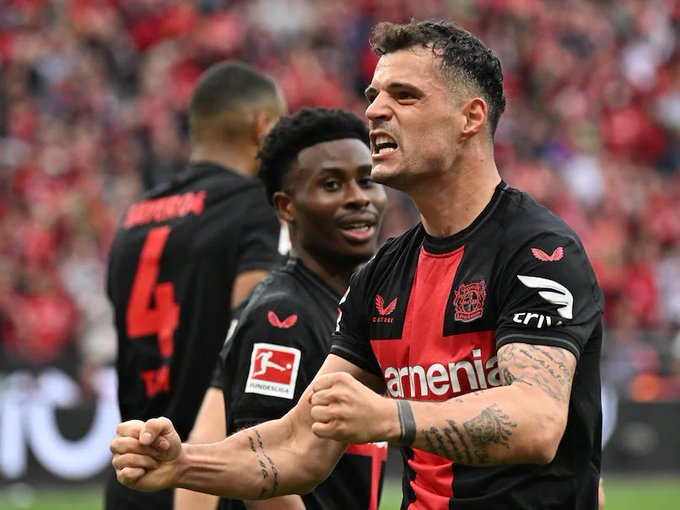
The tactical change suited him because it placed his passing, intelligence, composure, and positional awareness at the heart of a structure that allowed those qualities to flourish.
Xhaka became the metronome of Leverkusen’s possession, the link between defense and attack and the player responsible for giving the team control when games became chaotic.
His influence extended beyond what he did with the ball. Xhaka started 32 of Leverkusen’s 34 Bundesliga matches during the title-winning 2023/24 campaign, missing one through suspension and only dropping to the bench on the final day after the title had already been secured.
There was also a sense that Xhaka had become an extension of Alonso on the pitch.
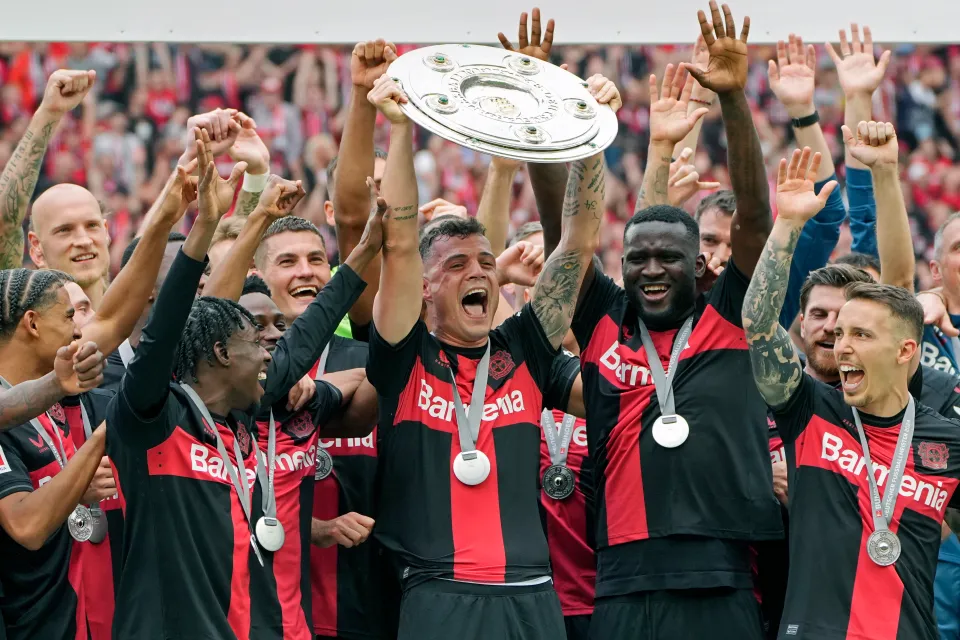
For a player whose Arsenal career had once been defined by questions over his temperament and leadership, the transformation was striking.
Winning the double in Germany with Leverkusen and ending Bayern’s 11-year chokehold on German football further redefined the player people had first known at Mönchengladbach.
The young, erratic, and fierce captain had become a calm and composed leader who could go long stretches without suspension.
Sunderland ‘Til I Die
As with every good thing in life, Alonso’s fairytale project eventually came to an end. Some of his best players moved on, and the manager himself later threw in the towel.
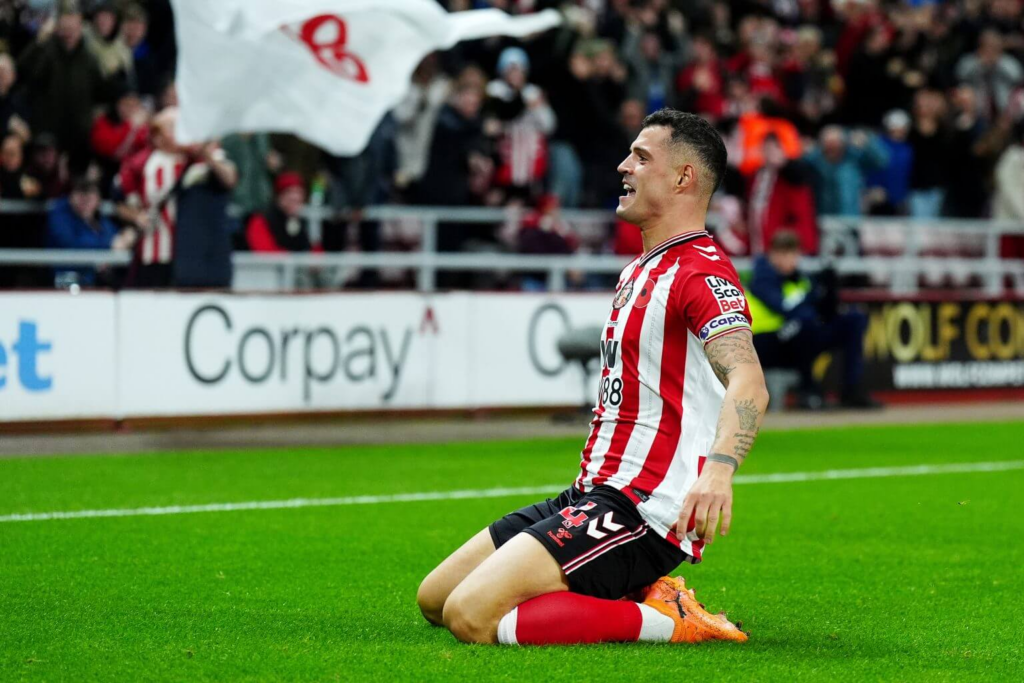
But the shock nobody expected was Xhaka’s move to newly promoted Sunderland for £13 million.
The rationale seemed difficult to explain. But for a player known for being daring and tackling challenges, perhaps it should not have come as a surprise.
A story as unique as Sunderland deserved a chance, just like Xhaka’s. Sunderland, however, had not always been a low-level club.
They had spent more than a decade in the Premier League before relegation in 2017, followed by a subsequent drop to League One. Those back-to-back relegations cast serious doubts over whether the club would ever return to top-flight English football.
The famous derbies against local rivals Newcastle seemed to belong to another era.
From 2018 to 2022, the Stadium of Light, with a capacity of 48,707 and one of the largest grounds in England, welcomed teams known only to English natives such as Scunthorpe United, Walsall, Lincoln, and Swindon.
Sunderland finished fifth, eighth, fourth, and fifth in League One, failing in the play-offs three times before finally winning promotion back to England’s second tier.
New ownership helped engineer the growth that pushed them back up.
In 2021, Louis-Dreyfus became Sunderland’s largest shareholder. Within a year, the club had returned to the Championship, and the narrative of an underfunded team struggling to survive in modern football began to change.
By 2024, when Régis Le Bris arrived after only two years managing senior football at Lorient, Sunderland looked ready to make another push for promotion despite not being the strongest candidates that season.
Burnley had conceded fewer goals per game than any other club in Football League history, while Leeds had the backing of the San Francisco 49ers’ investment arm. Both amassed 100 points and secured automatic promotion.
Sunderland collected 76 points and endured five straight losses before beating Coventry City over two legs and then upsetting Sheffield United at Wembley.
Their reward was a return to the Premier League. They then entered the new season with the league’s lowest wage bill. Little wonder that most pre-season analysis predicted an immediate return to the Championship.
For Xhaka, that was precisely the attraction. A chance to do something different
The move was about creating history. “It’s a different type of pressure for sure,” he said. “For myself, for the club, but also for the teammates. I have a good feeling; I am seeing where we can make a big change, and I want to be a part of that. To write our own history.”
When he arrived, he spoke about the energy surrounding the club and the mentality he had encountered among the players and supporters.
He knew what Sunderland needed from him: experience, leadership, and his quality. Xhaka was handed the captain’s armband as a sign of faith in his ability to lead their team filled with young players.
“I feel that I’m ready to help the team with my experience, but with quality as well.” Granit Xhaka backed that statment with action.
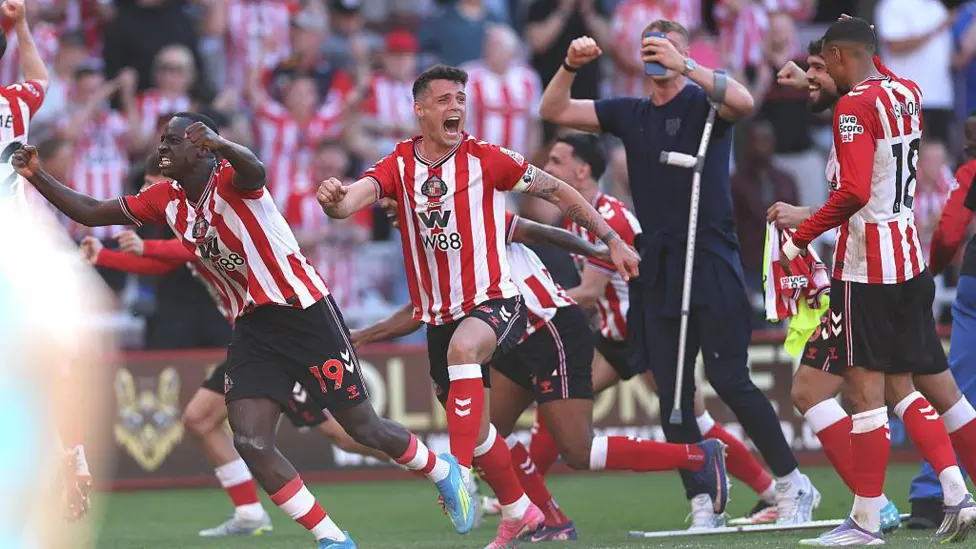
Xhaka’s 34 appearances, laced with six assists and one goal, proved pivotal for the club. By the end of the season, he and Sunderland had not only survived relegation but shattered expectations by qualifying for the Europa League after defeating Chelsea, and the Swiss was named the club’s player of the season.
What made it even more remarkable was how quickly Sunderland began competing with the established sides around them. They took points from six of the eight Premier League teams playing in Europe.
“We have a big energy and a big team spirit,” Xhaka said. “That makes the difference.”
There was something fitting about Xhaka finding himself in this position again. At Gladbach, Arsenal, and Leverkusen, he had repeatedly taken on responsibility. At Sunderland, he was doing it once more, only this time with a club trying to establish itself among England’s elite.
The midfielder who had once been questioned for his temperament was now trusted to lead a group through one of the most demanding challenges in English football.
With the transfer window back in full swing and the new season on the horizon, Xhaka has still been the subject of interest, most notably from Chelsea, where he was offered the chance to reunite with his former manager, Alonso.
More than ever, Xhaka has been earning his flowers.
Who knows? He may yet defy the odds and win the Europa League with Sunderland, or give us one last World Cup dance with Switzerland in 2030.
Granit Xhaka’s story reveals that it was never really about proving everyone wrong. It was about refusing to let anyone else decide how his story would end.
Who wrote this?

Francis Muojindu is a law graduate, journalist, and writer who is always seeking to amplify African Voices in sports.
He primarily covers football, basketball, and athletics with good knowledge of other sports.
When Francis is not bantering with friends, he is on the search for the latest news flying across the globe.
- Francis Muojindu

- Francis Muojindu

- Francis Muojindu
- Francis Muojindu

- Francis Muojindu

- Francis Muojindu

- Francis Muojindu

- Francis Muojindu

- Francis Muojindu
- Francis Muojindu

- Francis Muojindu