



Spain are World champions again. Sixteen years after Andrés Iniesta’s extra-time winner in Johannesburg delivered La Roja’s first World Cup. Ferran Torres’ strike against Argentina in New Jersey sealed a second World Cup title and brought the curtains down on another unforgettable tournament.
Spanish celebrations will dominate headlines for weeks to come. Fans will remember the goals that broke records, extra-time daggers and underdog upsets; these are stories that will make this World Cup one to remember.
For the United States, Canada and Mexico, the tournament also brought millions of visitors, packed hotels, full flights, and a surge in spending across host cities.
The champions celebrate with the trophy, crews sweep away the confetti, and reality asks the question many choose to ignore.
What does the host nation actually get out of it?
The economics of the World Cup come wrapped in big numbers, institutional corruption, and even bigger promises. Football’s biggest event creates an illusion of growth, exposure and legacy. In reality, those promises do not always materialise.
A walk through past host nations reveals a similar pattern. Stadiums that once held the world’s attention became expensive monuments to a month-long tournament. Some found a second life through domestic football clubs, while others sit underused, draining public funds long after the final whistle.
For every fan reflecting on the beauty of football’s biggest competition, I’ll take you down a road less travelled to examine what it really costs to host a World Cup, and why football’s greatest showpiece may not always be the economic engine it promises to be.
The Battle to Host the World Cup
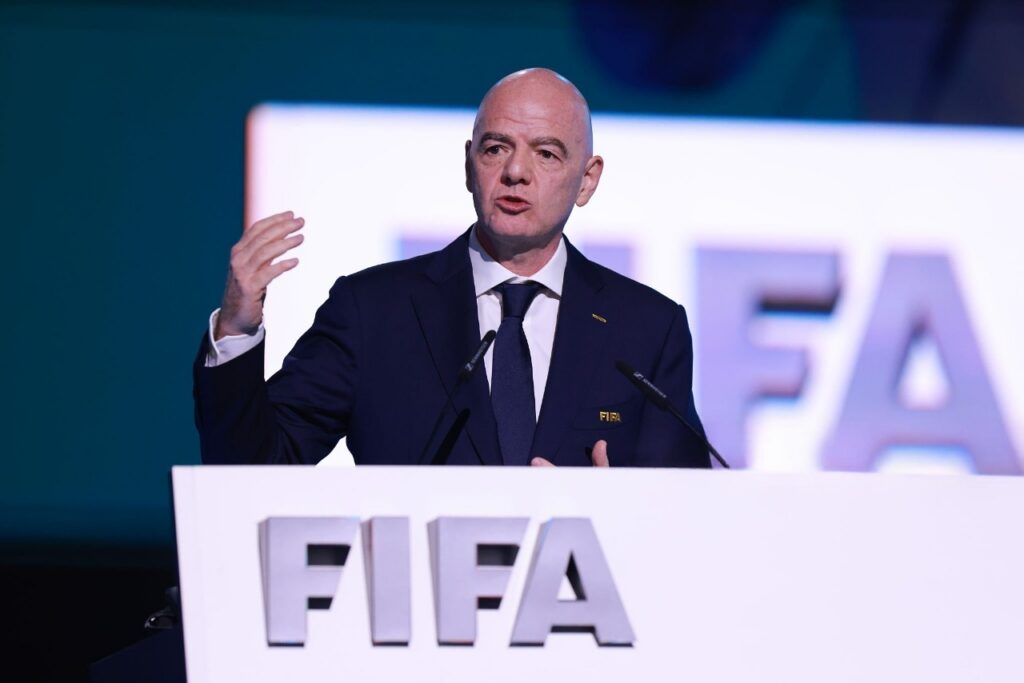
If you have ever wondered how a country gets chosen to host the World Cup, the answer starts with FIFA, football’s global governing body.
Interested countries submit official bids to FIFA. Bids contain detailed proposals that explain why a nation should host the tournament. They include plans for stadiums, transport, accommodation, security, finances, and the long-term impact the event could have on the country.
Submitted bids are reviewed by FIFA’s Bid Evaluation Task Force. The task force examines key areas such as infrastructure, commercial potential, costs, environmental impact, and the country’s overall vision for the tournament. Each bid is then scored and assessed to determine whether it meets FIFA’s requirements.
After the evaluation process is completed, the FIFA Council reviews the findings and selects up to three bids to move forward. The Council consists of FIFA’s president and representatives from football’s six continental confederations: CAF, UEFA, CONMEBOL, CONCACAF, AFC, and OFC.
The FIFA Congress, the organisation’s highest decision-making body, makes the final decision. Comprising all 211 member associations, the Congress allows each nation to cast a vote and awards the right to host the World Cup to the bid that secures the required majority.
In simple terms, the journey from bid submission to hosting the world’s biggest football tournament involves detailed planning, strict evaluation, and finally, a vote by football nations from across the globe.
On paper, choosing a World Cup host is a rigorous process. However, the process has been overshadowed by corruption. An investigation by the US Department of Justice in 2015 revealed a culture of bribery, vote-buying, and backroom dealings that stretched across decades.
The reports revealed that back-door monetary exchanges influenced the controversial decisions to award the 2018 and 2022 FIFA World Cups to Russia and Qatar, raising doubts about whether FIFA selected host nations on merit alone.
The scandal led authorities to arrest and indict numerous FIFA officials, while football’s governing body banned others from the sport for corruption.
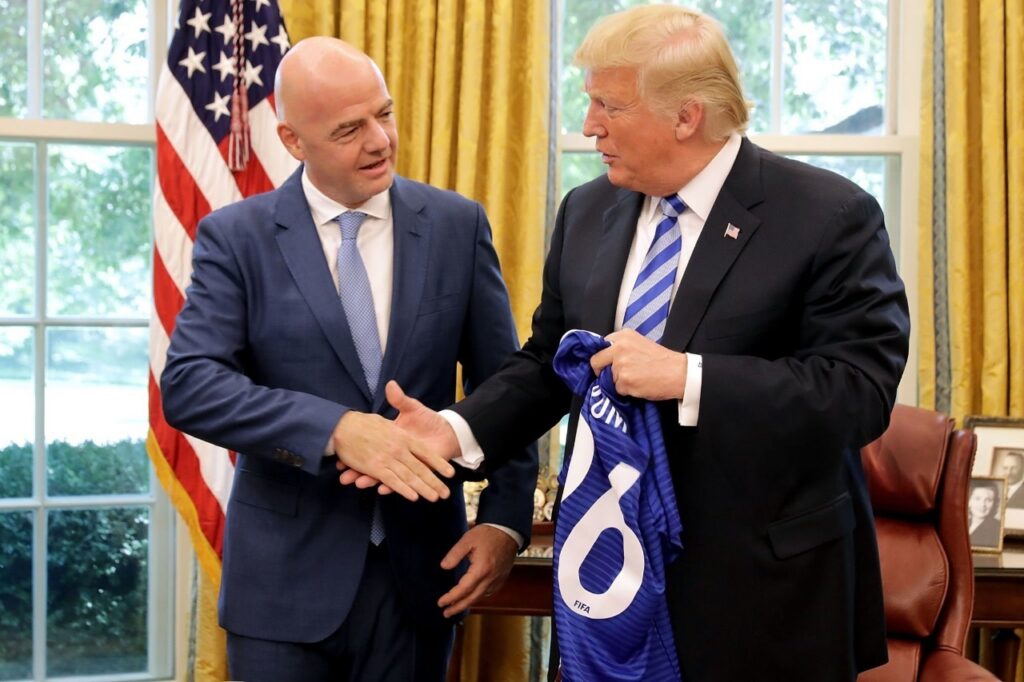
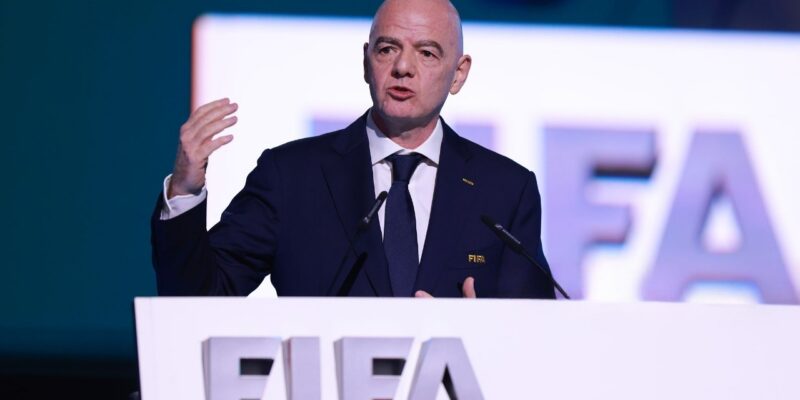
When Gianni Infantino succeeded Sepp Blatter in 2016, he promised a new era of transparency and accountability. However, the FIFA chief has come under heavy criticism with arguments that suggest many of FIFA’s old habits remain.
Critics have questioned FIFA’s governance reforms, its decision to award the 2034 World Cup to Saudi Arabia as the sole bidder, its growing political ties with world leaders, and its increasing emphasis on commercial revenue above all else.
A decade after corruption allegations exposed deep flaws within the organisation, FIFA continues to face scrutiny over whether its leaders make decisions in the best interests of football or powerful interests operating behind the scenes.
The Billion Dollar Cost of Football’s Biggest Show
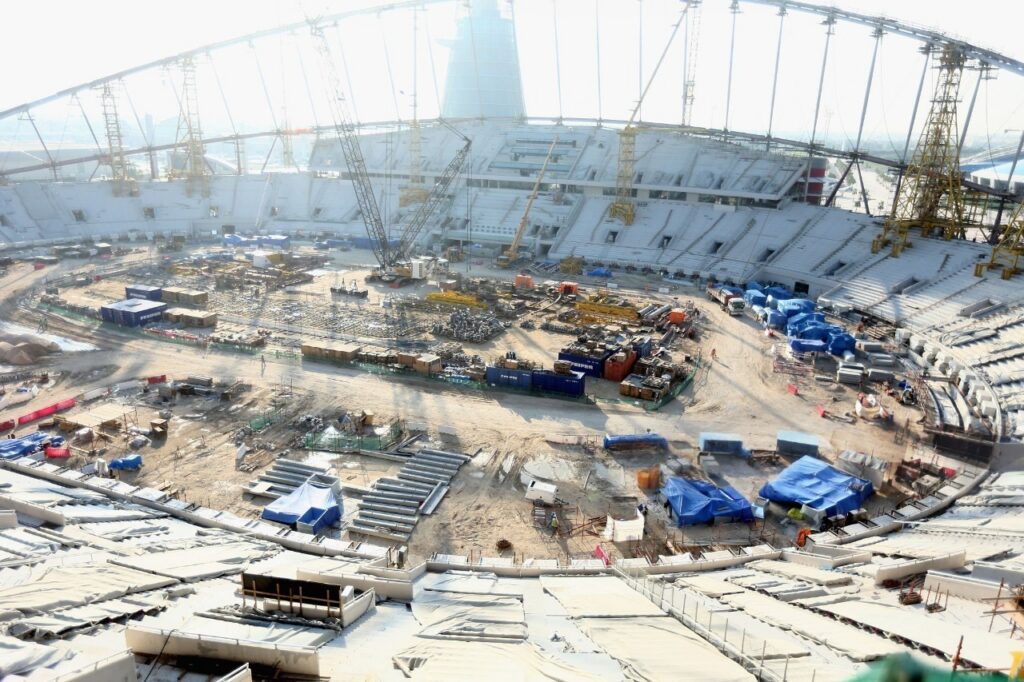
Between 2010 and 2026, host nations spent an estimated $265 billion in direct costs preparing for five editions of the FIFA World Cup. The largest share came from Qatar, which reportedly spent around $220 billion ahead of the 2022 tournament.
But that is just half the story.
After winning the right to host the World Cup, each host city signs a separate agreement with FIFA known as the Host City Agreement. In a nutshell, this agreement absolves FIFA of virtually every financial liability associated with matches played in those cities.
FIFA keeps all revenue from broadcasting rights, sponsorships, licensing and ticketing while host cities finance much of the infrastructure, policing, transport and public services required to stage the tournament.
Host nations suddenly face a race against time to build stadiums, upgrade transport systems, strengthen security and prepare entire cities for millions of visitors.
For the 2026 FIFA World Cup, co-hosts the United States, Canada and Mexico avoided one of the tournament’s biggest expenses by relying on existing stadiums rather than constructing new ones.
However, the United States and Canada are not traditional football powers in the same way as many European and South American nations, and developers had built most of their major stadiums for other sports.
Despite Mexico’s rich football culture and strong domestic league, maintaining and modernising world-class stadiums remained financially demanding. As a result, all three nations committed significant resources to upgrading existing venues rather than building new ones.
The 2026 World Cup: The First of Its Kind
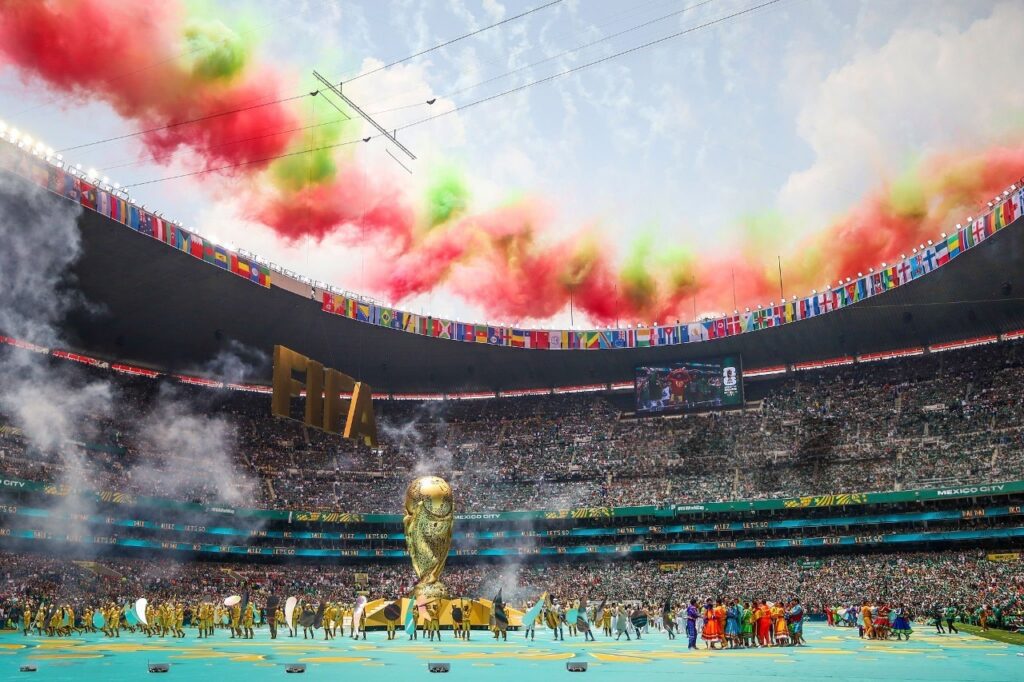
The tournament was staged across 16 venues, with 11 in the United States, two in Canada and three in Mexico. FIFA required stadiums to meet strict standards, including a minimum capacity of 40,000 for group-stage matches and 80,000 for the final. Venues also needed modern broadcast facilities, high-speed digital infrastructure, premium hospitality areas and world-class playing surfaces supported by advanced drainage systems.
One of the biggest upgrades in the United States was the replacement of artificial turf with hybrid grass. Seven host stadiums, including SoFi Stadium, MetLife Stadium and Mercedes-Benz Stadium, installed specially engineered surfaces made up of about 90 to 95% natural grass reinforced with synthetic fibres. Construction teams built the pitches on deep sand foundations, incorporating irrigation, drainage, and ventilation systems to keep them in excellent condition throughout the tournament.
Another major modification involved widening the playing fields. FIFA required a 105-by-68-metre pitch and additional space around it for broadcasters, photographers and advertising.
Tournament organizers removed sections of permanent seating, installed temporary bleachers, altered concrete structures, and raised the playing surfaces in many NFL stadiums because their seating was originally designed much closer to the field. These changes slightly reduced stadium capacities during the tournament.
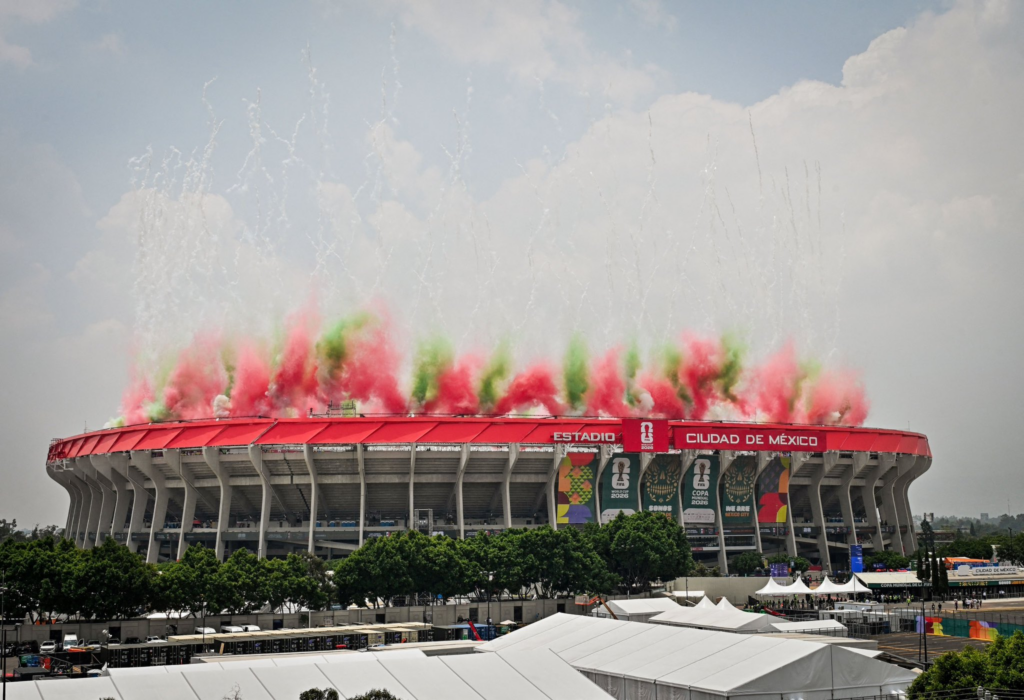
The venues also had to comply with FIFA’s commercial requirements by covering sponsor branding and temporarily replacing stadium names with neutral titles. Organisers redesigned premium hospitality and VIP areas for FIFA’s commercial partners. Altogether, these upgrades cost some host stadiums more than $10 million each.
Mexico faced similar demands. The iconic Azteca Stadium underwent a two-year renovation costing about $175 million. Beyond the stadium, the country invested roughly $500 million in airport upgrades and transport infrastructure to improve connections between host cities and match venues.
These figures only scratch the surface, but they illustrate the scale of investment required to host a FIFA World Cup. The bigger question remains whether such spending delivers lasting value and is the motivation behind pouring billions of dollars into a month-long tournament.
What Reward Does Every Host Nation Chase
Mexicans can never forget the Hand of God in 1986, a moment now passed down as football folklore to younger generations; neither will Americans forget Diana Ross’s stage mishap in Chicago in 1994.
Many people viewed post-apartheid South Africa as an unsafe country because of its burgeoning crime rate. Hosting the World Cup was a strategy meant to correct that perception and prove that Africa, in general, had what it took to host the World Cup.
To be honest, I can go on an endless ramble about the many reasons why countries host the World Cup.
My goal is to paint a clear picture of the role of geopolitics in global sports. With the World Cup at its very heart.
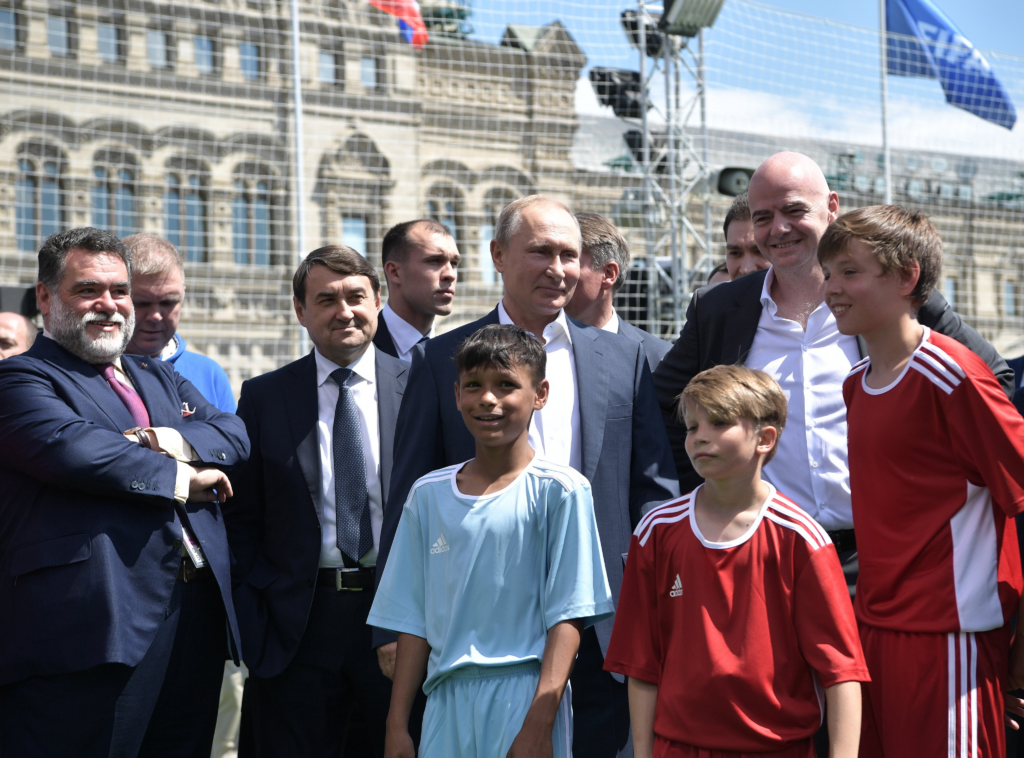
In 2010, Russia won the rights to host the 2018 FIFA World Cup. It presented the perfect opportunity to rebuild relations with the West, which had deteriorated over many years. It was also an opportunity to challenge the perception that the country was deeply racist, particularly towards Black footballers and players of African descent. As it turned out, hosting the World Cup was merely a poisoned chalice for the global community, who were bamboozled by the charms of a bloodthirsty tyrant.
To date, many of these factors still play a role. Qatar, in 2022, faced widespread human rights criticisms, especially the use of immigrants for stadium construction work without effective safety measures, exposing them to hazards and some eventual death.
The country’s discriminatory treatment against women sought to use the World Cup to reshape its image as a nation that was open and welcoming to the international community while remaining true to its Islamic identity. A clear paradox between actions and perception, if you ask me.
Today, geopolitical tensions in the Middle East continue to shape global conversations, from energy security to international diplomacy. But somehow, the United States have avoided the same level of scrutiny as the previous hosts despite launching military campaigns in Venezuela and Iran, as well as a myriad other internal human rights violations.
Saudi Arabia, the country set to host the 2034 FIFA World Cup, is no different. Despite the criticism that accompanied its successful single-bid campaign, FIFA paid little heed. What can you expect from a nation that has invested and continues to invest billions across various sports while expanding its footprint across some of football’s biggest leagues?
It is called the art of “sportswashing”–using sports as a means to deflect from the very acts that make these countries face criticism
A look away from the goals, trophies, and celebrations lies a contest for influence, reputation, and global relevance.
The Aftermath: Economic Returns Might be Overrated
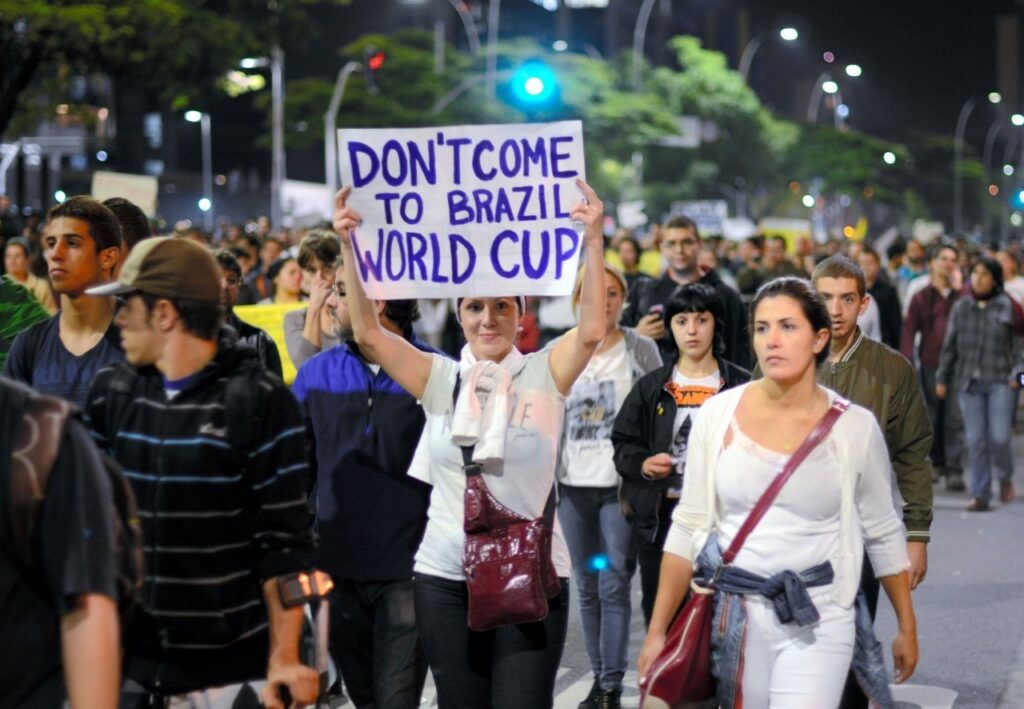
We’ve all heard the mumbo jumbo words that come out every single time about the economic benefits a country gains from hosting the World Cup. Well, that idea is overstated; even the supposed political image cleansing most times ends up backfiring.
South Africa 2010
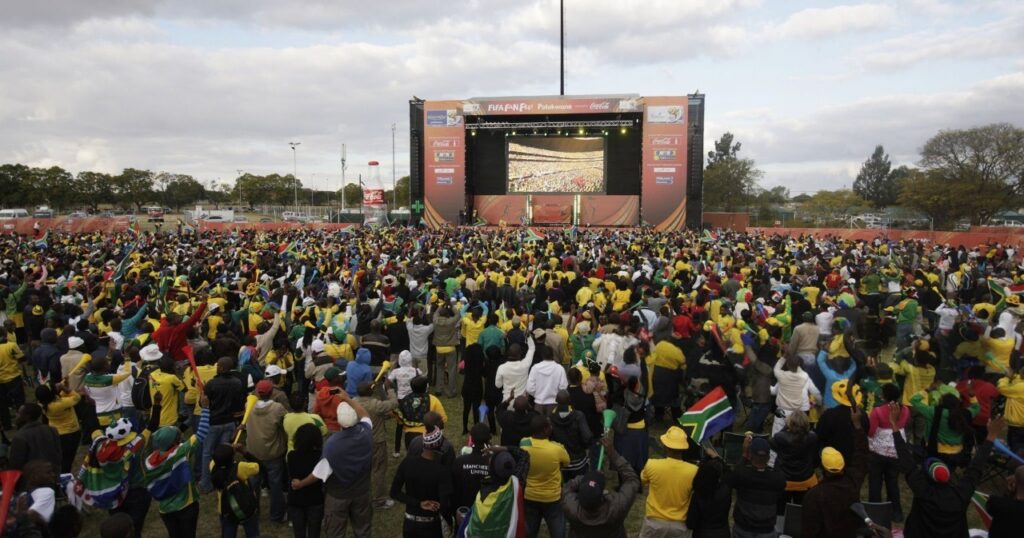
South Africa built five new stadiums and renovated five existing ones for the 2010 World Cup, spending roughly $1.1 billion on the stadiums alone. Only three remain economically viable today, such as the FNB Stadium in Johannesburg.
Others find occasional uses for rugby games or concerts, but that is not enough economic activity to keep a stadium running. For the beautiful stadium that South Africa built in Cape Town, the government has had to stomach $3.5 million in annual maintenance fees to keep it running.
On infrastructure, the government worked on the Gautrain that connected the stadium to the airport in Johannesburg and further stretched to Pretoria, together with major motorway upgrades.
However, after the tournament, expensive toll fees on the motorways had South Africans paying through their noses after the tournament, an event that caused a lot of grumbling.
Top government officials at the time said that the essence of the World Cup was to showcase Africa and paint South Africa as crime-free.
More than 16 years later, South Africa has yet to achieve that aim. Instead, worsening xenophobia has become more visible, prompting even fellow Africans to avoid the country.
Furthermore, the claims of the World Cup sparking development in its football may be partially true through more private investment, which has witnessed the dominance of South African teams on the continent, but nationally this is only the country’s second World Cup in 16 years.
Tourism, which organisers touted as one of the World Cup’s biggest economic benefits, also fell short of expectations. By the end of the tournament, South Africa had attracted only 309,000 foreign visitors, fewer than half the number of international arrivals it typically recorded in an average month in 2010.
Rather than accelerating, the country’s economic growth slowed during the event. John Saker, Chief Operating Officer of KPMG Africa, summed it up by saying, “The big boost didn’t happen.”
Brazil 2014
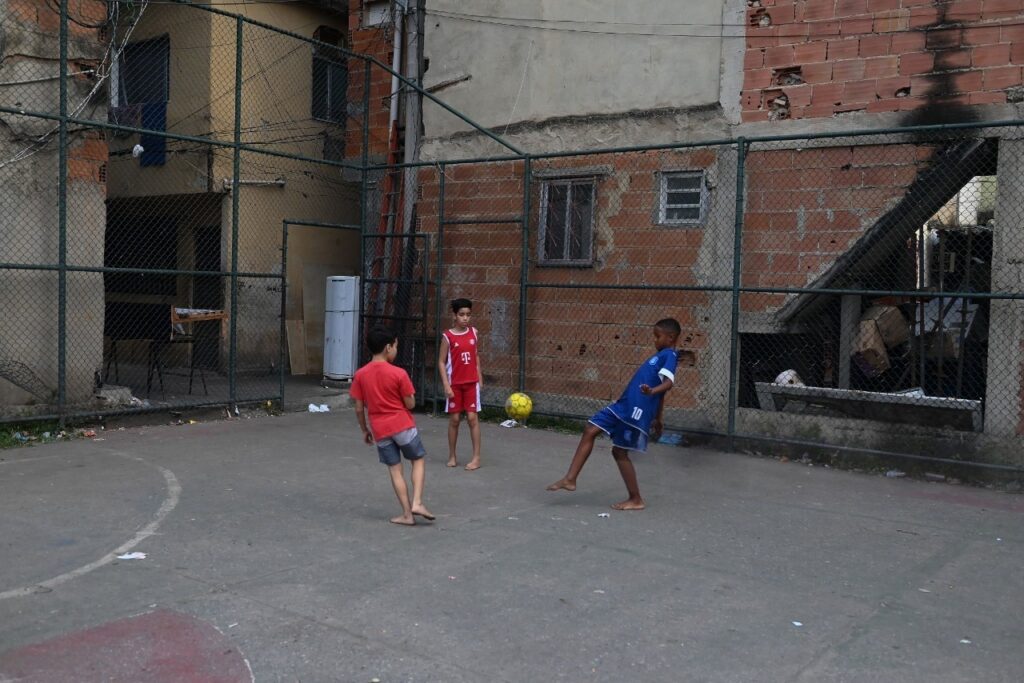
Brazil’s story might even be worse off. Even during the months leading up to the World Cup in 2014, there were widespread protests.
Authorities displaced more than 25,000 families in Rio and about 250,000 people across Brazil to make way for infrastructure projects tied to the World Cup and the Olympic Games, which followed two years later. Rio’s Housing Secretary, Jorge Bittar, defended the demolitions as part of a £285 million urban redevelopment plan designed to transform the area around the Maracanã Stadium, which itself underwent a £330 million renovation ahead of the World Cup.
Officials promised new cultural spaces, landscaped public squares, and a cinema as part of a broader effort to modernise the district. It was the same familiar promise of transformation that accompanies almost every major sporting event, but one that rarely matches reality.
For many residents who were forced to relocate, however, the consequences have lasted long after the tournament ended. Reports cited by BBC News Brasil found that numerous displaced families continue to face unstable housing, mounting debt, fractured communities, relocation to distant neighbourhoods and lengthy bureaucratic battles to obtain compensation.
To make matters worse, authorities never used the land they cleared through forced evictions for the projects that initially justified the removals. Recife provides one such example. Authorities had promoted ambitious plans for a so-called World Cup City around the Pernambuco Arena. But several of the promised developments failed to materialise, leaving many former residents displaced without seeing the anticipated benefits.
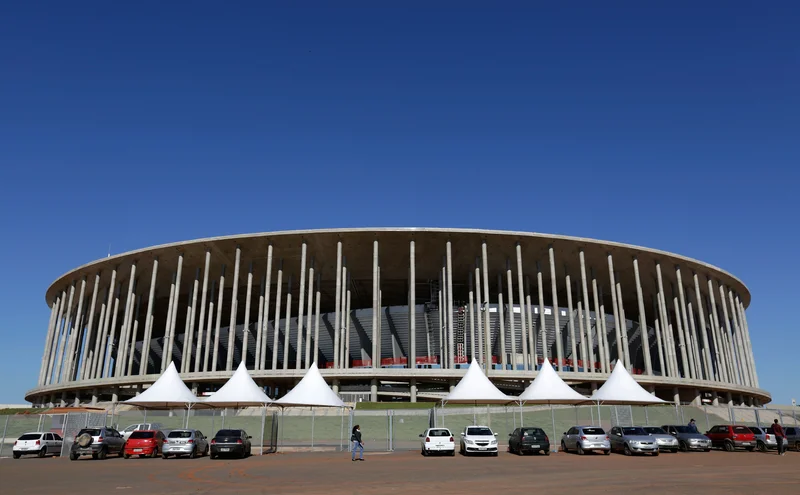
A harsh reality is that many of Brazil’s World Cup stadiums have struggled to justify the enormous public investment made in them. The $550 million stadium in Brasília has at times been used as a parking lot for buses. Meanwhile, authorities spent around $215 million to build Cuiabá’s Arena Pantanal, but construction defects soon plagued the stadium, and homeless people later occupied it. Local authorities have admitted that maintaining the venue has become a financial burden and are seeking private operators to take it over.
But Cuiabá’s troubles extended beyond the stadium. An $800 million light rail project intended to connect the airport to the city centre remains largely unfinished, with only a fraction of the planned route completed, while several former officials have come under investigation for corruption.
Brazil’s investment in the World Cup produced expensive facilities that became symbols of debt and poor planning instead of the lasting legacy the government had promised.
Qatar 2022
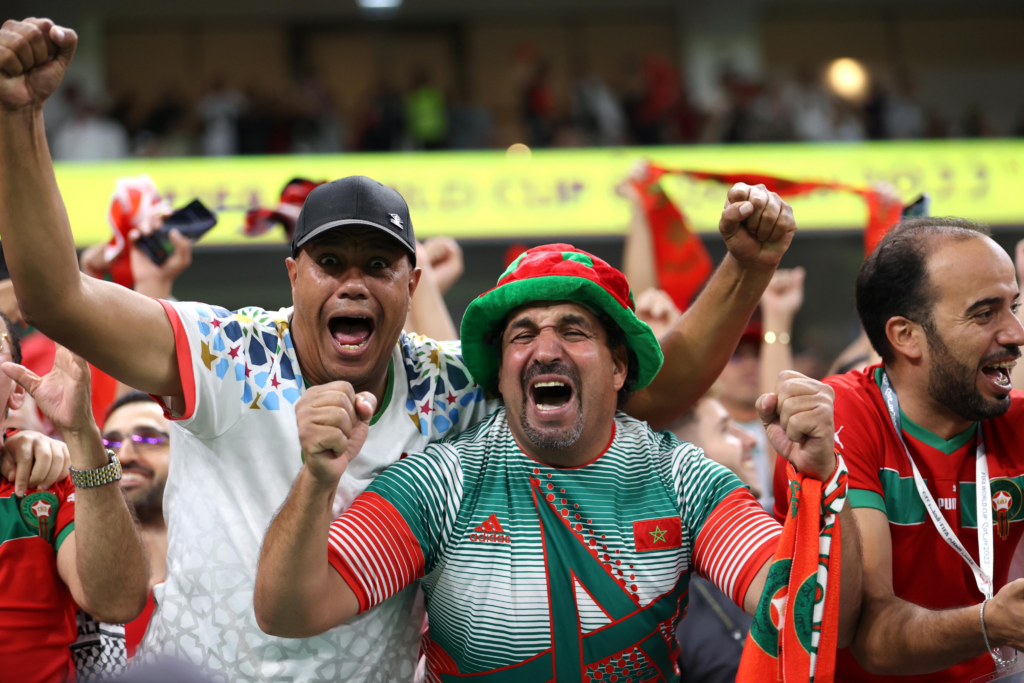
Qatar has taken a different approach to its World Cup legacy by repurposing several tournament venues. Sports medicine and research facilities have converted some stadiums, while selected venues donated sections of seating to support football infrastructure projects in parts of Sub-Saharan Africa.
However, questions remain over the long-term viability of some of the large-scale developments built for the tournament. Newly developed districts struggled to attract the expected level of occupancy. Regional geopolitical tensions with Iran have also complicated Qatar’s efforts to position itself as a global tourism and business hub.
On the football side, the Qatar Stars League has yet to experience sustained growth in global interest despite attracting a couple of high-profile players with lucrative contracts. Many international observers remember the 2022 World Cup as much for the controversy surrounding Qatar’s last-minute ban on alcohol sales inside stadiums, a decision that reportedly affected the revenue projections of FIFA sponsor Budweiser, as they do for footballing reasons.
USA, Mexico, Canada 2026
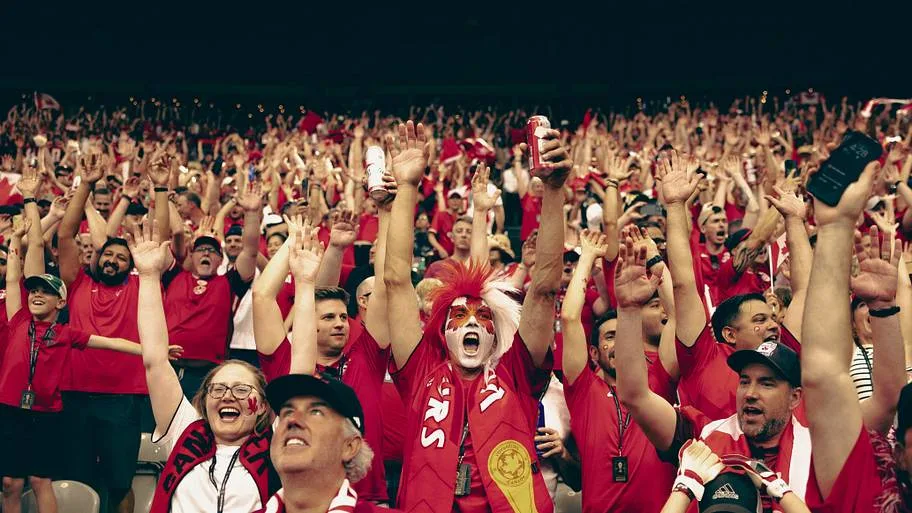
The United States presents a different case altogether. As the world’s largest economy, it is difficult to isolate the World Cup’s economic impact from broader economic activity.
Instead, a more revealing story lies with several major cities that declined the opportunity to host matches. They argued that FIFA’s financial requirements offered too little economic value while exposing local taxpayers to unnecessary risk.
Chicago, Phoenix, and Detroit are strong cases in point; they chose not to bid to host matches for the 2026 FIFA World Cup despite their strong sports cultures.
Among their concerns were the requirement for cities to cover most security and operational costs, waive certain taxes, accept broad contractual powers for FIFA, and provide few legal protections against unexpected expenses. Chicago’s former mayor, Rahm Emanuel, criticised the demands as effectively asking taxpayers to provide a “blank check” for FIFA’s event.
Their caution stemmed in part from the financial lessons of the 1994 FIFA World Cup in the United States. Although analysts expected the tournament to generate billions in economic benefits, a later study found that the nine host cities instead recorded combined losses of between $5.5 billion and $9.3 billion.
The findings reinforced concerns that analysts often overstate the economic gains from hosting a World Cup at the city level.
But more worrisome is the difficulty that host cities in the United States have faced in receiving the $1 million promise FIFA made as part of its football development initiative.
Unfortunately for them, FIFA made the promise verbally during several meetings, and the world football governing body has not shown any sign of keeping that promise, considering that most of the committees set up for the World Cup are slowly concluding their operations.
It is staggering that such a small sum, so inconsequential compared with the costs incurred by these host cities, has become a subject of debate, especially given the heavily paraded record revenue figures that FIFA keeps waxing lyrical about. For context, Kansas City suspended sales tax on World Cup tickets, which is estimated to have cost the city revenues of about $15.6 million, a figure15 times the amount being demanded.
As we approach 2030, it is important that host nations prioritise nationwide development rather than undertake massive construction solely for footballing reasons and, above all, maximise their potential income streams during the tournament. We can already see a clear approach emerging through the increasing trend of having multiple hosts to reduce economic liabilities.
Who wrote this?

Francis Muojindu is a law graduate, journalist, and writer who is always seeking to amplify African Voices in sports.
He primarily covers football, basketball, and athletics with good knowledge of other sports.
When Francis is not bantering with friends, he is on the search for the latest news flying across the globe.
- Francis Muojindu

- Francis Muojindu

- Francis Muojindu

- Francis Muojindu

- Francis Muojindu
- Francis Muojindu

- Francis Muojindu

- Francis Muojindu
- Francis Muojindu
- Francis Muojindu

- Francis Muojindu