



There are football nations, and then there are football empires. Italy belong to the latter.
The Azzuri clinched two of the first three World Cup trophies in 1934 and 1938. A footballing culture so deeply woven into national identity that the Azzurri jersey carries the same weight as a flag.
Iconic names like Paolo Maldini, Roberto Baggio, Giuseppe Meazza, and Alessandro Del Piero represent eras and generations that defined Italian football’s legacy.
And on the 9th of July, 2006, in Berlin, Germany, Italy secured their fourth World Cup star.
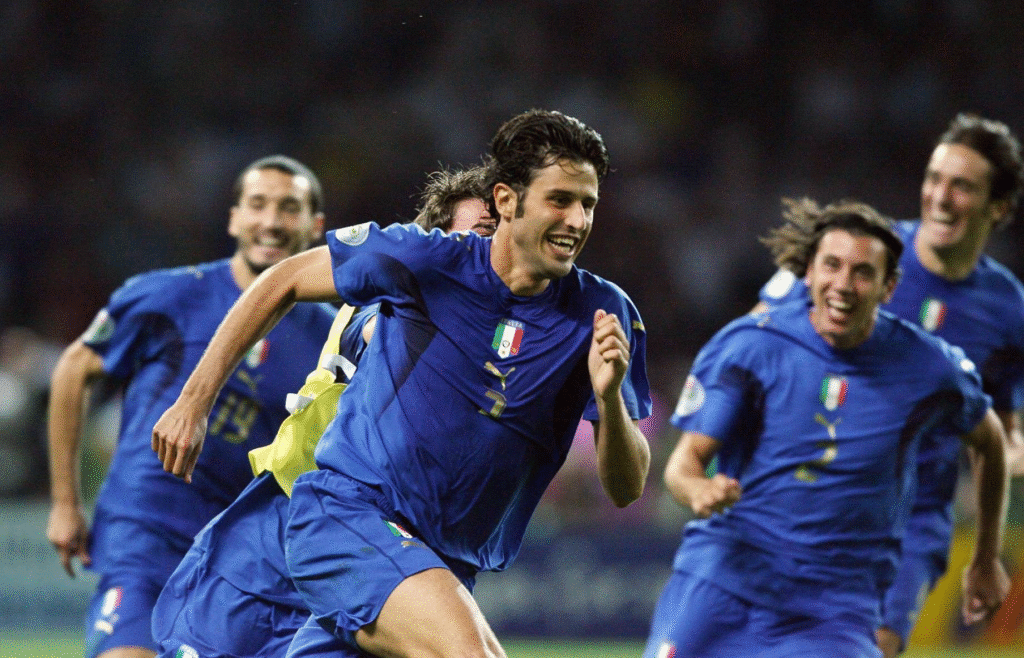
When the fifth penalty went in from Fabio Grosso, the sight of players running onto the pitch was a moment of immense joy. Italy had finally become world champions for the first time in 24 years.
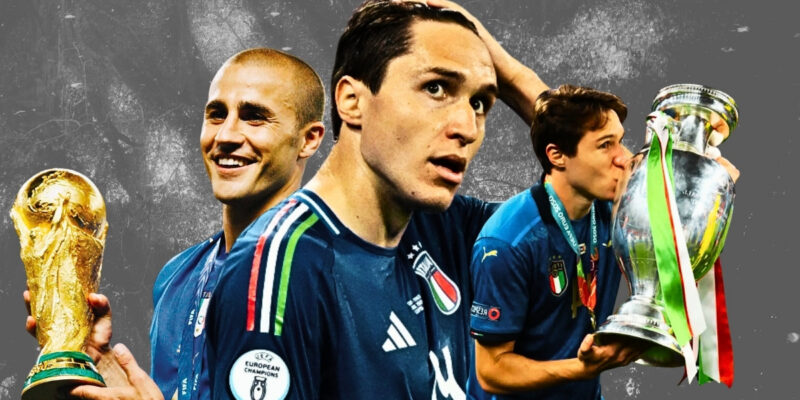
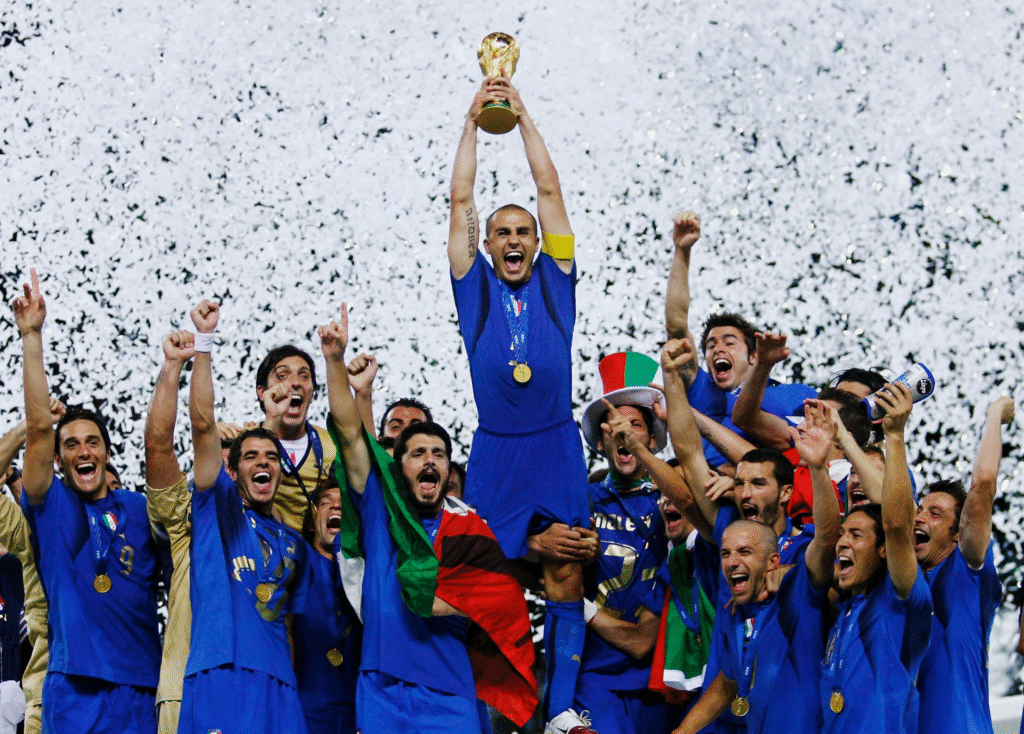
Their captain, Fabio Cannavaro, lifted the trophy with so much joy and pride because they had beaten a strong French squad. A French squad built on firepower and strength throughout the tournament. A side that had knocked out heavyweights like Spain, Brazil, and Portugal on their way to the final.
Yes, France had lost Zinedine Zidane to a red card after that infamous headbutt against Materazzi. But all props to the Italians for standing their ground and seeing out the game.
As Cannavaro hoisted that trophy over his head, nobody in their right mind could have imagined that Italian football’s story from that night to this moment would become one of the most shocking declines in the history of the sport.
The Italian Way
Heading into the 2006 World Cup in Germany, Italian football was the absolute gold standard of the sport. Every player wanted to be associated with Serie A.
The catenaccio identity was the exemplary model for top coaches. It was a highly tactical and ruthless system that focused on organization first, built on a strong defensive structure. The philosophy was simple: defense is the best form of attack.
This style brought dominance to Italian football, especially the Serie A, which also translated to the continent through AC Milan.
Throughout the 1980s and 1990s, it was widely considered the most competitive, richest, and most star-studded league in the world.
This was also the era of the Le Sette Sorelle, also known as the Seven Sisters. Juventus, AC Milan, Inter Milan, Roma, Lazio, Parma, and Fiorentina were European giants.
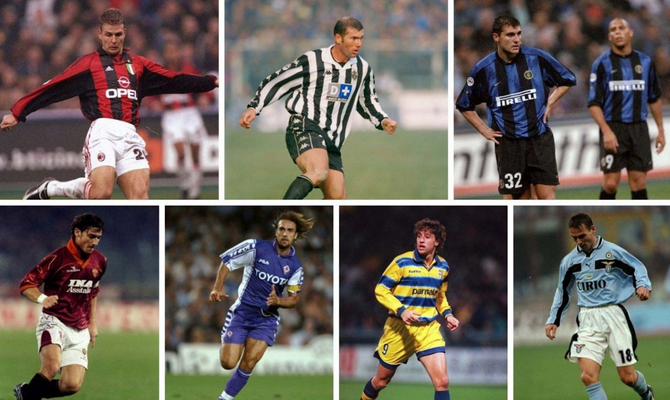
Top players like Diego Maradona, Zinedine Zidane, Ronaldo, Roberto Baggio, Marco van Basten, and Gabriel Batistuta all played in Serie A during that era.
But even with all that brilliance, an earthquake of a scandal hit Italian football in the form of Calciopoli. This was bigger than the 115 charges or any other type of scandal you’d see in the Turkish league.
And to make matters worse, the bombshell report dropped in May 2006, mere weeks before the start of the 2006 World Cup.
With this backdrop, the Italians went to Germany with low expectations. But within the squad, the players knew they had to shut out all the noise and play their hearts out.
2006 World Cup: 4-Time World Champions
The Azzurri went into the 2006 World Cup with a certain sense of motivation. Marcello Lippi had assembled a stacked group of players that looked like world beaters.
27-year-old Gianluigi Buffon was in goal. 32-year-old Fabio Cannavaro and 29-year-old Alessandro Nesta were the iconic centre-back pairing. The likes of 32-year-old Marco Materazzi and 29-year-old Francesco Totti were also important parts of the squad.
Andrea Pirlo, one of the younger members of the senior squad, went into the tournament at the age of 26. Gennaro Gattuso was 27. They also had a forward line led by the likes of 28-year-old Luca Toni and 32-year-old Filippo Inzaghi.
Italy finished top of Group E with seven points, beating Ghana and the Czech Republic 2-0 and drawing 1-1 with the United States.
They needed a 95th-minute penalty from Francesco Totti to defeat Australia in the Round of 16. They were dominant, however, against Ukraine in the quarter-final.
Italy then needed extra-time goals from Grosso and Del Piero to knock out Germany in the semi-final before the famous final against France.
For the majority of the squad, it felt like the perfect start to the final chapter of their careers with the Italian national team.
And in the final, they edged out a 10-man France on penalties to win it all. Finally, redemption was in their grasp. They had managed to banish the ghosts of Calciopoli.
2010 World Cup: The Curse of Champions
The 2010 World Cup, the first ever held in Africa, saw Italy enter the competition as defending champions. They had what many people described as the easiest group in the tournament. They needed to get past New Zealand, Slovakia, and Paraguay.
But so far, they were trying to avoid the “defending champions curse” that befell the French camp in 2002 after they won it all in 1998.
In the goalkeeping department, Gianluigi Buffon was once again the number one goalkeeper. At centre-back, there was a fresh pairing of 26-year-old Giorgio Chiellini and 24-year-old Leonardo Bonucci. Andrea Pirlo was the oldest midfielder at 32, anchoring the midfield. Up front, Italy had the likes of 33-year-old Antonio Di Natale, 24-year-old Giuseppe Rossi, and a fresh face in 20-year-old Mario Balotelli.
It was a mixture of the experience from 2006 and the first signs of a new generation in 2010.
The tournament did not start the way Italy would have expected. They fell behind in the first half against Paraguay, but Daniele De Rossi salvaged a point.
Then came New Zealand, the minnows of the group. To everyone’s surprise, New Zealand scored first, and Italy needed a penalty from Vincenzo Iaquinta to equalize. What should have been a straightforward match turned out to be a frustrating one.
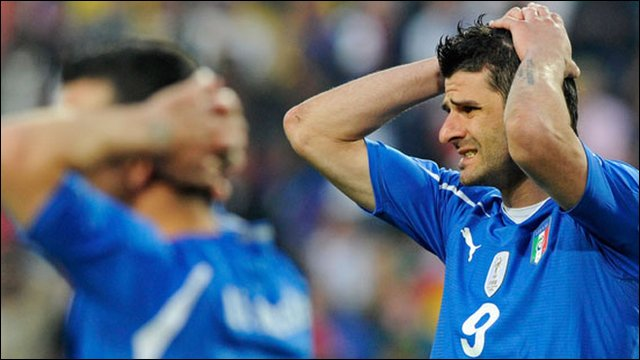
Everything then pointed to their final group match. Italy needed a win against tournament debutants Slovakia to qualify for the knockout stage.
Once again, everyone was surprised as Slovakia raced into a 2-0 lead. Di Natale pulled one back for Italy, but Slovakia added a third. Despite a stunning stoppage-time goal from Fabio Quagliarella, Italy lost.
Just like that, the defending champions were on their way home from South Africa.
Marcello Lippi took full responsibility. He admitted that the team had played with fear in their hearts, and he stepped down from his position as manager.
2014 World Cup: Lightning Strikes Twice
Cesare Prandelli took over from Marcello Lippi, and at the 2014 World Cup in Brazil, the weight of being defending champions was no longer on Italy. There was, however, the weight of expectation to atone for the disappointment of South Africa.
A glimpse of that redemption was shown to the world in their opening Group D match against England. Italy secured a 2-1 win against a star-studded England side, with Mario Balotelli scoring a beautiful goal that earned his team all three points.
What better way to begin the tournament after the disappointment of the previous World Cup?
However, a major upset followed. Italy lost their next game to Costa Rica, with Bryan Ruiz scoring the only goal of the match.
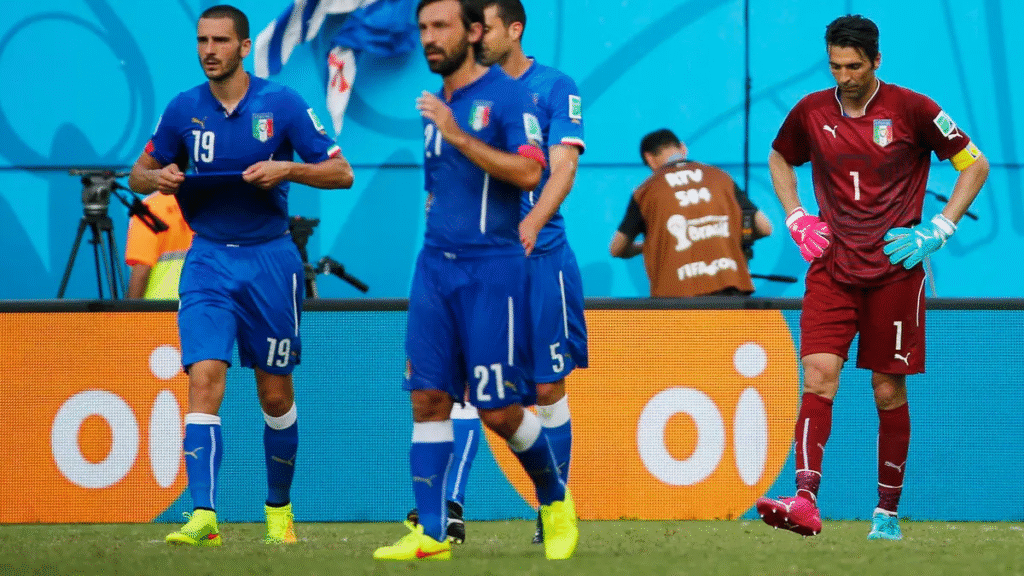
It was not all doom and gloom, though. Italy needed only a draw against Uruguay in their final group match to advance to the knockout stage.
But things quickly spiralled out of control in the second half. Claudio Marchisio saw red for a studs-up challenge on Egidio Arévalo. Then, Luis Suárez infamously bit the shoulder of Italian defender Giorgio Chiellini.
But the real dagger came in the 81st minute.
Diego Godín rose highest from a corner kick to head Uruguay into a 1-0 lead. That solitary goal was enough to send Italy crashing out of the World Cup at the group stage once again.
It also marked the end for manager Cesare Prandelli, who resigned from the job.
Euro 2016: A Heartbreak Made in France
Antonio Conte got the job next for Italy, and he brought back that infectious team spirit, defensive discipline, and organization that Italian football is known for.
That was on display at the 2016 Euros, where Italy topped their group after defeating world number two Belgium 2-0 and also beating Sweden. There was also an impressive 2-0 victory over Spain in the round of 16, the defending European champions. It was the kind of performance that made people say, “This is the Italy we know.”
In the quarter-finals, there was more heartbreak, though, as they were knocked out by Germany. But they did not go down easily. They played the Italian way, staying disciplined and organized throughout the match.
It eventually came down to penalties, and Italy lost in the shootout. That was football at the highest level. These margins decide everything.
Milan, 2017: Buffon’s Tearful Goodbye
After Euro 2016, Antonio Conte left the Italian national team job. One of his reasons was that he wanted to return to the daily, hands-on management of club football. Another reason he gave was the lack of support. He said he felt isolated by both the media and Italian clubs while in the role.
That felt like one of the first signs of the problems Italy was experiencing.
Conte was replaced by Gian Piero Ventura, who would lead Italy into the 2018 World Cup qualifying campaign.
The qualification process started in a disaster after Italy suffered a heavy defeat to Spain. Things got worse after they were unable to beat Macedonia. But alarm bells started ringing when they struggled to a narrow 1-0 victory over Albania.
Those results sent them into the World Cup qualification play-offs, where they faced Sweden.
Italy lost the first leg 1-0. However, there was so much expectation going into the second leg that they would get the job done at the Giuseppe Meazza.
After 23 shots and 75 percent possession, Italy still could not score. The match ended 0-0.
The silence inside the stadium was deafening.
Buffon was on his knees. In an emotional interview after the game, he announced his retirement through tears.
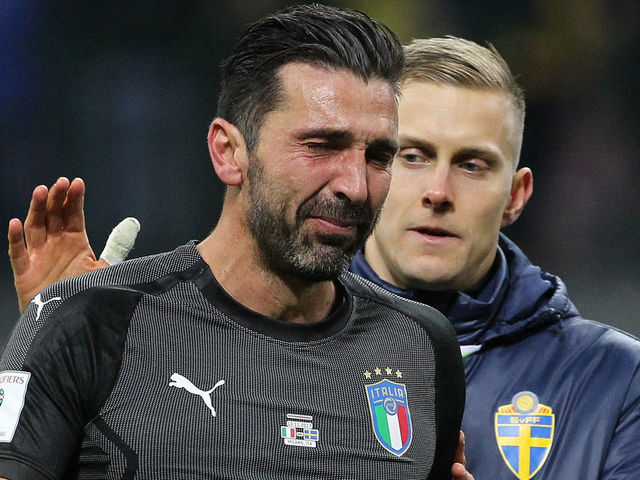
Italy had failed to qualify for the World Cup for the first time in 60 years.
That was before the likes of Maldini, before Baggio, before Rossi, before most Italian national team supporters had even started following the sport.
The news made headlines across the world. The biggest story in football was that Italy, four-time world champions, would not be at the World Cup.
Once again, the fallout claimed another manager, as Ventura resigned from his position.
Euro 2020: The Illusion of Recovery
Roberto Mancini would step into the role next, and quite frankly, he looked like someone who could bring something special and rebuild Italy. He always carried a certain aura. Even standing on the touchline in his suits, he looked like a manager who belonged at the highest level.
Even though he was 8 years removed from that miracle of winning Manchester City’s first EPL trophy, his pedigree was unquestionable.
Mancini began a rebuild, and Italy started to look entirely different with several new players. A young starlet, Gianluigi Donnarumma, was now in goal. Jorginho anchored the midfield alongside Marco Verratti and Nicolò Barella. In defense, they still had the experience and leadership of Giorgio Chiellini and Leonardo Bonucci. Federico Chiesa was the wild card upfront.
Italy looked like a proper Italian team again, and they would prove that through their performances. They went on a 37-match unbeaten run, a world record at the time.
Italy carried that momentum into Euro 2020 and finished Group A with a perfect record. They were made to work hard by Austria in the Round of 16. They defeated world number one Belgium in the quarter-finals and edged past Spain in the semi-finals. The prize was the hosts, England, in the final.
Even though England took the lead early on, the Italians found an equalizer. Once again, Italy would win on penalties on English soil.
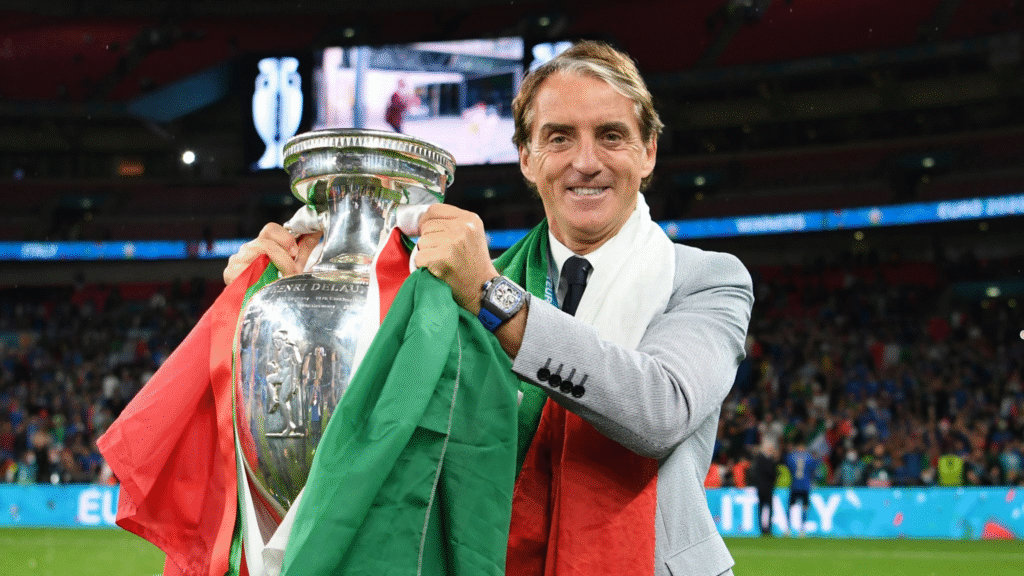
Italy were European champions again. Italy was finally back.
But something still lingered. There were slight question marks over the true strength of the team.
When you looked at Serie A, the league was still struggling and continuing to decline. Many of Italy’s biggest stars were playing their football elsewhere and developing outside the country.
It felt as though the deeper structural problems within Italian football had not disappeared. But all those concerns were brushed aside in the euphoria of winning a continental trophy.
Palermo: The Second Death
Despite the apparent dominance of Roberto Mancini’s Italy, the World Cup qualifying campaign was not as smooth as many expected.
Italy were in an “easy” group and were favourites to finish top, but they struggled. There were 1-1 draws against Bulgaria and Switzerland at home. More draws away to Northern Ireland, and Switzerland meant they failed to secure automatic qualification.
Once again, Italy found themselves in the play-offs.
This time, however, it looked easier. Waiting for them in the play-off semi-final was North Macedonia.
This was a nation that had never played at a World Cup and had qualified for only one major tournament in its history. This was going to be an easy ride to the World Cup for the Italians.
After 92 minutes, Italy had registered 32 shots compared to North Macedonia’s four. Yet it would be North Macedonia that found the breakthrough.
A low, powerful strike from 25 yards by Aleksandar Trajkovski beat Gianluigi Donnarumma in goal.
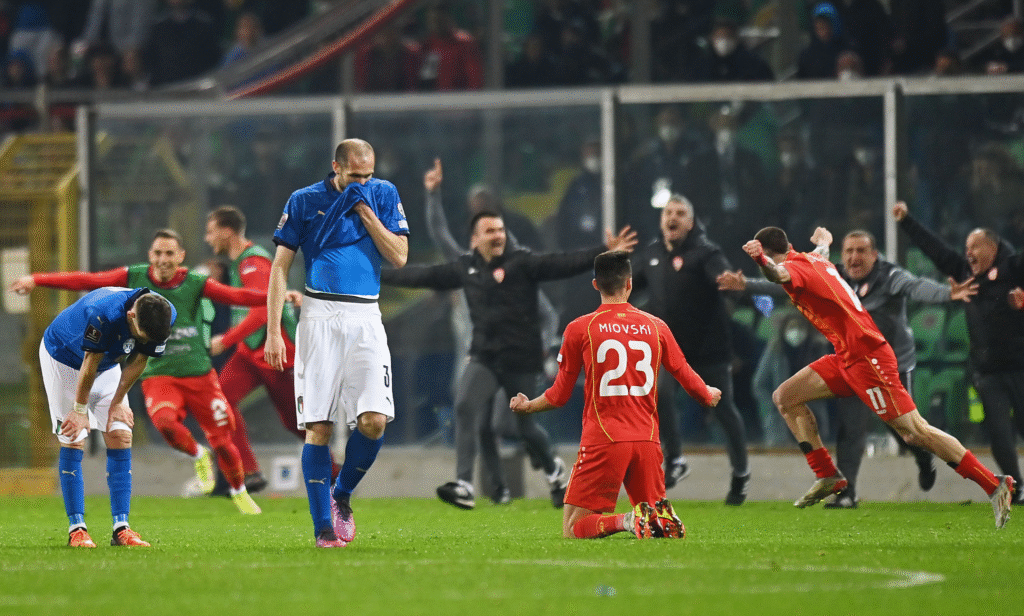
Just like that, Italy were not going to the World Cup again.
The heartbreak was even greater when many looked back at the qualifying campaign. Had Jorginho converted either of the two penalties he missed against Switzerland, Italy would not have been in the play-offs in the first place.
This was now a national embarrassment.
Mancini later described it as the biggest disappointment of his career.
2026: The Third Apocalypse
When all else had failed, it was time to throw things at the wall to see if anything would work. Gennaro Gattuso was the next man to take charge of Italy, and everyone knew what the objective was. Italy needed to qualify for the World Cup.
Italy’s qualification group included Norway, Estonia, Moldova, and Israel. On paper, this should have been a breeze. But if you know Italy by now, they never fail to disappoint when the stakes are lowest.
An opening-day 3-0 defeat to Norway quickly put everything into perspective.
From that point on, Italy knew they had to be perfect, and they were. They won their next six qualifying matches.
Normally, a convincing victory over Norway on the final matchday would have been enough to secure qualification. The problem was that a win alone was unlikely to be enough. Norway had built an almost unassailable goal difference of +29, while Italy sat on +12.
As a result, Italy found themselves back in the play-offs. The dreaded play-offs.
They got past Northern Ireland in the semi-final, while Bosnia eliminated Wales, a side that many felt would have been a tougher opponent for Italy.
Italy could not have asked for a better path to the World Cup. You could see videos of the Italians celebrating when they found out they were going to face Bosnia instead of Wales in the final round.
And the Italians came out on fire. Moise Kean opened the scoring early in the match.
But things soon turned against them. Alessandro Bastoni received a red card just before half-time, leaving Italy to play the rest of the game with ten men.
They managed to hold on until the 79th minute before Bosnia found an equaliser.
Extra time followed. Then came penalties.
Bosnia were flawless from the spot. Italy were not. Pio Esposito and Bryan Cristante both missed their penalties.
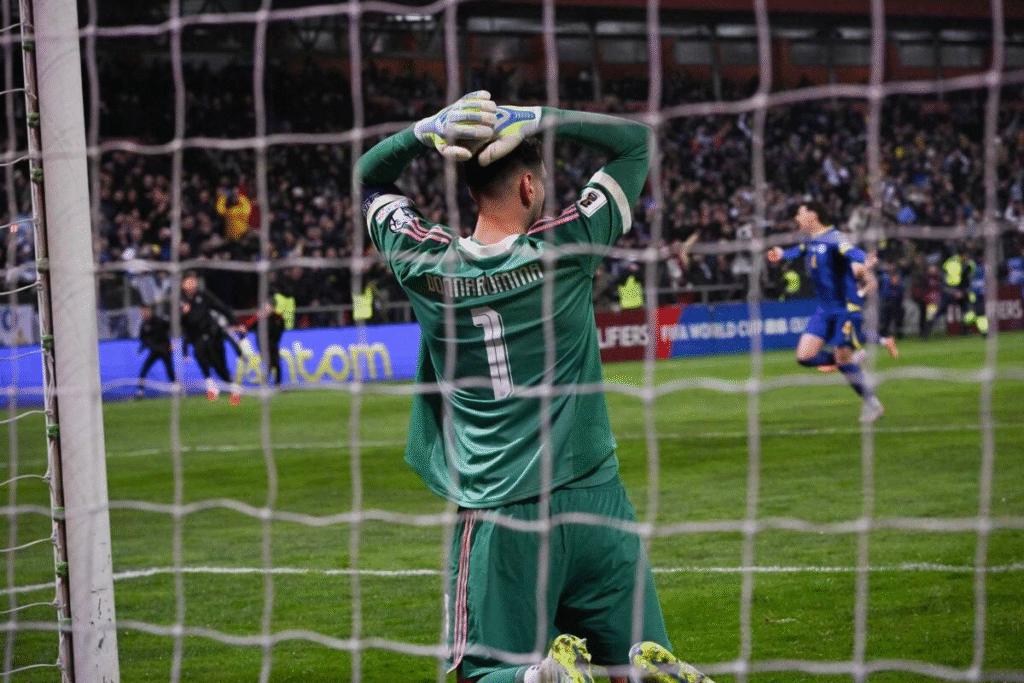
When the final kick hit the net, Gianluigi Donnarumma dropped to his knees, his hands on his head. It was an image that brought back memories of Buffon’s heartbreak years earlier.
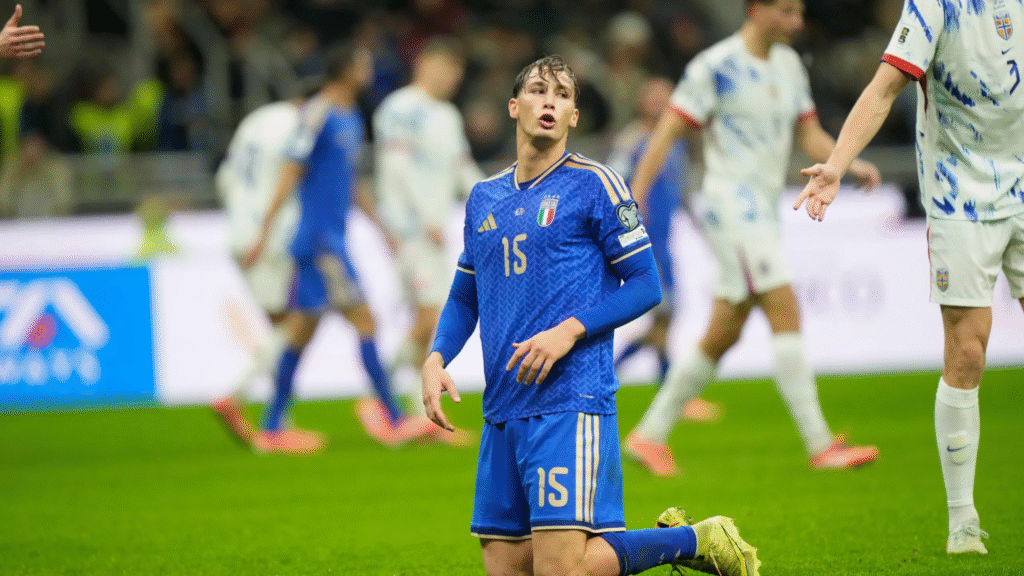
Italy had become the first former world champion to fail to qualify for three consecutive World Cups.
There are now 16-year-olds who have never seen Italy play at a World Cup.
Can Italy Find Its Way Back?
The idea of Italy being a punchline was funny the first few times. But like Manchester United, at some point, the downfall of a giant is so sad that you can’t help but worry about them.
The aftermath of Italy failing to qualify for a third consecutive World Cup brought major changes.
Gattuso stepped down immediately. There were also calls for Gabriele Gravina, the president of the Italian Football Federation, to resign. Eventually, he did.
But the bigger question remains: what comes next for Italy?
How does a nation that built its footballing identity around catenaccio struggle to win games it is expected to win?
How does a nation with four stars above its badge fail to qualify for the World Cup?
How does a league that was home to some of the greatest players in the world just two decades ago fail to hold on to its superstars?
Those are the questions that continue to linger.
And this, coming off the back of the colossal embarrassment of Inter Milan by Paris Saint-Germain in the 2025 UCL, has sent alarm bells ringing across the world of football.
We are watching a footballing giant slow-walk into obscurity at all levels. The league is unwatchable. No world-class young talent seems to be in the pipeline. The ones touted to be the next big thing just vanished, stalled, or regressed massively.
And to make matters worse, no young Italian coaches are making the big leap. It is just a vicious cycle of Gasperini, Conte, Allegri, Pioli, Spalletti, Gattuso, Mancini, Sarri, and back again.
Carlo Ancelotti opting to coach Brazil instead of the Italian National Team is a bigger indictment of the dying culture that no one wants to touch with a 10-foot pole.
Maybe this is rock bottom, and Italy would have to bounce back from here. Maybe there are still several depths to fall before Italian football can rise again from the ashes of shameless obscurity.
Who wrote this?

Philip is a sports broadcaster at Royal FM 95.1 in Ilorin, Nigeria, where he presents Sport File and Soccer Chat. Away from the mic, he writes long-form football pieces and runs Football Chronicles on YouTube. He has worked with AFTV, Kwara Youth League and Koller FA. He's interested in the stories behind the results — why teams rise, why they fall, and what gets forgotten in between.