



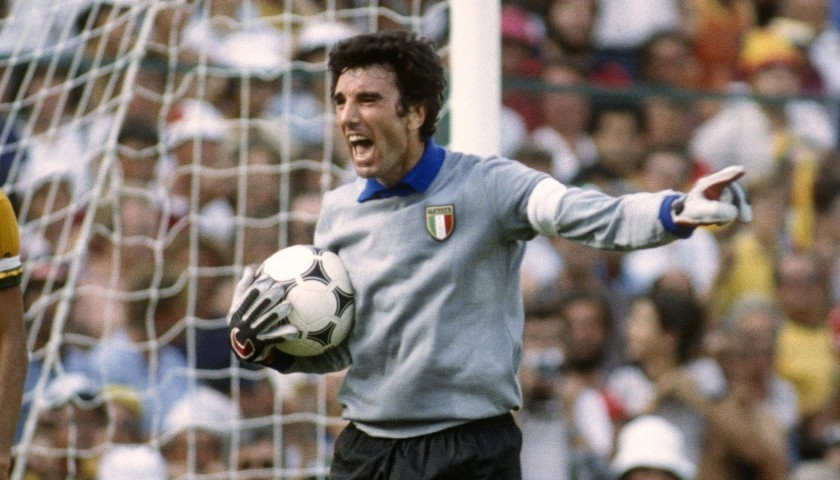
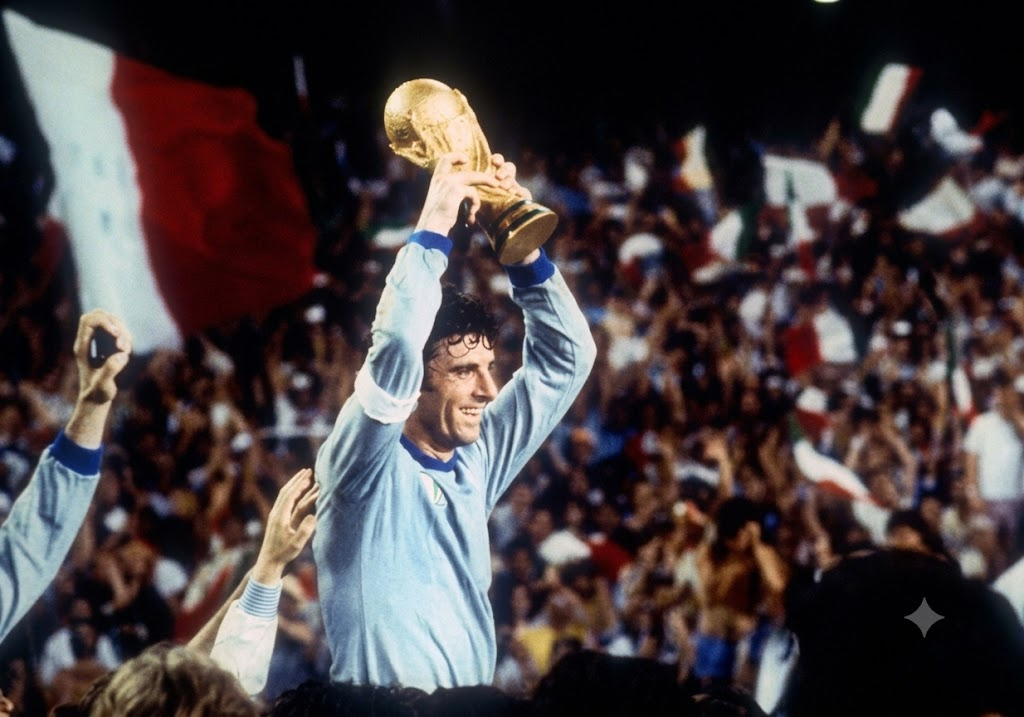
On the night of July 11, 1982, at the Santiago Bernabéu in Madrid, Dino Zoff stood with his arms raised and eyes fixed on the sky. It was a proud moment as he had just captained Italy to victory over West Germany in the World Cup final, becoming the oldest player ever to win the tournament at 40 years old.
As a teenager, Dino Zoff had been rejected by two clubs for being too short. Yet by the time he lifted the trophy, he was older than many of the coaches on the touchline. Even his own goalkeeping coach insisted that Zoff was a better player at 40 than he had been at 26.
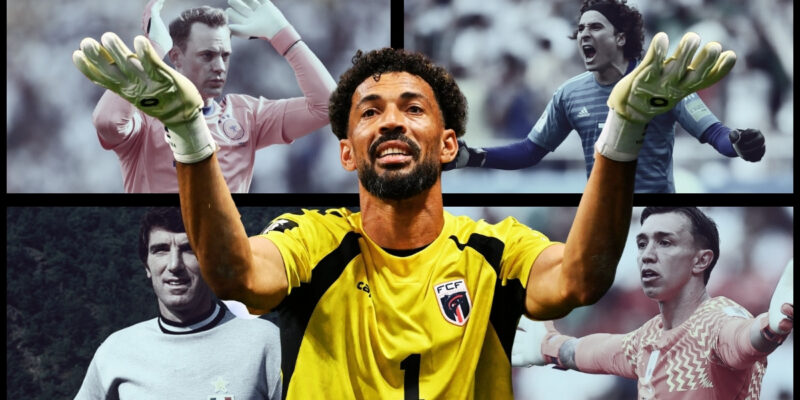
Forty-four years on, the record no longer feels like some museum piece. In the opening week of the 2026 World Cup, at 40 years of age, Cape Verde’s goalkeeper kept a clean sheet on his tournament debut against World Cup favourites Spain.
At the time, Vozinha’s performance seemed like a typical déjà vu, but he wasn’t alone. Germany’s Manuel Neuer, Mexico’s Guillermo Ochoa, and Uruguay’s Fernando Muslera are all in their 40s. Each logs meaningful minutes for sides expecting deep tournament runs.
For the first time in World Cup history, multiple goalkeepers of this age are starting in the same edition, and their national teams are trusting them with real responsibility between the posts.
However, it poses a question football rarely faces: why does this one position seem to ignore the rules that retire everyone else?
Strikers often lose their bite in their early thirties and transition into deeper roles. Pace-dependent wingers lose utility when their speed drops by even ten per cent. However, goalkeepers play long after outfield teammates retire.
A Record Nobody Has Threatened
Forty years have passed, and nobody has come within shouting distance of breaking Dino Zoff’s achievement. The list of the oldest World Cup winners since then reads like a roll call of legends.
German forward Miroslav Klose and Argentine goalkeeper Franco Armani won the World Cup at 36. However, neither neared Dino Zoff’s age record. Since 1982, no winning goalkeeper has come close to matching Zoff’s historic milestone. Such a wide gap in football records tends to say something about how unusual the original achievement really was.
But what actually makes Zoff’s record durable isn’t just that he was old. He was exceptional while being old, in a position where age is usually brutal for outfield players. When a goalkeeper has honed positioning, reading of the game, and decision-making to compensate, that gap barely shows. For Dino Zoff, it never did! What separates the Italian from modern counterparts like Neuer, Muslera, or Ochoa was his relentless consistency. Dino Zoff anchored a World Cup-winning campaign at 40. Now, 44 years later, his successors struggle for playing time or to exit early.
Italy’s road to that 1982 title wasn’t smooth either, which makes the story better. The team drew all three group matches against Poland, Peru, and Cameroon. They reached the second round, still searching for identity. Italian newspapers openly questioned whether Enzo Bearzot’s side even deserved to advance.
Then it found one, beating Argentina and Brazil. And Zoff was at the centre of both results. His performance at the tournament was spectacular and practically unbelievable for his age. He earned the best goalkeeper award and a spot on the tournament team. He had also claimed these honours fourteen years earlier during Italy’s home European Championship victory.
Dino Zoff went on to play professionally until he was 41, retiring as the record-holder for most Serie A appearances, a mark that stood for over two decades after he hung up his gloves.
The Vozinha Renaissance
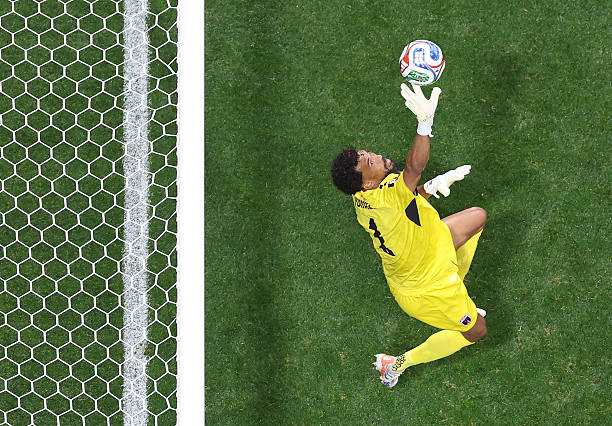
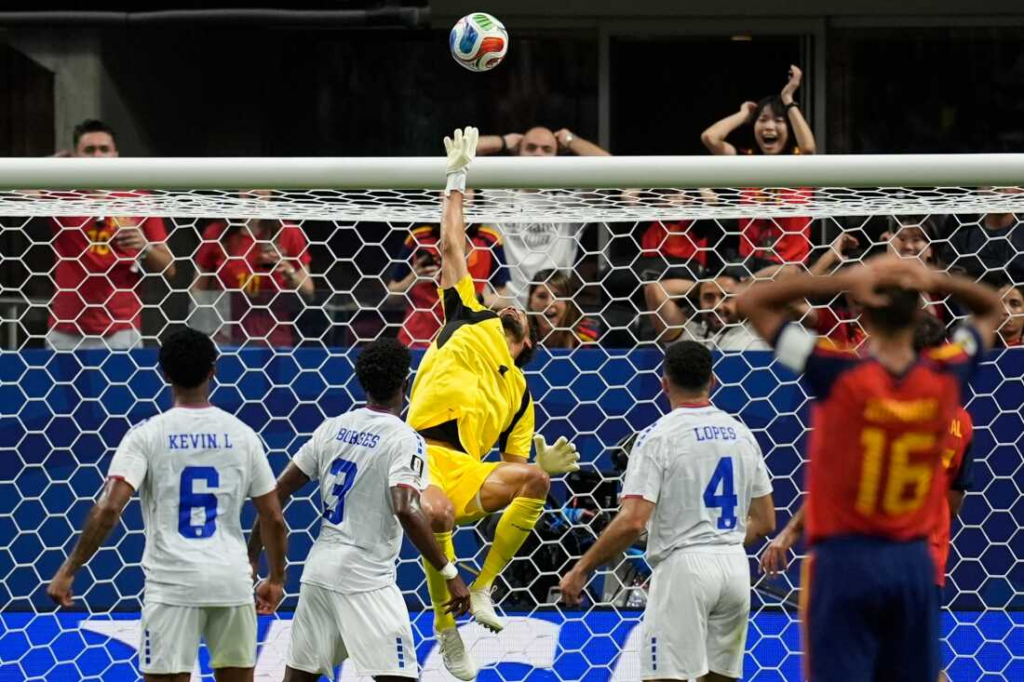
The goalkeeper at the centre of this story plays for a country making its World Cup debut. Born Josimar José Évora Dias, Vozinha made ninety international appearances for Cape Verde before gaining global recognition. Twelve days after turning forty, he started against Spain in his country’s first-ever World Cup match. He made seven saves, including several dramatic diving stops, to force a scoreless draw.
That performance made him the third-oldest goalkeeper to record a clean sheet in World Cup history, behind only Peter Shilton and Zoff. It also made him, within about twenty-four hours, a very different kind of public figure. His Instagram following jumped from roughly 50,000 to over 2 million in a single day.
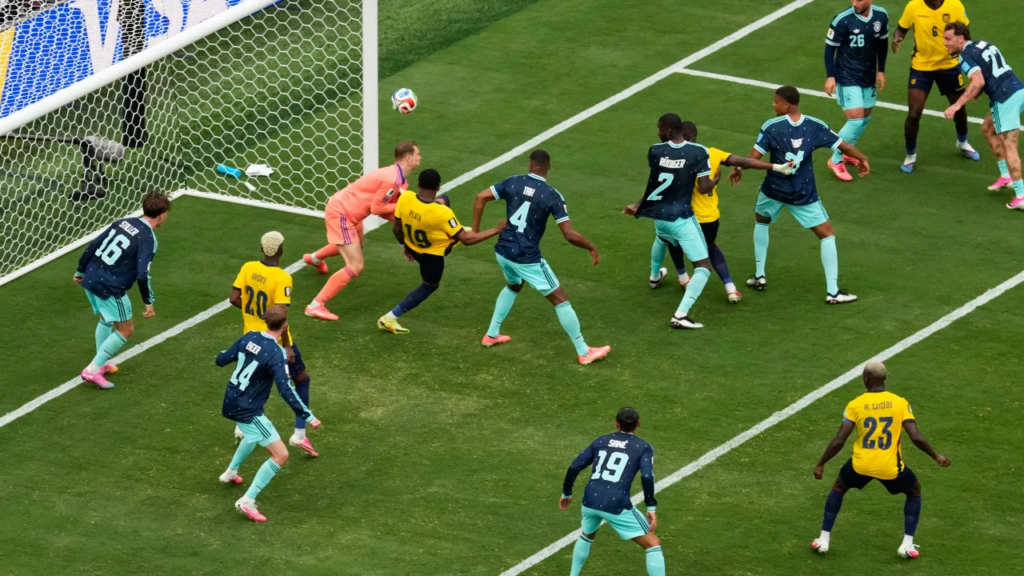
He isn’t the only one rewriting the math on age in this tournament. Germany’s Manuel Neuer became the first player aged 40 or older to appear at the 2026 World Cup. He started in a 7-1 win over Curaçao at 40 years and 79 days old. Mexico’s Guillermo Ochoa and Uruguay’s Sergio Rochet, both also in their 40s, made their squads as well. None of them is a ceremonial selection kept around for sentiment. They are first-choice goalkeepers for nations with real ambitions in this tournament.
From a journalistic standpoint, this represents a shift in football dynamics. The modern game demands relentless stamina, yet these veterans prove that cognitive maturity can outrun physical decay. We are no longer watching an anomaly; we are witnessing a systemic evolution redefining global longevity.
Why Goalkeepers Get a Different Clock
Pace dies early and visibly: a winger or a fullback who relied on speed at 24 usually can’t hide its absence at 34.
On the other hand, goalkeeping requires a different set of resources. Several of these resources don’t decay at the same rate, or they decay in ways that experience can offset over time.
Positioning is the clearest example. Over two decades, a goalkeeper facing thousands of shots develops a reflexive sense of where to stand. This positioning cuts down the distance required to make a save before the striker even hits the ball.
Command of the penalty box during corners and set pieces is learned and built through repetition and communication with a back line that changes personnel every few years, while the goalkeeper often stays put.
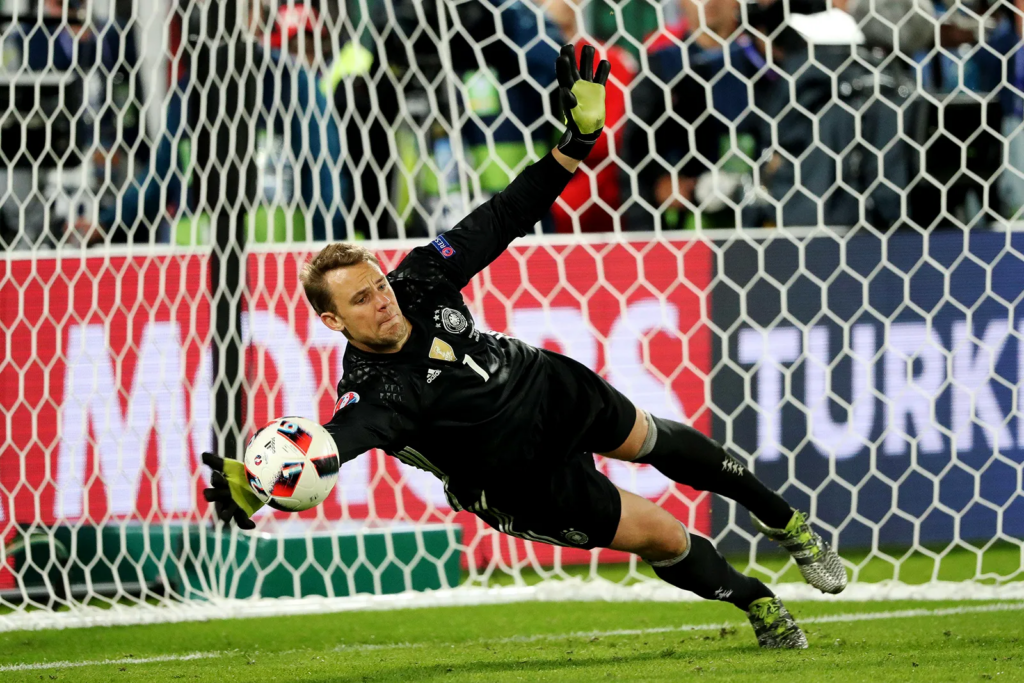
There’s also game reading: the ability to anticipate a through ball or a cutback half a second before it happens. All that resembles pattern recognition more than reflex. Furthermore, pattern recognition is a skill that improves with volume of experience.
A goalkeeper’s physical workload, measured in distance covered per match, is a fraction of an outfield player’s. The explosive actions of a goalkeeper are short and relatively low compared to the sustained running of a midfielder or winger across ninety minutes. Regardless, that doesn’t make goalkeeping easy.
None of this means goalkeepers are immune to decline. Reaction time to close-range shots, lateral explosiveness, and recovery between matches all fade eventually. But the timeline is longer, and the position rewards exactly the kind of accumulated knowledge that a career spent standing in the same six-yard box, year after year, naturally produces.
The Untold Part of The Story
There’s a less talked-about layer to this story, and it has less to do with biomechanics than with attention. For most of football history, a 40-year-old goalkeeper from a country playing its first World Cup match would have been a footnote, mentioned once in a match report and forgotten by the following week. But Vozinha’s experience this week suggests that calculus has changed.
Ninety caps, more than a decade of senior international football, and nine clean sheets in the year before this tournament weren’t enough to make him widely known outside Cape Verde and committed scouting circles. But one ninety-minute performance, amplified almost immediately across social platforms, was.
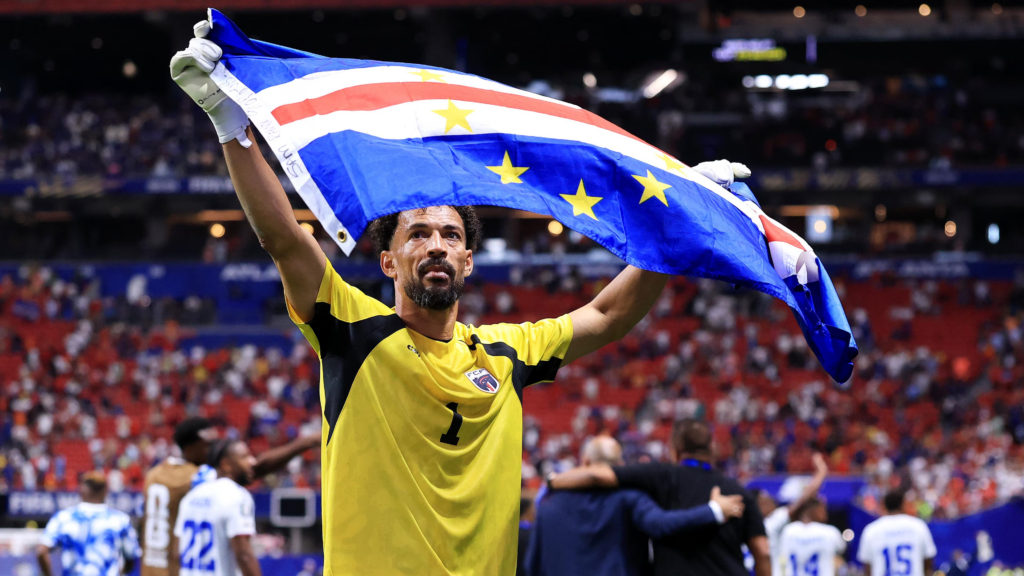
That’s not a criticism of the football media ecosystem so much as an observation about how visibility now works for players from federations that rarely get camera time. The ceiling on recognition used to be set by where you played and for whom. Now it can be reset in an afternoon if the moment is big enough and the platform exists to carry it.
A stunning performance no longer needs a European powerhouse backdrop to resonate globally. The viral nature of modern sports media ensures that merit, regardless of geography, can achieve instantaneous validation.
It also means the story of the 40-year-old goalkeeper isn’t merely a record about defying age. Increasingly, the story centers on whom audiences notice, when they notice them, and how quickly public attention shifts for a player who spent two decades doing excellent work in relative obscurity.
What Would It Take to Catch Dino Zoff
No player currently in their 40s at this World Cup possesses the opportunity to win the tournament outright the way Dino Zoff did. Germany, Mexico, and Uruguay are credible squads, but none enter as the outright favourite the way Italy’s golden generation did in 1982. That makes Zoff’s record likely to survive this tournament too, at least in its purest form: the oldest player to actually lift the trophy.
But that may be slightly beside the point. The more interesting trend isn’t whether someone matches Zoff’s specific feat this summer. Actually, it’s that the conditions that used to make a 40-year-old goalkeeper a rarity appear to be producing several of them at once, in the same tournament, across different continents and football cultures.
Better sports science, longer and more carefully managed careers, and a growing understanding within national federations that experience between the posts is worth more than it used to be have all converged at the same moment. Such a pattern suggests that the next Zoff-level story might not take another forty-four years to arrive.
It also suggests something quietly encouraging for smaller football nations. A federation without the budget to develop a generational young striker can still find, develop, and hold onto a goalkeeper for two decades, and that goalkeeper can still be the difference between a respectable World Cup debut and an embarrassing one.
For now, the record remains where it stood in July 1982: a 40-year-old man in Madrid with his arms raised. Goalkeepers are no longer waiting for permission to age on someone else’s timetable.
Who wrote this?

Mahbubat Salahudeen is a Sport Journalist with a primary focus on Youth-Athleticism and women's football.
She is currently pursuing a degree in Media Communications and Public Relations. While much of her experience lies in Sports communications, she has honed transferable skills in strategic communication, audience engagement, and digital media production that transcend industries.
- Mahbubat Salahudeen

- Mahbubat Salahudeen

- Mahbubat Salahudeen

- Mahbubat Salahudeen

- Mahbubat Salahudeen

- Mahbubat Salahudeen

- Mahbubat Salahudeen

- Mahbubat Salahudeen

- Mahbubat Salahudeen

- Mahbubat Salahudeen