



The biggest moment of your life can happen in a flash. For Khvicha Kvaratskhelia, it took 92 seconds.
On the 26th of June, 2024, at the Veltins-Arena in Gelsenkirchen, Germany, world number 74 Georgia, making their first appearance at a major tournament, needed a win over Portugal to reach the knockout rounds of the European Championships.
With just 92 seconds into the game, Antonio Silva played a careless pass, Georges Mikautadze won the ball, and a 23-year-old in a number 7 shirt did what he had been doing to defenders all his life. He ran into the space, took off, and finished low past Diogo Costa. That was the earliest goal Portugal had ever conceded at a European Championship.
The rest of the night was about resistance, but Georgia secured a 2-0 win despite recording the lowest ball-possession percentage by any winning side at the Euros since records began in 1980, at just 28%.
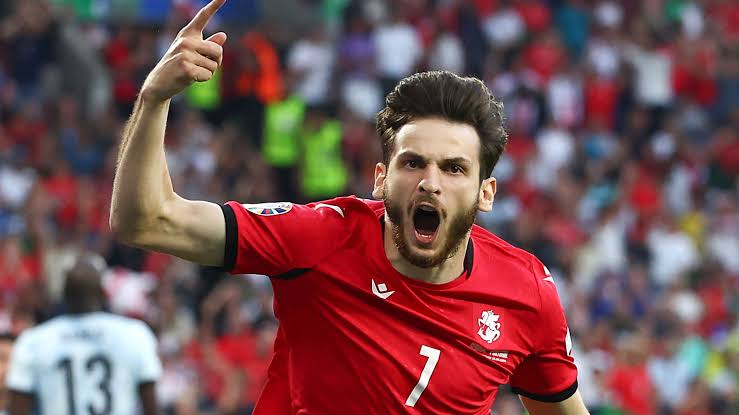
Khvicha Kvaratskhelia was taken off to a standing ovation late in the second half, and afterward he was asked how it compared with the Scudetto he won with Napoli the year before. “This is the best day in my life,” he said, “because it was more difficult to do this with the Georgian team than to win the Scudetto with Napoli.”
Before kick-off, a 2013 photograph had been circulating on social media of Cristiano Ronaldo visiting a football academy in Tbilisi, surrounded by wide-eyed kids, including Kvaratskhelia. At full-time, they swapped shirts in what was surely a full-circle moment.
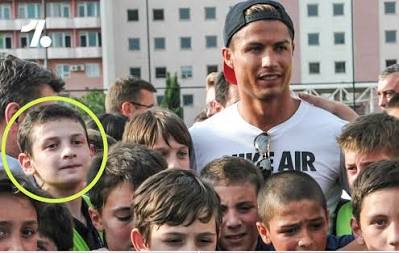
But how does a boy in that photograph end up scoring against his hero on the biggest night in his country’s football history?
His story was far from straight. It ran through a Tbilisi academy, two seasons in Russia, a war that forced him home, and a city in southern Italy that gave him a name nobody had earned in decades: Kvaradona.
Made in Tbilisi
Football was the Kvaratskhelia family business. Khvicha’s grandfather, Mamia, and his father, Badri, played the game. Badri Kvaratskhelia was a forward who won the Georgian title in 1992/93, and four league titles in five seasons in the Azerbaijani league. He went on to play for Azerbaijan at the international level, making his debut in 2000 at 35.
When Khvicha was born in February 2001, the ball was already in the house, and Badri became his first coach.
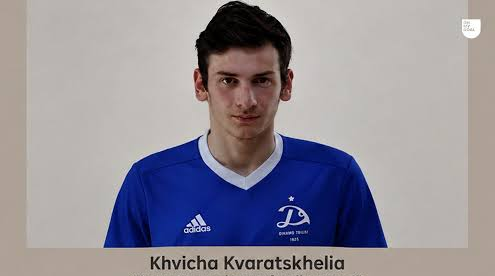
Around the age of 10 or 11, Khvicha Kvaratskhelia joined the academy of Dinamo Tbilisi, the most decorated football club in Georgian history. A former academy director, Andres Carrasco, convinced the club’s scouts to take him on because he was scrawny, impossible to stop, and always tormented his opponents.
Looking at Kvaratskhelia now, you won’t be surprised to learn he was a bit of a rascal and a rebel, and he grew up idolizing Cristiano Ronaldo as a Real Madrid fan in a house where his father leaned Barcelona. I could only imagine the joy in 2013 when Ronaldo visited an academy in Tbilisi, and Kvaratskhelia managed to be in the same picture frame.
Kvaratskhelia made his first-team debut at 16, coming on as a 62nd-minute substitute against Kolkheti-1913 Poti on 29 September 2017 in a 1-1 draw. His first senior goal followed seven weeks later, scoring the only goal in a 1-0 away win at Shukura Kobuleti. He made four league appearances, and it quickly became clear his talent was bigger than Georgia, though it came under unexpected circumstances.
The Russian Misadventure
In March 2018, a contract dispute ended his time at Dinamo Tbilisi, and he moved to Rustavi, where he played 18 league games and scored three goals. This opened the door to the first real big-move rumor, as links to Bayern Munich started circulating.
But the Bavarians never came, so he left Georgia for Russia.
In February 2019, Lokomotiv Moscow took him on loan for the second half of the season, but he made just seven league appearances and scored one goal, though he won his first major honor, lifting the Russian Cup.
His coach, Yuri Semin, was so impressed that he was disappointed when the club failed to agree a permanent deal. “I’ve been following him since he was 15, and he still manages to surprise me every time”, he said.
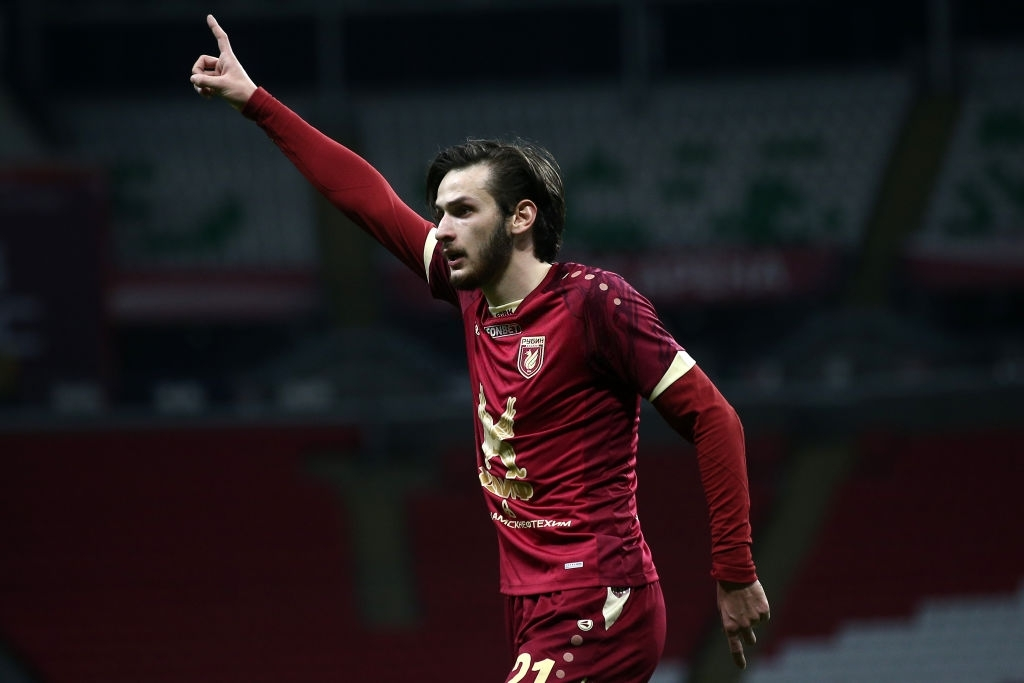
Kvaratskhelia moved east, signing a five-year deal with Rubin Kazan in July 2019. As poetic as football is, he came off the bench, on his debut, to score an equalizer in a 1-1 draw against Lokomotiv. Over the next three seasons, He leaned more toward creating chances, scoring nine goals and providing 18 more in 73 matches.
He wasn’t doing all this in obscurity. In early 2021, L’Équipe published a list of the 50 best players born in the 21st century, and Kvaratskhelia was the only player from the Russian Premier League on it. Georgia named him Footballer of the Year in 2020, 2021, and 2022, at the ages of 19, 20, and 21.
Don’t get me wrong; the misadventure in the subtitle is not that Russia failed him or he failed there. He was good enough to leave a mark and young enough to be thought of as a prospect. Though he was far enough from Europe’s top leagues that the scouts were slow, his story took an unexpected, drastic turn in the spring of 2022.
The War That Changed Everything
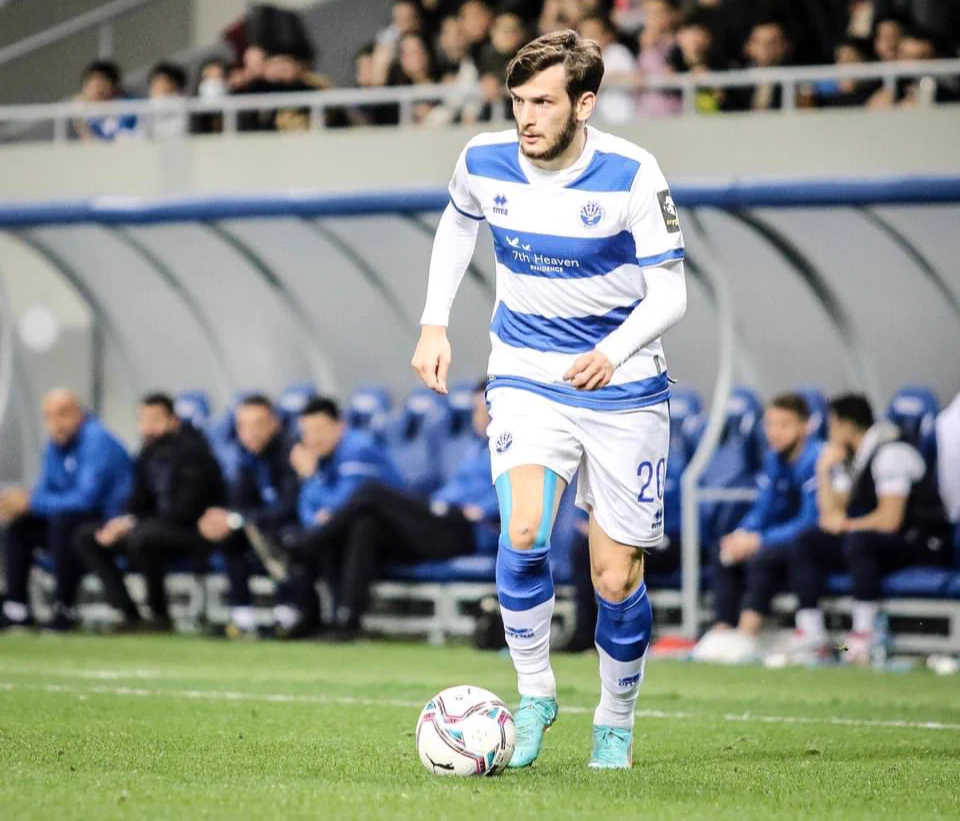
Russia’s invasion of Ukraine upended far more than football, but the sport felt it too. As part of its sanctions, FIFA ruled that foreign players could suspend their contracts with Russian clubs until June 30th, 2022, and sign elsewhere.
So, in March 2022, Rubin Kazan announced that Kvaratskhelia’s deal was suspended, and he went home, back to Georgia.
Kvaratskhelia returned home and signed for Dinamo Batumi, rivals of the club that raised him, and hit the ground running. In 11 league games, he scored eight goals and added two assists, and was named the best player of the Erovnuli Liga’s second round, helping Batumi to the title.
The irony is that years in the Russian league left scouts only curious. Six months back in Georgia forced them to act. Multiple top European clubs were reportedly making moves to add him to their ranks. Leeds, Juventus, Roma and Real Sociedad were among those said to be interested, but Napoli were faster than all of them.
On July 1st, 2022, Napoli confirmed the signing on a contract until 2027, for a reported €10–12 million. He was Napoli’s first signing of the summer, and the wider public didn’t notice. But that would not last.
Becoming a God in Naples
In the summer of 2022, Napoli let Lorenzo Insigne and Dries Mertens, the club’s two leading scorers, leave on free transfers.
And the replacements didn’t exactly spark any fanfare. One of them was a Georgian winger, whose name is a bit hard to pronounce (probably more than “a bit,” actually). He made his debut against Verona, and you could see the flashes of what he has to offer.
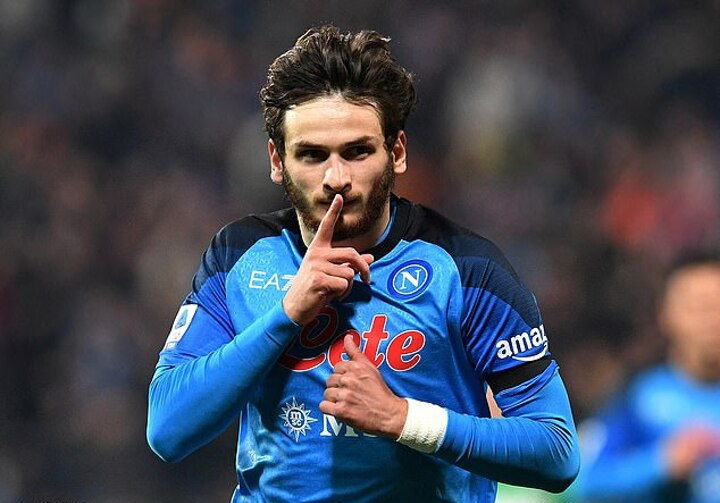
In his first interview, he said he’s not there to be anyone’s replacement.
In Kvara’s first two games, he scored three times and made an assist, winning Serie A’s Player of the Month for August. And he didn’t pump the brakes once. In his first four starts, he recorded five goal involvements, the most by any Napoli player since the club returned to the top division in 2007.
Just 12 league games in, his numbers grew to six goals and seven assists, and he formed a symbiotic partnership with prolific Nigerian striker Victor Osimhen.
That season, Napoli broke a 33-year wait to win the Scudetto by 16 points, their first since Maradona’s in 1990. He finished with 12 goals and 13 assists, was named Serie A’s best player, and was voted the best young player of that season’s Champions League. The celebration was unmatched, and Kvara was dubbed ‘Kvaradona’.
“Today ‘Kvaradona’ is definitely my favorite. It creates an emotion different from the other nicknames. It fills me with pride. ”
That name isn’t a title people pass around, especially in a city that guards Diego Maradona’s memory with something closer to religion than sentiment.
Kvara earned it, and liked it.
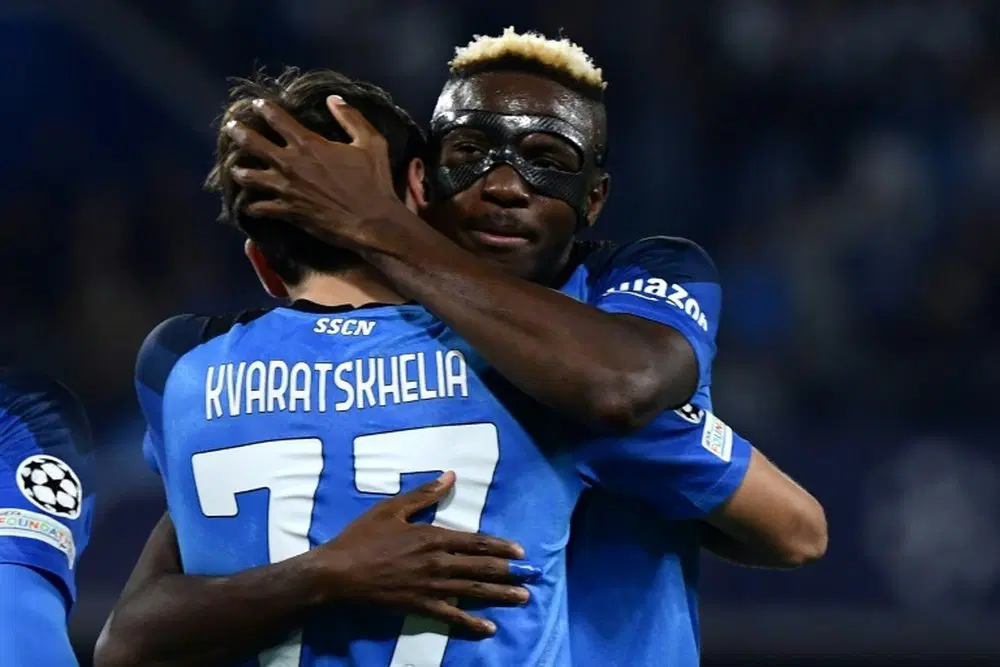
A mischievous part of me wants to say everyone easily adopted the nickname because it was easy to say, but, frankly, Kvaratskhelia is now a name everyone knows how to spell and pronounce.
Georgia’s First Son
Playing and winning with your national team always has a different energy, and no one really put much pressure on Georgia to do the latter. In fact, they had never played at a major tournament.
They finished fourth in their five-team Euro 2024 qualifying group and reached the tournament only through the Nations League play-offs, beating Greece on penalties in March 2024.
Manager Willy Sagnol said his players told him they didn’t want to go to Germany for shopping, but the group stage threatened to change that.
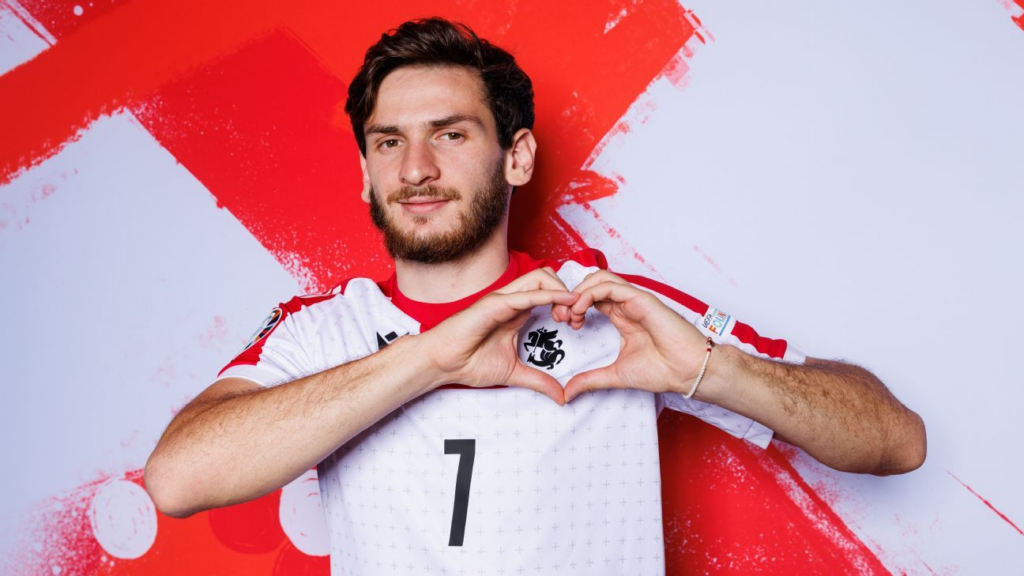
They opened their first major tournament with a humbling 3-1 defeat to Turkey before a 1-1 draw with Czechia gave them hope of reaching the knockout stages. All they needed was a win over Portugal in their final group game. Easy, right?
But somehow, they managed to pull it off. That win over Portugal was called the greatest result for Georgia since the country gained independence from the Soviet Union in 1991. And Kvaratskhelia set them on the path to that victory. He wanted his hero’s shirt, and he got it, along with a goal and a place in the knockout rounds.
The tournament ended for the Georgians four days later, when they fell to Spain. Though, for a moment against the eventual champions, it looked like Georgia might touch the sky again when they took an early lead. But Spain did not let up, coming at them with 35 shots and winning 4-1.
Nobody in Georgia treated it as a failure. Far from it. They had lived a dream; for a team ranked 74th in the world to reach the knockout rounds of their first major tournament is monumental. It proved that the stubborn thing Kvaratskhelia had always done, running straight at bigger opponents, could be done by a whole team.
The Paris Connection
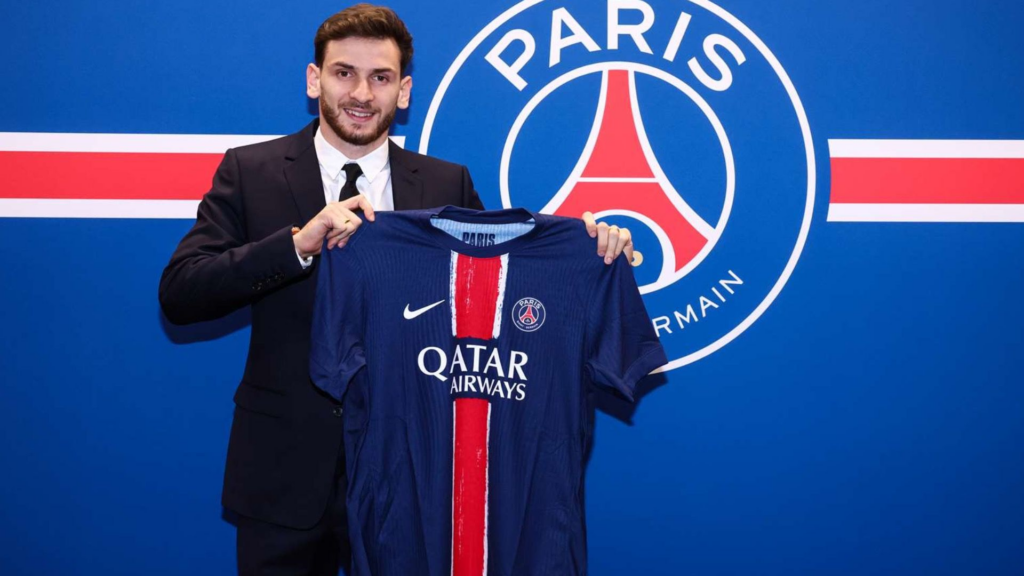
Back in Italy, that Scudetto-winning Napoli side fell apart after manager Luciano Spalletti left. Antonio Conte eventually came in and got them back into title contention, but Kvara wouldn’t wait around.
In January 2025, he asked to leave. No one was really surprised, maybe because we all subconsciously knew Napoli would be a stepping stone to a higher level.
He made the higher move and landed in the French capital, signing for Paris Saint-Germain for a reported €70 million. He took the number 7 shirt Kylian Mbappé had left behind, and there was no debate as to whether it would be too big to handle.
The difference when you play for the elites is that, more often than not, you are just part of the collective. PSG is flooded with stars: Ousmane Dembélé, Vitinha, Achraf Hakimi, Marquinhos, Fabián Ruiz, Désiré Doué. World-class players who will walk straight into most top sides’ starting XIs.
But Kvara did not waste time getting into the flow. He got his first goal involvement in his first start to set up Dembélé in a 1-1 draw with Stade Reims. He instantly became a regular starter on the left flank for the Parisians, both domestically and in Europe.
Kvaradona scored the fourth goal in the 5-0 win over Inter Milan in the UEFA Champions League final, taking his tally for the season in Europe to three goals and two assists. In six months, he’s leaped from a Napoli that wasn’t even in Europe to winning the biggest continental trophy.
The trophies were coming in: Coupe de France, Ligue 1 and Champions League, all in his first half-season. And it got better.
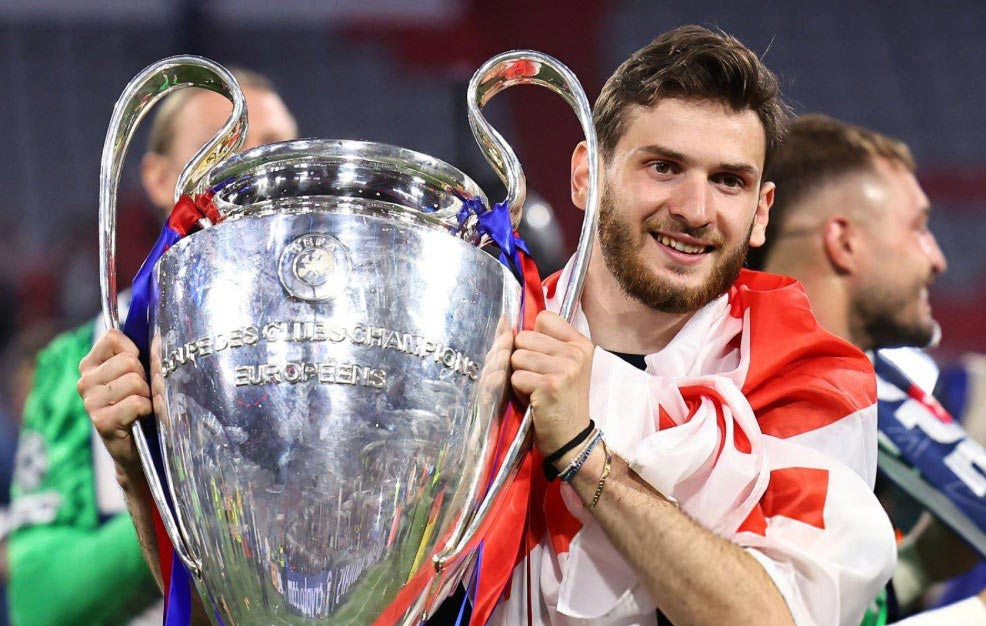
The following season, Kvaradona fully embraced the spotlight and saved his best performances for the biggest nights. In the 2025/26 UEFA Champions League, he scored 10 goals and provided 6 more as PSG incredibly retained their hold on the trophy. That made him the first player to score or assist in seven consecutive Champions League knockout matches in a single season.
At the start of this season, he continued making his mark, scoring the opening goal in a 2-1 win over Aston Villa in the UEFA Super Cup. Unfortunately, his blistering career is set to pause as he nurses his way back from an ACL injury he picked up against Barcelona in the UCL League Phase.
It is arguably the most painful and worst injury footballers can pick up, given the rehabilitation process and the return to elite competition. But if there’s one thing about Kvara, he is stubborn. That stubbornness gives hope and confidence that he will bounce back and get back on his horse. That young boy from Tbilisi who was happy to take a picture with Cristiano Ronaldo is still only 25. But he has already won multiple league and UCL titles, and he knows that the door is wide open to lift more trophies and become an idol for the game’s future stars.
Who wrote this?

Philip is a sports broadcaster at Royal FM 95.1 in Ilorin, Nigeria, where he presents Sport File and Soccer Chat. Away from the mic, he writes long-form football pieces and runs Football Chronicles on YouTube. He has worked with AFTV, Kwara Youth League and Koller FA. He's interested in the stories behind the results — why teams rise, why they fall, and what gets forgotten in between.
- Philip Oluyide
- Philip Oluyide
- Philip Oluyide
- Philip Oluyide
- Philip Oluyide
- Philip Oluyide
- Philip Oluyide
- Philip Oluyide
- Philip Oluyide