



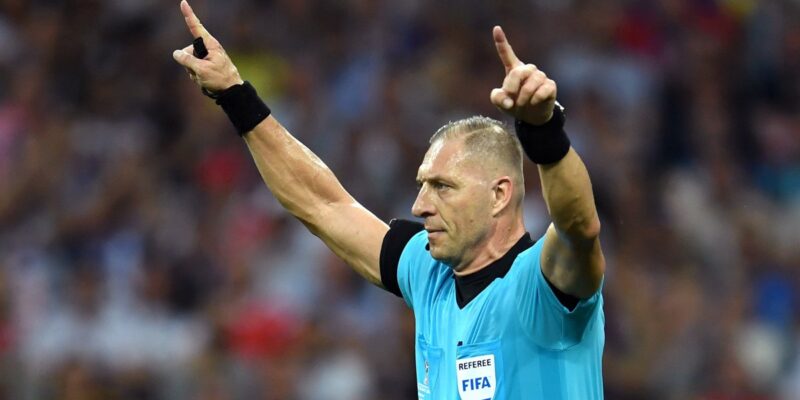
On a bitterly cold January afternoon in 2025, Arsenal’s 17-year-old midfielder, Myles Lewis-Skelly, was playing his second senior league game, putting in a sliding challenge on Wolves’ Matt Doherty. Referee Michael Oliver reached into his pocket and pulled out a straight red card, leaving Arsenal down to ten men.
What happened next ignited a media storm, spiralling into another furious nationwide debate over referee calls in the Premier League. Soon enough, an independent panel rescinded the three-match ban that accompanied the red card, admitting the call was wrong. And just like that, English football found itself in a now-familiar cycle of another VAR controversy.
It’s been four years into the Premier League’s VAR era, and it has been accompanied by considerably more drama than anyone ever anticipated.
What is VAR, and Why Does It Keep Breaking Our Hearts?
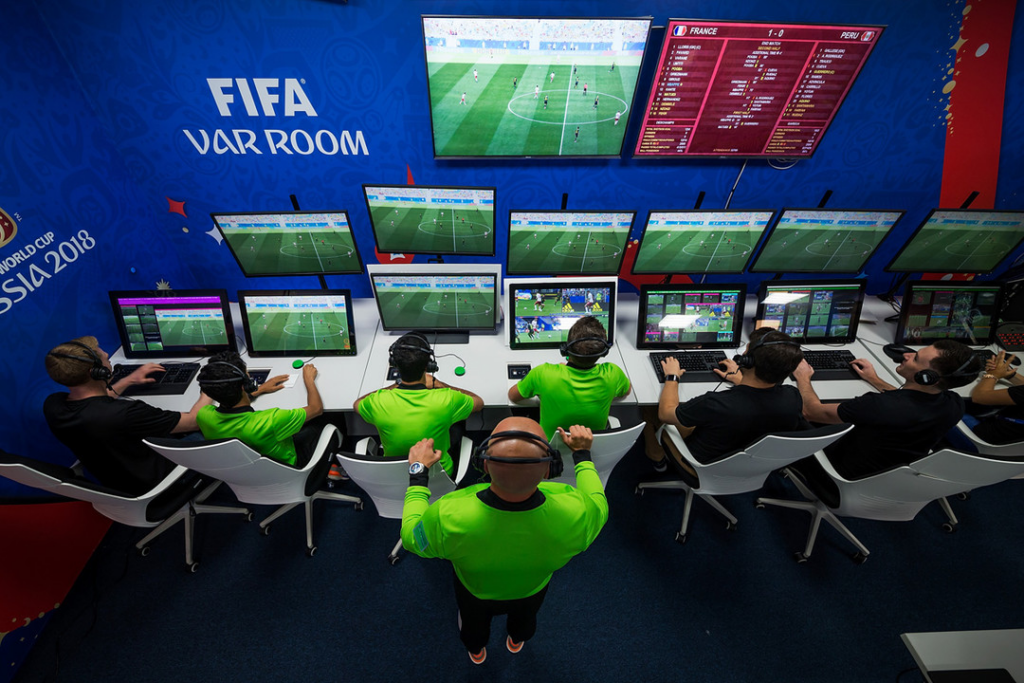
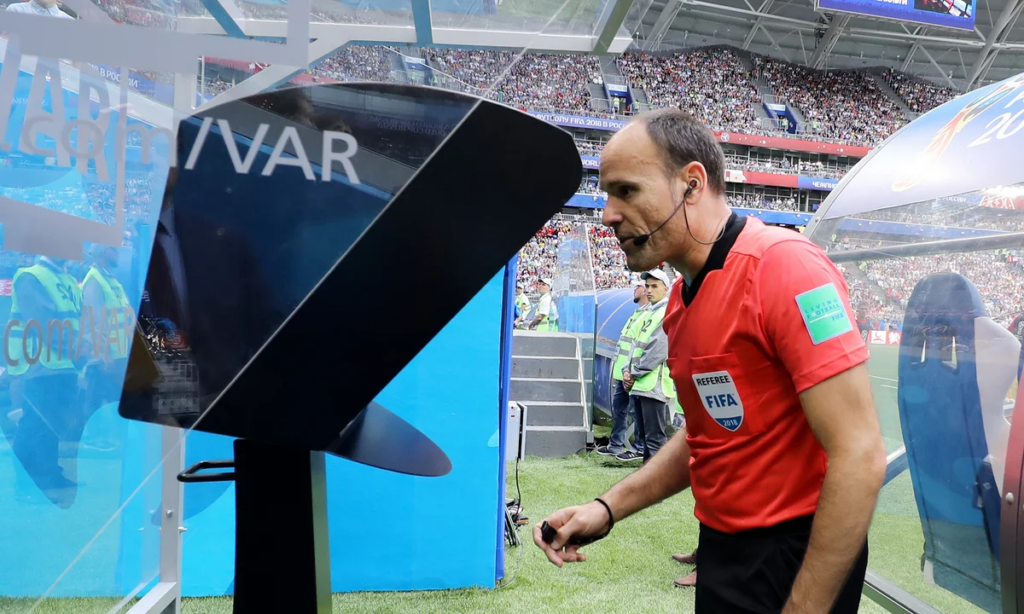
VAR – Video Assistant Referees are a team of three to four professional officials stationed in a central video operations room, monitoring matches through dozens of camera feeds. When a referee misses a key incident or needs a second look, the VAR steps in.
The system can only intervene in four categories:
- Goals: to check for infringements in the build-up or whether the ball crossed the line
- Penalties: to decide if a spot-kick should stand or be overruled
- Red cards: for dangerous tackles or violent conduct
- Mistaken identity: ensuring the right player is punished – a lesson famously learned from the case of Kieran Gibbs getting sent off for a handball actually committed by Alex Oxlade-Chamberlain during a heated clash between Arsenal and Chelsea in March 2014.
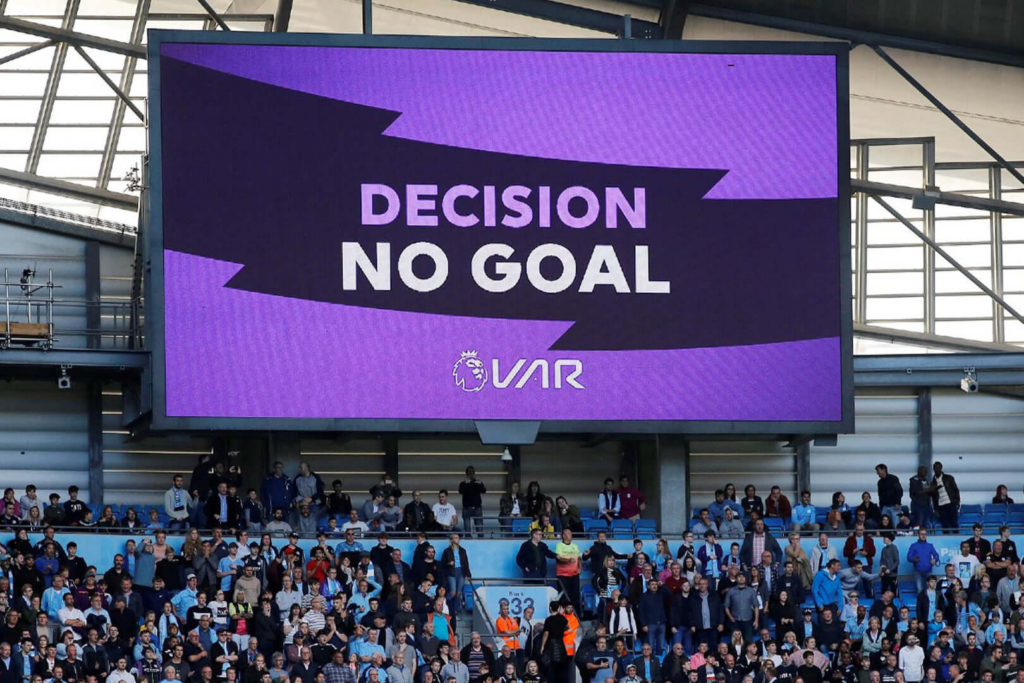
Under IFAB’s attempt to ensure fairness while equally preserving the flow of the game, VAR is only supposed to intervene under a “clear and obvious” categorisation. But as anyone who has watched a goal celebration freeze under a VAR check knows, the line between “clear”, “obvious”, and “two officials looking at the same frame and seeing different things” can be excruciatingly thin. In trying to eliminate human error, football inadvertently created a new type of human theatre.
Football Wasn’t Always This Sceptical of Technology
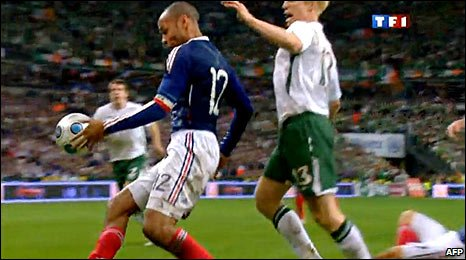
For a fact, IFAB has a long and occasionally embarrassing history of resisting innovation. Back in 2009, most of football ruled Thierry Henry’s handball against Ireland that ended their World Cup qualifying dream as ‘one of those things’; c’est le jeu. While the Irish fans wanted his head, IFAB said nothing.
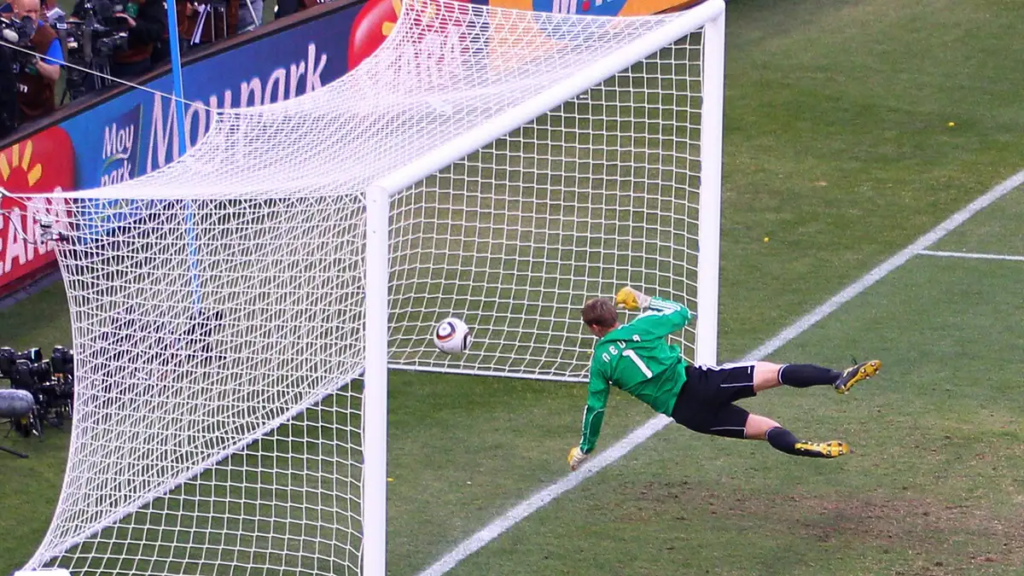
Then came the 2010 FIFA World Cup in South Africa. On June 27th, in Bloemfontein, Frank Lampard’s shot against Germany cannoned off the underside of the bar, landed a yard behind the goal line, and bounced back out.
The linesman waved play on. England lost 4-1. What followed was a massive public outcry, with football fans calling for instant replays to assist referees. And English football, which had spent years sneering at technology, found religion overnight.
IFAB introduced goal-line technology, setting the pace for a new era in football. Fans loved it: instant, accurate, and unobtrusive. Building on that success, the Royal Netherlands Football Association (KNVB) began developing a wider video review concept as part of its Refereeing 2.0 project.
Mock trials ran during the 2012-13 Eredivisie season. The International Football Association Board (IFAB) amended the Laws of the Game in 2014 to allow VAR trials.
After testing the system in domestic leagues across Europe, it was rolled out at the 2018 FIFA World Cup. The genie was officially out of the bottle, and football would never look back.
The Case For VAR (It’s Stronger Than You Think)
Before we dive into everything that’s gone wrong, it’s worth remembering why VAR was introduced in the first place and why it hasn’t been scrapped despite enormous pressure.
According to the Premier League’s independent Key Match Incidents (KMI) panel, a five-person body of former players, coaches, and officials who review every major decision, post-VAR accuracy on key match incidents has reached 97%. Without VAR intervening, that figure drops to 86%.
In practical terms, VAR catches goals scored from illegal positions, rescues wrongly dismissed players, spots penalties missed in real time, and periodically prevents genuine injustice from going unpunished. In 2024-25, there were 18 VAR errors across the entire Premier League season. That’s one blunder roughly every two matches.
In essence, the problem was never whether VAR worked in theory. It was always about how it was implemented.
The 2023-24 Season: The Year Clubs Nearly Pulled the Plug
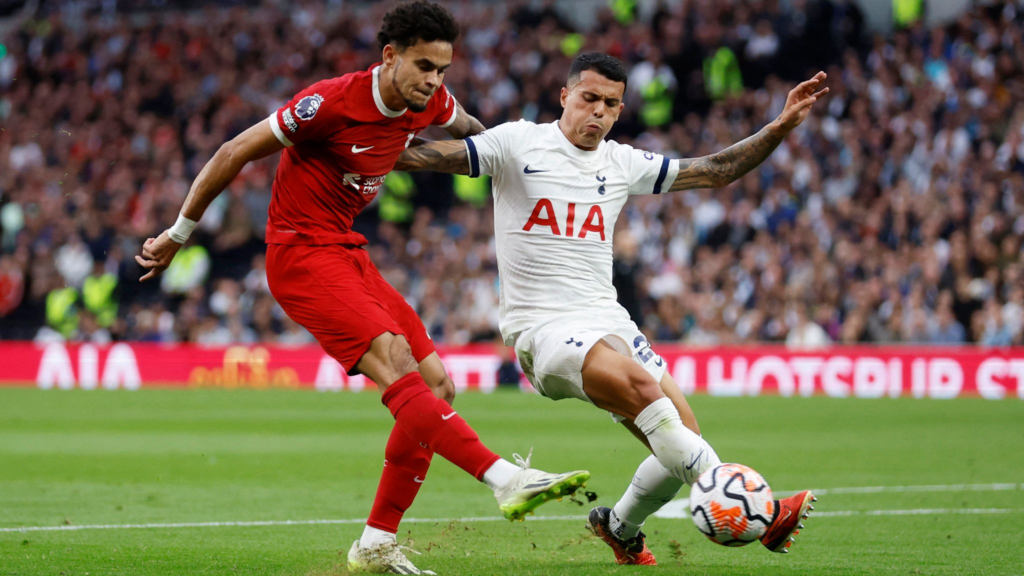
The 2023-24 season pushed VAR to a breaking point. Liverpool had a legitimate goal against Tottenham disallowed in a manner that defied logic.
Similarly, Nottingham Forest were so incensed by the pattern of decisions that they formally wrote to the Premier League in protest. Things got so bad that they had to hire the services of retired referee Mark Clattenburg as an in-house consultant.
They were not alone, as Wolves were so fed up they formally submitted a resolution to scrap VAR entirely ahead of the 2024-25 season, requiring 14 of 20 clubs to vote in favour to pass.
The present order of things proves your curiosity about how that petition turned out. Clubs voted 19-1 to keep VAR.
The rebellion forced genuine reform. The Premier League announced six structural changes to VAR operations. These include faster review times and expanded in-stadium communication. They also committed to showing overturned clips on big screens.
As any seasoned fan might expect, those reforms were not an automatic extermination of the inherent chaos of VAR.
The 2025/26 Season: The Great Paradox

The 2025/26 season produced a VAR story so contradictory it could only happen in English football. Arsenal, under Mikel Arteta, won the Premier League title for the first time in 22 years. They also became the first club in league history to complete an entire season without conceding a penalty. Furthermore, they never received a single red card.
Yet, the numbers behind the narrative reveal a glaring gap between perception and reality. According to the KMI panel, they should have conceded three penalties and been reduced to ten men three times.
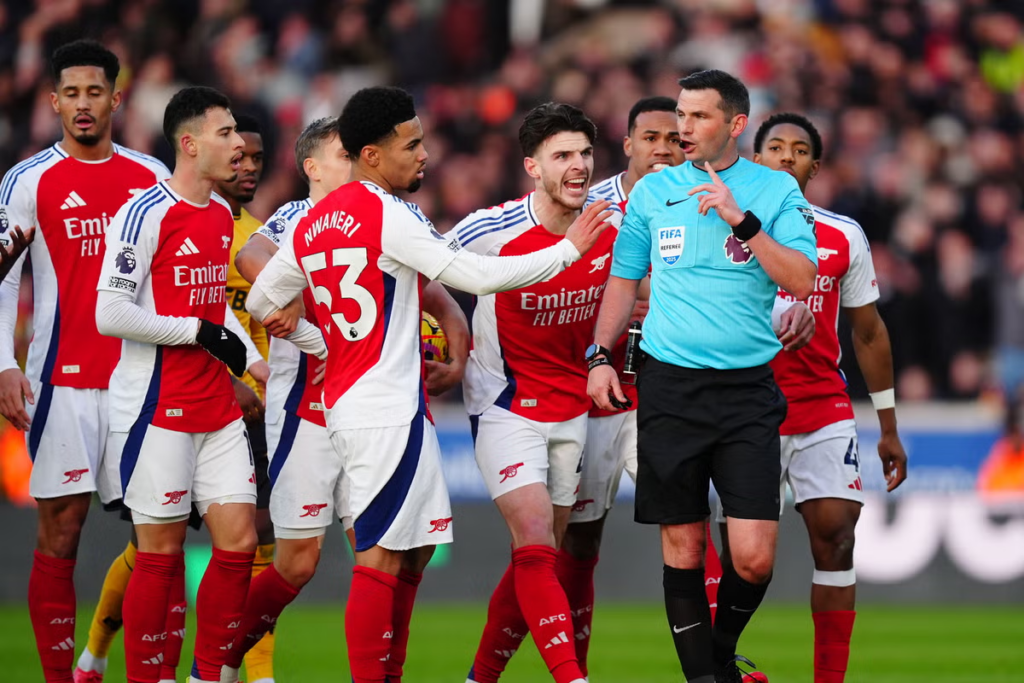
Ironically, Arsenal fans still walk around with the conviction that the PGMOL has an agenda against their team despite the actual evidence going against that narrative.
Chelsea were even more fortunate, recording eight incorrect decisions in their favour and no VAR errors against them all campaign long.
Crystal Palace and Everton sat at the other end of that table. The Toffees were denied penalties against Arsenal, West Ham, and Manchester City. Crystal Palace suffered three major incorrect calls.
In total, the Premier League recorded 25 VAR errors in 2025-26, seven more than the previous season, reversing a trend of gradual improvement.
Premier League chief football officer Tony Scholes offered a candid assessment. “I think personally VAR was introduced in a manner that the world expected perfection”, he said. “They thought that by the introduction of VAR, there would never again be a referee mistake. That’s simply unrealistic.”
Scholes added, “I think it’s a reasonable objective to achieve 100% accuracy on factual decisions like offsides. Once you move into subjective decisions, though, the very nature of them is exactly the title: subjective.”
The Never-Ending Problems of VAR
Football hates dead time. It always has. Nothing kills the atmosphere faster than watching 50,000 people sit in silence for four minutes while officials in a room 200 miles away argue over whether a player’s left armpit was marginally offside.
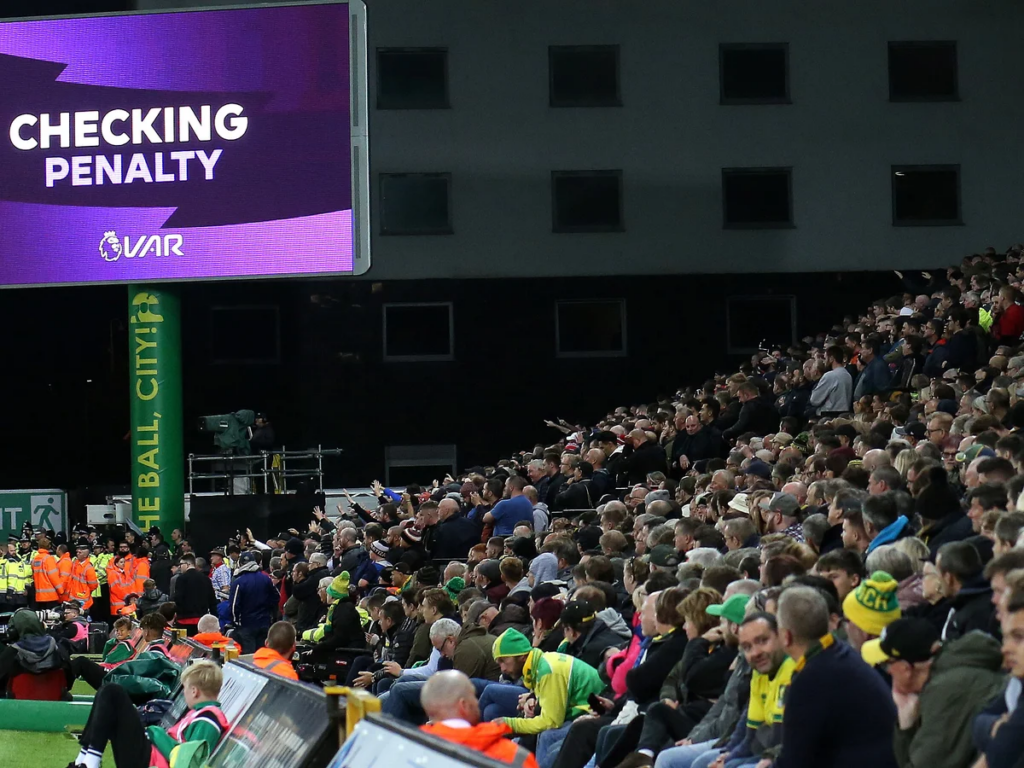
The Premier League’s VAR Improvement Plan has reduced average review times from 64 seconds per match in 2023-24 to 39 seconds, but the damage still exists. The hesitation before celebrating a goal and the crowd looking at each other instead of the pitch have become defining features of the game.
Similarly, the handball rule continues to be the clearest example of VAR’s inconsistency problem. Whether an arm is in a “natural position” remains an absurdly subjective call. Two referees watching the same clip can reach completely different conclusions, each applying the same guidelines and each convinced that they are right.
In 2025-26, the inconsistency extended beyond handball. VAR decisions on second yellows, on whether a tackle merited a red, and on the threshold for “clear and obvious” all varied match to match, club to club, in ways that supported every fan’s darkest conspiratorial suspicions.
It now looks like the technology introduced to get rid of controversial calls has become a great multiplier of errors. Referees suffer from endless indecision. Instead of making bold calls, they rely on VAR to clear up confusion. VAR then passes the buck right back to the on-field ref.
Positive Changes to VAR: What’s Actually Happening Now
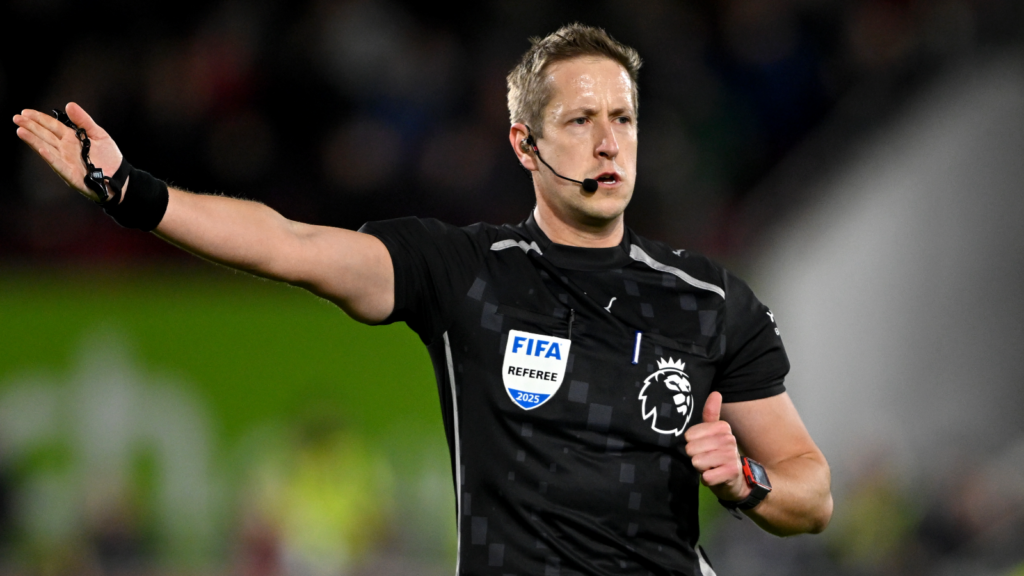
The 2025-26 season kicked off with the most significant transparency reforms since VAR’s introduction. Referees made live stadium PA announcements for the first time to explain VAR decisions, reviews, and conclusions. Stadium big screens must now show all disallowed goals with a definitive clip or screenshot explaining the decision.
Also, for the opening six weeks of the season, referees wore body cameras in their earpieces, feeding images from their point of view into the broadcast. For the first time, millions watching could see what the person in the middle actually saw.
To curb time-wasting and boost transparency, only team captains may now approach referees during disputes. This ends the undignified spectacle of six players simultaneously surrounding an official.
Not to forget, the French league also decided to start micing up their referees, allowing fans in the stadium and viewers at home to hear the reasoning behind decisions in real time. The response was positive. Introducing transparency reduced frustration, even when people disagreed with the decision.
The Premier League has moved in this direction, slowly. The “Match Officials Mic’d Up” programme, which gives broadcast access to referee communication, has grown, and the in-stadium announcements represent the most direct version yet.
The goal is what Arsène Wenger called for as far back as the 2021 French Football Refereeing Convention: referees, like coaches, like players, like any other professionals accountable to the public they serve, should explain themselves.
Post-match explanations for major decisions, which José Mourinho demanded after the 2021 North London derby, remain the logical next step. Some federations are edging toward it. The PGMOL has resisted, but the pressure will only grow.
The 2026 World Cup: Football’s Most Ambitious VAR Experiment
Whatever the Premier League’s reforms, the 2026 FIFA World Cup in the United States, Canada, and Mexico represents the most technologically advanced officiating environment in the sport’s history and a potential glimpse at what football’s future looks like.
AI-Powered Player Avatars
FIFA has partnered with Lenovo on a system that goes significantly beyond anything seen before. Every one of the 1,248 players at the tournament has undergone digital body scanning. Each scan creates a precise 3D AI avatar.
These avatars feed directly into the semi-automated offside system. When an offside check triggers, viewers will see photorealistic digital twins of the actual players. High-speed cameras track the players by capturing 29 data points 50 times per second.
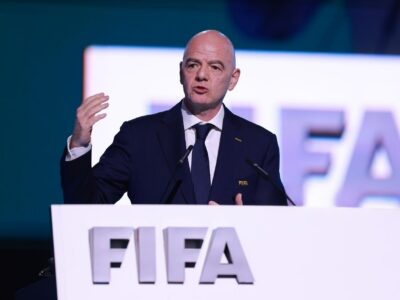
“AI-enabled 3D player avatars represent a significant development in semi-automated offside technology,” said FIFA President Gianni Infantino. “Highly accurate body-part dimensions allow the system to track players reliably during fast or obstructed movements.”
The goal, after years of blurry freeze-frames and misaligned blue lines, is to produce offside graphics that are not only accurate but also visibly and undeniably so.
The Ball Sensors Tell All
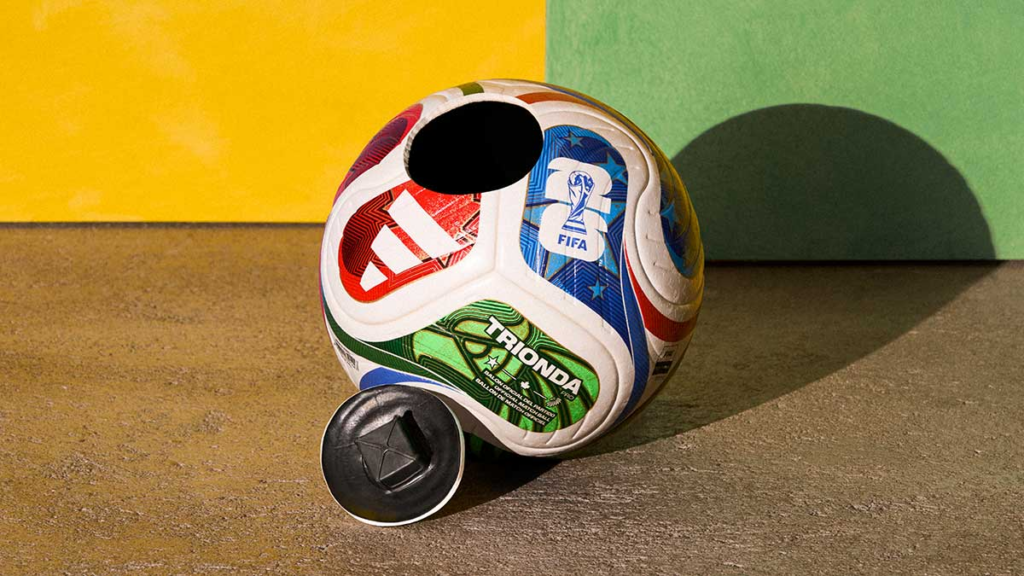
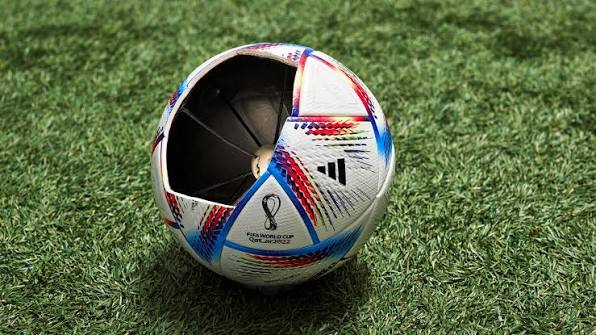
Inside every official match ball at the 2026 World Cup sits an inertial measurement unit sensor, transmitting data 500 times per second to the video operations room.
Combined with the player-tracking cameras, the system generates a real-time virtual recreation of every moment of the match, allowing officials to pinpoint the exact instant a ball was played, which helps determine whether an attacking player was onside or not.
In clear offside situations, the system sends an automated alert directly to the assistant referee’s earpiece, allowing them to raise the flag without routing the decision through the VAR room first.
Closer calls still go to the full VAR review, but unlike the 70-second manual checks taken at the 2018 World Cup, offside decisions will be resolved in under 20 seconds.
Other interesting additions also include VAR’s powers to intervene in the following:
- Incorrectly awarded corner kicks (if a wrongly given corner led to a goal)
- Clearly incorrect second yellow cards resulting in a sending-off.
- On-field interactions between players, involving close-mouthed exchanges.
These expansions address scenarios that repeatedly caused controversy in club football, and it will be somewhat refreshing to see these additions play out in the summer.
What Else Needs to Change with VAR?
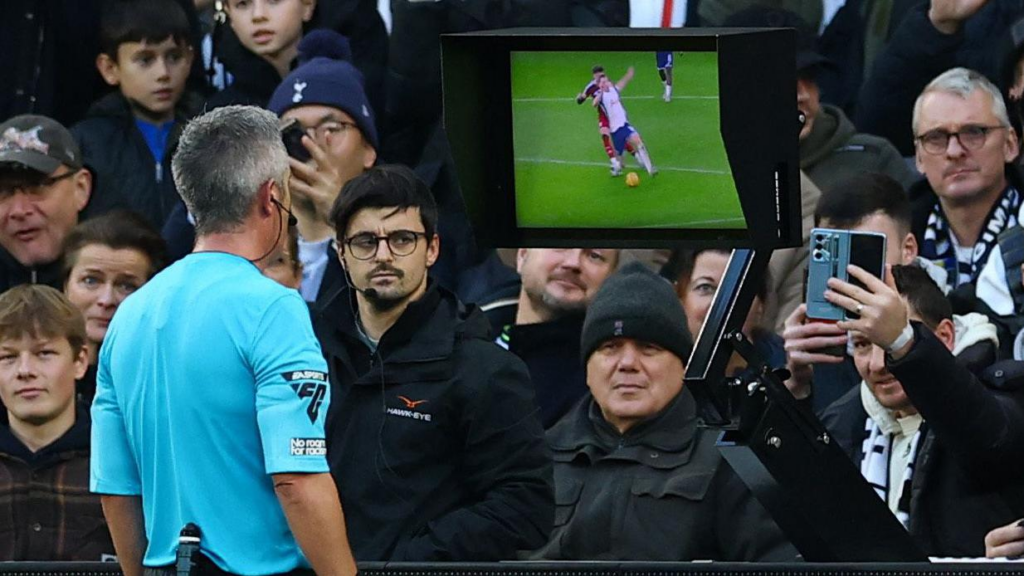
The technology is finally catching up. The transparency reforms are real and meaningful. But some of the core philosophical problems with VAR still need to change.
A clearer definition of “clear and obvious”: The phrase that governs when VAR can intervene has become a puzzle box. Premier League refereeing chief Howard Webb has repeatedly said the bar for intervention is deliberately high. But what exactly that bar is remains opaque to everyone watching from the stands, which is precisely the problem. If consistency requires a clear standard, that standard needs to be publicly stated and consistently applied.
Tony Scholes is right that 100% accuracy on offsides is a reasonable target, and the technology is getting there. But for tackles, handballs, and red-card offences, demanding perfection is somewhat far-fetched. The goal should be transparency about exactly ‘how officials arrive’ at those calls, rather than fracturing opinions over similar offences.
VAR is not going anywhere. The 19-1 vote in 2024 settled that. And in truth, despite the frustrations of the 2025-26 season, VAR’s case is much stronger on the numbers than the noise suggests. Football without it would mean returning to an era where Thierry Henry could handle a ball into the net in a World Cup qualifier and walk away.
The 2026 World Cup will be the most significant test yet. With sensor-equipped balls, bodycams on referees, and real-time tracking of 29 points on every player’s body 50 times a second, it is, by far, an extraordinary display of technology in the service of the beautiful game.
If it still generates controversy, at least we’ll be able to see exactly why.
Who wrote this?

Mahbubat Salahudeen is a Sport Journalist with a primary focus on Youth-Athleticism and women's football.
She is currently pursuing a degree in Media Communications and Public Relations. While much of her experience lies in Sports communications, she has honed transferable skills in strategic communication, audience engagement, and digital media production that transcend industries.
- Mahbubat Salahudeen

- Mahbubat Salahudeen

- Mahbubat Salahudeen

- Mahbubat Salahudeen

- Mahbubat Salahudeen

- Mahbubat Salahudeen

- Mahbubat Salahudeen

- Mahbubat Salahudeen

- Mahbubat Salahudeen

- Mahbubat Salahudeen