



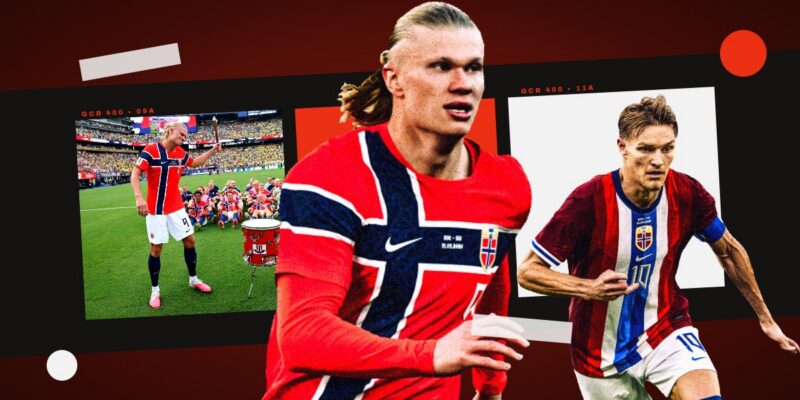
The odds favored Brazil ahead of their 2026 FIFA World Cup round-of-16 clash against Norway in New Jersey. Driven by late tactical resolve against the run of play, Norway delivered a stunning blow to the five-time champions. This remarkable two-to-one victory handed Brazil an unexpected exit, ending Norway’s long absence from the World Cup stage
Brazil’s premature elimination unfolded in a shocking, almost eerie fashion. Entering the tournament with clear expectations and aiming to secure the sixth star, the Selecao carried strong momentum into the knockout stages.
But what makes this result compelling is how Norwegian football has completely reinvented itself. Within a decade, Norway transformed from global obscurity in FIFA to an elite powerhouse capable of stunning five-time champion Brazil. Their unprecedented trajectory fell from nineties heights into a two-decade wilderness before systematic re-engineering restored their world-stage presence.
The 1990s Glory Era (Drillostil)
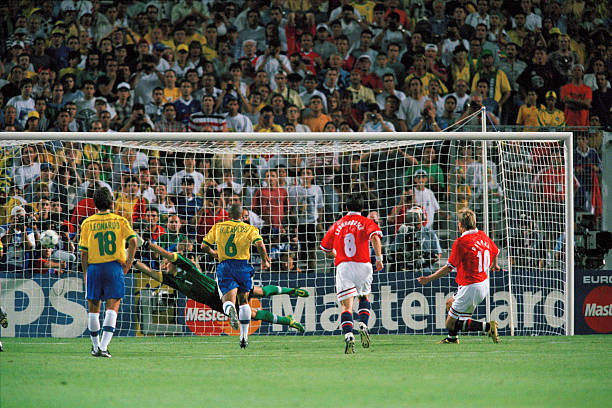
Like a typical déjà vu, 2026 was not the first time Norway had shocked Brazil. Their history of defiance dates back to Marseille, France, in 1998.
However, Norwegian football laid the foundation for its ascension eight years prior, in October 1990. Before then, Norway was a European lightweight, without a dominant football footprint like heavyweights France, the Netherlands, and Germany.
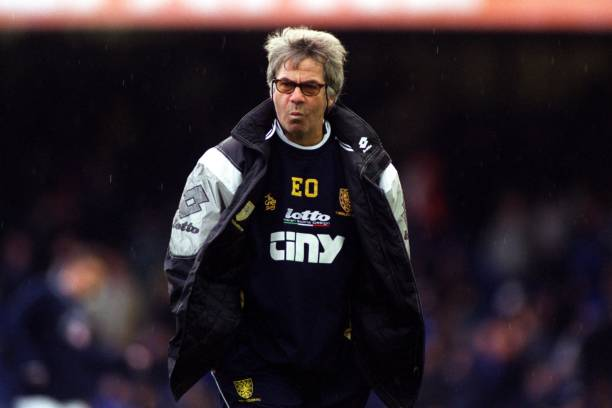
Then came Egil “Drillo” Olsen. Within three years, Drillo orchestrated a dramatic shift, transforming a nation of minnows into a dominant global powerhouse that topped a 1994 World Cup qualifying group featuring England and the Netherlands.
Drillo was a brilliant tactical genius whose innovative strategies earned him a place alongside revolutionary football legend Johan Cruyff. His decisive implementation of a hyper-disciplined zonal 4-5-1 formation directly transformed their midfield into a high-intensity defensive trapping zone. This modern system completely replaced the traditional man-marking techniques that defined most international football tactics throughout the twentieth century.
In their famous 2–0 qualifier win over England in June 1993, this setup suffocated elite opposition, forcing turnovers deep in Norway’s half.
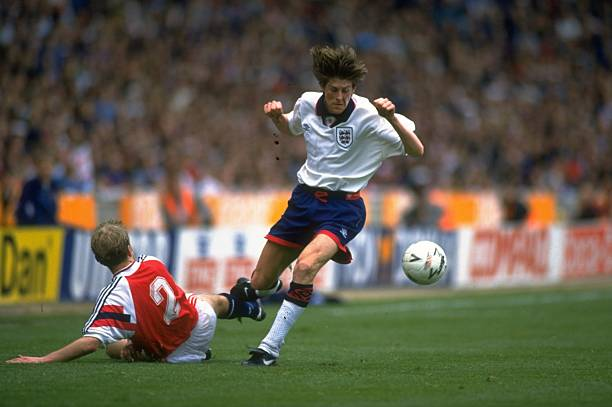
As a pioneer of sports science, Drillo used data, video analysis, and probability metrics long before they became global norms in football. He also prioritized physical stature and high-frequency long balls during games, perfecting the famous “Flo Pass,” a diagonal, deep launch from the defensive line up the field of play. A typical example is left-back Stig Inge Bjørnebye firing a long-range ball to tall winger Jostein Flo, who bullied England’s ‘smaller full-backs’ and led Norway to a 2-0 win in a 1994 FIFA World Cup qualifying match.
However, despite the famous resurgence, Norway narrowly missed the 1994 World Cup knockout rounds on goal difference in a tight Group E where all four teams finished on 4 points. Nonetheless, their structural blueprint had begun to gain global validation.
By the time they met Brazil in 1998, their 2–1 victory was no fluke; it exposed the vulnerabilities of Brazil’s style when pitted against hyper-efficient, physical pragmatism. There and then, Drillo’s era proved that tactical discipline and data-driven systems could rewrite football’s global hierarchy.
However, good times, as they say, are finite. Just when Norway thought they had found the solution to the problem that had plagued their footballing identity for years, that solution vanished all too quickly, to everyone’s chagrin.
The Dark Ages (2000–2024)
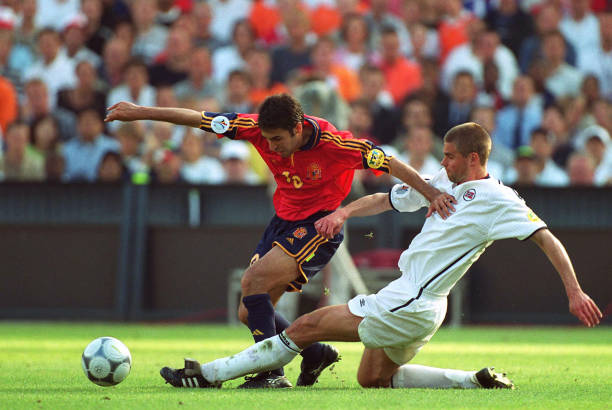
Raúl of Spain and Bjorn Otto Bragstad of Norway challenge during the UEFA Euro 2000 Group C match between Spain and Norway.
Against the run of events, Norway’s modern tragedy struck as quickly as restitution arrived. It all started at Euro 2000, when an almost certain qualification to the next phase of the tournament took a drastic turn that Norwegian football as a whole barely anticipated. In June 2000, Norway found themselves in Group C alongside Spain, FR Yugoslavia, and Slovenia.
Steffen Iversen of Norway celebrates a goal during the UEFA Euro 2000 Group C match between Spain and Norway.
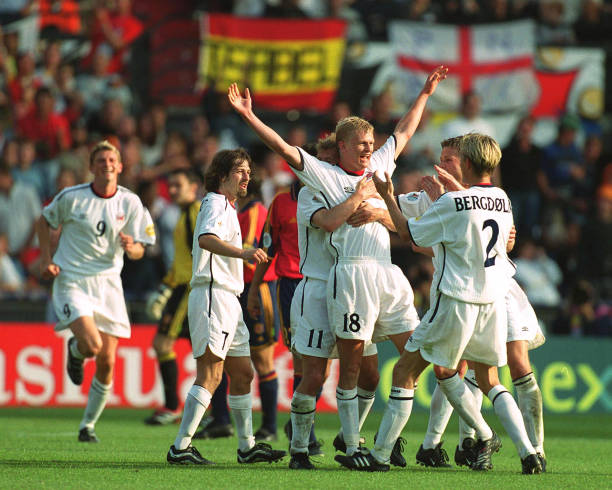
Norway defeated Spain 1–0 in their opening match; Steffen Iversen plundered a headed shot past Spain’s José Francisco Molina in goal. Then lost by a similar scoreline to Yugoslavia. Going into the final group game against newcomers Slovenia, a win guaranteed Norway’s progression to the last 16. Their fate lay in their own hands.
Head coach Nils Johan Semb chose a conservative, pragmatic approach called the Drillostil. Rather than push for a win, Norway sat in a low block and relied on long balls to Tore André Flo and John Carew.
The plan, without an ounce of doubt, was to seal a stalemate. As news arrived that Yugoslavia led Spain 3–2 late into injury time, Norway felt secure. They played out the final minutes of their 0–0 match with minimal risk. They believed the draw was enough to advance.
But catastrophe unfolded in the parallel match. In the 92nd and 95th minutes, Spain scored two miracle goals to snatch a 4–3 victory over Yugoslavia. Spain topped the group with 6 points. Both Yugoslavia and Norway finished tied on 4 points with 0 goal difference. Because the head-to-head record was the primary tiebreaker, Yugoslavia advanced over Norway after a 1–0 win days earlier.
To both the media and fans, that unexpected loss was an indictment of Drillostil. Norway then missed twelve consecutive major tournaments, including six World Cups and six European Championships, spanning nearly a quarter of a century.
Åge Hareide offered brief hope with his structural critiques in the early 2000s. However, this did little to stop the decline. Norwegian football steadily sank into systemic stagnation. By 2017, the national team hit an all-time low of 88th in the FIFA rankings. That was a dramatic drop from second place in 1995.
While rivals evolved, European football embraced new tactical approaches like Tiki-Taka and Gegenpressing. Meanwhile, Norwegian academies remained wedded to physical functionalism. This left a generation lacking in 1v1 dribbling skills, ball mastery, and composure under pressure. The nation had become prisoners of their own past success.
How They Got Here: Architects of the Renaissance
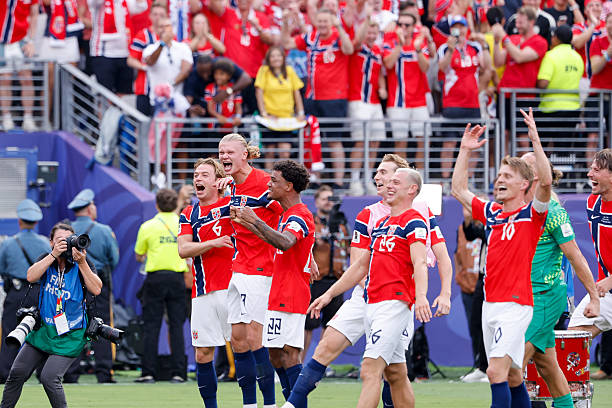
It wasn’t until 2010 that Norwegian football looked itself in the mirror and didn’t like what it saw. I mean, the relentless long balls of the Drillostil era were dead.
After a decade-long tournament drought, Norway made a striking realization about its athletes. They had produced players who were completely disengaged from real-world game situations.
Håkon Grøttland and the Norwegian Football Federation realized Norway needed a change. To compete in modern Europe, the nation had to embrace technical football. They aimed to regain their long-lost identity as a European powerhouse. That key decision laid the foundation for Norway’s success. The world saw this display at the 2026 FIFA World Cup, particularly against Brazil.
The NFF overhauled its coaching curriculum, jettisoning rigid endurance drills for small-sided games that prioritize ball touches. In no time, grassroots fields were flooded with over 17,000 newly certified coaches — meaning a kid like Martin Ødegaard didn’t just stumble into brilliance; he grew up fine-tuned by several local mentors, with each one either sharpening his vision, imparting endless tricks up his sleeve, or sowing the seed of some extraordinary trait not every young football talent can have.
Despite these revolutionary approaches, Norway’s secret weapon was the Barneidrettsbestemmelser philosophy. Under this national pact, leagues record no scores or standings in U13 football. So, instead of tracking individual goals or saves, clubs trained young Norwegians in groups for a decade. This approach successfully groomed future generations as cohesive teams.
Look closely at Erling Haaland’s teenage years at Bryne FK. Back then, he was still a skinny youngster delayed in his growth spurt. Fortunately, the Barneidrett philosophy sheltered him from early rejection.
Norway’s cold climate forced Haaland indoors. Like many young Norwegians, he trained on smaller pitches with less space and time. Lacking early physical leverage, he mastered spatial timing. He found open spaces before opponents could react, long before his frame caught up.
By 2015, the NFF tied it all together with Landslagsskolen (The National Team School), selecting the top 10% of regional talents for elite weekend clinics.
This system served two purposes. In traditional European systems like England, France, or Spain, top clubs recruit talented ten-year-olds early. These children leave their local communities to join high-pressure, residential academies. Lionel Messi, Cesc Fabregas, and Kylian Mbappe are among the players who developed this way.
“Secondly, the Landslagsskolen bridged the gap between local grassroots clubs and Norway’s youth national teams. This eased players’ integration into the senior teams.
The Bodø/Glimt Model & Eliteserien Revival
However, domestic clubs didn’t serve only as a breeding ground for national team players. When it comes to clubs renowned for their role in growing Norwegian youth football at the club level, FK Bodø/Glimt comes to mind. Before the revival, the domestic Eliteserien was stuck with outdated tactics.
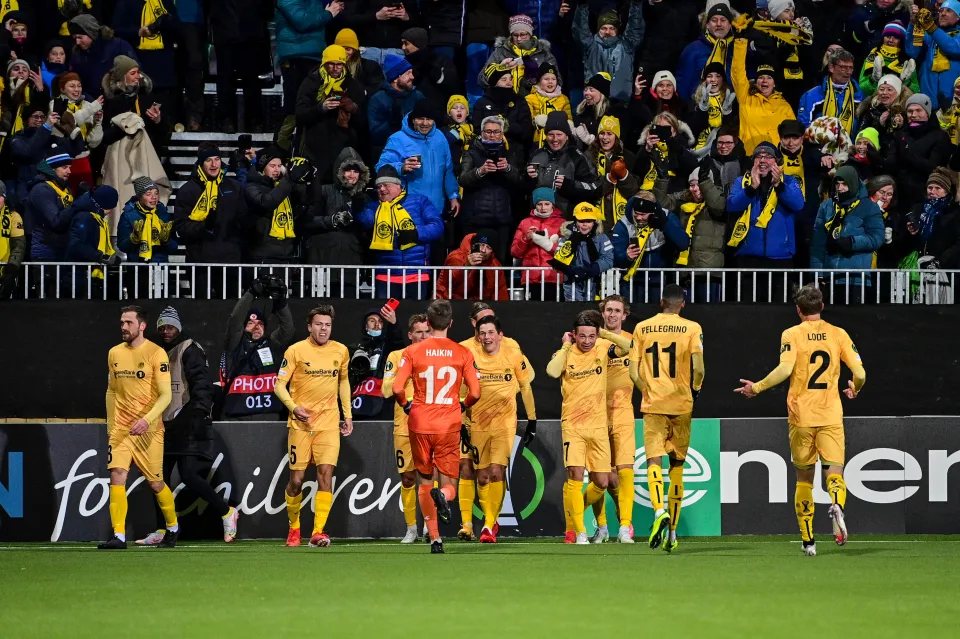
No one cared about smooth ball control as long as players could kick the ball far and win headers. That dynamic shattered when FK Bodø/Glimt flattened José Mourinho’s AS Roma 6–1.
Alongside Molde FK, Bodø/Glimt triggered an ideological revolution across Norwegian and European football. They proved local clubs could outthink and outplay European royalty through fluid, high-intensity positional play.
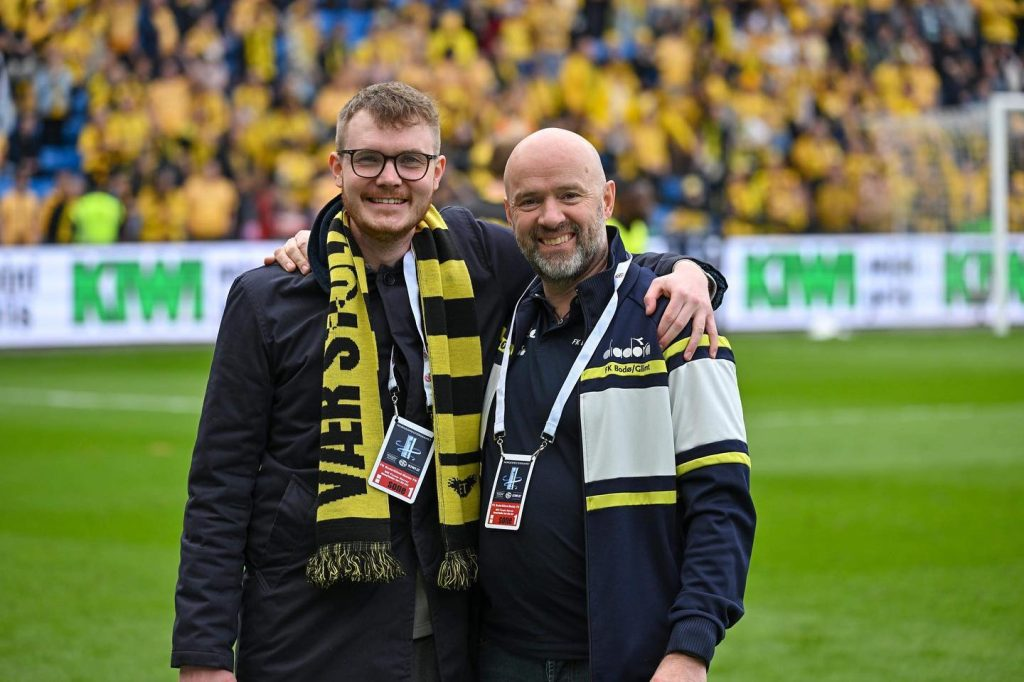
But to replicate the burgeoning growth of the national teams at the club level, Bodø/Glimt hired Bjørn Mannsverk—a former Royal Norwegian Air Force fighter pilot—as mental coach.
He was tasked with rewiring the emotional state and mindset of the players through goal-oriented, practical strategies. It was, and still is, an unconventional approach, since there isn’t an obvious connection between football and military tactics. But a closer look at what Bodø were trying to build might explain why. In fighter jets, panic under pressure can be fatal.
Mannsverk applied military-grade focus and mindfulness techniques to football. He did this by introducing “The Ring,” a post-conceded-goal huddle where players openly confessed their individual errors after a game, without fear or shame.
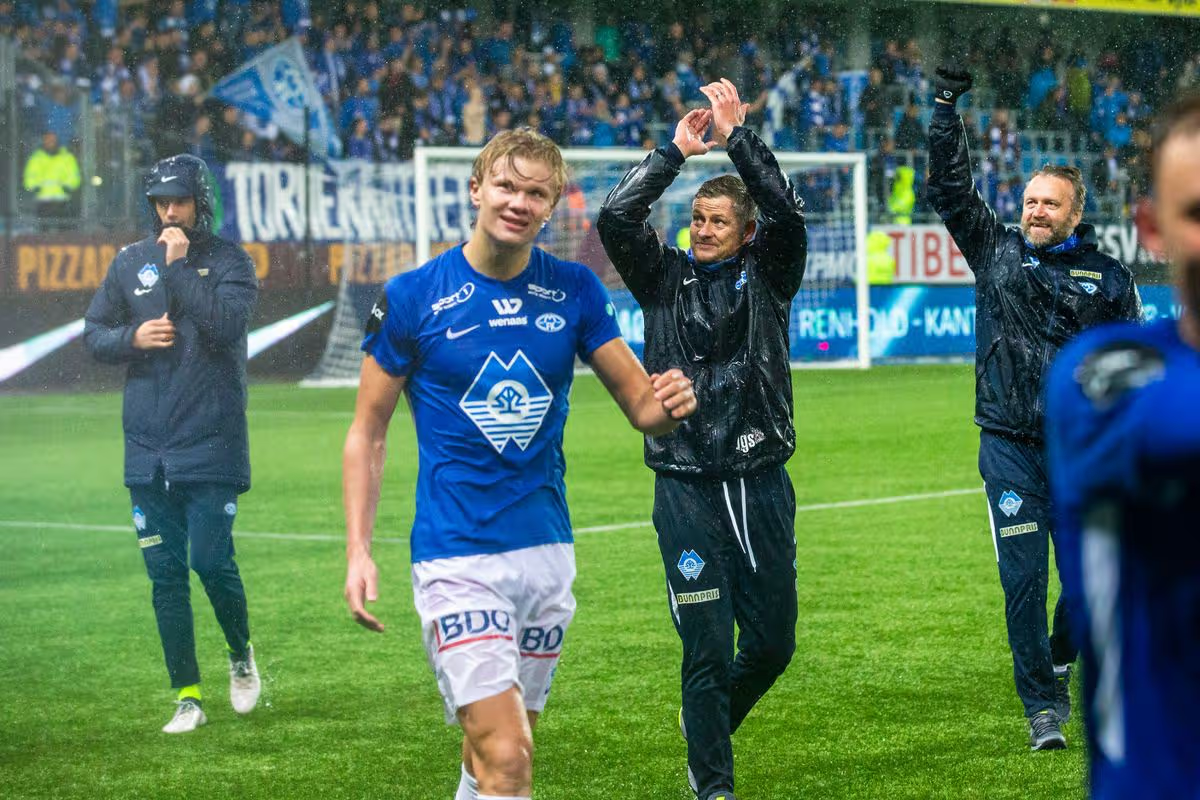
Meanwhile, down in Molde, Ole Gunnar Solskjær spent two full years staying behind after practice to personally whip crosses at a teenage Erling Haaland, famously telling him, “You have no idea how to head the ball; we are fixing that today.”
While Bodø/Glimt addressed the mental side, Molde FK worked on individual skill. So, when young Norwegian talents step onto European grass today, they move with a psychological composure nurtured by a fighter pilot and legendary strikers.
Early European Export Strategy
Now, beyond what Bodø/Glimt and Molde FK have done, Norwegian players also had a role to play. Historically, Scandinavian players stayed in the comfort of their domestic leagues until their mid-twenties, venturing abroad only as finished products.
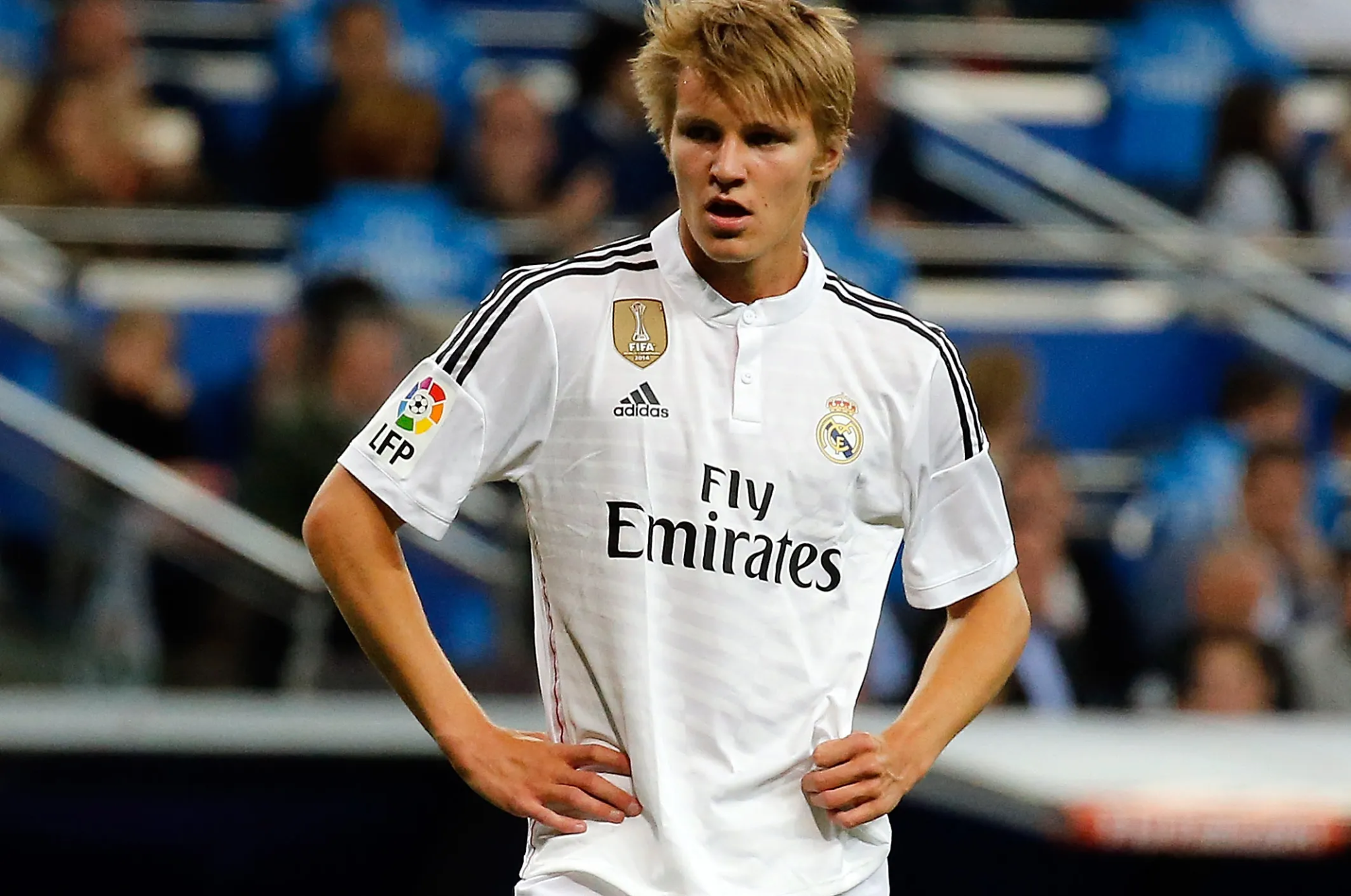
This strategy prioritized pitch time over immediate status.
Consider Martin Ødegaard: signing for Real Madrid at 15 brought global fanfare, but his real transformation happened far from the Bernabéu, through loan spells at Heerenveen and Vitesse. On those damp Dutch pitches, Ødegaard learned to withhold possession against defenders, evolving into the player who now captains both Arsenal and his country.
Similarly, when Erling Haaland chose Red Bull Salzburg, he gained 27 first-team appearances in his first season — a platform he might not have had in a highly competitive team structure with intense media scrutiny.
By the time Antonio Nusa and Oscar Bobb followed this exact pipeline into elite European leagues, they had already made thousands of high-pressure decisions. By the time they earned their senior national team caps, facing world powers like Brazil was no new challenge.
Norway’s journey from its 1990s golden age through two decades in the wilderness to a modern footballing power is an extraordinary comeback woven in structural reinvention. By replacing physical attrition with year-round indoor infrastructure and an unalloyed commitment to youth development, the Norwegians freed themselves from the shackles of their past success to reclaim their future.
Their triumph over Brazil on football’s grandest stage proved that international identity is not an inheritance, and their resurgence should be studied, especially by struggling heavyweights like Brazil and former powerhouses like Nigeria. Norway’s revival offers an inescapable lesson: talent creates moments, but systems build eras.
Who wrote this?

Mahbubat Salahudeen is a Sport Journalist with a primary focus on Youth-Athleticism and women's football.
She is currently pursuing a degree in Media Communications and Public Relations. While much of her experience lies in Sports communications, she has honed transferable skills in strategic communication, audience engagement, and digital media production that transcend industries.
- Mahbubat Salahudeen

- Mahbubat Salahudeen

- Mahbubat Salahudeen

- Mahbubat Salahudeen

- Mahbubat Salahudeen

- Mahbubat Salahudeen

- Mahbubat Salahudeen

- Mahbubat Salahudeen

- Mahbubat Salahudeen

- Mahbubat Salahudeen

- Mahbubat Salahudeen

- Mahbubat Salahudeen

- Mahbubat Salahudeen