




There is still an atmosphere of scrutiny surrounding players who receive significant attention early in their careers.
Certain players get high regard before playing a full season or making a lasting impact.
While it initially feels like a gift or honor for these players to be compared with football legends who treaded similar paths, the comparison starts to feel like less of a compliment and more of a subtle threshold.
Harry Winks was one of those players who seemed destined for the top, but things did not go as projected.
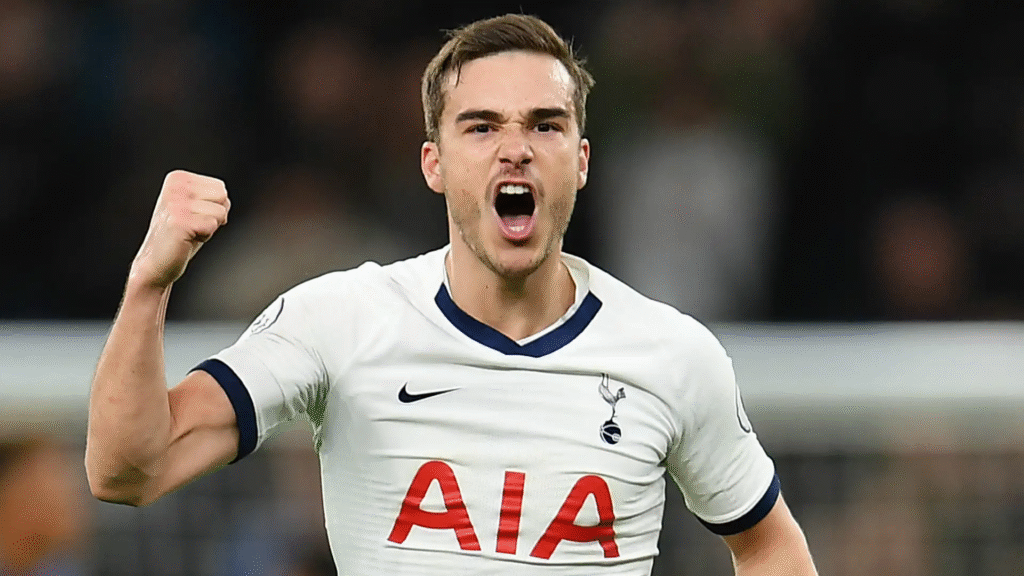
At his peak, he embodied every trait the Premier League wanted in a central midfielder. He showed tactical and positional intelligence, receiving the ball in tight spaces, turning under pressure, and dictating tempo.
Managers adored him early despite his inexperience. He could do all that was expected of a top midfielder.
His performances early on drew flattering comparisons to Barcelona and Spain legend Andres Iniesta, with pundits referring to Winks as the “English Iniesta.”
This is the story of how intense early expectations shaped Harry Winks’s career path and his initial rise before his current challenges.
A Product of Tottenham’s Golden Academy Era
Harry Winks joined the Spurs academy at the age of five and from the onset, coaches noticed his technical ability and composure.
His small stature raised doubts about his chances of surviving physically in English football, but these uncertainties did not deter him from fulfilling his ambitions.
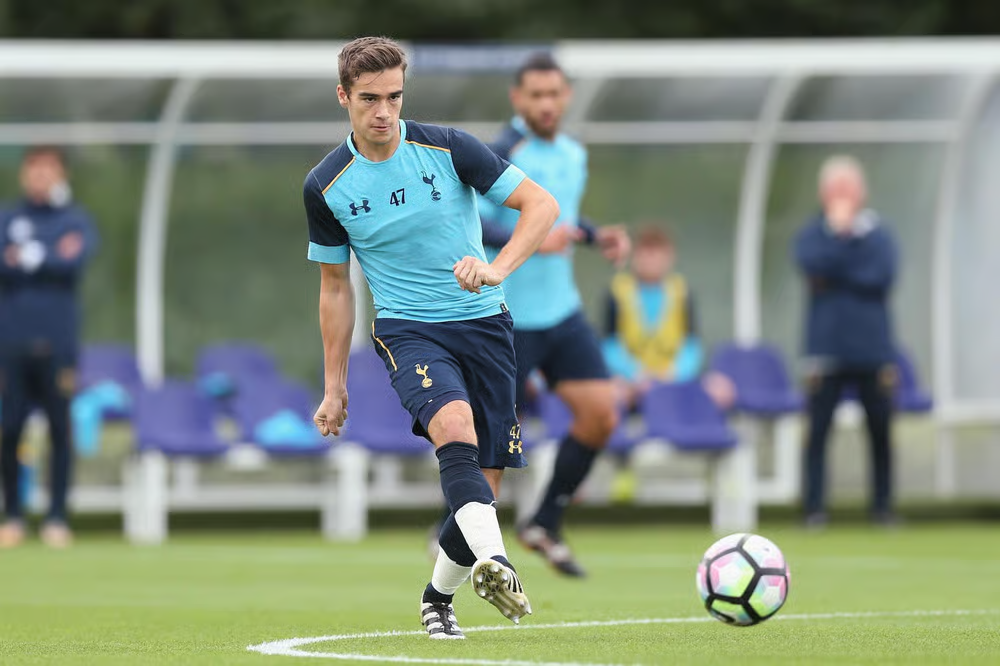
Winks developed with other academy players like Harry Kane and Ryan Mason. Together, they represented the “One of Our Own” spirit.
Two players shaped the midfielder Harry Winks would become, and each filled a distinct gap the other could not.
Scott Parker, the tenacious Tottenham captain who won the Football Writers’ Footballer of the Year award in 2011, mentored the young academy scholar. They engaged in video analysis sessions where they dissected midfield positioning, pressing triggers, and the art of controlling a game from deep.
For the technical aspect of his game, Winks turned to Luka Modric, the Croatian maestro who had donned the same Tottenham shirt before winning the Ballon d’Or at Real Madrid.
Winks studied Modric’s ability to drop between the lines, receive on the half-turn, and evade pressure through intelligent body orientation rather than pace or physicality, gradually weaving those qualities into his own game.
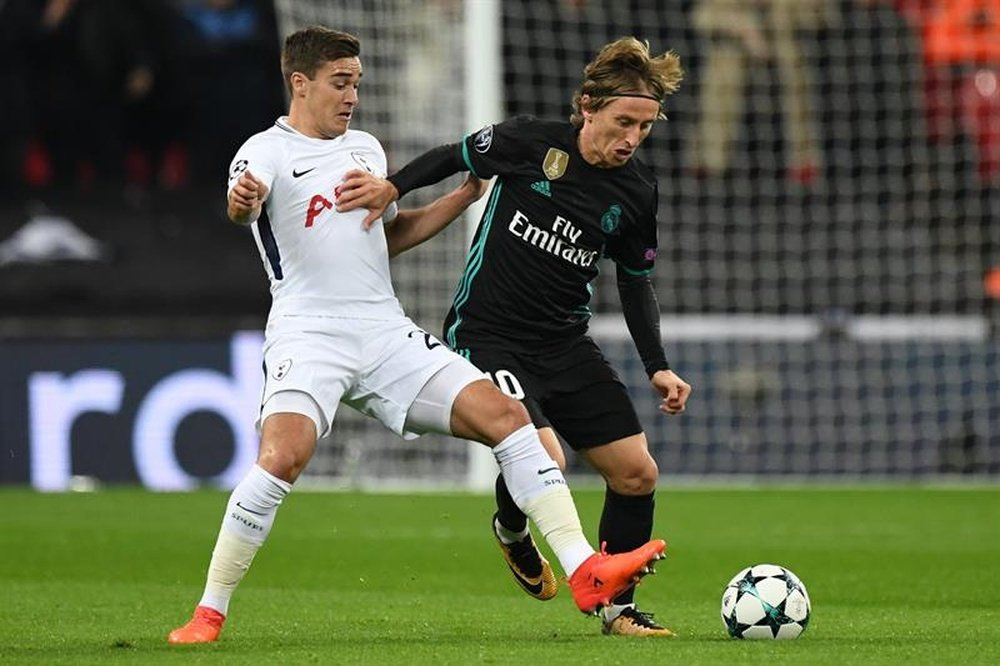
English academies often produce strong, box-to-box midfielders for the 4-4-2 system based on running and physical play.
This unique trait among English midfielders highlights the clear difference between Wink’s profile and traditional English midfielders.
Winks offered something altogether different. His playstyle resembled that of LaLiga academy prospects. He excelled in pre-assist stats, creating high-quality chances with line-breaking passes.
At a time when England lacked deep-lying playmakers, he offered creativity in midfield, reminiscent of Jack Wilshere’s peak performances, with the ability to influence play from a similar position.
Breaking Through Under Mauricio Pochettino
Tottenham Hotspur’s front office recognized Harry Winks’s ability, but Mauricio Pochettino’s intentional decision to retain him during the 2016 summer transfer window profoundly shaped his development.
The conventional practice with academy products in English football revolves around shipping young talents to the lower leagues to “toughen up” and gain experience.
Defying convention, Pochettino went a different route. He placed Winks directly into the first team, immersing him in the tactical structure, relentless pressing, and stamina demanded by the Argentine’s setup.
This approach delivered results. Winks justified Pochettino’s faith as pre-season fitness sessions revolved around the punishing Gacon test, an incremental running assessment meant to reveal physical weaknesses.
Following his success in fitness training, the 2016 pre-season tour in Australia became decisive. The Spurs faced Europe’s top clubs like Juventus and Atletico Madrid, marking a defining point for Winks.
His performances during the tour earned Winks a spot on the Spurs for the 2016-17 Premier League opening weekend.
On November 19, 2016, Winks was handed his first Premier League start in a London Derby against West Ham United at White Hart Lane.
He was deployed in a midfield setup alongside the prominent Mousa Dembele. Winks controlled the tempo of the game and dictated play at a level rarely seen in a 20-year-old.
Winks’ defining moment: dispossessing a West Ham defender, launching the attack, and drilling his shot past the keeper.
His sprint to the touchline for a manager’s embrace signaled gratitude. Winks returned, wrapped in a towel, to thank Pochettino personally.
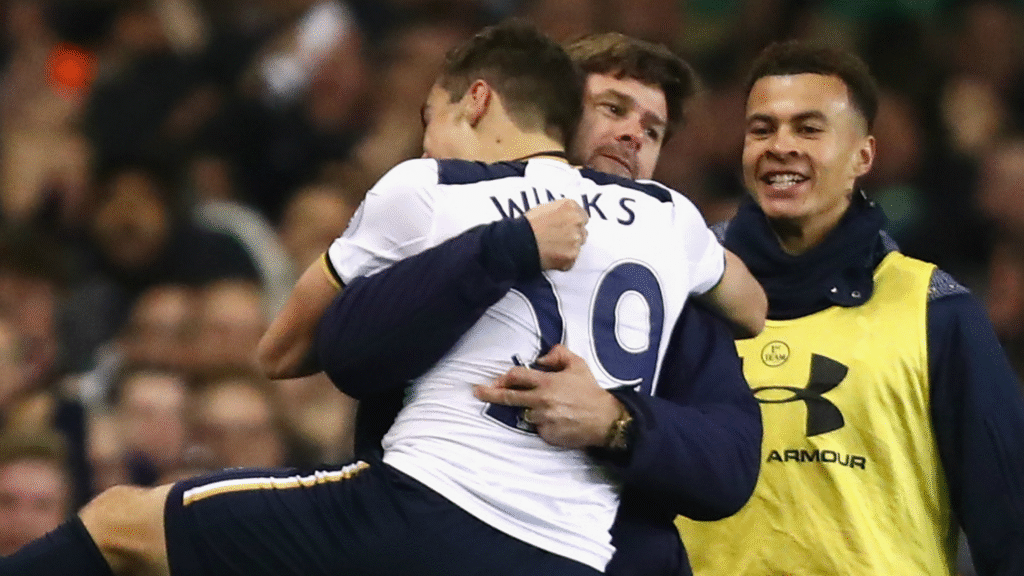
What followed this display was a full integration into the first team, which also showed Wink’s importance.
Pochettino deployed Winks as a game-management tool, disrupting opponents with reliable possession control.
By early 2017, Winks had amassed over 30 appearances as Pochettino called him the “perfect midfielder.”
The Night Europe Took Notice
After breaking through at Spurs, Harry Winks continued playing with an impressive level of consistency, earning his first England call-up during the early stages of the 2017-18 season.
On October 17, 2017, Mauricio Pochettino made a daring statement in Madrid.
He boldly started 21-year-old Harry Winks at the Santiago Bernabeu, facing one of the greatest midfield trios ever assembled.
Winks was primed to battle Luka Modric, Toni Kroos, and Casemiro in midfield on the biggest stage in club football.
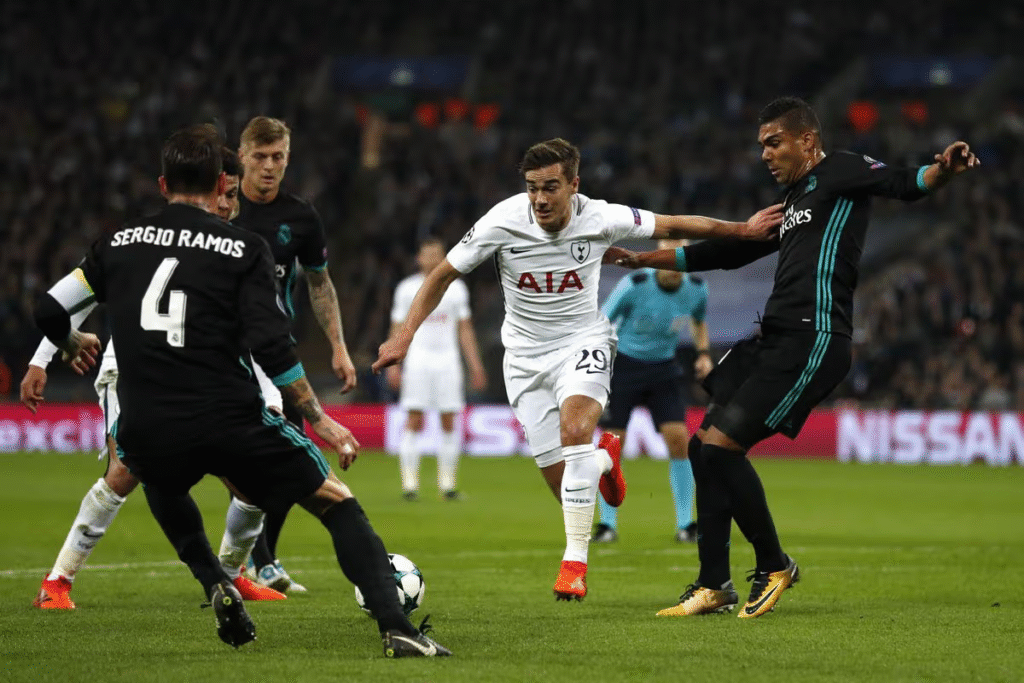
Instead of playing it safe, Winks imposed himself, dominating offense and defense. He posted a 94% pass completion rate against a side that had unsettled elite opposition all season.
Winks commanded the ball from Spurs’ center-backs, dodged challenges, and drove incisive passes forward, forcing the reigning European Champions to adapt and curtail his involvement.
The match ended 1-1. Winks left the Bernabeu having matched his childhood idol Modric in every aspect.
Two weeks later, he made a decisive impact. Tottenham hosted Madrid at Wembley, and once again, Winks started.
He anchored midfield with authority and drove the buildup to the opening goal.
Winks split Madrid’s defense with a precise diagonal pass to Trippier, who set up Dele Alli for the lead.
Spurs won 3-1, and analysts praised Winks as a key orchestrator responsible for the victory.
Winks built on his success, carrying outstanding form into one of European football’s most hostile arenas.
At Signal Iduna Park, he broke Dortmund’s counter-press, recycling possession and threading incisive passes. His efforts earned Spurs a 2-1 away win.
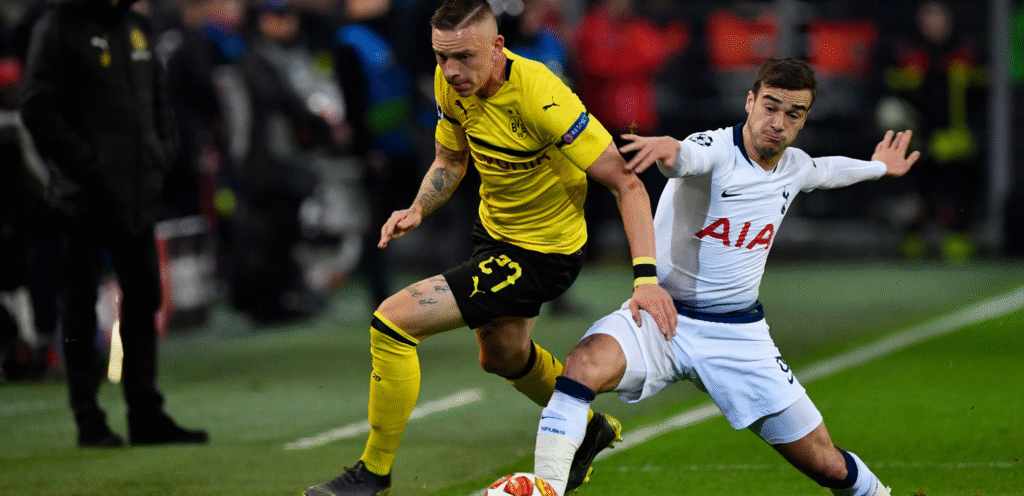
Tottenham topped a group with Madrid and Dortmund, finishing all six matches unbeaten. Winks stood out for Spurs, ranking among the most efficient passers in the competition.
Spurs fell to Juventus in the Round of 16, but Winks already looked like Tottenham and England’s future.
From Prospect to UCL Finalist
When Tottenham faced Borussia Dortmund in the round of 16 of the 2018-19 Champions League, Winks took charge.
He controlled the midfield and helped the attacking quartet dismantle Dortmund 3-0, securing a first-leg victory at Wembley. Spurs commanded the tie from then on and advanced to face English rivals Manchester City.
The quarterfinal against the Cityzens demanded something different. The first leg of the tie took place at the newly opened Tottenham Hotspur Stadium, and that added a bit of spice to the encounter.
Winks’ pressing and defending were crucial in overcoming City’s intricate positional system.
He disrupted the rhythm of Pep Guardiola’s side. Tottenham took a crucial 1-0 advantage heading into the second leg.
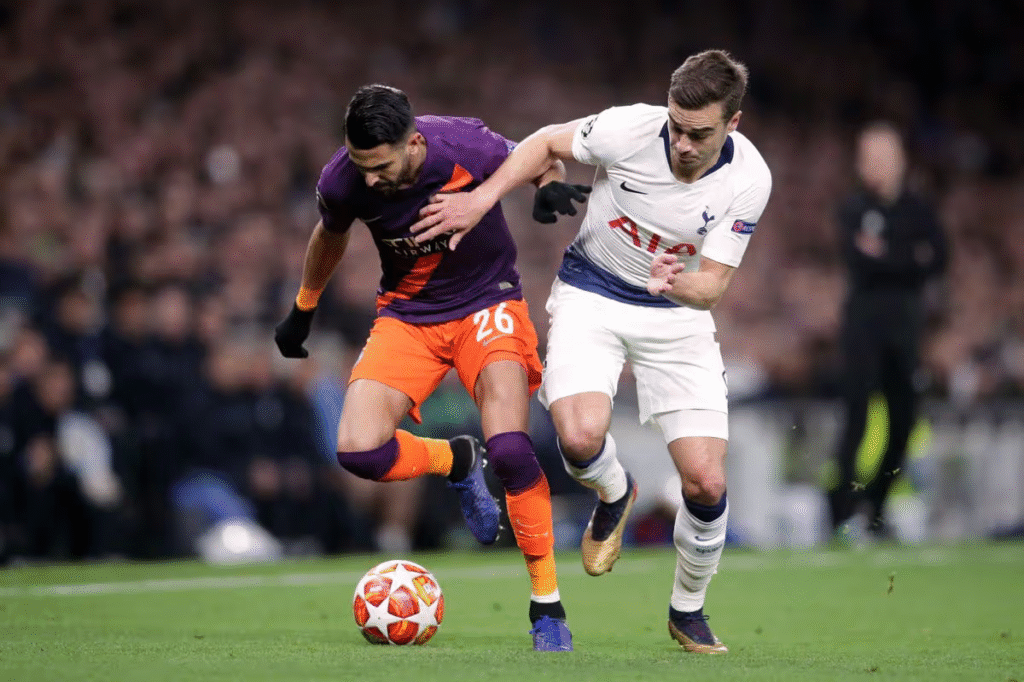
That same Manchester City encounter, however, dealt a devastating personal blow to Winks. He sustained a severe groin injury that required immediate surgical intervention in late April.
The injury sidelined him for both semi-final legs against Ajax, denying participation in the club’s most dramatic comeback night.
What followed this setback demonstrated a side of Winks that statistics tend not to capture. He underwent an isolating and painful rehabilitation program with a single objective of playing in Madrid on June 1.
Pochettino rewarded Winks’ efforts. He handed him a starting position in the Champions League final against Liverpool, dropping semi-final hero Lucas Moura to accommodate him.
For a boy who joined the academy at 5, walking out under Madrid lights to play in the Champions League final meant something beyond football.
Winked played 66 minutes before his substitution, with Spurs ending up as runners-up after an agonizing 2-0 defeat.
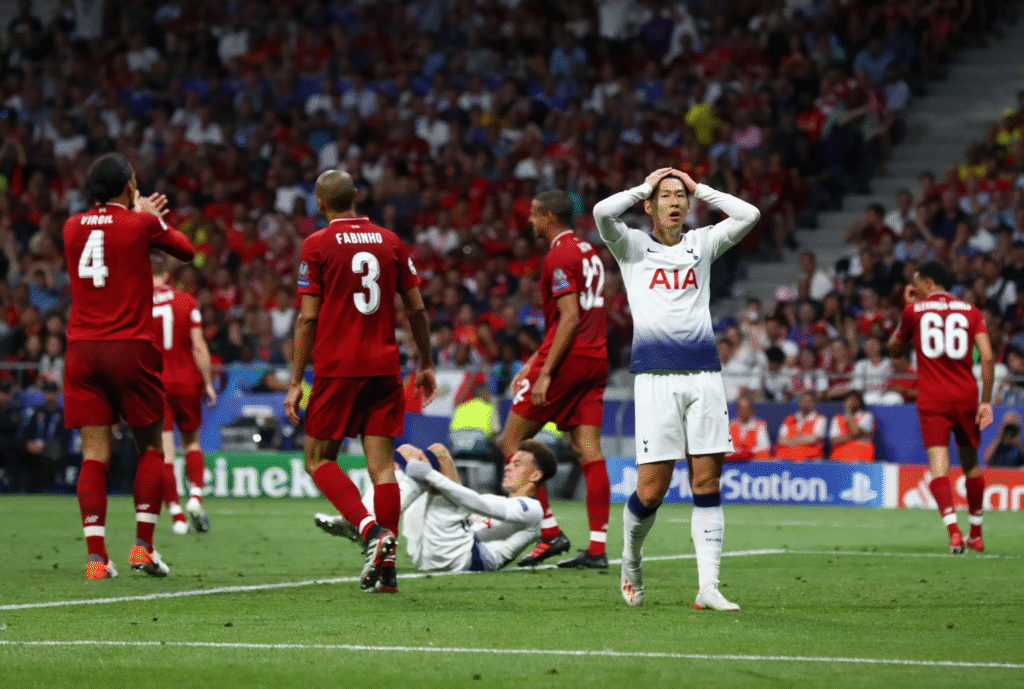
In spite of the loss, Pochettino’s willingness to stake Spurs’ entire tactical framework on a player returning from injury confirmed, beyond any doubt, that Winks had reached the summit of his profession.
The Weight of the “Next Iniesta” Label
The genesis of the “Next Iniesta” label originated during an interview with Mauricio Pochettino in September 2018.
Speaking publicly about his midfielder’s qualities, Pochettino drew a comparison between Harry Winks and Barcelona legends Xavi Hernandez and Andres Iniesta.
This bold claim transformed Winks’ reputation, marking a shift in how football observers evaluated him.
Tottenham’s coaching staff also fuelled the narrative behind the scenes, coining the “Little Iniesta” moniker, due to Winks’ low center of gravity and his ability to manipulate spaces without exerting physical dominance.
Winks initially welcomed the association and even admitted to modeling his entire game around Xavi and Iniesta. He did not have the height or power of traditional English central midfielders.
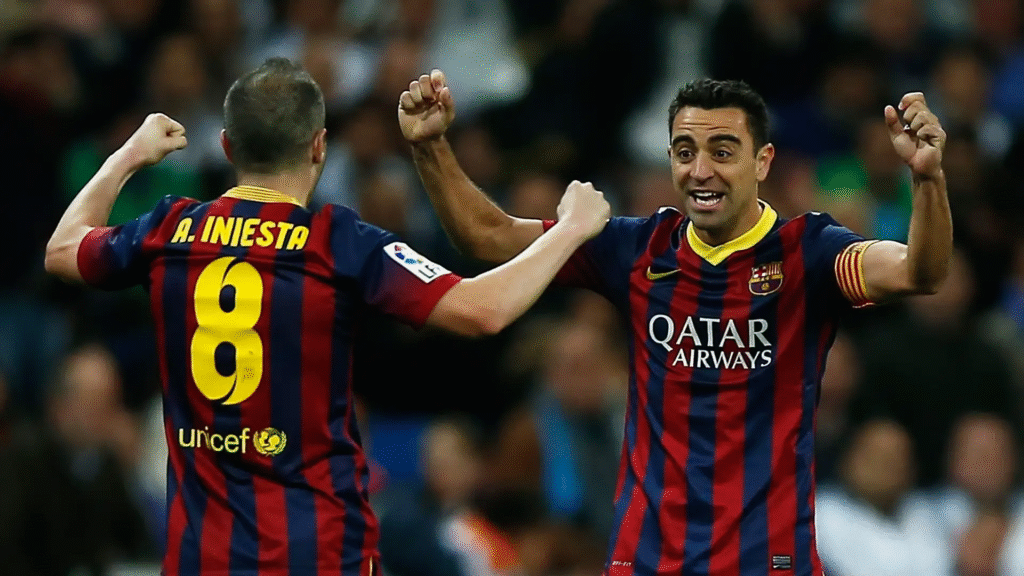
Meanwhile, the British media took this comparison, initially made in admiration, and transformed it into something far heavier.
Every outstanding performance Winks displayed was viewed by pundits as not only fulfilling his potential but also an ideal solution to the English national team’s technical deficiencies.
The comparison affected how critics viewed his contributions and how they affected the outcomes of the results.
Iniesta had a reputation for being decisive and impactful in the final third with his lethal dribbling, incisive through balls and match-defining moments that significantly impacted the scoreline.
Unlike Iniesta, Winks’ strengths lay elsewhere. He functioned as a deep-lying playmaker and ball winner, tasked with recovering possession in midfield and making plays for those ahead of him.
While this task brought enormous tactical value on the pitch, his role tended not to generate headline moments similar to Iniesta’s.
Opposition managers became wary of the limitations and exploited them by deploying physical midfielders to nullify Winks’ productivity.
Limited passing options led to conservative play, which drew criticism. By late 2019, club uncertainties and managerial changes weighed on Winks and affected his form.
Falling Out of the Premier League Spotlight
Tottenham’s dismissal of Pochettino in November 2019 marked a major turning point in Winks’ career.
Pochettino had constructed a system at Tottenham around Winks’ specific qualities, concealing his limitations to great effect. Every manager who followed dismantled the structure that enabled Winks to flourish.
After Pochettino left, Mourinho changed Tottenham’s style. Mourinho’s tactics prioritized defensive strength and fast counterattacks, favoring physical force and discipline—a sharp contrast to Winks.
Mourinho reduced Winks from playmaker to squad player; his skills no longer suited the new tactics.
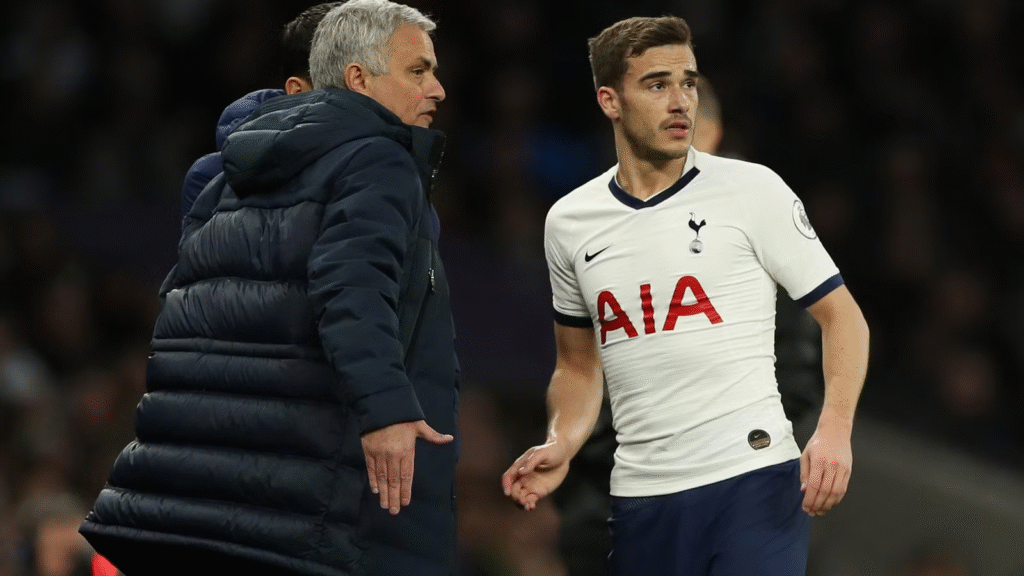
As Wink’s confidence deteriorated, his game became a tale of conservative passing patterns. He often opted for recycling the ball sideways and backward, rather than forward contributions.
In the 2020 summer transfer window, Tottenham’s signing of Pierre-Emile Højbjerg signified the final nail in the coffin of Winks’ standing at the club.
Højbjerg brought the physicality Mourinho wanted, relegating Winks to cup matches and bench roles.
After Mourinho’s tenure ended, the subsequent appointment of Nuno Espirito Santo and Antonio Conte did not reverse the trajectory of Winks at Tottenham.
Espirito Santo dropped his usual setup for a strict 4-3-3, giving Skipp and Højbjerg double pivot responsibilities.
Conte’s 3-4-3 demanded relentless midfielders. Bentancur and Skipp were chosen; Winks was overlooked.
As a result of limited playing time at Tottenham under these managers, Winks accepted a season-long loan to Sampdoria for the 2022-23 campaign.
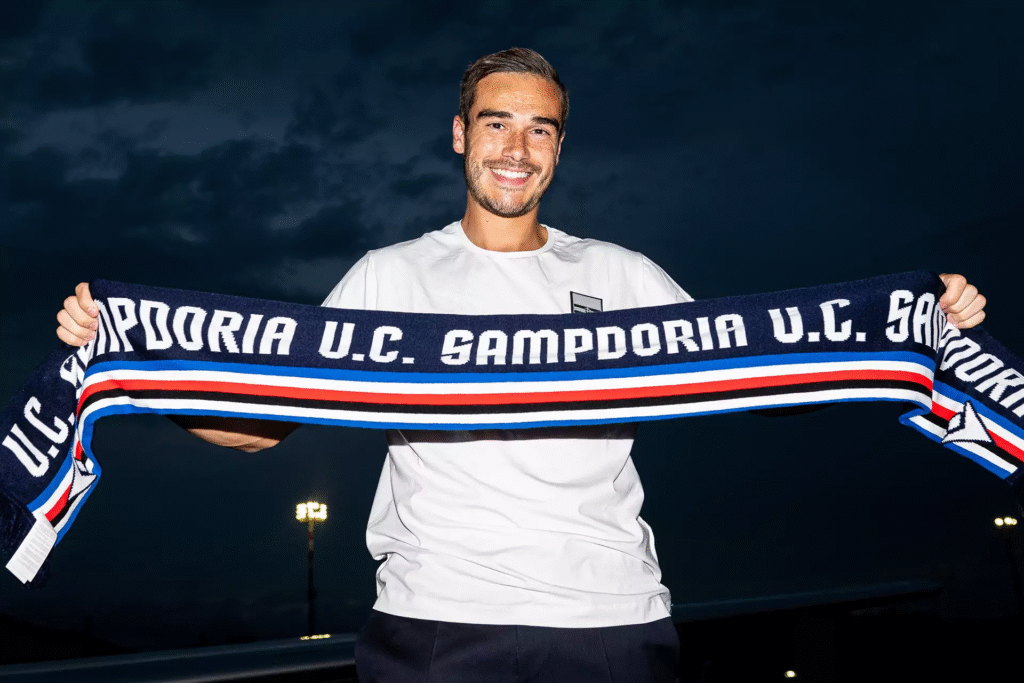
For the first time in 21 years, Winks was set to play for another club. His Italian debut stalled: ankle surgery sidelined him for months.
Winks returned in January, started 20 matches, displayed his value, but could not save Sampdoria.
Tottenham did not entertain any plans to integrate Winks back into the team and began seeking buyers for the out-of-favor midfielder throughout the summer window.
A Fresh Start That Turned Into Survival Football
Winks transferred permanently to Leicester City for £10 million in July 2023, welcoming the needed change.
Enzo Maresca, the manager of Leicester City, did not see Winks as a player in need of psychological rehabilitation.
Instead, Maresca positioned Winks as the cornerstone of a possession-heavy, build-from-the-back system, which was similar to the tactical setup under Pochettino years earlier.
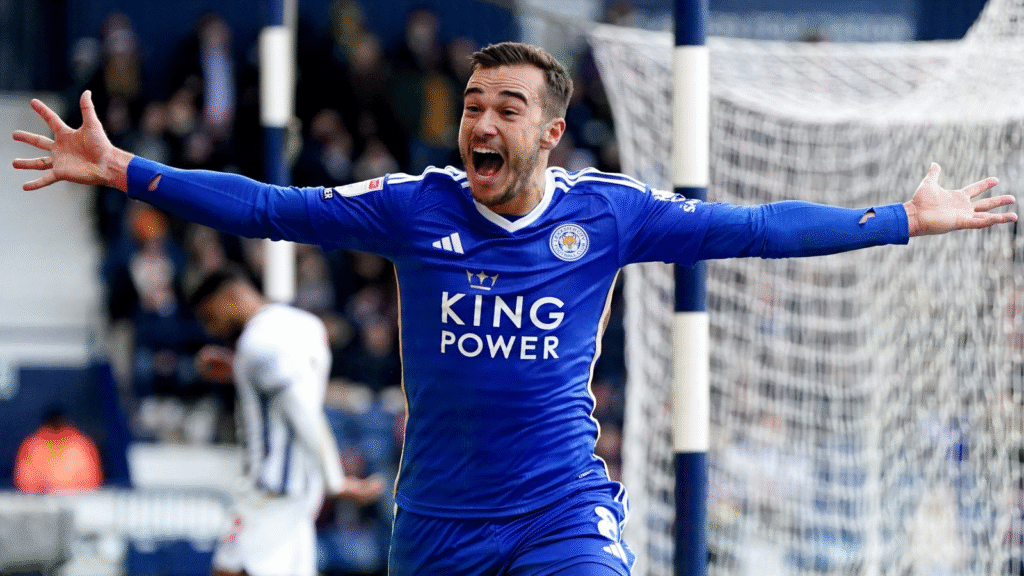
Winks led Leicester’s push to win the 2023-24 Championship and return to the Premier League.
However, optimism dissipated before the Premier League season began. Maresca’s sudden departure to the London-based side Chelsea stripped the Foxes of the tactical identity in which Winks had rediscovered himself.
With the exit of Maresca, the management ditched the possession-based structure, replacing it with a low-block, counter-attacking system best suited for teams aiming to avoid the drop in their first season back in the top flight.
Rather than playing in a system that enabled him to operate as an orchestrator, Winks tracked runners and put in a lot of defensive cover for a side that averaged less ball possession.
Leicester returned straight back to the Championship for the 2025-26 season. Under Gary Rowett’s reign as manager, their misery was further compounded as the club struggled to find form.
The Foxes were officially handed a six-point deduction on February 5, 2026, after being found guilty of breaching the EFL’s Profit and Sustainability Rules for the 2023-24 season.
In April 2026, Leicester endured a six-match losing streak and sat 23rd, connecting their downward to previous setbacks under Rowett.
Following a 1-0 loss to Portsmouth, Winks got involved in a verbal altercation with traveling supporters.
He sat on the team bus as they headed home eight points from safety and on the brink of back-to-back relegations.
From the UCL Final to League One
The final whistle in the Hull City match painted a scene of dejection and gloom, as the outcome confirmed Leicester City’s relegation to League One.
They endured a historic back-to-back fall, dropping from the Premier League to the third tier in two seasons.
Harry Winks stood on that pitch, wondering how it all got to the point where he was assessing the idea of competing in the third tier while still statistically at the stage of his career that was supposed to be his prime.
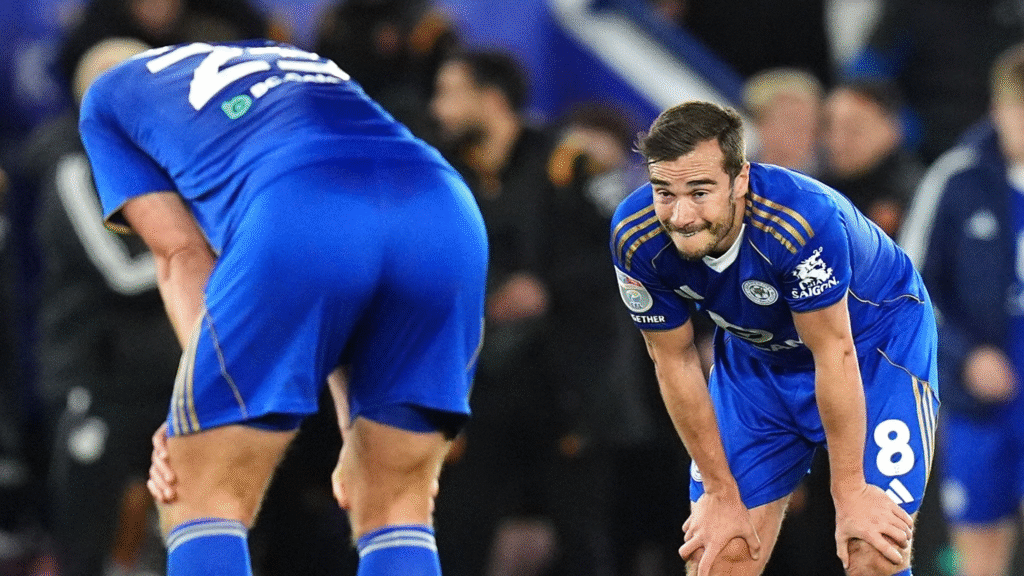
The atmosphere was affected further by the Portsmouth incident. Some sections of the King Power Stadium expressed dissatisfaction with Winks’ presence on the pitch, booing his name during their final home fixture.
The viral clash with traveling supporters shattered his bond with the fans, with relegation intensifying the crisis.
Seven years marked Harry Winks’ lackluster career arc. In June 2019, he played in the Champions League final in Madrid against Liverpool.
By summer 2026, he will be preparing for away fixtures at intimate, modest stadiums, with crowds only a fraction of the size of those he played before.
This seven-year gap renders the “Little Iniesta” tag a distortion of its original intent. Winks’ failure to evolve his game in unfavorable situations underscores modern football’s inclination to marginalize technically gifted players through mismanagement and systemic breakdown.
At 30 years old, Winks confronts the stern reality of the professional scene. His technical intelligence never eluded him, irrespective of the country or division he played in.
The drop to League One leaves the midfielder at a ruthless crossroads in his career.
Winks must either restore his standing in League One or pursue renewal elsewhere, seeking a club with better finances willing to invest in him.
Who wrote this?

Bienuoma Agaga-Akpati is a software engineer, writer, eSports player, and sports enthusiast, presently working with a group of ambitious Africans to transform the writing industry. With good knowledge of various sports and eSports, coupled with his keen ability for research, he loves analyzing ideas and topics that fosters the growth of the sport and eSports scenes. In his spare time, he enjoys creating content and engaging in discussions across various platforms.
- Bienuoma

- Bienuoma

- Bienuoma

- Bienuoma

- Bienuoma

- Bienuoma

- Bienuoma

- Bienuoma

- Bienuoma

- Bienuoma

- Bienuoma

- Bienuoma

- Bienuoma

- Bienuoma

- Bienuoma

- Bienuoma

- Bienuoma

- Bienuoma

- Bienuoma

- Bienuoma

- Bienuoma

- Bienuoma

- Bienuoma

- Bienuoma

- Bienuoma

- Bienuoma

- Bienuoma

- Bienuoma

- Bienuoma

- Bienuoma